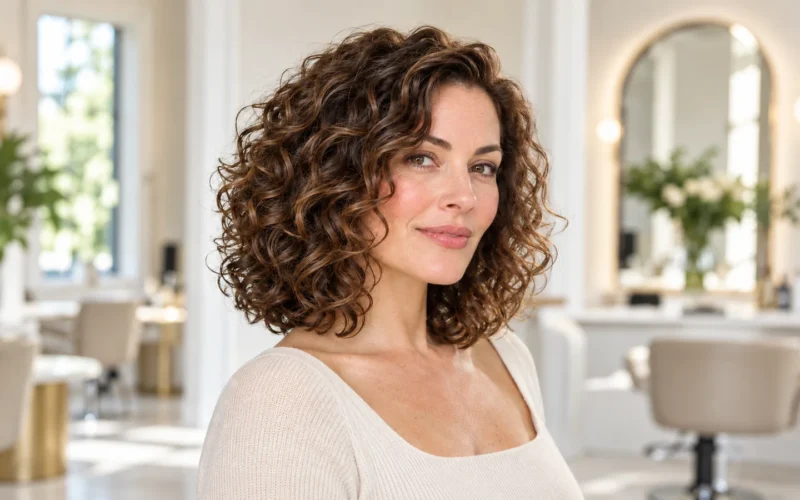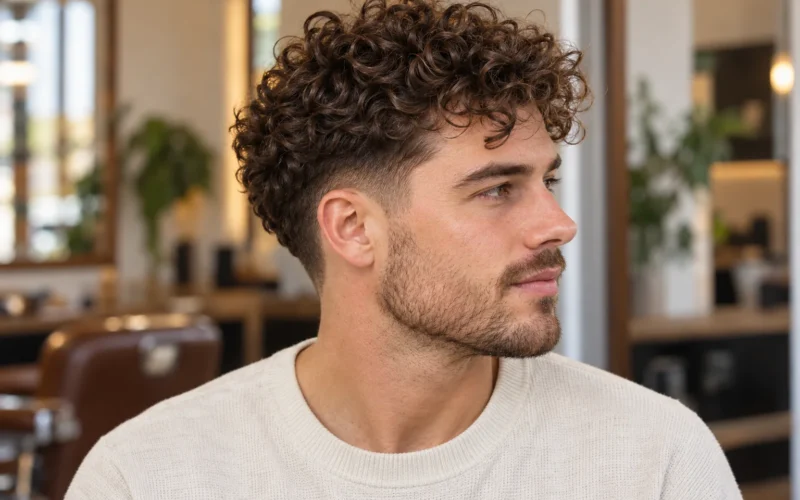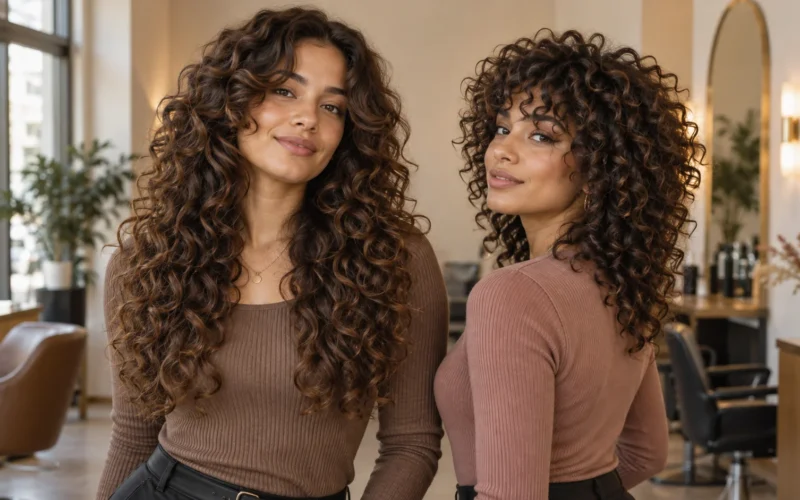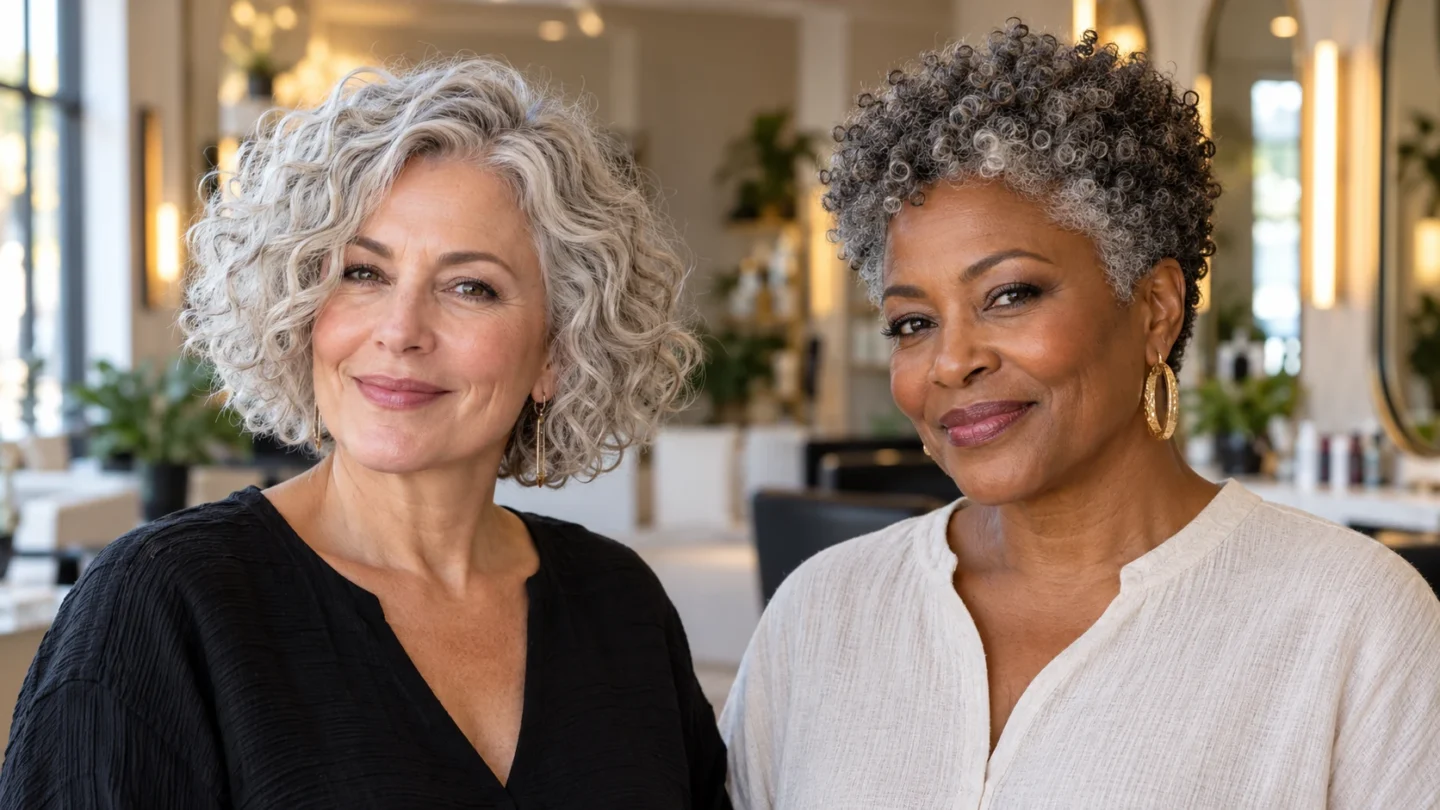
One short cut can make fine curls look fuller. The same cut can expose somebody else’s crown, spring two inches higher than expected or turn into a triangle after wash day. The scissors are innocent. The planning was the problem.
The best short hairstyles for naturally curly hair over 50 are chosen by density, dry shrinkage and the amount of weight your ends need, not by age or face shape alone. Fine or low-density hair usually benefits from a strong perimeter and restrained layering. Medium or dense curls can often carry more internal layering, tapering or a shag shape.
Hair can become finer, drier or simply different through midlife and menopause, although the change is not identical for everyone. Cleveland Clinic’s menopause guidance notes that hormonal changes may affect hair fullness and moisture. Choose for the hair you have now, even if your curls used to behave like entirely different employees.
First, separate fine hair from low density
Fine describes the width of each strand. Low density means fewer strands across the scalp. You can have fine but plentiful curls, or coarse strands with visible spacing at the crown. That difference changes how much hair a stylist can safely remove.
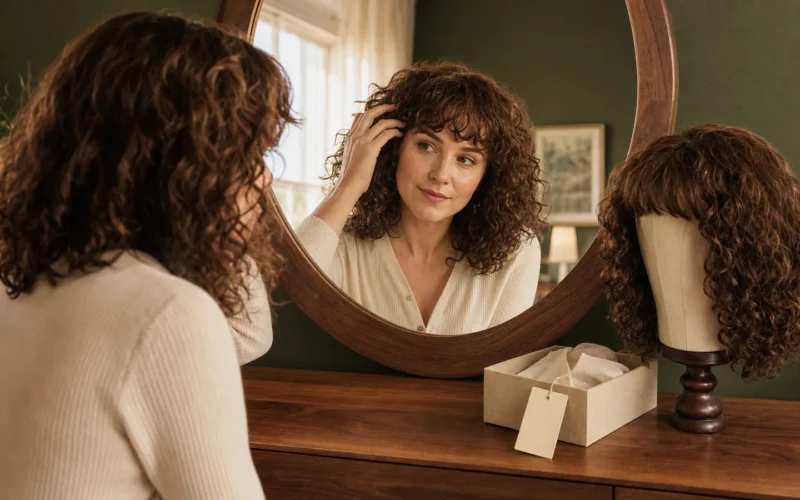
Also judge the cut on fully dry, normally styled hair. A curl that sits at the jaw while wet may finish near the cheek once it springs back. If committing still feels risky, use our method for previewing a curly haircut before you commit and show the stylist the shortest dry point you will accept.
| Cut | Usually strongest for | Main risk |
|---|---|---|
| Long-top curly pixie | Fine or low-density curls needing crown lift | Top cut too short to curl |
| Soft curly bixie | Fine to medium density and mixed waves or curls | Bulk around the ears |
| Blunt curly bob | Fine or low-density hair needing fuller ends | Unexpected shrinkage above the jaw |
| Soft layered bob | Medium or dense curls needing movement | Too many layers thinning the perimeter |
| Rounded tapered crop | Dense curls or coils needing controlled sides | Exposing fragile temples |
| Short soft shag | Medium or dense hair that suits airy texture | Wispy ends on low density |
1. Long-top curly pixie for lift without wispy sides
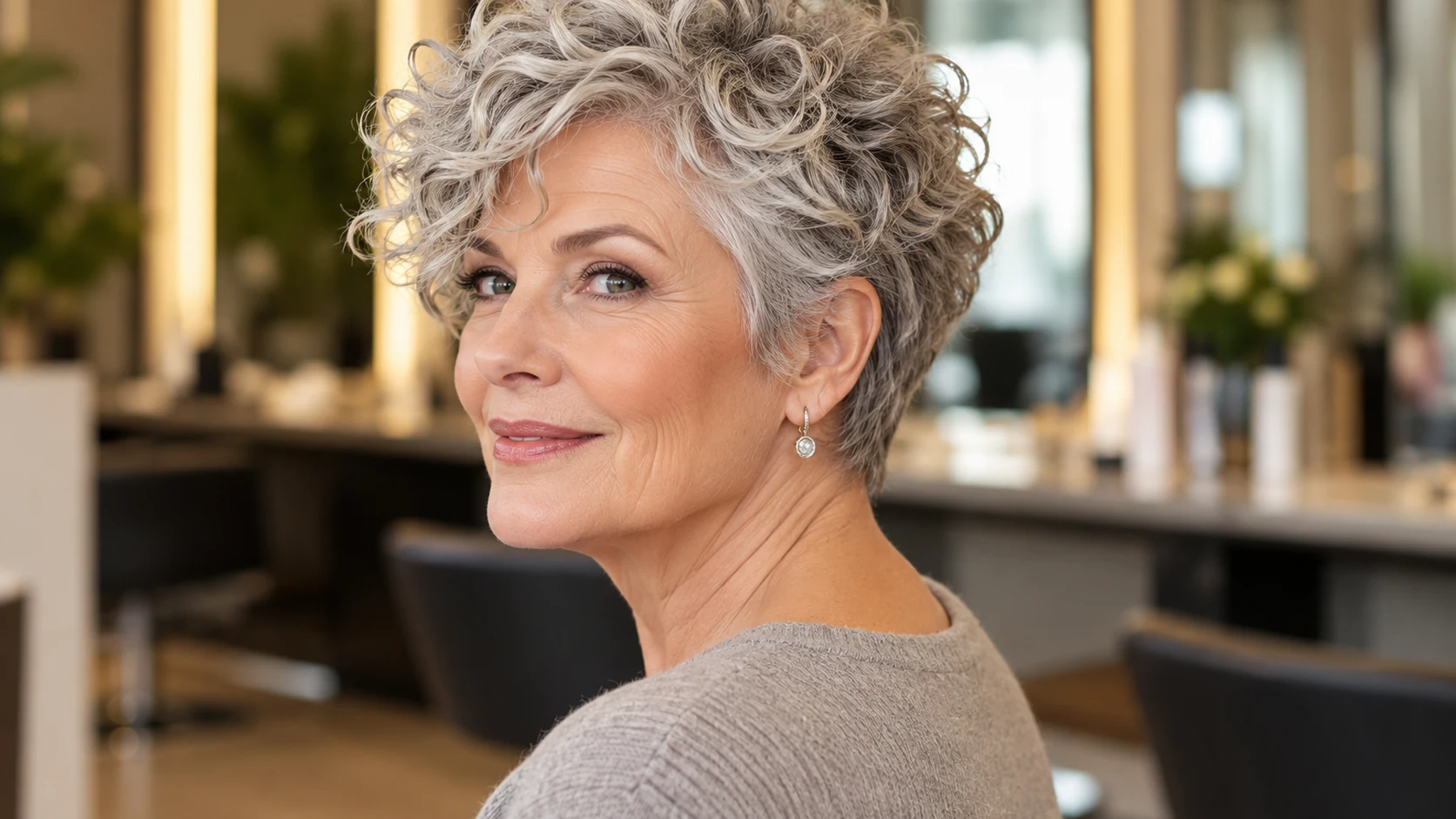
A long-top pixie removes length from the sides and nape while leaving enough hair on top for the curl to form. That contrast can create visible lift without asking fine ends to build a full bob.
Best for: Fine strands, lower density at the sides, or anyone who wants very little hair on the neck. Ask for: A soft taper with enough top length to complete your normal curl pattern. Watch out for: Aggressive texturizing or a top section cut before the stylist sees its dry spring. This shape also needs more frequent reshaping than a bob if you want the nape to stay neat.
2. Soft curly bixie when a pixie feels too final
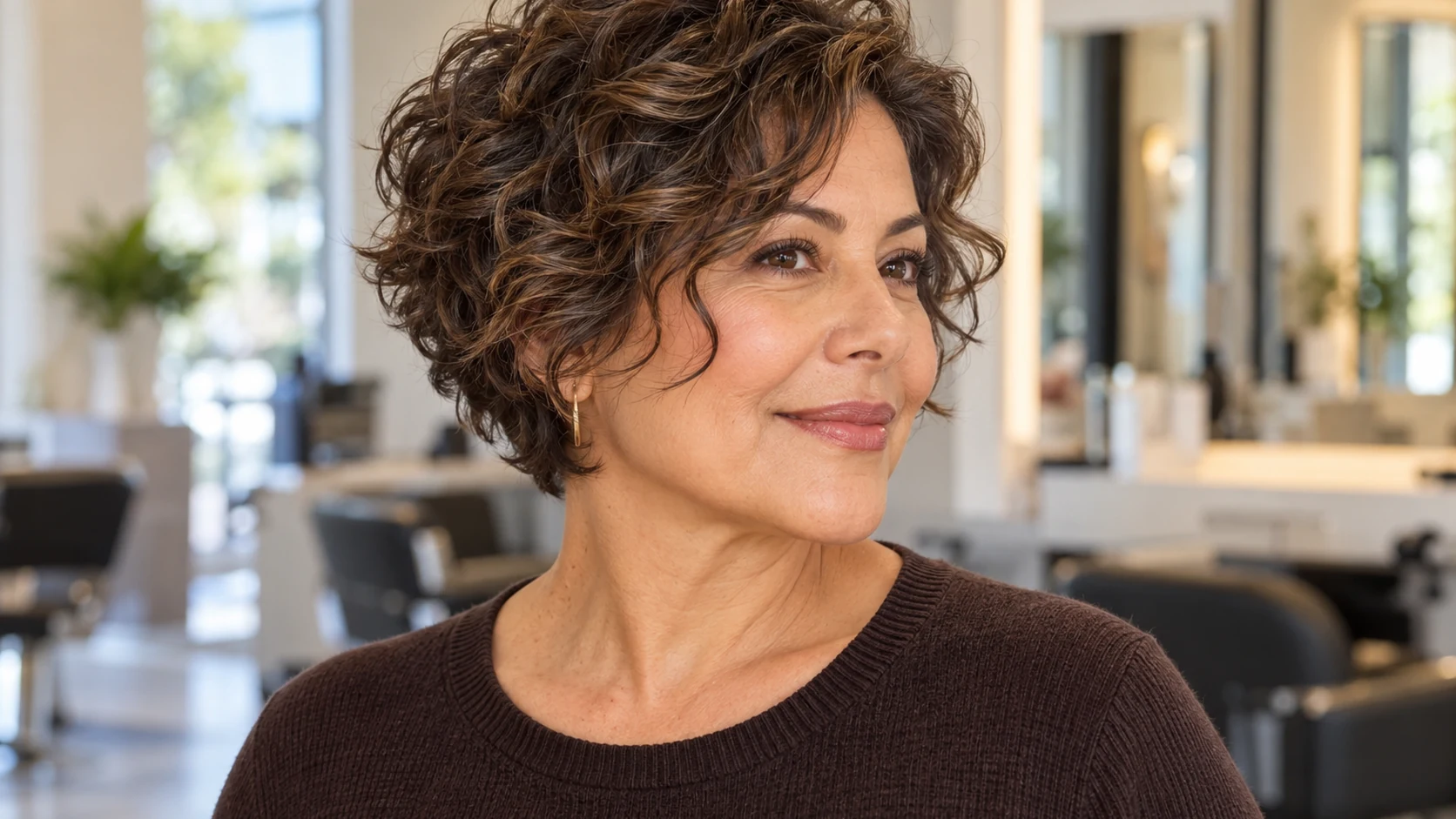
A bixie sits between a pixie and bob. It keeps softness around the ears and more movement through the crown, so it is a useful stepping stone if you want shorter hair without losing every styling option at once.
Best for: Fine to medium density, loose curls or mixed wavy-curly texture. Ask for: A connected shape with movable crown length and a tidy but not shaved nape. Watch out for: Too much weight collecting beside the ears while the crown stays flat. Bring a photo of the side and back, not only the flattering front view.
3. Blunt curly bob when the ends need to look fuller
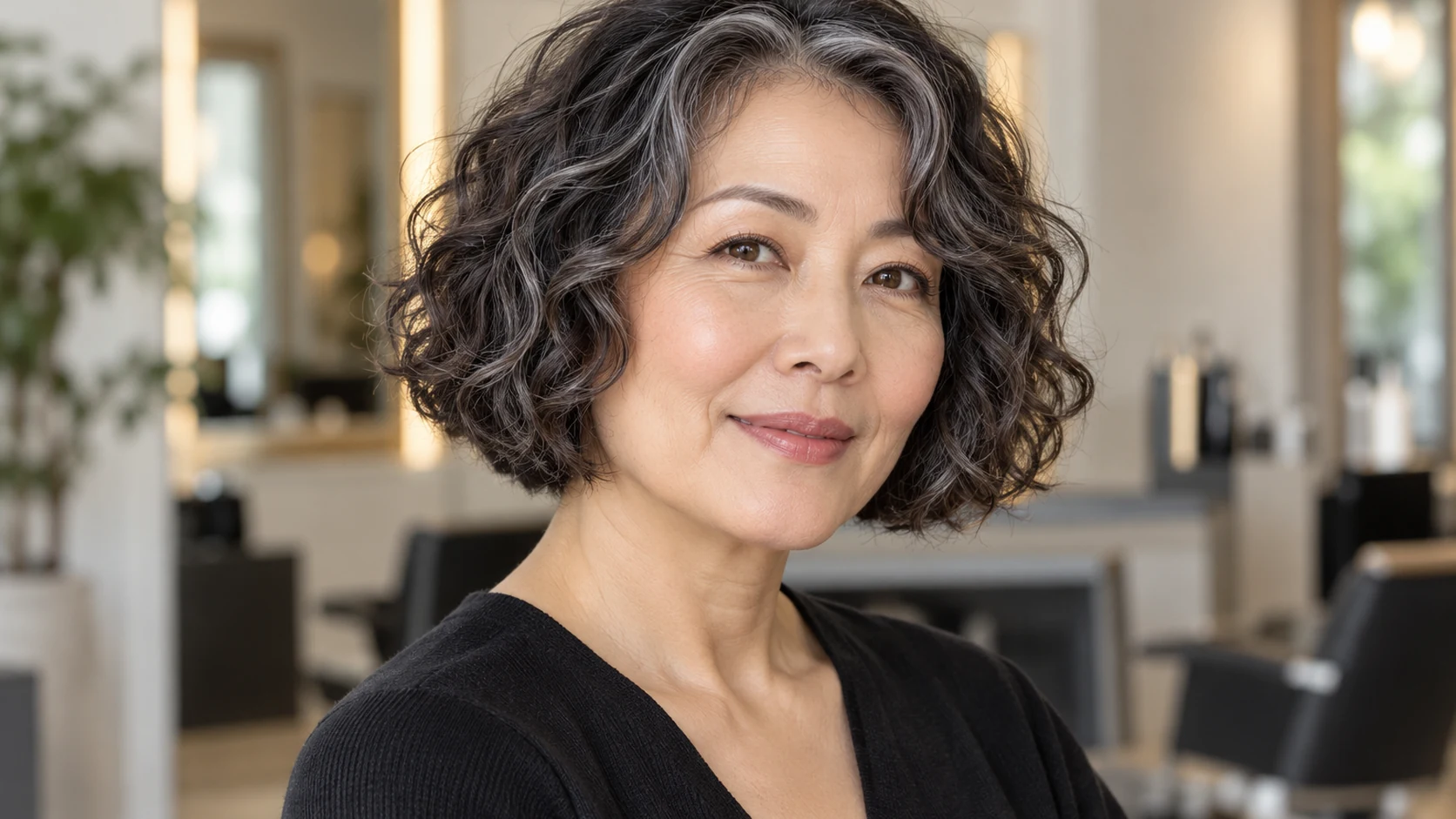
A softly blunt bob preserves a stronger lower edge. It does not create new hair, but it can make the perimeter look more substantial because fewer short internal pieces disappear above it.
Best for: Fine or lower-density waves and curls, especially when heavy layering has made the bottom look see-through. Ask for: Minimal internal layering and a dry finished length at or below the chin. Watch out for: Copying a jaw-length photo without allowing for your own shrinkage. If your underneath sections spring tighter, they may need a slightly different cutting plan to keep the outline balanced.
4. Soft layered bob for movement without sacrificing the bottom
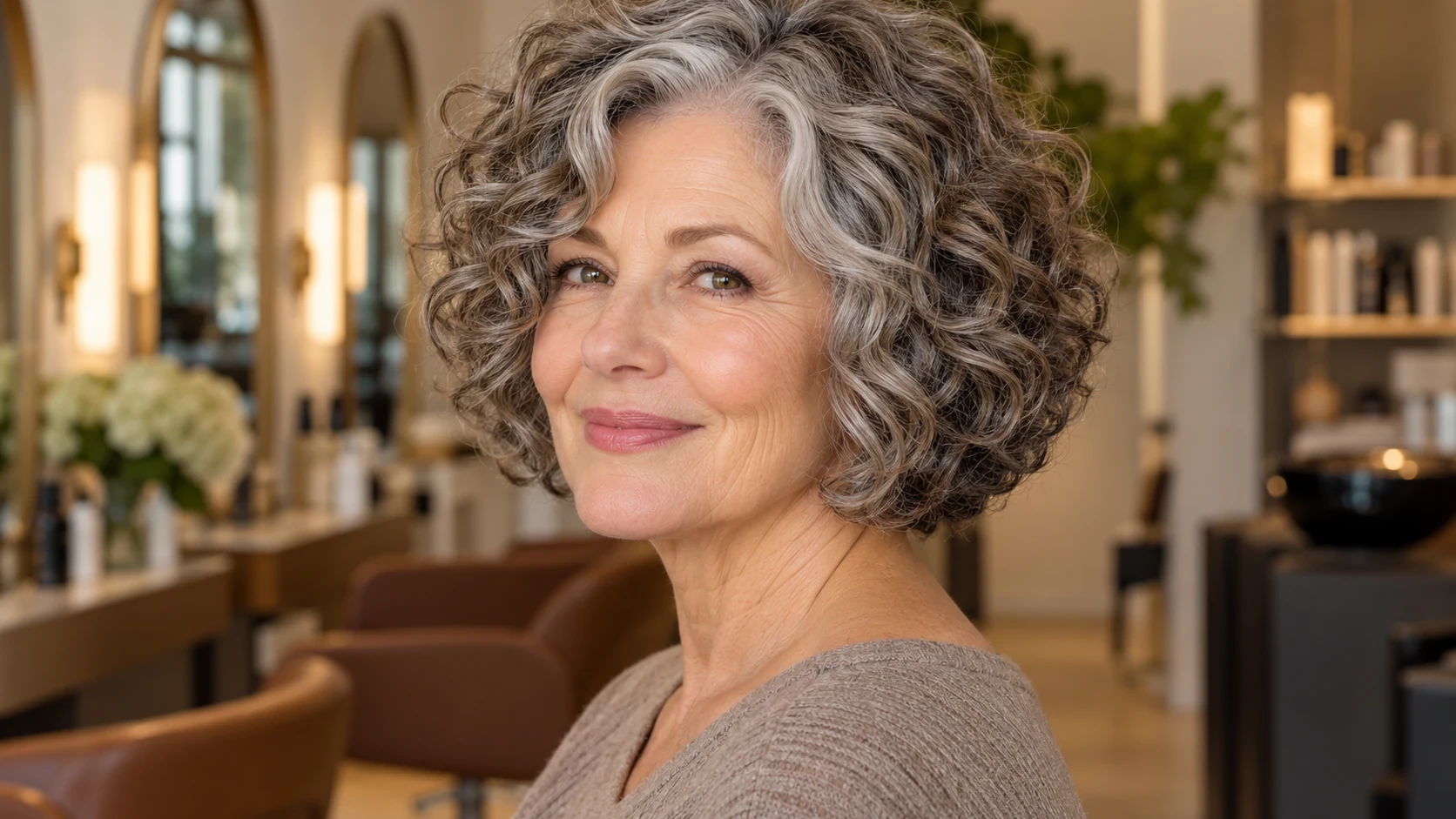
This bob keeps a visible perimeter but removes selected weight through the crown and sides. It gives medium or dense curls room to move without turning the cut into a stack of disconnected short pieces.
Best for: Medium density, fuller sides or a crown that collapses under one-length hair. Ask for: Conservative crown layers that connect into full ends. Watch out for: The automatic promise that “more layers mean more volume.” On low-density hair, too many layers can expose the scalp and leave the bottom thin. A little lift is useful. Excavation is not.
5. Rounded tapered crop for dense curls and coils
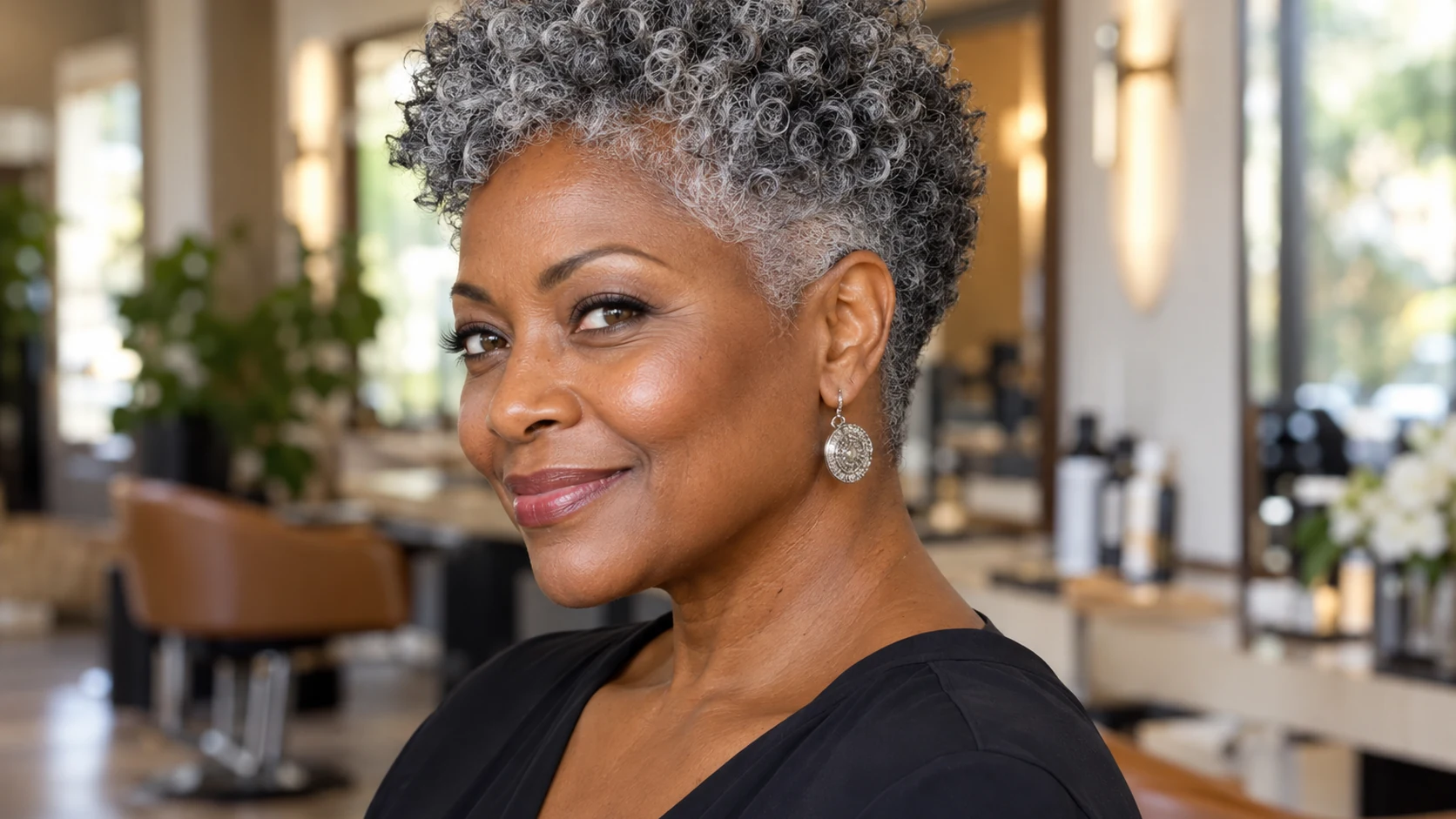
A rounded top celebrates curl density while tapered sides and a cleaner nape keep the silhouette compact. The shape can feel polished without requiring every coil to be separated into perfect little spirals.
Best for: Dense curls or coils, strong shrinkage and anyone who wants volume away from the neck. Ask for: A rounded crown that follows your natural growth pattern, plus a soft taper rather than an automatic close cut. Watch out for: Very short sides if your temples are fragile or sparse. Ask to see exactly where the taper will begin before the clippers appear.
6. Short soft shag for airy texture, not stringy ends
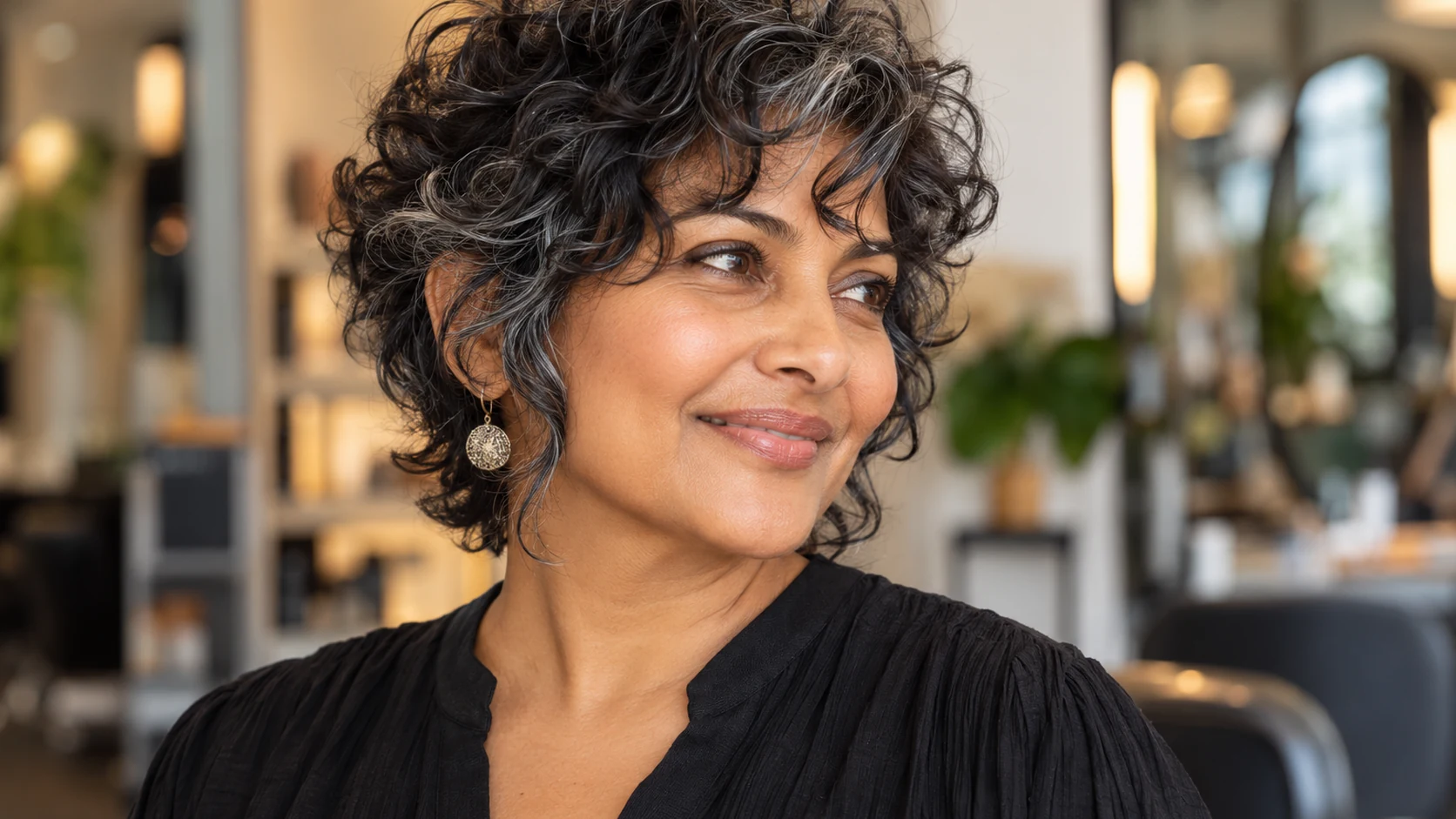
A short shag uses a curly fringe, crown layers and a less-perfect perimeter to create movement. It works best when the hair has enough density to support those shorter interior pieces. If you are deciding between this and a stronger outline, compare the tradeoffs in our curly shag versus curly bob guide.
Best for: Medium to dense waves or curls, natural volume and readers who enjoy a slightly undone finish. Ask for: Soft crown layers, a fringe cut for dry shrinkage and enough weight left through the ends. Watch out for: Short layers everywhere on low-density hair. The intended “airy” result can become transparent surprisingly fast.
How to avoid a cut that only works in the salon
A beautiful blow-dry is not proof that the natural shape works. Before cutting, tell the stylist how you normally dry your hair, where you part it and how much time you will actually spend styling. Then ask:
- Where will the shortest section land when completely dry?
- Which areas are being layered, and which are keeping weight?
- Will the cut still work with my usual air-dry or diffuser routine?
- How will the tighter and looser sections be balanced?
- What will the shape look like as it grows around the ears and nape?
Dry cutting can show where individual curls settle, while wet cutting can help establish a clean structure. Neither label guarantees skill. The more useful question is how the stylist accounts for your different curl patterns and checks the shape in its finished state.
When a haircut cannot solve the real problem
A stronger shape may make fine hair look fuller, but it cannot treat ongoing hair loss. A widening part, a noticeably smaller ponytail, patchy loss, scalp pain or sudden shedding deserves medical attention. The American Academy of Dermatology explains that female pattern hair loss often begins in midlife and is best assessed early.
If the change is more than a haircut decision, our guide to hair loss after 65 and seeing a dermatologist explains what to document before the appointment. Otherwise, choose the cut that protects the weight your hair needs, allows for its real shrinkage and still fits the routine you will use next Tuesday, not just on salon day.