If your curls finally look good but your scalp starts a complaint department, the routine is not really working. The difficult part is finding the cause. Was it the shampoo, gel, fragrance, product buildup, hard water, pollen, or something unrelated to hair care?
A sensitive scalp can itch, burn, sting, feel tight, or develop flakes. Sometimes the timing points straight to a new product. Other times, every bottle on the shower shelf looks guilty.
If that sounds familiar, this guide will help you separate obvious product clues from the messier cases. You will see when simple troubleshooting makes more sense, where UCARI may create a useful shortlist, and when a dermatologist is the safer next step.
Partnership disclosure: UCARI sponsored this article. HairIsCurly independently reviewed the product’s role, practical uses, and limitations.
First, work out what kind of clue your scalp is giving you
Scalp discomfort does not automatically mean an intolerance. According to the American Academy of Dermatology, itching may come from product residue, an allergic reaction, dandruff, eczema, psoriasis, infection, or another condition.
Use the timing and appearance of the problem to choose the safest first move.
| What you notice | What to do first | Where UCARI may fit |
|---|---|---|
| Burning or an itchy rash soon after one new product | Stop using it and rinse thoroughly | Not the first step. The product already gives you a strong clue |
| White particles appear only after gel dries | Check for product residue or incompatible stylers | Usually unnecessary unless other symptoms remain unexplained |
| Greasy or stubborn flakes keep returning | Follow appropriate dandruff care and consider a dermatologist | It cannot diagnose dandruff or another scalp condition |
| Several products seem to cause trouble, or symptoms also involve skin, digestion, congestion, or headaches | Start a symptom and exposure record | A broad UCARI report may help create a shortlist to investigate |
| Swelling, trouble breathing, widespread hives, open sores, pus, severe pain, or patchy hair loss | Seek medical care promptly | Do not use a wellness screen to delay care |
If gel leaves flakes but your scalp feels calm, our guide to telling dried gel from dandruff can save you from treating the wrong problem. If medicated dandruff shampoo is not helping, check these reasons Nizoral may not be working before simply using more.
What UCARI actually does
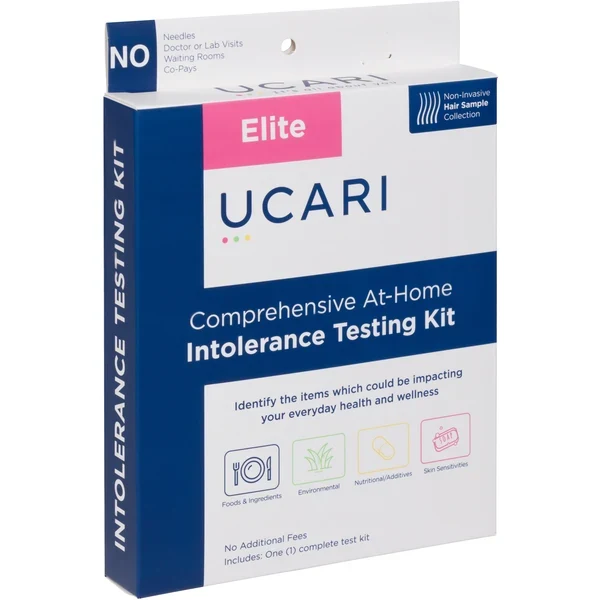
UCARI is designed for people with too many reasonable suspects and no clear place to begin. The company says its bioresonance process compares a hair sample with a database of more than 1,500 items.
UCARI at-home wellness screen
Too many suspects? Start with a clearer shortlist.
Screen 1,500+ food, environmental, personal-care and nutritional items from 10–15 hair strands, then use the color-coded report to decide what to investigate first.
UCARI is a complementary wellness screen, not an allergy test, medical diagnosis or substitute for professional care.
The report covers four groups:
- Foods and ingredients, including additives and preservatives
- Environmental exposures, such as pollen, dust, dander, and mold
- Ingredients found in personal-care products
- Nutritional items, including vitamins, minerals, amino acids, and fatty acids
A curl routine may involve shampoo, conditioner, leave-in, cream, gel, oil, fragrance, and laundry products touching the pillowcase. Looking only at shampoo can miss the wider pattern.
UCARI also provides an Ingredient Checker that compares food labels with the user’s report. It should not be described as a scanner for hair-product labels unless UCARI confirms that feature separately.
From hair sample to report in four steps
The sample is much smaller than many people expect. You are not mailing a lock of hair or sacrificing a curl clump.
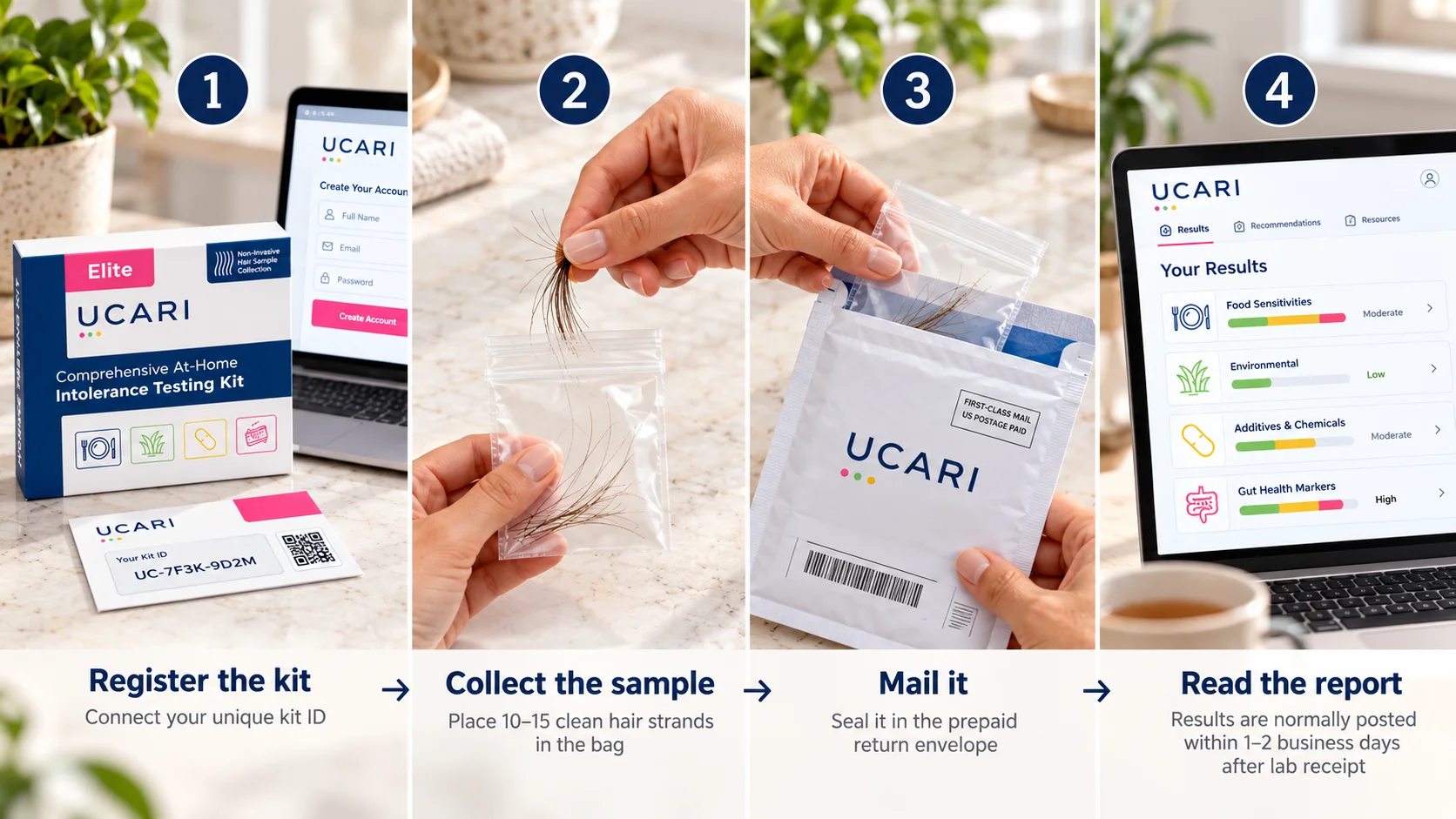
UCARI’s process has four steps:
- Register the kit. Connect the unique kit ID to a secure UCARI account.
- Collect the sample. Place 10 to 15 clean strands of head hair in the collection bag. UCARI advises avoiding heavy gel or hairspray on the sample. Body hair can be used when necessary.
- Mail it. Seal the sample in the included prepaid return envelope.
- Read the report. UCARI says results are normally posted within one to two business days after its US lab receives the sample. Mail transit takes additional time.
The kit is listed for people aged 10 and older. Each person needs a separate kit.
The useful part is not the longest list
A long report can feel like your grocery list has filed a complaint. Do not remove every reported item at once. You will not know which change mattered, and broad food restriction can create nutritional problems.
A better approach is:
- Match the report to real timing. If your scalp burns only on styling days, begin with the personal-care category, not a random food.
- Choose one or two plausible items. Prioritize exposures that are frequent and relevant to the symptom.
- Change one variable. Keep the rest of the routine stable for a reasonable observation period.
- Record what happens. Note the product or food, timing, scalp symptoms, other symptoms, and any improvement.
- Reintroduce carefully when appropriate. If the symptom returns after a safe reintroduction, that pattern is more useful than a report by itself.
UCARI includes a Nutritional Reboot built around removing higher-ranked items, observing changes, and reintroducing them intentionally. People considering major dietary changes should involve a doctor or registered dietitian, especially children, older adults, pregnant people, and anyone with an existing medical condition.
What UCARI can and cannot tell you
| UCARI may help you | UCARI cannot do |
|---|---|
| Organize many possible exposures into a personalized report | Diagnose an allergy, dermatitis, dandruff, psoriasis, or nutritional deficiency |
| Decide what to investigate first | Prove that a listed item caused a symptom |
| Make elimination and reintroduction more structured | Replace medical patch testing, blood testing, or professional examination |
| Create a report to discuss with a qualified professional | Tell you to ignore persistent or worsening symptoms |
Allergy specialists do not consider hair analysis or bioresonance an evidence-based method for diagnosing allergies. The Australasian Society of Clinical Immunology and Allergy warns that treating these methods as diagnostic tests can lead to unnecessary restriction or delayed care.
For a recurring itchy rash that appears where products touch the skin, a dermatologist may recommend medical patch testing. Patch testing and UCARI answer different questions. One investigates contact allergy medically; the other offers a broad wellness shortlist.
Is UCARI worth considering for a sensitive scalp?
UCARI makes the most sense when the problem recurs, an obvious product swap did not solve it, and several exposure categories seem possible. Its appeal is convenience: no needles, home collection, a broad report, and defined next steps.
It is a weaker fit when one new product caused an immediate reaction, when a diagnosed scalp condition already explains the symptoms, or when someone expects the report to deliver a medically proven answer.
The realistic expectation is not, “This kit will identify the culprit.” It is, “This kit may give me a more organized place to start.” For someone stuck in an expensive cycle of replacing products and guessing, that can be useful.
A note for trichologists and curl professionals
Professionals can use a UCARI report as client-supplied wellness context, not as a diagnosis. UCARI also offers a wholesale and retail partner program with no stated minimum order and margins of up to 50%. Any recommendation should clearly explain the test’s complementary role and encourage medical care when symptoms require it.
When a sensitive scalp has too many suspects, the goal is not to blame everything. It is to narrow the field, change one thing at a time, and know when the problem belongs in a dermatologist’s office rather than another shopping cart.
—