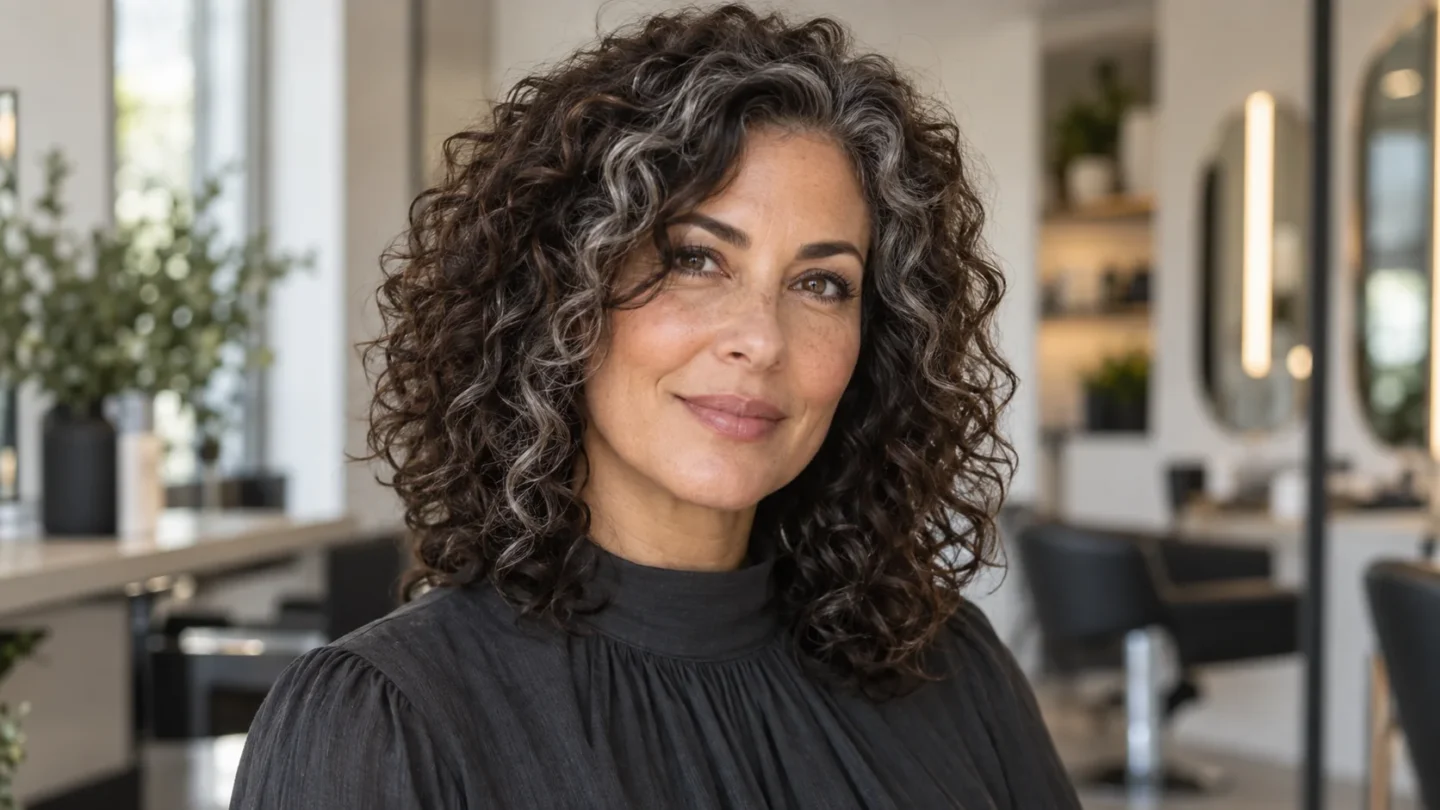
The silver at your temples is coming in. Your curls are still mostly dark brown. Then someone suggests a full head of ash-blonde highlights to “blend” it all, and suddenly you are wondering whether you can go gray without giving up being a brunette.
You can. Gray blending for dark curly hair does not have to mean making every curl pale. The useful choice depends on where your silver grows, how much of it you have, and whether the dark lengths are natural or previously dyed. If you want to keep your base dark, say that before anyone mixes color.
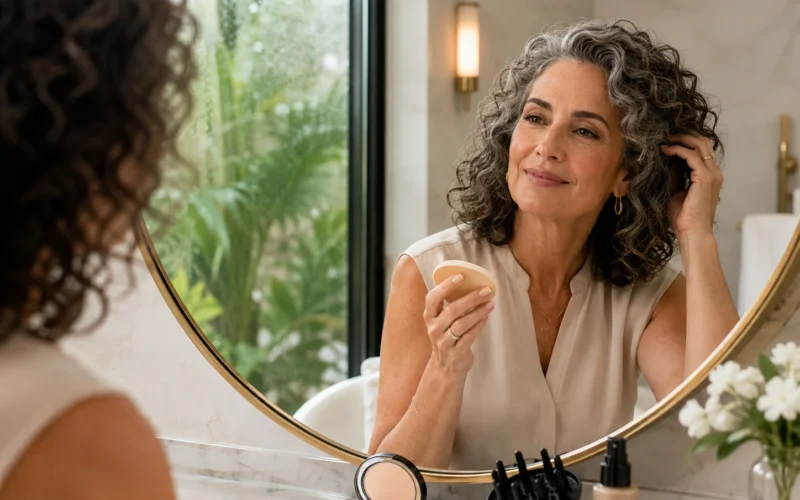
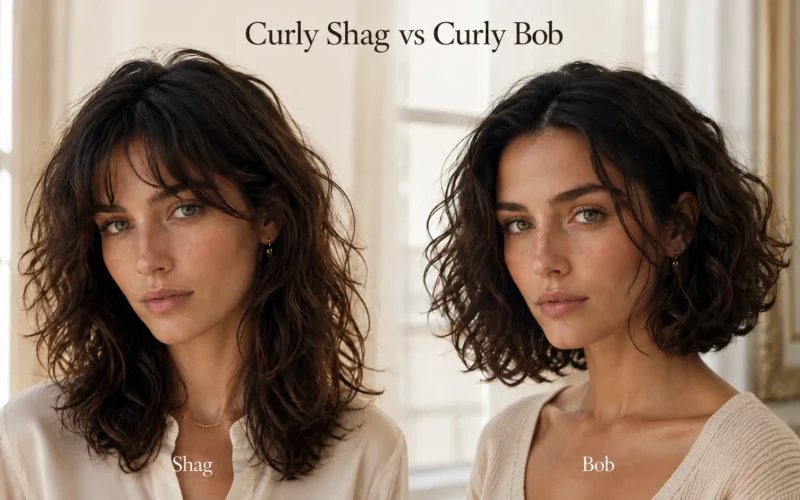
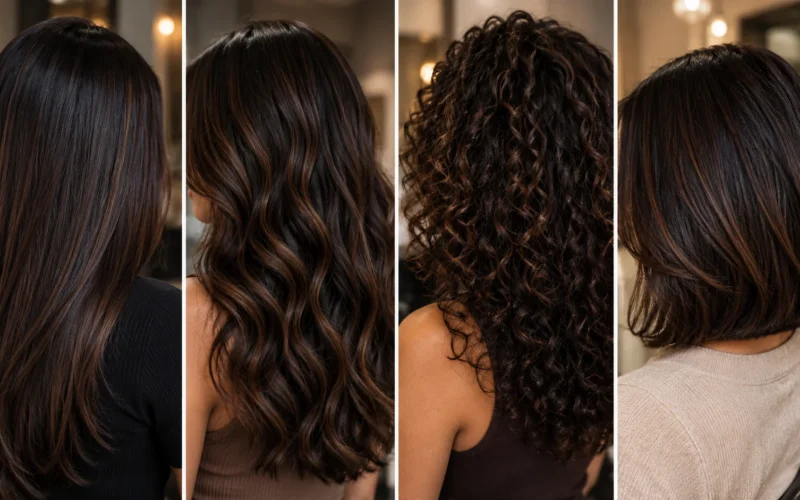
These four looks are original visual illustrations, not photographed salon results or promises of what one appointment can achieve. Save the placement idea you like, then ask a colorist to assess your own hair in person.
1. Keep the silver temple streak
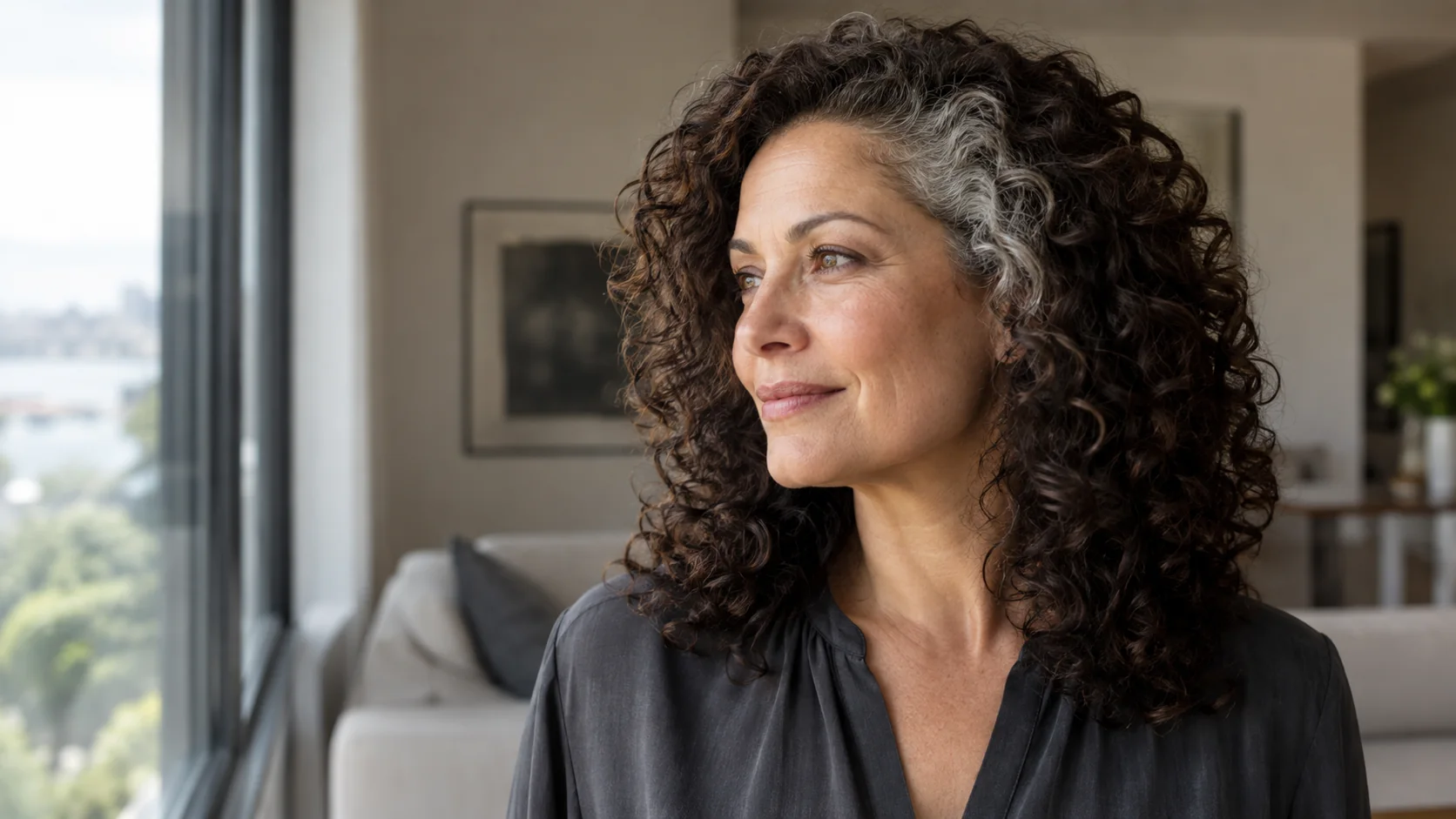
If most of your gray lives at one temple or along the hairline, you may already have the most striking part of the look. Leave that natural silver visible. Keep the brunette lengths dark, and only consider color elsewhere if an old dye line needs softening.
Best for: a localized silver streak and anyone who wants the least processing. Ask your colorist to protect the existing gray rather than dye over it, and show them the part and curl shape you actually wear. A face-framing silver section can disappear if the stylist plans the color only while your hair is pulled straight.
Know the limit: this does not hide scattered gray across the crown. It makes one naturally bright area intentional instead of pretending it is not there.
2. Soften scattered silver with a brunette glaze
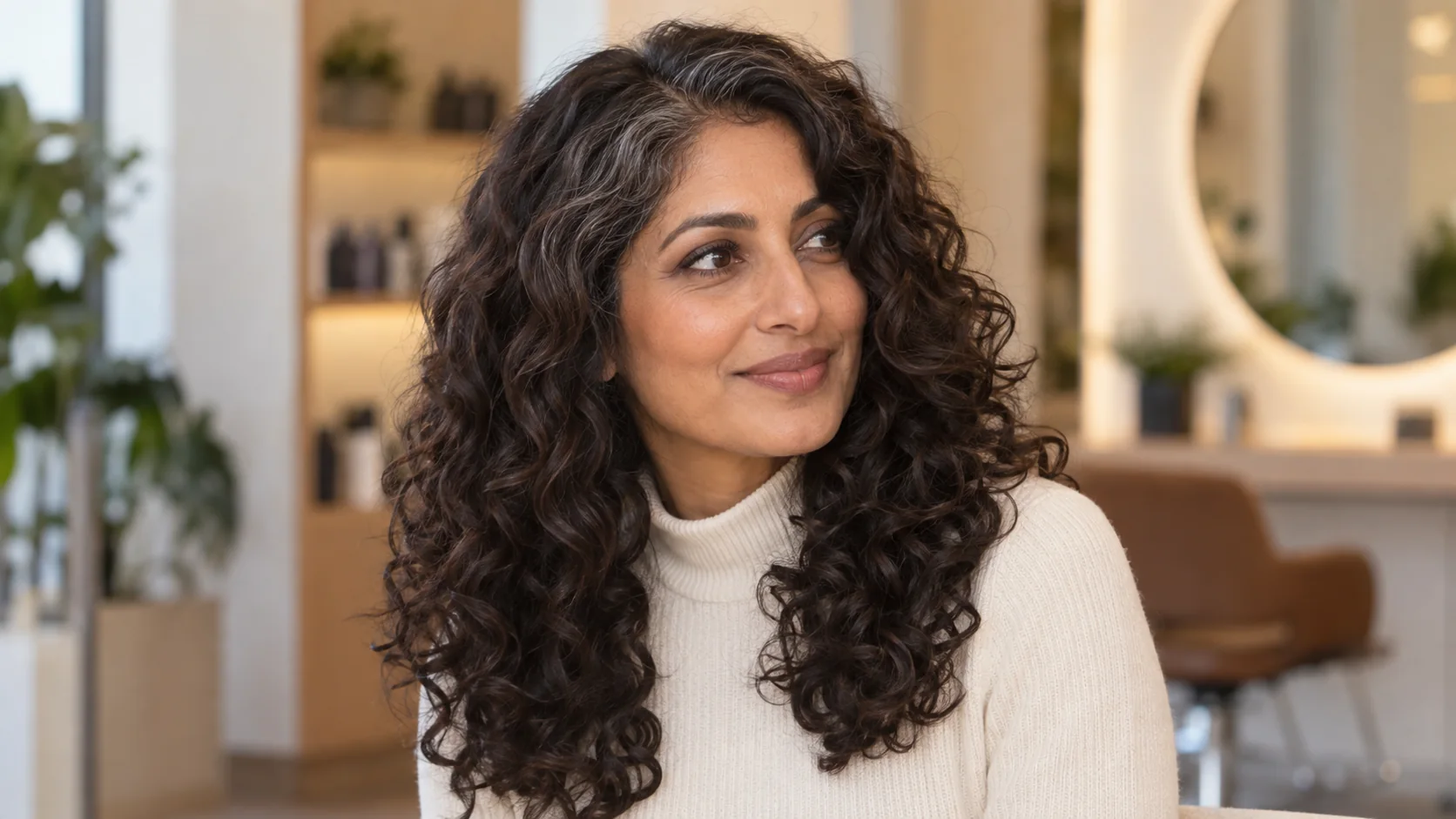
For early gray scattered through otherwise dark curls, a demi-permanent brunette color can soften the contrast without bleaching the whole head. It is not the same as permanent, opaque coverage. The gray may read as a quieter taupe or brown-silver while the rest still looks brunette, and the color will fade.
Best for: someone who is not ready to display bright silver yet but dislikes a hard permanent-color line. Wella’s professional guidance describes blending tints and root-shadow options for transitions; the formula and fade will depend on the hair. Ask to see a realistic swatch or previous client results on a base as dark as yours.
Know the limit: a glaze cannot turn previously dyed dark lengths silver or permanently stop the gray from showing. If the aim is no upkeep at all, this is still a color service.
3. Add a few fine, cool ribbons where gray meets dark
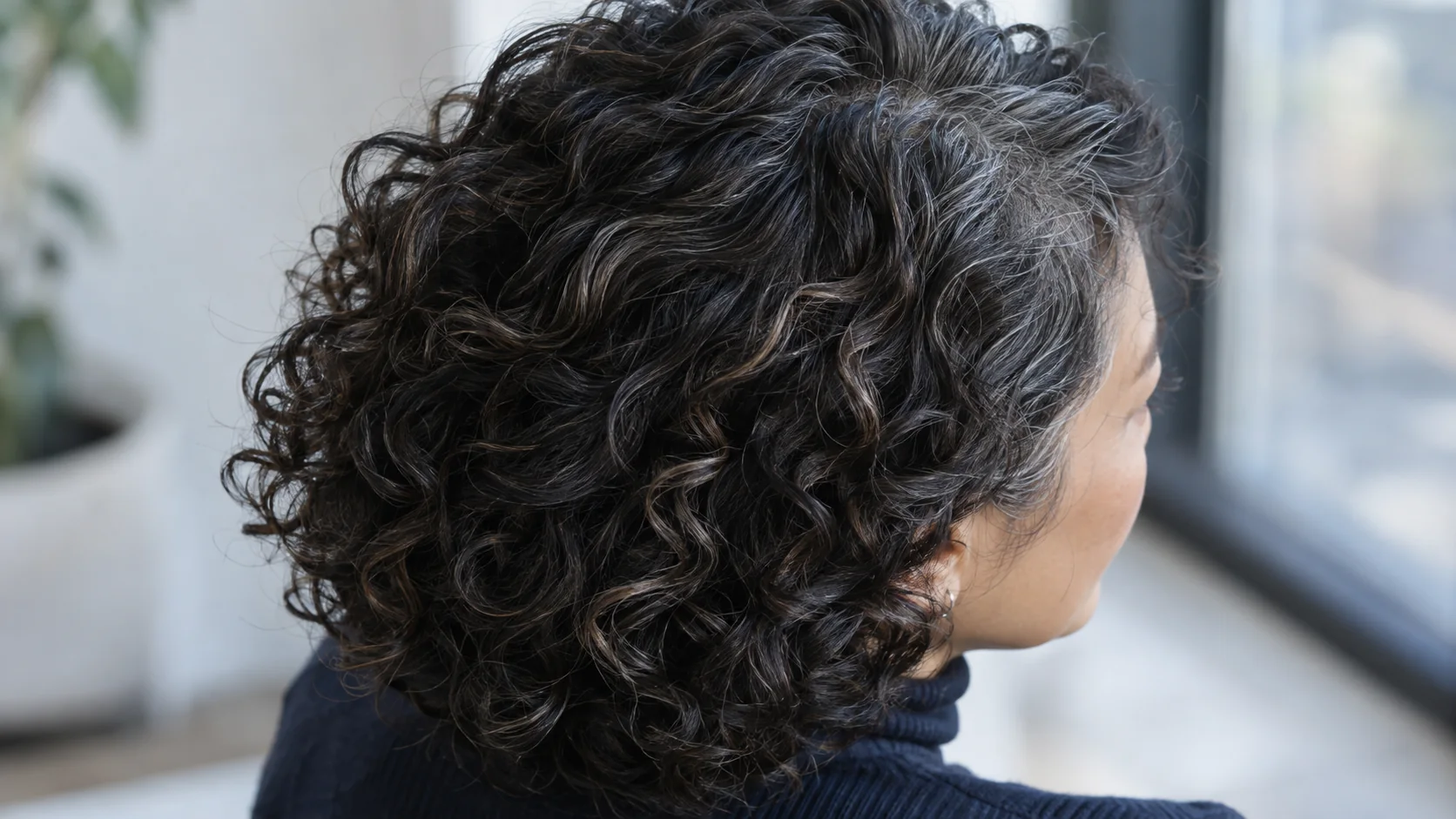
When gray is scattered across the part and crown, a colorist may use a few fine highlights to bridge the jump from silver to deep brown. On curls, placement matters more than covering every strand. The lighter pieces should remain visible on the outer curl clusters when the hair springs back, with plenty of dark depth between them.
Best for: scattered gray that looks stripey against a dark base, and someone willing to accept some selective lightening and toning. Wella describes strategic highlights around gray-prone areas rather than mandatory full coverage. Your stylist should decide how light the starting hair can safely go, especially if it was dyed dark before.
Know the limit: cool ribbons on very dark hair can turn warm as tone fades; they are not naturally silver hairs. Do not show a nearly white inspiration photo and assume one gentle session will get you there. The American Academy of Dermatology warns that substantial lightening can increase damage and dryness. Our guide to curls after bleaching explains what to watch for if you choose the lighter route.
4. Put dark lowlights back into gray-heavy curls
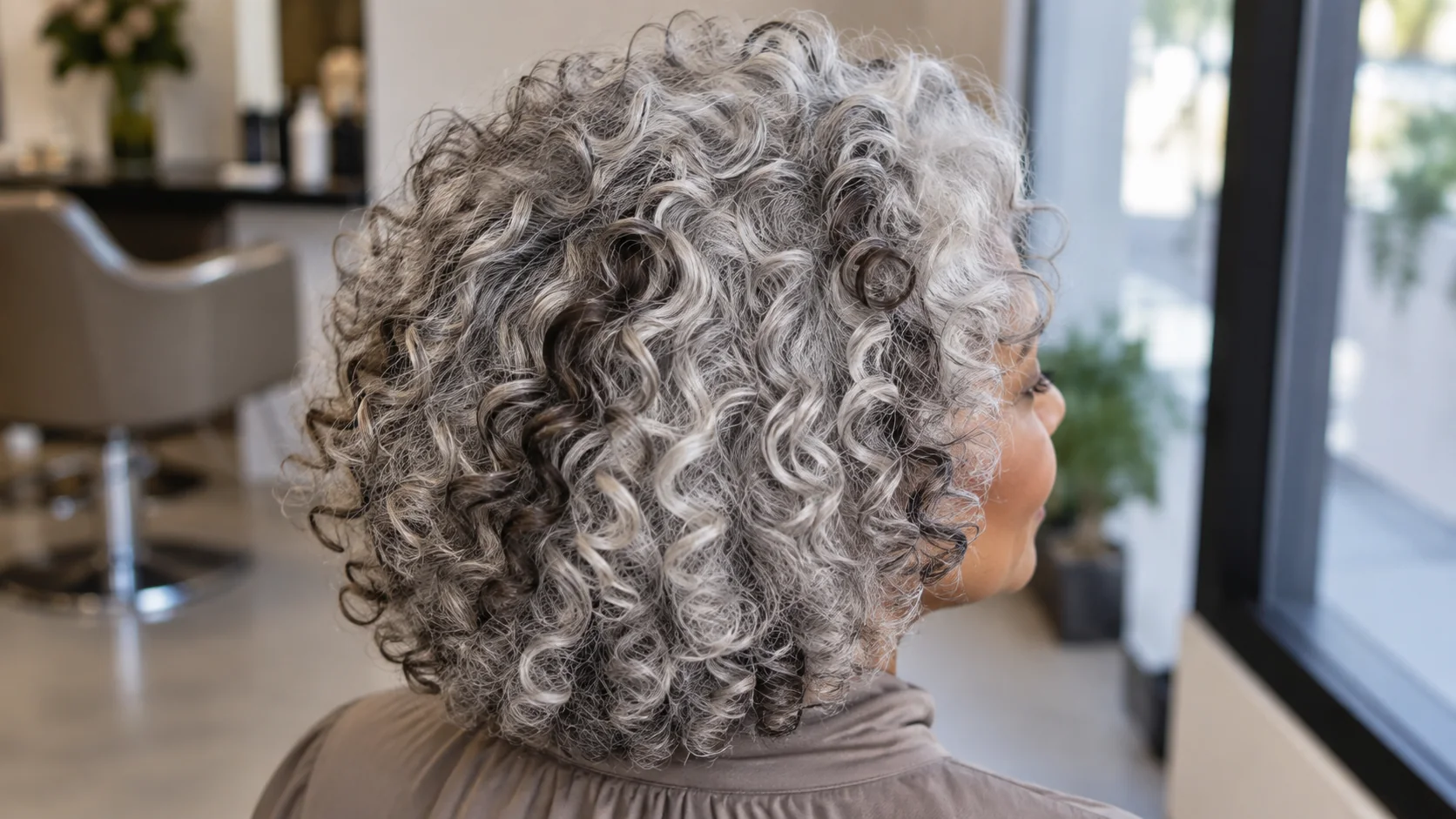
Once the top layer is mostly silver, adding more light pieces may be the opposite of what you want. A few brunette lowlights can return depth between the pale curls without turning the whole head dark. Wella describes lowlights as darker pieces woven through lighter or gray hair for dimension.
Best for: a gray-rich crown that feels washed out, with dark hair still underneath. Ask for lowlights that echo your remaining natural brown, not a solid dark cap. On curly hair, wide stripes can look separate when the clumps move.
Know the limit: this puts pigment onto silver strands, so those pieces can fade or need refreshing. If your goal is completely uncolored silver, leave this option alone.
Before booking, settle the old-dye question
A photograph of natural gray woven through dark curls is not a map for removing years of permanent dark dye. If you have silver roots and nearly black colored lengths, tell the colorist exactly what has been applied, even if the box was called “semi-permanent.” Ask whether your chosen look is possible in one visit, whether a strand test is sensible, what level of warmth might appear during lightening, and what the grow-out will look like after several washes.
Readers discussing gray blending in curly brunette routines are often asking for this distinction: fewer root touchups while still looking brunette, not a generic blonde transition. The consultation should answer that brief in plain words. If the only proposal is “we’ll make everything much lighter,” it is fair to pause and ask for another plan.
Bring one photo of the look you want and a photo of your curls in ordinary daylight. Say where you want the silver to stay visible, how dark you want the overall result, and whether protecting your curl pattern matters more than getting bright silver quickly. A good answer may be a staged plan, a small color service, or no color at all. That last option still counts as a decision.