Winter accessories can either frame curly hair beautifully or flatten it before you reach your destination. The difference is usually not the accessory itself. It is where the fabric touches the curls, how firmly it fits, and whether the hair is trapped underneath it.
Scarves and shawls are easiest on curls when they sit below the hair rather than rubbing against the ends. Headbands need enough stretch to feel comfortable without pressing down the roots. A winter hat benefits from a smooth lining, but it also needs room for the curl pattern. These small choices let warmth and style work together.
Wool Shawls Create Elegant Winter Looks Around Natural Curls
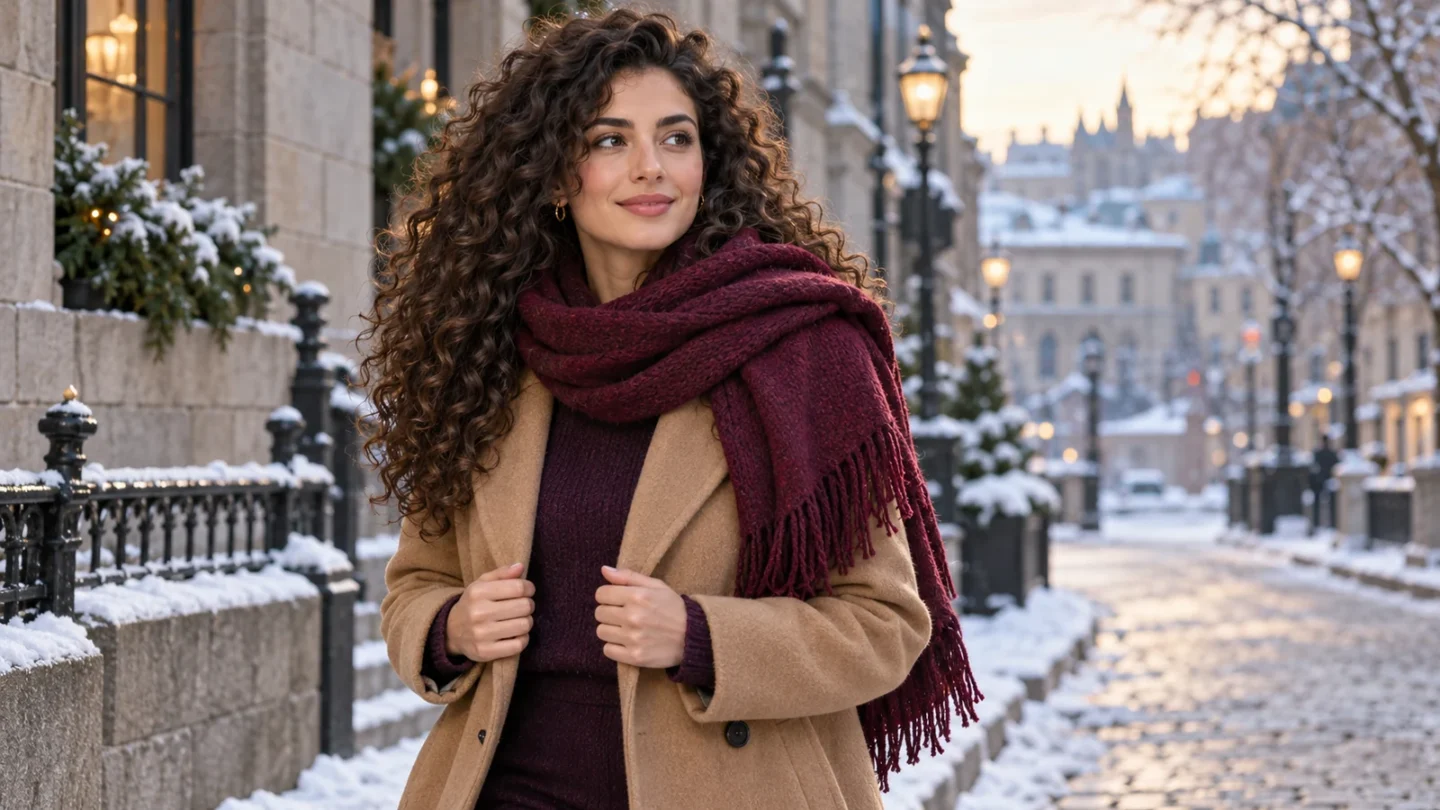
Wool shawls are an attractive alternative to a tightly wrapped winter scarf, especially when you want to keep your curls visible. Their generous size allows them to sit over the shoulders and upper back instead of being wound repeatedly around the hair.
Traditional Irish knitwear provides useful inspiration for this look. The wool shawl collection available through https://www.aran.com/ includes textured styles that add warmth and visual interest without requiring a bulky knot close to the curls.
For shoulder-length or long curls, place the hair over the back of the shawl or bring it over one shoulder before arranging the fabric. This prevents the ends from being caught beneath several layers. With a shorter curly cut, fold the shawl into a narrower shape and drape it around the coat collar so the accessory adds texture without competing with the hair.
Color can make the combination feel intentional. Burgundy, forest green and navy give dark curls contrast, while camel, soft grey and cream create a quieter frame. One substantial shawl is usually enough; adding a large hat and an oversized scarf at the same time can crowd the face and hide the curl shape.
Knitted Headbands Keep Curls Visible and Comfortable
A knitted headband is useful when the ears need warmth but the curls do not need full coverage. Wider bands suit voluminous hair because they look balanced and spread pressure across a larger area. The inside should feel soft, and the elastic should recover without gripping the hairline.
Position the band slightly behind the front curls instead of dragging it backward from the forehead. Then lift out any curls that were caught underneath. This keeps the front definition visible and avoids a compressed ridge across the crown.
A neutral headband works well with a patterned scarf or bright coat. If the rest of the outfit is simple, a ribbed or twisted band can become the focal point. Comfort is the best test: if the band leaves a deep mark or gives you a headache, it is too tight for an all-day style.
Satin-Lined Hats Help Preserve Curl Definition
Rough knit can rub against the cuticle as a hat moves, which encourages surface frizz and tangles. A satin-lined hat reduces that friction. It cannot, however, prevent compression if the beanie is too small or pulled firmly over the crown.

Look for enough room to slide two fingers between the hat and the top of the hair. A slightly slouchy shape is usually more curl-friendly than a fitted cap. Put it on only after the hair is completely dry, because damp curls can set in the flattened position. For more cold-weather protection ideas, see our practical guide to protecting curly hair in winter.
With long curls, loosely gather the lengths at the nape or place them inside the back of a roomy hat without twisting them tightly. Short curls can remain out around the front and sides while the hat sits slightly behind the hairline. If the roots still flatten, lift them gently with clean fingertips after removing the hat rather than brushing through the curl pattern.
Loose Scarf Styles Reduce Frizz and Tangling
The scarf itself is not always the problem. Frizz often starts when curls are trapped between a scarf and a textured coat collar, then rubbed with every head movement. A loose drape keeps the scarf warm while reducing repeated contact.
Before wrapping the scarf, move long or shoulder-length curls above it or bring the hair over one shoulder. Keep the knot low and loose enough that the ends are not pulled into it. If a scarf will touch the hair throughout the day, choose a smoother weave for that contact point and save rougher, heavily textured knits for styles worn below the curls.
When you arrive indoors, remove the scarf slowly rather than pulling it upward over the hair. That small habit prevents individual curls from catching in the weave and reduces the need to reshape the whole style.
Half-Up Hairstyles Work Beautifully With Winter Accessories
A half-up style keeps the front curls controlled while preserving movement through the lengths. It pairs particularly well with scarves and shawls because fewer strands fall forward and become trapped inside the fabric.
Gather only the upper section and secure it with a soft tie or a smooth-edged clip. Keep the tension light so the crown does not look stretched when the accessory comes out. A slightly elevated half-up shape can balance a large scarf, while a lower placement looks polished with a tailored coat or knitted headband.
This style is also practical when moving between cold streets and heated rooms. It still looks complete after the hat or scarf is removed, and it does not depend on an accessory staying in exactly the same position all day.
Refresh Flattened Curls Without Rebuilding the Whole Style
After removing a hat, pause before adding product. Shake the roots lightly with your fingertips and let the hair settle for a minute. Some curls rebound once the pressure is gone.
If only a few pieces look stretched, dampen your hands, smooth those curls and coil them briefly around a finger. For widespread flattening, use a light mist of water, scrunch once or twice, and allow the hair to dry without repeated touching. Our guide to refreshing curls without heavy product explains when a spot refresh is enough and when more water is useful.
Coordinate Accessories With Your Curl Pattern and Outfit
Successful winter styling starts with proportion. Large scarves and shawls can balance dense, voluminous curls, while narrow headbands create a cleaner contrast. Looser curl patterns often pair naturally with draped fabrics; tighter curls can hold their shape beside more structured hats and coats.
Choose one main accessory and let the others support it. A rich wool shawl may need only simple earrings and an understated coat. A bright headband works best when the scarf and outerwear are quieter. Most importantly, the accessory should stay secure without pulling, catching or flattening the hair.
Curly hair does not need to disappear under winter clothing. A loose shawl, comfortable headband, roomy satin-lined hat or low scarf placement can protect warmth and preserve the character of the curls. The strongest look is the one that still feels comfortable and recognizable when every accessory comes off.