A French crop on curly hair has a short, textured top that points forward, a fringe that falls onto the forehead, and shorter sides and back. The fringe is what makes the shape recognizable. On waves it might look like a broken line. On tighter curls it may finish in a row of small bends well above the brows.
Decide where you want that fringe to sit when it’s dry. Then choose how much hair to keep above the ears. Those two decisions tell your barber more than the words “French crop” on their own.
What makes it a French crop?
A straight fringe shows the cut line. A curly fringe shows where the bends land, which may be higher than you’d expect from the wet length. CADMEN Barber Academy’s guide explains why curls may need extra length to finish in the same place as straight hair. The sides can be cut with scissors, tapered at the edges, or faded.
The names overlap in barbershops. A classic Caesar usually has a flatter fringe and a more uniform length across the top. A textured crop describes the finish on top, which may or may not be pushed forward. A curly fringe can hang over the forehead on many cuts, including ones with longer sides. If the photo shows curls swept up with a clear forehead, look for a different reference for the front.
1. Classic French crop with scissor-cut sides
On loose waves, a short fringe with a softly broken edge gives the crop its shape without a hard line across the forehead. The sides are shorter than the top, but the two blend together. From the side, you still see hair above and behind the ear.

Ask for connected sides and enough top length for a wave to bend forward. This works well if you want the outline to soften as it grows. If your waves go nearly straight when cut short, bring a picture with a little more length at the front and let the barber take it down gradually.
2. Defined curls with a low taper
A low taper tidies the sideburns and neckline while leaving the hair above the ear largely in place. That extra side density matters when the top forms larger curls. It keeps the shape connected from the temple to the crown.

Point to where you want the shorter area to stop. Try “clean up the sideburn and neck, but leave the hair over the ear.” On top, ask for a few intact curl groups to fall onto the upper forehead. The taper may need a tidy before the top needs another cut. See our low taper examples for curly hair if you want to compare how much side weight to keep.
3. Short textured crop with a low fade
Here the blend runs around the side and back, starting low near the ear. That continuous band is what separates the look from a temple taper. A short, forward fringe keeps the front neat, while the stronger contrast puts more attention on the texture up top.
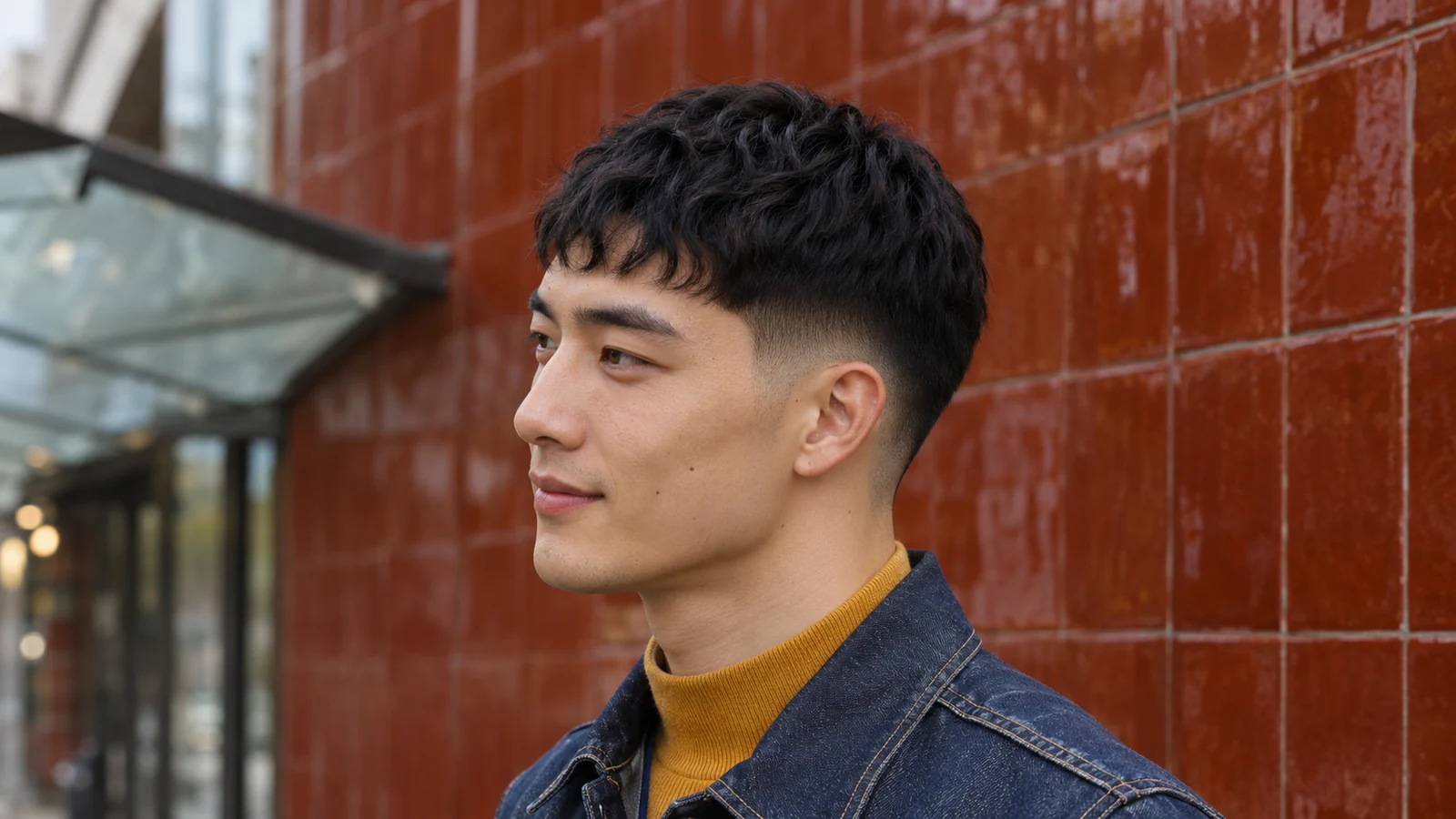
Ask how close the shortest area will be and where the blend will end. A low fade can start at stubble if you’d rather avoid bare skin. If the corners of your fringe already look sparse, leave them a little longer and check the front dry before taking more off. Plan for more frequent side trims if you like the fresh contrast.
4. Fuller crop with a soft, longer fringe
Leave enough length for several curls to fall toward the brows. The front should have movement, with some curls landing higher than others. Keep the sides shorter and connected, and make room through the crown so the top follows the shape of your head instead of ballooning above the ears.

Dense hair can carry a fuller front without looking thin at the ends. If your fringe tends to part on one side, let it keep a small break rather than trying to flatten it into a straight line. Ask your barber to shape the bulk farther back first and leave the front intact until you see how it dries. If you want the sides to stay fuller too, compare the other cuts in our men’s curly hairstyle guide.
5. Tight coils with a short forward edge
On tight coils, the crop can sit high on the forehead and still have a recognizable fringe. Look for a compact shelf of coils pointing forward, with a few individual tips visible past the hairline. Shorter, softly shaped sides keep the silhouette tidy without a band of exposed scalp.

Show your barber how the coils sit on an ordinary wash day. Ask to keep enough length for the front to form its little bends. Check the crown separately: shortening it to match the fringe can expose a whorl or make a patch stand up. A small adjustment to the outer shape often makes more sense than taking more off the top.
What to tell your barber about the dry fringe
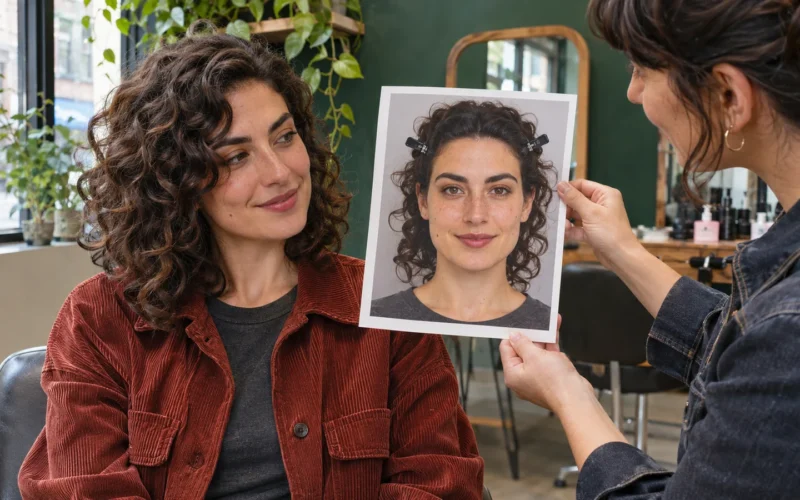
Bring a front photo for the fringe and a side photo for the blend. Point to a spot on your own forehead. For example: “I want the front to finish about a finger above my brows when it’s dry. Keep the curl shape, leave some weight above the ears, and clean up the sideburns and neck. Can we check the front dry before taking it shorter?”
Mention a cowlick or a curl that always springs higher than its neighbors. Ask the barber to look at how the front and crown sit before wetting the hair. They can choose how to do the main cut, then check how the fringe lands without stretching it. If it dries shorter than you expected, the next cut needs more length at the front, even if the sides still look right.
Styling it between cuts
Start with damp hair and guide the front forward with your fingers. Let the curls settle into the shape they naturally make. If they spread out as they dry, try a little light hold and leave the fringe alone until it sets. A flat spot the next morning may only need a little water and a nudge forward.
Use the part of the cut that’s bothering you to decide when to go back. If the fringe falls into your eyes, ask for a fringe tidy. If the sides puff out first, reshape the sides. A fade losing its contrast doesn’t necessarily mean the top needs to be cut shorter.
The images illustrate haircut shapes for reference.