
You notice more scalp through your curls, a part that keeps widening, or far more hair than usual in the shower. At 65 or older, some loss of density can happen with age, but a meaningful change should not be dismissed as “just aging.”
Book a medical evaluation when hair loss is new, worsening, patchy, painful or accompanied by scalp changes. A dermatologist can tell the difference between common pattern thinning and problems linked to inflammation, infection, medication, illness or a nutritional or hormonal issue. Medicare may help with a medically necessary evaluation, but that is not the same as blanket coverage for every hair-loss treatment.
Medical note: This guide helps you prepare for care. It cannot diagnose the cause of hair loss or predict what your plan will cover.
When hair loss deserves a dermatologist visit
Gradual thinning is common, especially after menopause and in men as they age. That does not make every change harmless or untreatable. The useful question is not “Am I old enough for this?” It is “Has my normal changed?”
| What you notice | Why it matters | What to do |
|---|---|---|
| A slowly widening part, receding hairline or smaller ponytail | May fit pattern hair loss, but an examination can confirm the pattern and rule out another cause | Schedule a routine appointment and bring earlier photographs if available |
| Sudden shedding, clumps in the brush or a bald patch | A rapid change needs a cause-focused assessment | Arrange an appointment promptly rather than starting several products |
| Itching, burning, tenderness, redness, scale, sores or pus | Inflammation or infection may be affecting the scalp and follicles | Seek medical care and avoid scratching or applying harsh remedies |
| Broken hairs after tight styles, bleach or heat | This may be breakage or traction rather than shedding from the root | Stop the likely stressor; get help if loss continues or the scalp is painful |
The American Academy of Dermatology lists widening parts, receding hairlines, thinner ponytails and gradual bald spots among common signs. Sudden patches, clumps of hair, intense itching, tenderness, scaling or sores give you more reason to be assessed.
If the main change is dryness, flat roots or a looser curl pattern without increased shedding, start with our guide to caring for curly hair after 50. Styling can make fine hair look fuller, but it cannot diagnose a changing follicle.
What can a dermatologist do for hair loss?
Seeing a dermatologist for hair loss is about more than getting a prescription. The first job is to identify what kind of loss is happening and whether more than one cause may be involved.
Expect questions about when the change began, whether it was gradual or sudden, family history, recent illness or surgery, weight change, diet, stress and every medicine or supplement you take. Do not leave out over-the-counter products. “It’s only a vitamin” has surprised more than one medication list.
The dermatologist may examine your scalp, hair, nails and other areas with hair loss, then gently test how easily strands shed or break. According to the AAD’s explanation of hair-loss diagnosis, blood tests or a small scalp biopsy may be used when a disease, deficiency, hormone imbalance or infection is suspected. Not everyone needs every test.
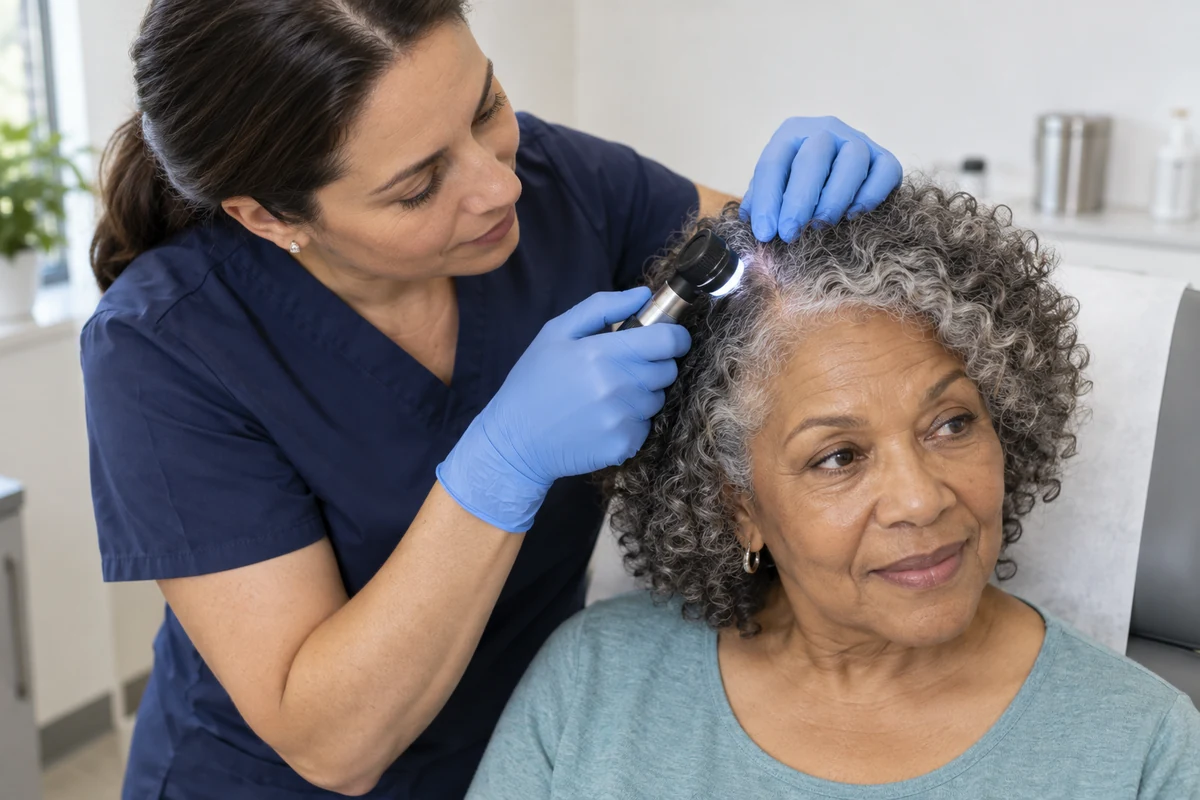
Treatment depends on the diagnosis. The right answer might be medication, treating a scalp condition, correcting a confirmed deficiency, changing a damaging practice or simply monitoring the pattern. This is why buying a supplement before the examination can waste money and muddy the picture. MedlinePlus notes that hair loss can also be associated with thyroid disease, diabetes, lupus, certain medicines, stress and poor nutrition.
Make the appointment more useful
You do not need a perfect hair diary. A few specific details are more valuable than a bag containing every product you have owned since 2018.
- Photograph the same areas. Take clear pictures of the center part, temples, hairline and crown in similar lighting. Date them.
- Write down the timeline. Note when you first saw the change and whether shedding is steady, episodic or accelerating.
- List medicines and supplements. Include recent additions, dose changes and anything you stopped.
- Record relevant health changes. Mention illness, surgery, major stress, appetite or weight change, new fatigue and scalp symptoms.
- Bring your plan information. Ask whether the dermatologist is in network, whether a referral is required and what tests may need authorization.

Before leaving the appointment, ask what diagnosis is being considered, whether tests are necessary, when results should arrive and what change should trigger an earlier follow-up. If a treatment is suggested, ask what result is realistic, how long it may take and what side effects or costs matter for you.
Does Medicare cover a dermatologist for hair loss?
Medicare does not provide a general promise to cover “hair-loss treatment.” The service and medical reason matter.
Medicare.gov states that Part B covers medically necessary doctor services. A dermatologist visit to evaluate symptoms or a suspected medical condition may qualify, but cosmetic services and products may not. Your deductible, coinsurance, provider participation and any additional insurance can affect the bill. Ask the office to verify benefits for the specific visit and proposed test rather than asking only whether it “takes Medicare.”
| If you have | Check before booking |
|---|---|
| Original Medicare | Confirm that the dermatologist accepts Medicare and whether the office accepts assignment; ask about likely costs for the visit and tests |
| Medicare Advantage HMO | Check the network, whether your primary care clinician must refer you and whether a proposed service needs prior authorization |
| Medicare Advantage PPO | Check network status and out-of-network costs; referral rules may differ from an HMO |
Medicare explains that Original Medicare and Medicare Advantage can have different provider, referral and prior-authorization rules. Most Medicare Advantage HMOs require a specialist referral, while plan details still control. A five-minute call before the appointment is less exciting than a surprise bill, which is exactly why it is worth making.
When referrals, authorization or bills block the next step
Start with the dermatologist’s office and the number on your plan card. Ask for the exact missing item, the date it was requested and who is expected to act. Keep names, call reference numbers and copies of notices. “Someone is working on it” is not a status update.
- Confirm that the dermatologist and testing location are in network.
- Ask your primary care office whether it sent the referral and where it was sent.
- Ask the specialist whether authorization is needed for the visit, test or procedure.
- If coverage is denied, request the written decision and appeal instructions.
- Save the clinical notes or supporting information your doctor provides.
Medicare says you can appeal when Medicare or your plan refuses to cover or pay for a service you believe should be covered. If the problem involves several offices, a denial and a confusing bill at the same time, this comparison of patient advocate services for Medicare Advantage plans explains government, hospital, nonprofit and ongoing-navigation options. Choose help based on the problem, not the loudest sales promise.
What a patient advocate can and cannot do
A patient advocate does not diagnose hair loss or choose treatment for you. The useful role is coordination: finding an appropriate in-network provider, tracking a referral, helping organize questions, calling about an authorization, reviewing a confusing bill or helping you follow an appeal process.

You can also connect with a patient advocate when the barrier is no longer understanding the hair problem but getting the appropriate care arranged. Before sharing health information, confirm the service’s privacy practices, cost or coverage, scope and how it communicates with your doctors and plan.
Your next three steps
Take photographs today, write down when the loss began and make a complete medication and supplement list. Then check your plan’s specialist rules and book the appropriate clinician.
Age can change density, texture and growth. It should not end the investigation when the change is sudden, symptomatic or clearly progressing. The goal is not to chase every strand. It is to find out whether your pattern needs treatment, monitoring or a different kind of help.