
You can wear a curly pixie without forcing your curls into someone else’s haircut. The risky part is treating “pixie” as one shape. A long top with soft sides behaves very differently from a tight taper or undercut, even when all three photos use the same label.
If you are excited but afraid of losing too much length, start with a long curly pixie. Keep the front and crown long enough for complete curls to form, leave some softness around the ears, and shorten only after you have seen the first shape dry. It is the easiest version to adjust and usually the least punishing to grow out.
Before saving more inspiration, compare these five structures by the parts that actually change the result: top length, side length, fringe direction and the contrast at the nape.
1. Long curly pixie when you want a safer first chop

A long curly pixie keeps visible curl through the top, crown and front while the sides sit closer without looking clipped tight. It is the best starting point when your curls need length to make a full turn, you like to tuck hair near the ears, or you want more than one styling option.
The tradeoff is that “long” can drift into a small rounded bob if the perimeter has no structure. Ask for a pixie silhouette with a deliberate nape, soft side length and a top that stays clearly longer. Show your stylist where you want the shortest front curl to land after it dries.
Say this: “I want a long curly pixie, not a bob. Keep complete curls through the top and front, leave softness around my ears, and show me the dry length before taking the fringe shorter.”
2. Side-swept curly pixie when the front needs movement
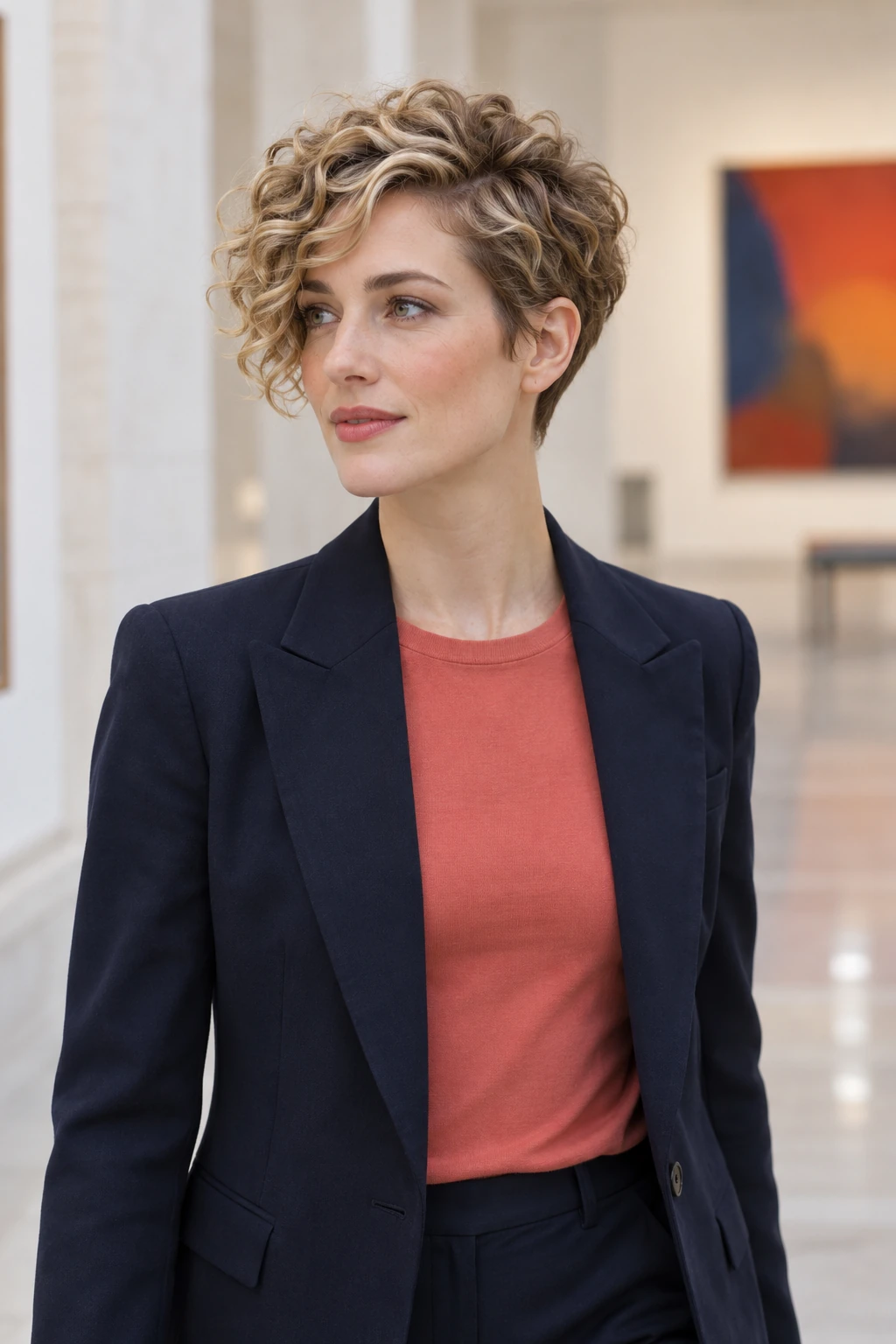
This shape keeps enough length across the front to follow a natural part or fall diagonally over the forehead. It can soften a very exposed hairline and gives looser curls somewhere to travel instead of springing straight upward.
Look at your growth pattern before choosing the sweep. A strong cowlick may make the reference photo impossible in the opposite direction, and cutting extra layers will not automatically change that. Style your hair with its usual part for the consultation so the stylist can see where the front naturally separates.
Say this: “I want the front to sweep in its natural direction. Keep the leading curl long enough to land near my brow or temple when dry, with less weight on the other side.”
3. Rounded curly pixie when you want curl around the whole head

A rounded pixie keeps visible curl at the sides and crown rather than making the top do all the work. It suits medium to high density when you want a soft, balanced outline and do not want the ears or temples fully exposed.
The danger is a shape that expands at the widest point and goes flat on top. The solution is not automatic thinning. The stylist needs to place the outline, preserve enough support under the curls and remove bulk only where it disrupts the silhouette. If your strands are fine or the perimeter already looks sparse, compare this choice with our fullness-preserving haircuts for fine curls before committing.
Say this: “I want a rounded outline with curl still visible at the temples. Keep the perimeter supported and remove bulk only where it makes the shape too wide.”
4. Tapered curly pixie for a clean nape without an undercut
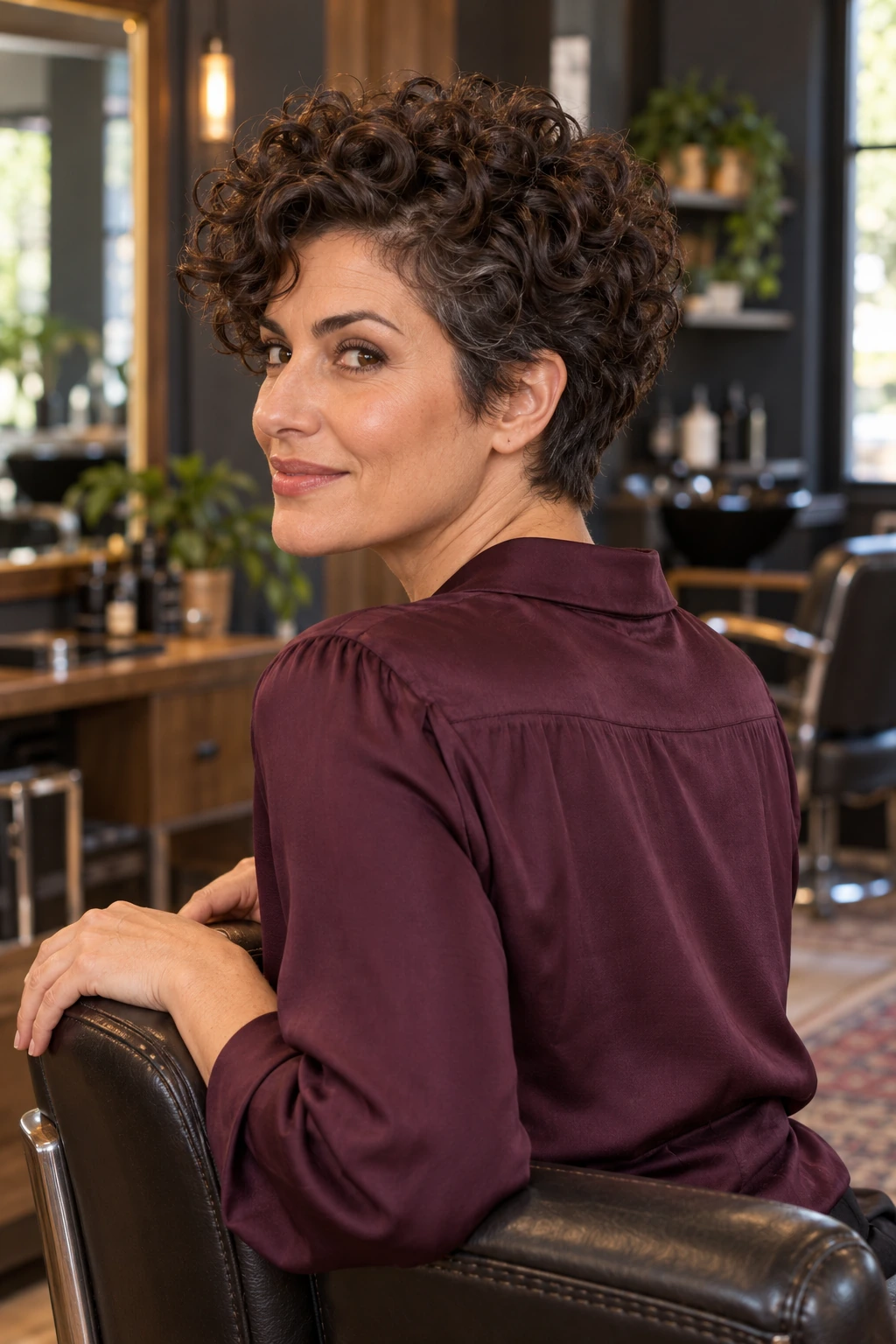
A tapered pixie becomes gradually shorter toward the ears and nape while the top stays fuller. The transition is blended, so it feels cleaner than a rounded pixie but softer than a disconnected undercut. Tighter curls and coils can hold a sculpted top especially well, but curl type alone does not decide the cut.
The closer the perimeter, the sooner growth changes the outline. Ask what the shape will look like after several weeks and whether a quick nape cleanup is enough between full cuts. A taper can be easy each morning while still demanding more frequent salon attention.
Say this: “Taper the sides and nape gradually, but do not expose the scalp or disconnect them from the top. I want a soft transition that can grow without a hard ledge.”
5. Undercut curly pixie when contrast matters more than easy grow-out

An undercut removes the hair underneath one or more sections while leaving a clearly longer curly top. It gives dense hair a dramatic silhouette and can reduce bulk around the sides. It also creates the biggest commitment in this list.
As the shaved or closely clipped area grows, the short layer can push against the longer curls or become visible before it is long enough to blend. Choose this because you like the contrast and are comfortable maintaining it, not because someone promises it will make thick hair effortless.
Say this: “Show me exactly where the undercut will begin and how much top hair will cover it. I want to know how we would maintain it and how we would blend it if I grow it out.”
The same reference photo can become a different cut on your curls
Match the reference to more than hair color. Look for a similar curl size, density, hairline and amount of shrinkage. A loose wave may relax when it becomes shorter because it loses the length needed to bend. A tight curl may spring higher and reveal much more forehead or temple than the photo suggests.
Cutting method matters, but there is no single method that every curl specialist must use. Hairstylists interviewed by Allure describe dry cutting as useful for seeing the natural pattern, while some established curl techniques work on wet hair. The practical question is whether your stylist can predict and check the dry result. Ask when the final length and balance will be assessed.
If you want to reduce the surprise before the appointment, use our guide to previewing a curly haircut realistically. A preview is a conversation aid, not a promise of an identical result.
Use a zone-by-zone salon brief
“A curly pixie” leaves too many decisions open. Bring front, side and back references, then agree on these points:
- Front: where the shortest curl should land when completely dry.
- Top: whether you want height, a rounded shape or a directional sweep.
- Sides: soft around the ears, gradually tapered or deliberately disconnected.
- Nape: natural, scissor-tapered or clipper-clean, including the shortest acceptable length.
- Density: where bulk may be removed and where support must remain.
- Check: when you will see the haircut dry before the final refinement.
Also tell the stylist how you normally wear your curls. Arriving with an unusually stretched style can hide shrinkage and growth patterns. If the salon gives preparation instructions, follow those instead of guessing.
Plan for the second month, not only the first photo
A curly pixie often uses less product and dries faster than long hair, but that does not always make it lower maintenance. A close nape loses its crisp line quickly. A fringe may need a morning reset. An undercut creates a separate grow-out job underneath the top.
Ask whether you can maintain the shape with small perimeter cleanups rather than repeatedly shortening the crown. If you may grow it out, the long pixie or soft taper gives the stylist more length to rebalance. Allure’s expert-backed pixie grow-out advice also warns that reshaping appointments should control bulk without removing the length you are trying to gain.
For styling, begin smaller than you did with long curls. Short hair can be flattened quickly by a rich leave-in plus cream plus gel. Choose one light styler, apply it on wet hair, and add hold only where the shape collapses. Our curl cream versus leave-in comparison can help if your current combination feels too heavy.
The right curly pixie is the one you can describe from every angle and still want after hearing the maintenance plan. If you cannot yet choose between two shapes, keep the top and front longer at the first appointment. You can always shorten them once you have seen how your own curls behave.