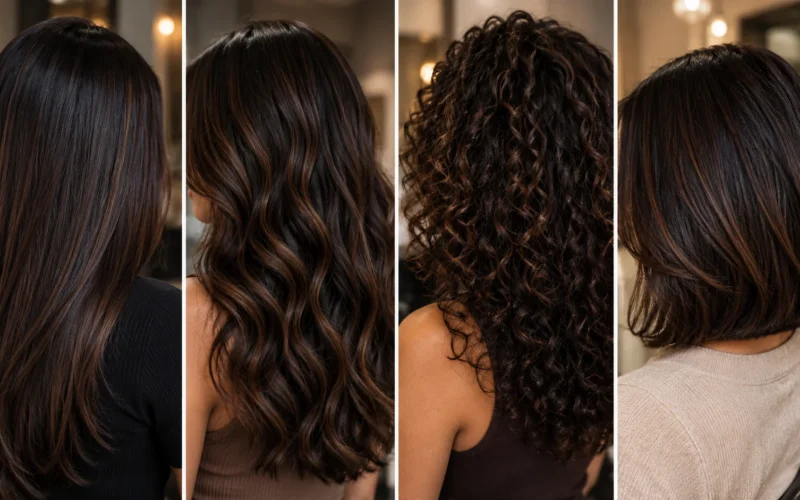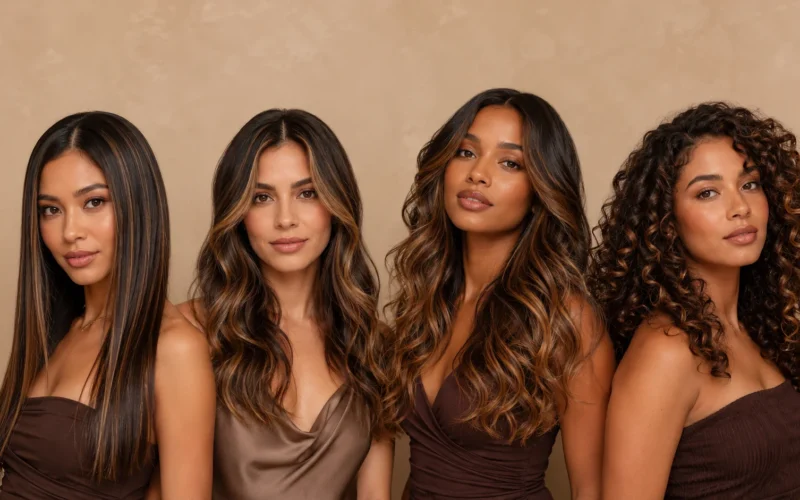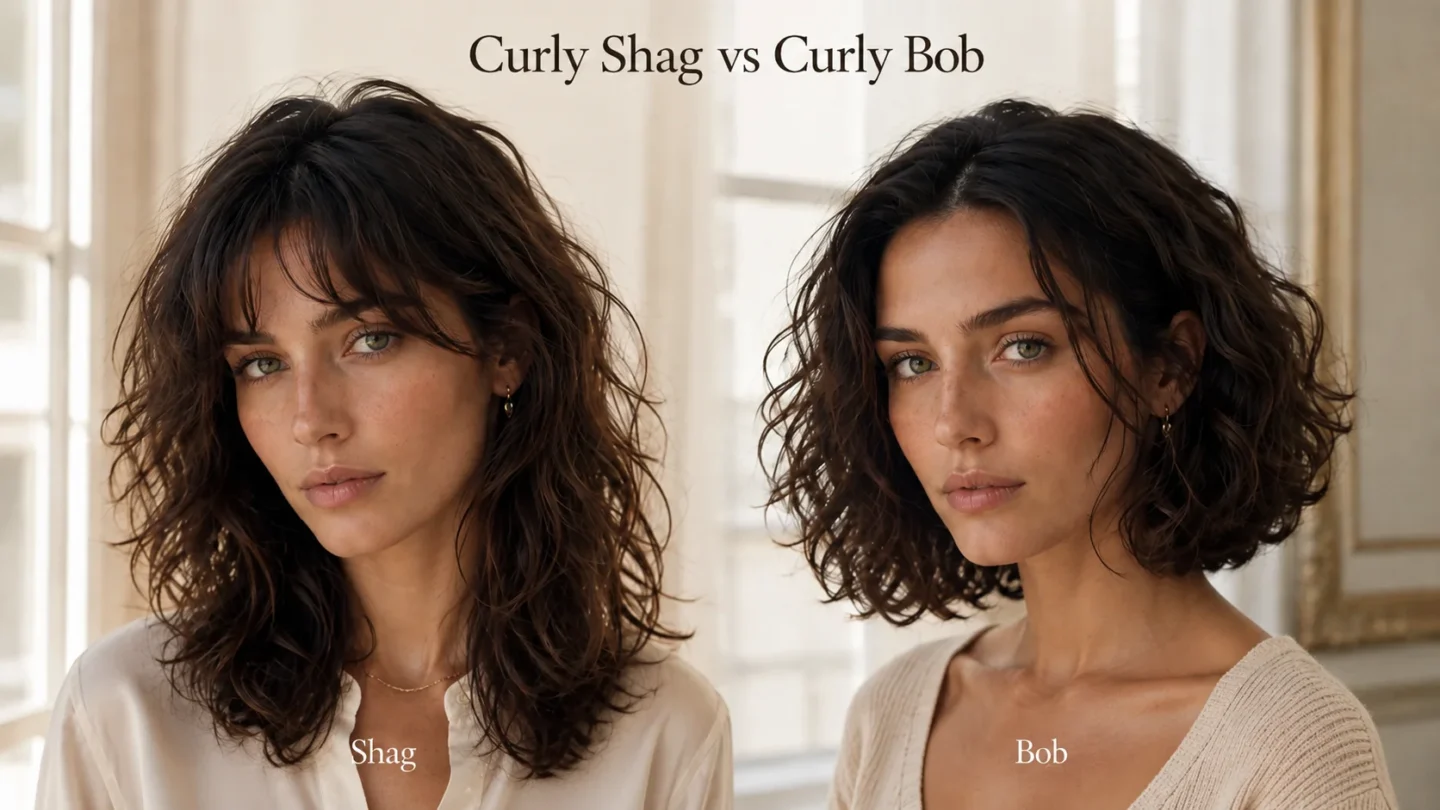
A curly shag haircut creates movement, separation and volume around the crown. A curly bob keeps a stronger outline and usually makes the ends look fuller. If you want layers without losing much length, the butterfly cut offers a softer third option.
Both the airy modern shag and softly sculpted bob appear in Allure’s 2026 haircut trend report. The better choice, however, depends on density, shrinkage and how much styling you’ll actually do after leaving the salon.
| Haircut | Best starting point for | Finished shape | Main concern |
|---|---|---|---|
| Curly shag | Medium to thick waves and curls | Layered, airy and fuller at the crown | Too many layers can thin the ends |
| Textured curly bob | Fine to thick hair wanting definition | Rounded, angled or softly blunt | Shrinkage can make it shorter than planned |
| Butterfly cut | Medium or long waves and curls | Face-framing volume with longer lengths | The shape may look subtle without styling |
Choosing the best hair salon for curls and waves means finding a stylist who asks how your hair dries, shrinks and behaves between appointments, not only which trend you saved.
Modern Curly Shag Haircut
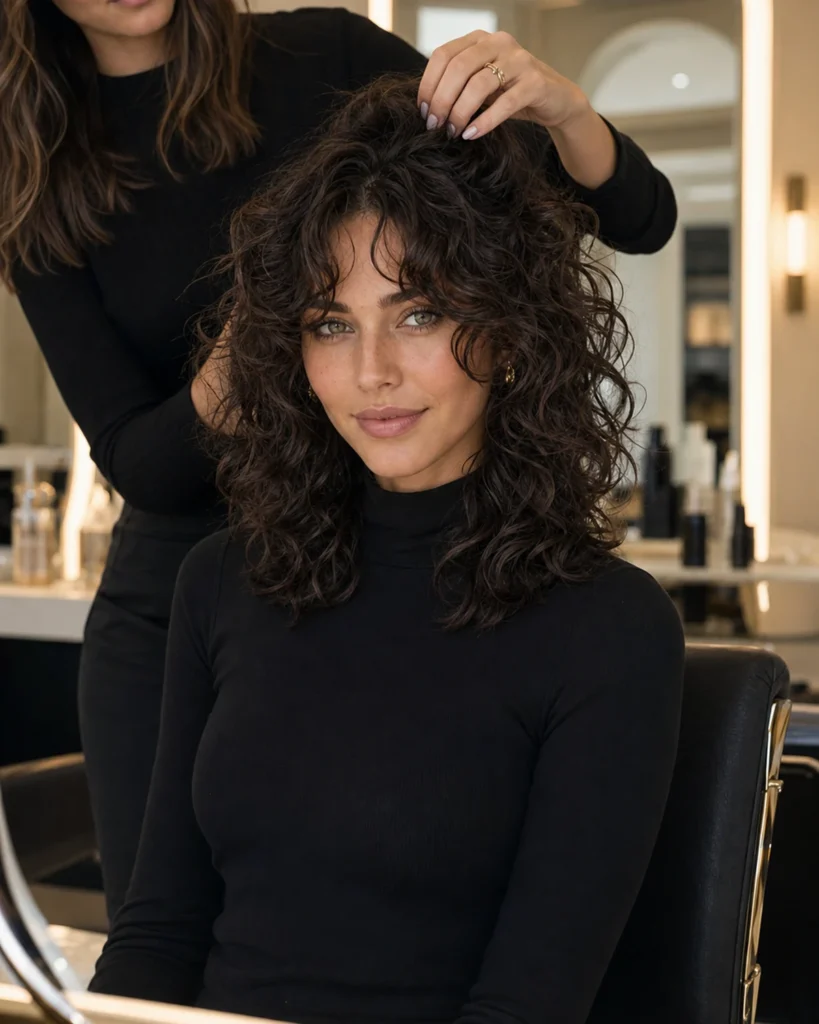
A modern shag uses shorter crown layers, face-framing pieces and lighter lengths. It can look relaxed without becoming an accidental mullet. That final detail deserves a proper conversation with your stylist.
The shag works particularly well when you want:
- More height around the crown
- Separation between curls
- Less weight through thick hair
- A soft fringe or shorter face-framing pieces
- A shape that doesn’t need perfect symmetry
Loose waves usually need longer, more blended layers. Cutting too many short pieces into fine 2A or 2B hair can leave the ends looking thin rather than textured.
Springy curls can support more visible layering. The shortest pieces still need to be planned around shrinkage, especially near the forehead and temples.
Dense curls often benefit from the weight reduction a shag provides, but that doesn’t mean every section should be thinned equally. Removing too much hair from the bottom can create a heavy crown sitting above sparse ends.
A shag is also a sensible choice for someone who prefers diffusing or air-drying. The shape already expects movement, so every curl doesn’t need to report for duty in exactly the right place.
Textured Curly Bob
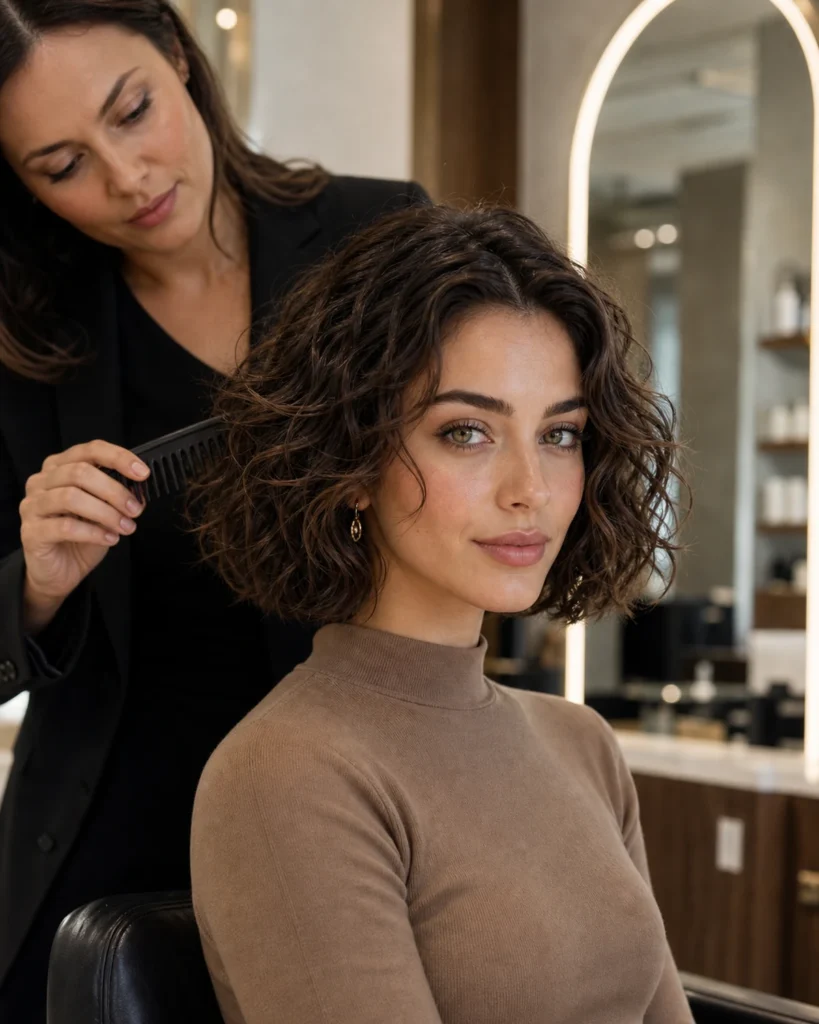
Curly bob haircuts generally finish somewhere between the jaw and collarbone. Within that range, the bob can be rounded, angled, layered or softly blunt.
The textured bob keeps more weight around the perimeter than a shag. Selective layering prevents the sides from becoming bulky while preserving enough density for the ends to look full.
Consider a bob if you want:
- A clear, intentional silhouette
- Shorter hair without heavy crown layers
- Fuller-looking ends
- A rounded or elongated shape
- Less separation than a shag
Fine waves often suit a bob with a stronger perimeter and restrained internal layering. The weight helps the ends look denser while a little texture prevents the cut from appearing stiff.
Medium and thick curls may need more shaping through the sides. A rounded bob encourages width and bounce, while a longer or angled bob keeps the silhouette more elongated.
Shrinkage is the main caution. A bob measured at chin length on wet or stretched hair may finish considerably higher when dry. Harper’s Bazaar’s curly bob guide also shows why the cut should be adapted to texture and desired shape rather than copied exactly from one photograph.
If you’re unsure about going short, begin with a collarbone-length lob. The stylist can assess the dry result before taking it higher. Scissors are very good at shortening hair. Their customer service becomes less impressive when you ask for the length back.
Butterfly Cut for Curls and Waves
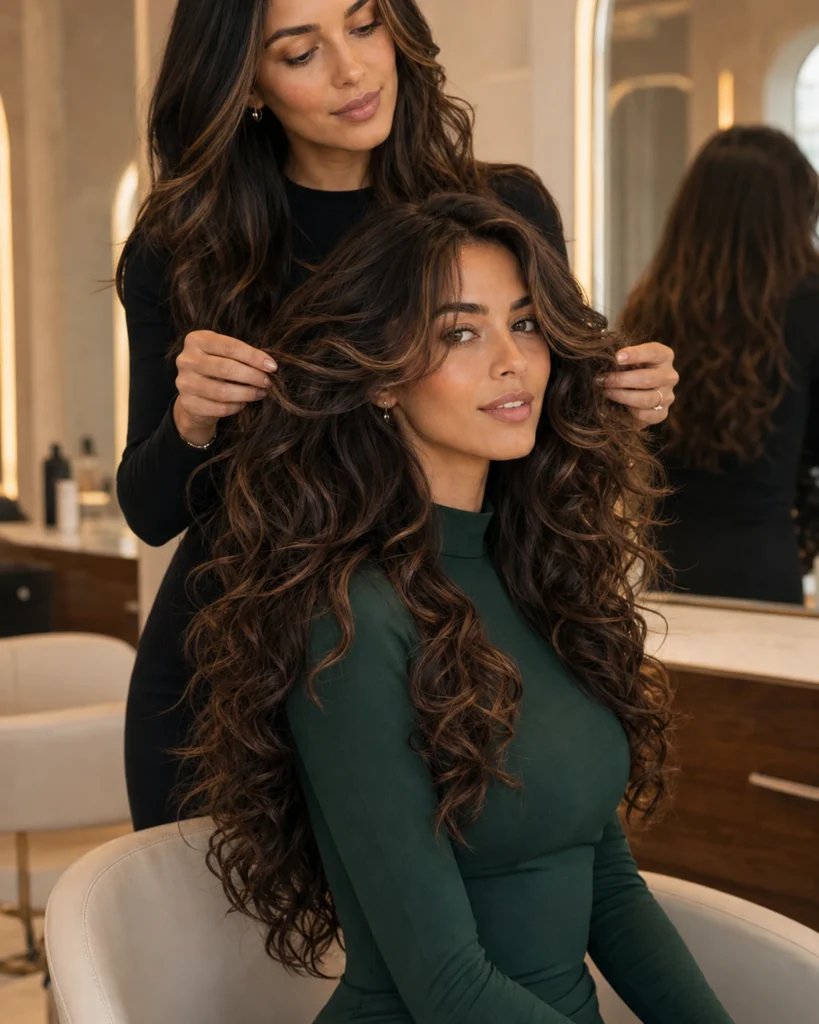
A butterfly cut combines shorter face-framing layers with longer layers through the rest of the hair. It creates movement around the face while preserving most of the overall length.
This cut suits medium or long hair that feels heavy near the front. It can also be easier to wear both curly and blown out than a heavily layered shag.
The butterfly cut is worth considering if you want:
- Face-framing volume
- Long layers with visible movement
- Most of your existing length preserved
- A softer grow-out
- A noticeable change without committing to a bob
There is one realistic limitation. A butterfly haircut left unstyled may resemble ordinary long layers. The dramatic curved shape shown in salon photographs often becomes more visible after a blowout or deliberate curl styling.
Glamour’s coverage of the butterfly cut for curly hair shows that the style can work with natural texture, but its face-framing pieces still need to account for shrinkage and uneven curl patterns.
Adapt the Cut to Density and Face Shape
Curl type helps describe the pattern. Density tells you how much hair the stylist has available to build the shape.
Face shape helps refine where the length and volume should sit. This guide to the best curly haircuts for every face shape provides useful examples without treating face shape as the only deciding factor.
- Fine or low-density hair: Start with a textured bob, lob or lightly layered butterfly cut. A dramatic shag may remove too much fullness.
- Medium-density waves and curls: All three cuts can work. Choose according to where you want the volume.
- Thick or high-density curls: A shag can release weight, while a carefully layered bob creates a more controlled outline.
- Strong shrinkage: Leave additional length in the bob, fringe or shortest shag layers until the dry result is checked.
- Mixed curl patterns: Different areas may need different layer lengths. Identical cutting instructions won’t always create a balanced finish.
A bob can be lengthened, a shag can carry more volume at the crown, and butterfly layers can begin above or below the cheekbones. Those adjustments usually matter more than following a rigid face-shape rule.
What to Discuss With Your Stylist
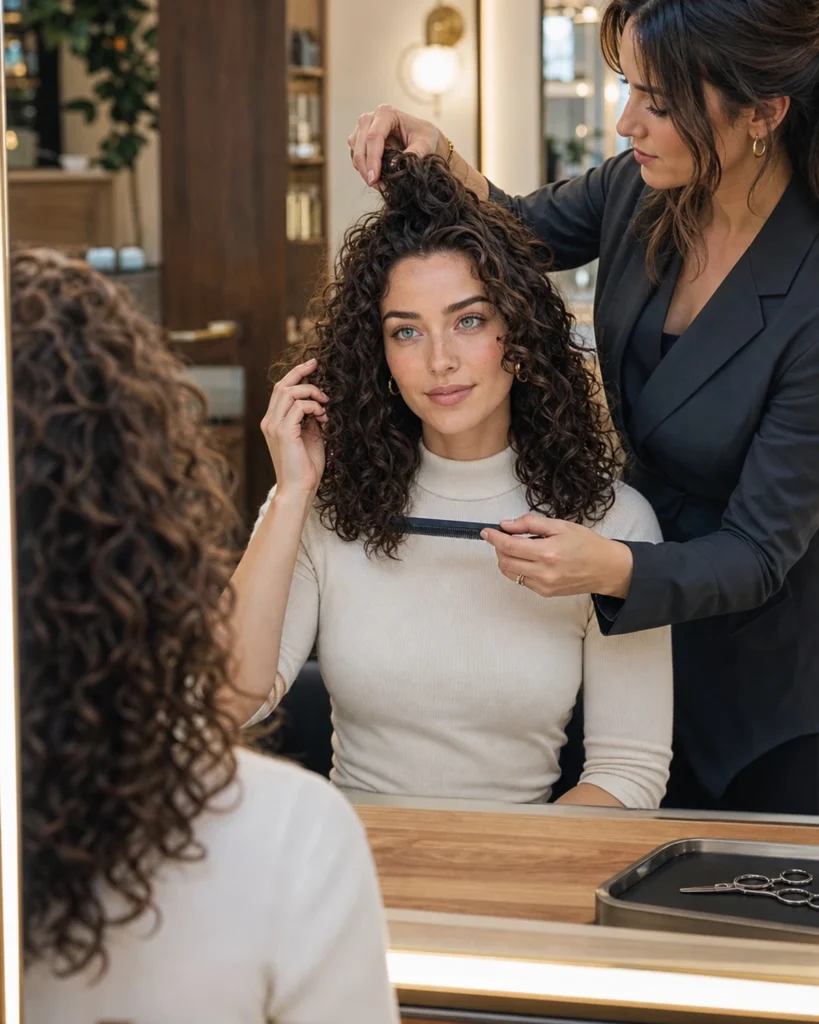
A useful consultation should cover how your hair behaves at home, not only how you want it styled for the final photograph.
Tell your stylist:
- Where you want the shortest curls to sit when completely dry
- Whether you normally wear your hair curly, stretched or blown out
- Where you want volume and where you don’t
- How much shrinkage you usually experience
- Whether your front curls behave differently from the back
- How often you diffuse, air-dry or use heat tools
- Whether you’re willing to style bangs regularly
- Which areas of your current cut feel heavy, flat or thin
Bring two or three reference photographs showing hair reasonably close to your density and curl pattern. A celebrity photograph can explain the general shape, but it cannot promise the same result on different hair.
If you’re struggling to picture the finished silhouette, Hair Is Curly’s guide to previewing a curly or wavy haircut explains how to compare lengths, layers and reference images before committing.
Styling and Maintenance
No haircut is automatically low maintenance. Much depends on how polished you expect it to look.
Curly shag
- Usually works well with air-drying or diffusing
- Benefits from lightweight hold and some root lift
- Crown layers and fringe need reshaping as they grow
Textured curly bob
- Needs even product application for a balanced outline
- May require sectioning during styling if curl patterns differ
- Loses its defined perimeter as it grows
Butterfly cut
- Grows out more gently than a short bob
- May need styling to emphasize the face-framing layers
- Keeps enough length for ponytails and loose updos
Choose the curly shag for visible movement and crown volume. Choose the textured bob for fuller ends and a stronger silhouette. Choose the butterfly cut when you want face-framing layers without giving up much length.
If none sounds quite right, ask for a collarbone lob with restrained long layers. A haircut doesn’t need an exciting name to look good on an ordinary Tuesday.