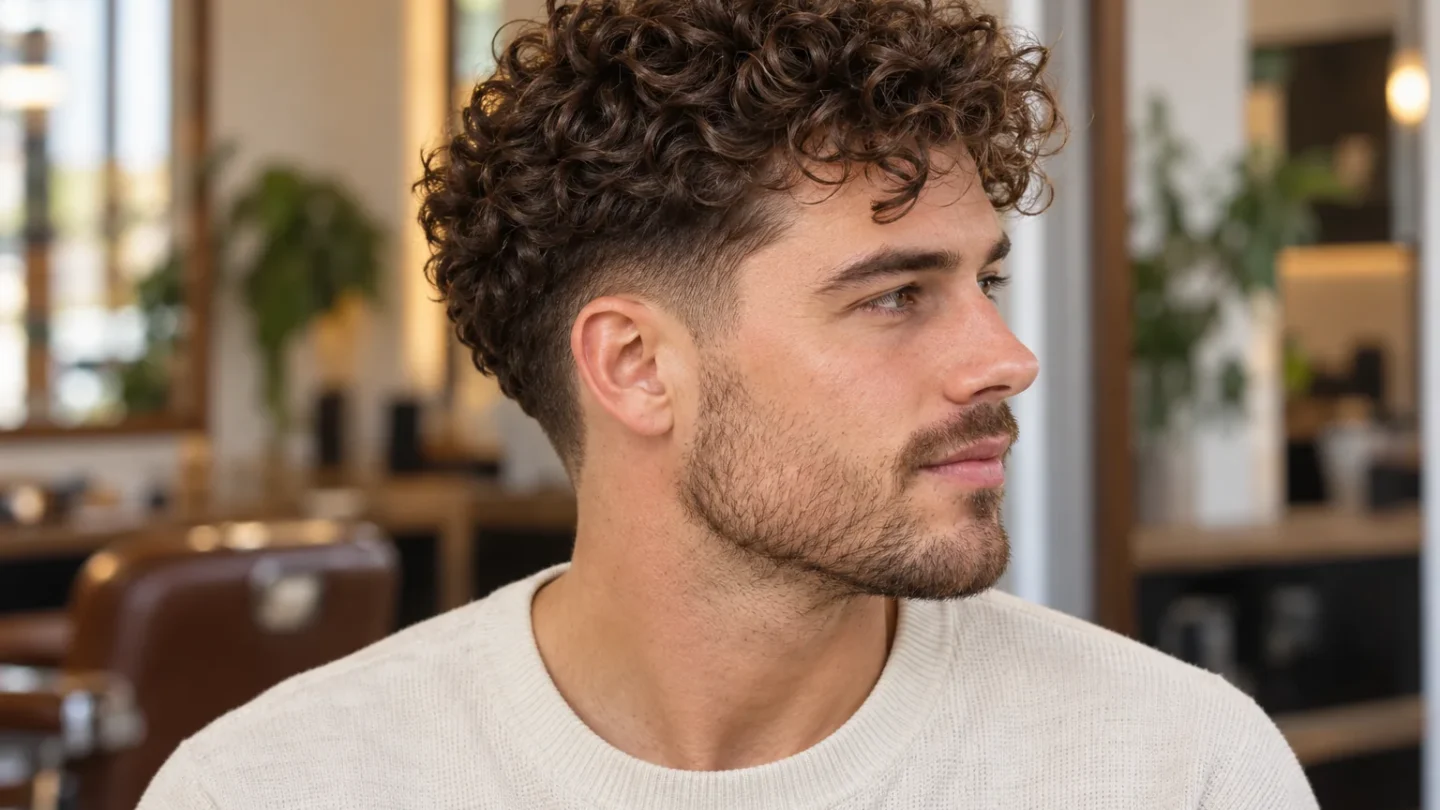
You ask for a low taper. The barber turns the chair around, and half the curls that gave your hair its shape are on the floor.
That usually happens because “low taper” describes the short area, not what should happen to the rest of your hair. You still need to decide how much weight stays above the ears, where the top lands when dry and whether the edges look softly shadowed or nearly bare.
The safest low taper fade for curly hair keeps clipper work around the sideburns and nape while preserving enough length above. A very short band continuing around the lower head is closer to a low fade. Barber terminology varies, so show the front, side and back instead of trusting the name alone.
Pick the shape before you pick the fade
A low taper can sit under almost any curly top, but the top shape determines whether the finished cut feels balanced.
| Cut | Usually works best when | Main tradeoff |
|---|---|---|
| Natural curly top | You want the safest first taper | Less dramatic contrast |
| Short curly crop | You want fast styling and a controlled outline | Needs enough top length to curl |
| Curly fringe | You want forehead coverage and movement | Fringe can shrink into the eyes or above the brow |
| Medium curly top | You want visible curl shape and flexible styling | Sides can widen as the taper grows |
| Curly blowout | Thick hair needs height and less side bulk | Requires deliberate shaping and styling |
| Rounded coil top | Tight curls or coils hold a sculpted silhouette | A high blend can flatten the round shape |
| Low skin taper | You want the cleanest edge contrast | Shows regrowth fastest |
| Curly mullet taper | You want to keep length at the back | The back needs its own shape, not neglect |
| Long swept-back curls | You want length without fuzzy sideburns and nape | More drying and product control |
Do not choose by curl type alone. Similar ringlets can need different cuts when density, shrinkage or temple fullness differs.
1. Natural curly top with a soft low taper

The barber cleans the sideburns and nape but leaves the upper sides connected to the top, so your natural curl shape still does most of the work. Choose it if you like your current length and only want a neater outline. Ask for a soft transition with no exposed skin for forgiving grow-out.
2. Short curly crop with a low taper
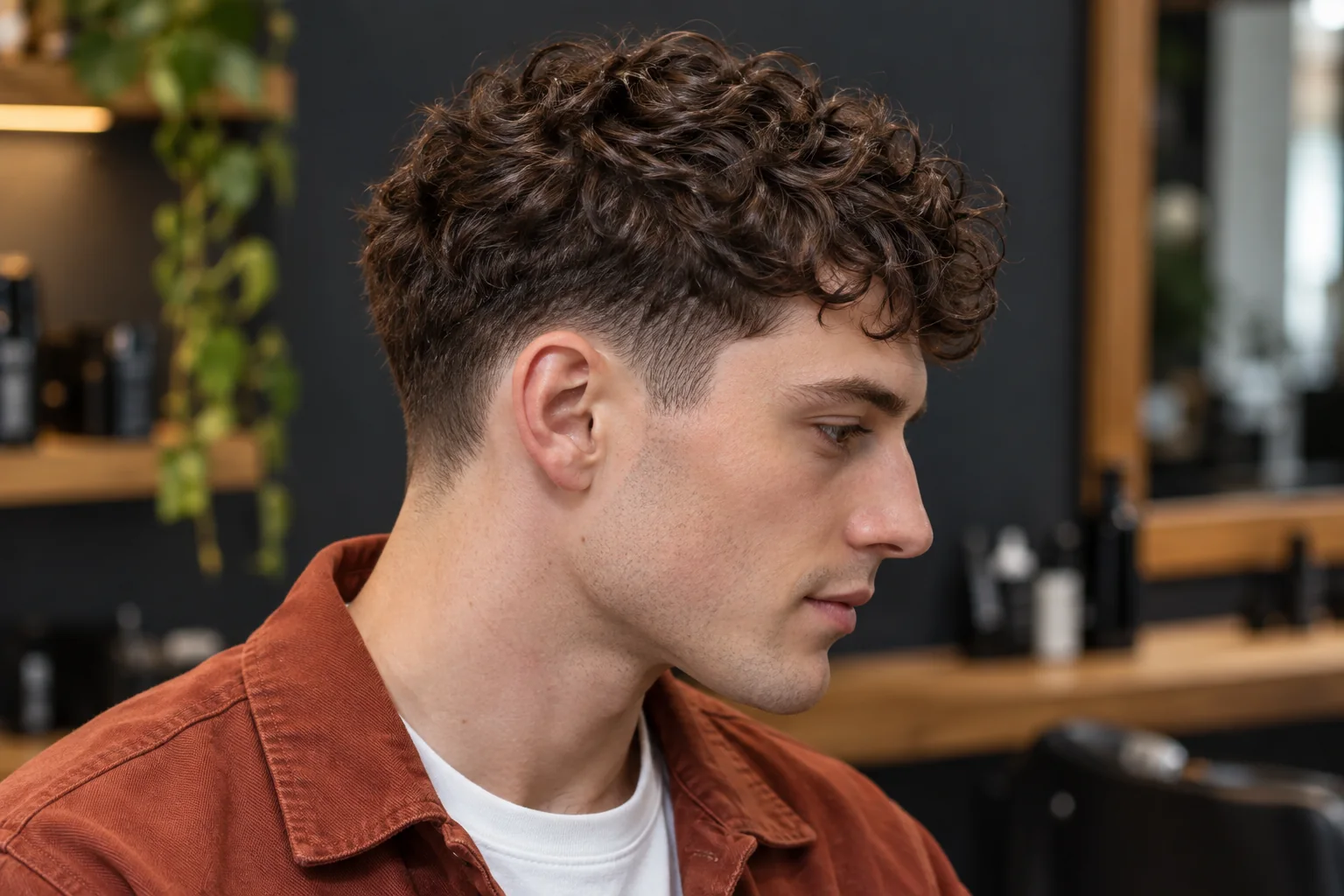
A short crop keeps the top compact while the taper removes fuzz around the edges. It suits someone who wants quick styling without arranging individual curls. The top still needs enough length to complete a bend or coil. Compare the broader options in our short curly hairstyles for men before deciding how much to keep.
3. Curly fringe with a low taper

Here, the visual weight sits forward. The low taper keeps the temples clean while the fringe adds movement without shaving away the corners. Decide where it should land when completely dry. Measuring stretched or wet hair can turn eyebrow-length curls into a much shorter result.
4. Medium curly top with a connected low taper
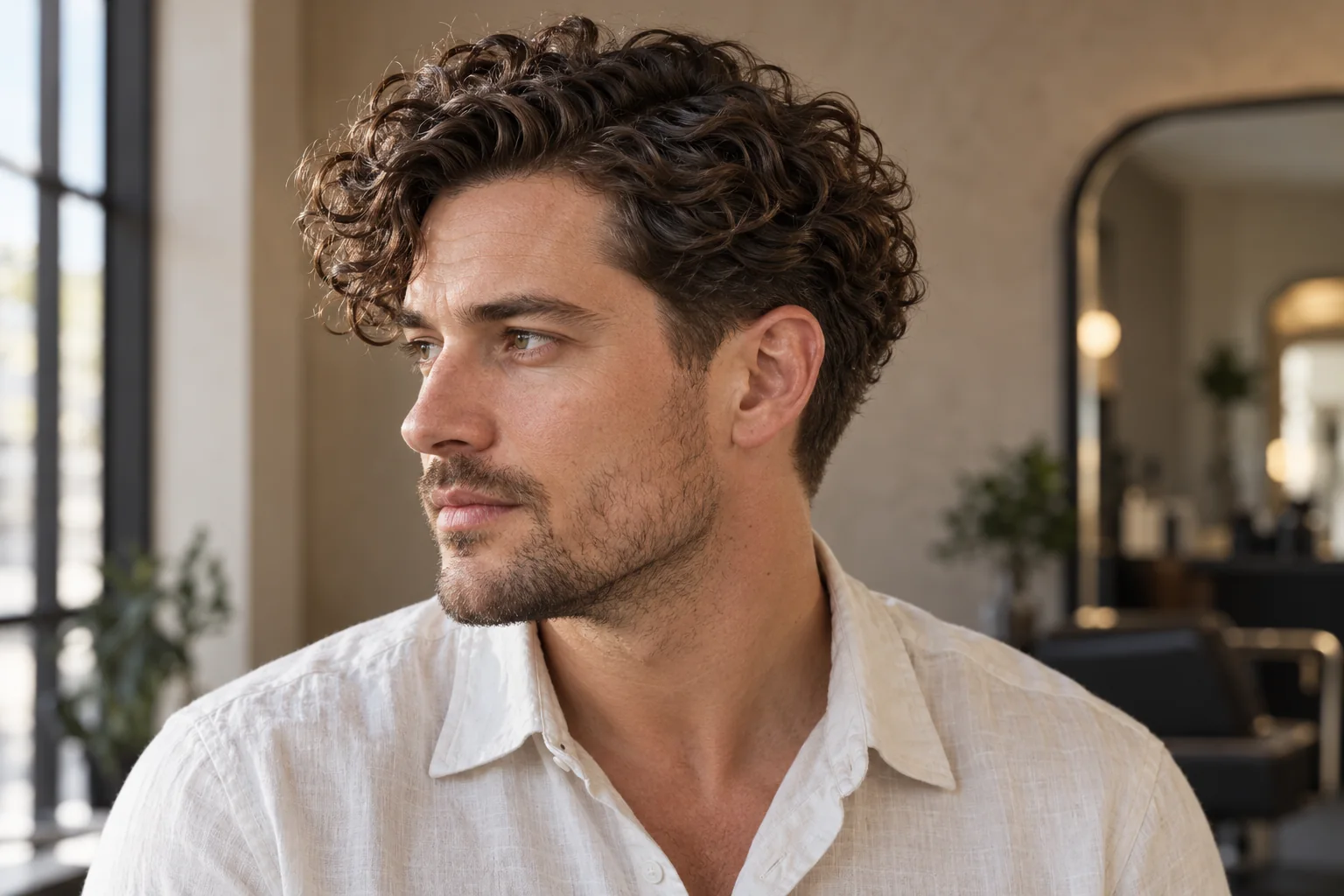
This version leaves enough length to part, sweep or wear the curls forward without the hollowed-out sides of a higher fade. Ask the barber to keep weight above the taper and connect it into the top. Our guide to medium curly hairstyles for men can help you choose the top shape.
5. Curly blowout with a low taper
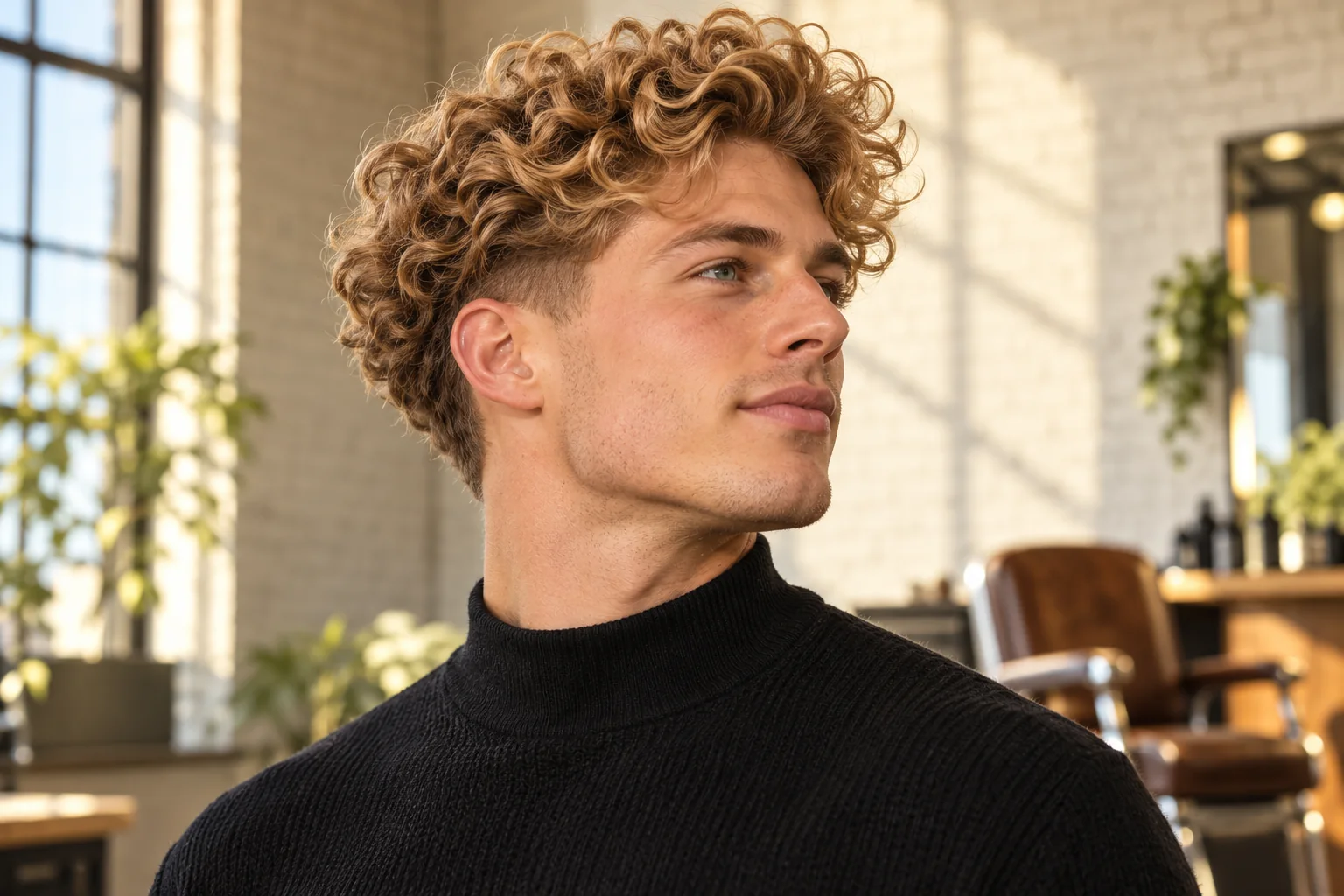
A curly blowout builds height through the top and upper sides, then tightens only the edges. It can balance dense hair that otherwise expands into one block. Ask for a silhouette that rises from the temples without a hard mushroom ledge. Hair that falls rather than stands may need directional drying to recreate the height.
6. Rounded coil top with a low taper
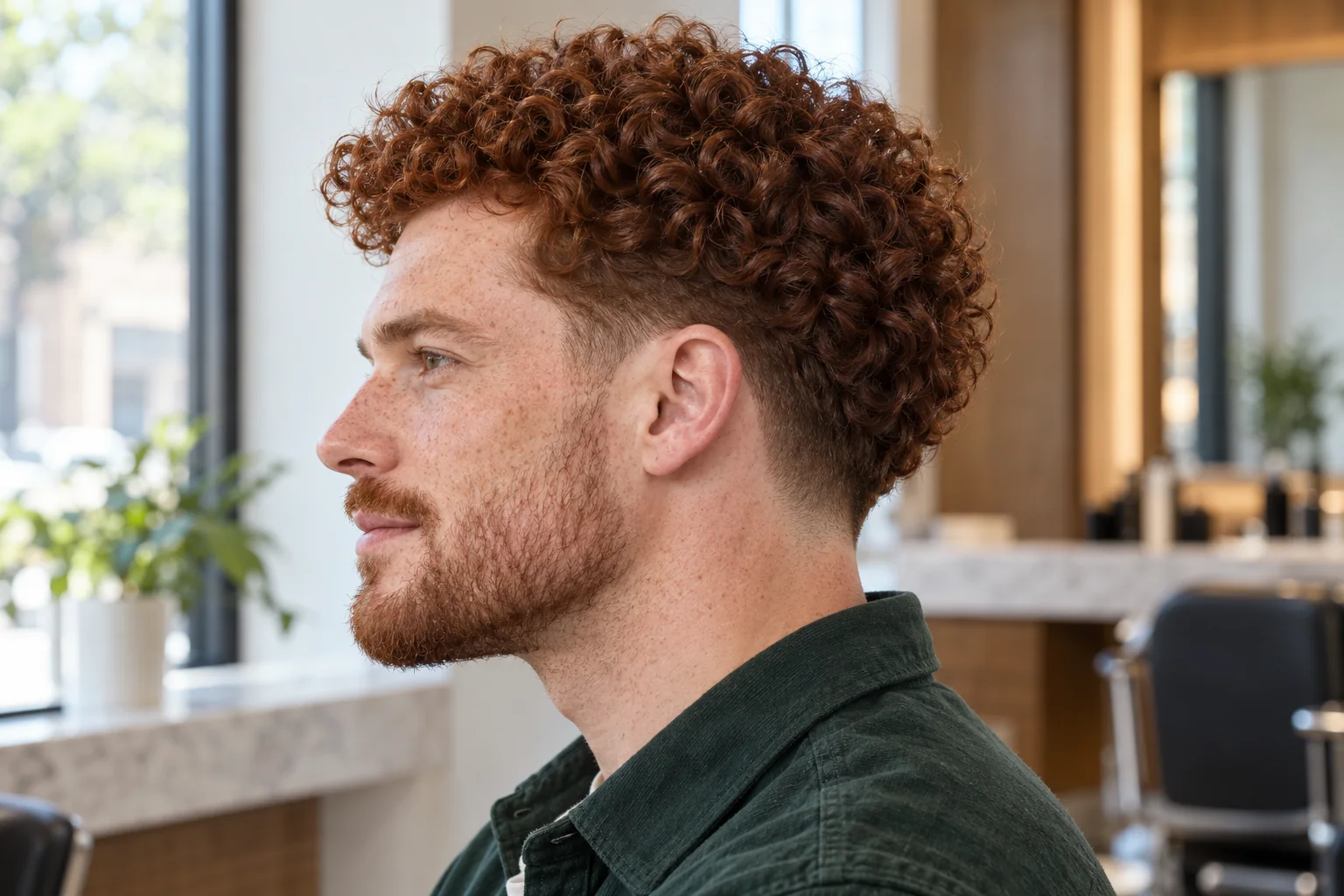
Tight curls and coils can hold a clean rounded shape while a low taper sharpens the edges. Ask the barber to check the shape from every angle before reducing the sides. A high blend can remove the lower curve and make the top look boxy. Keep the finish soft if your temples are naturally lighter.
7. Defined curls with a low skin taper
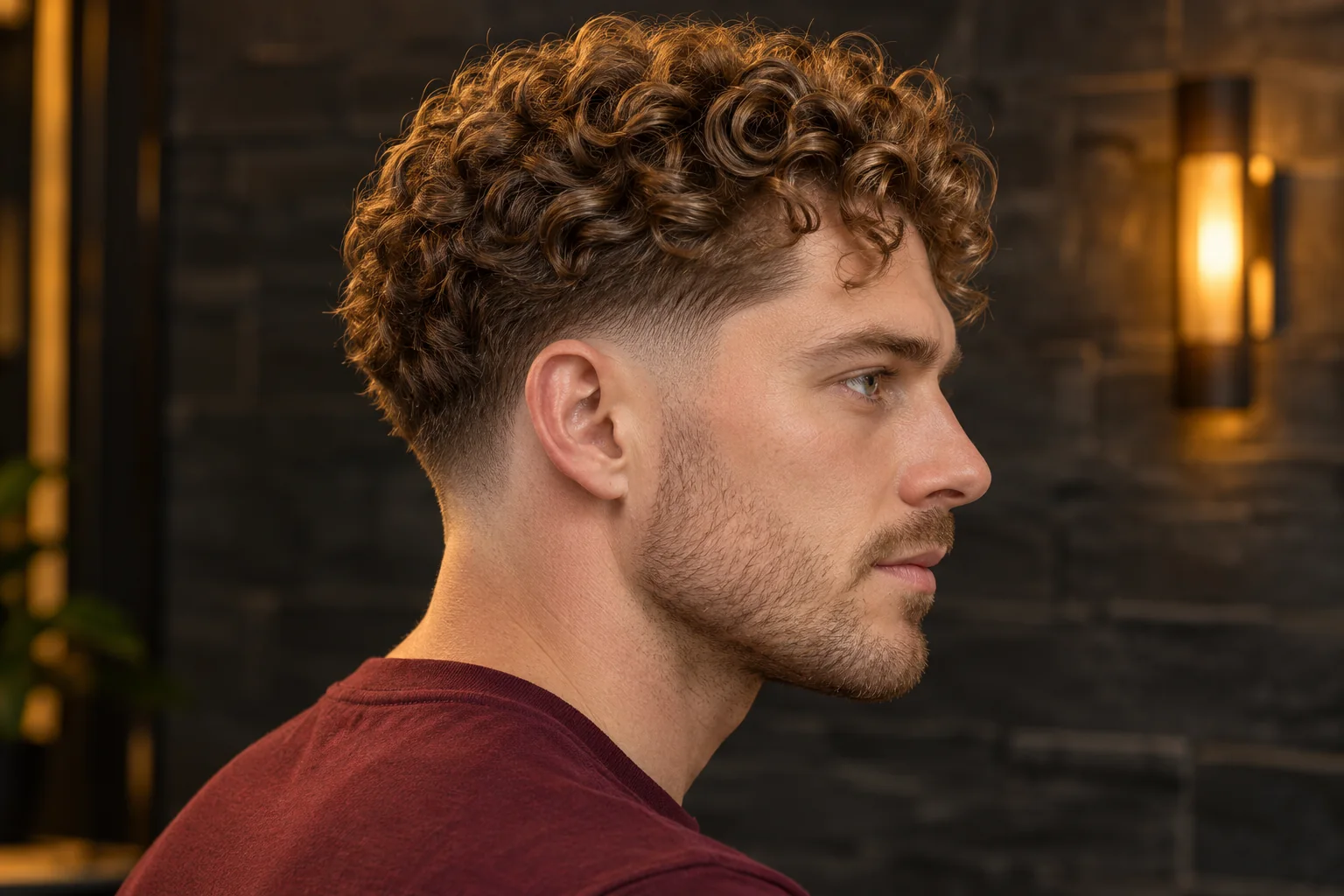
The taper reaches skin or nearly skin at the sideburns and nape while the curls above remain full. It photographs sharply, but the effect fades faster as growth creates a shadow. If you are unsure how much scalp you want visible, compare the tradeoffs in our skin fade haircut guide.
8. Curly mullet with a low taper
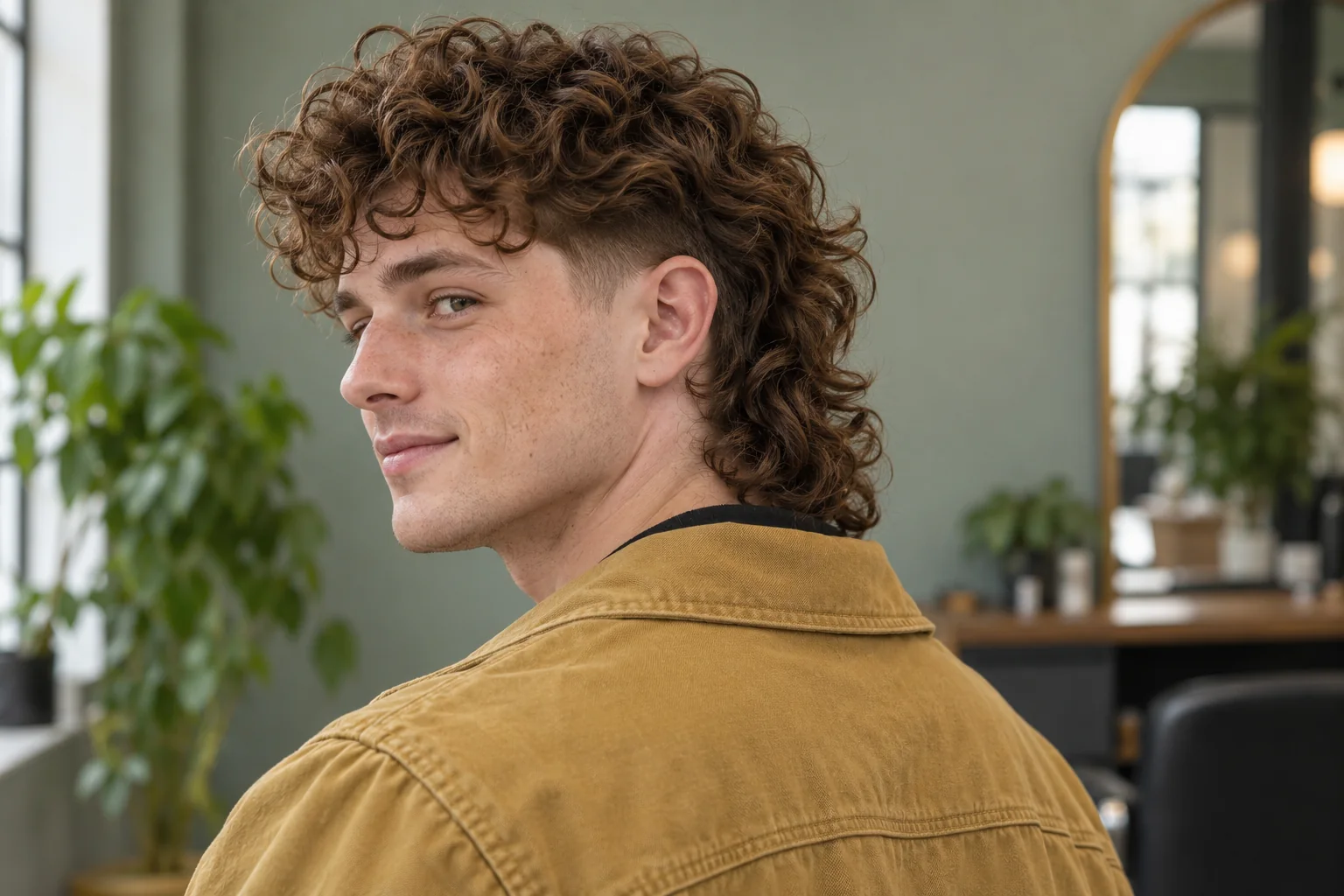
A low taper cleans the temples without removing the length that makes a curly mullet recognizable. The back still needs a deliberate shape. Leaving it untouched while repeatedly shortening the sides creates a tail, not a balanced mullet. Bring a rear-view reference and use our curly hair mullet ideas to choose the back length.
9. Long swept-back curls with a low taper

This version keeps substantial top length but cleans the sideburns and neckline. Ask for minimal removal above the ears if you want to sweep the hair back without short pieces escaping. The taper will not make long curls low-maintenance, but it gives the outline a cleaner finish between full reshaping appointments. See our long curly hairstyles for men for more top shapes.
What to tell your barber
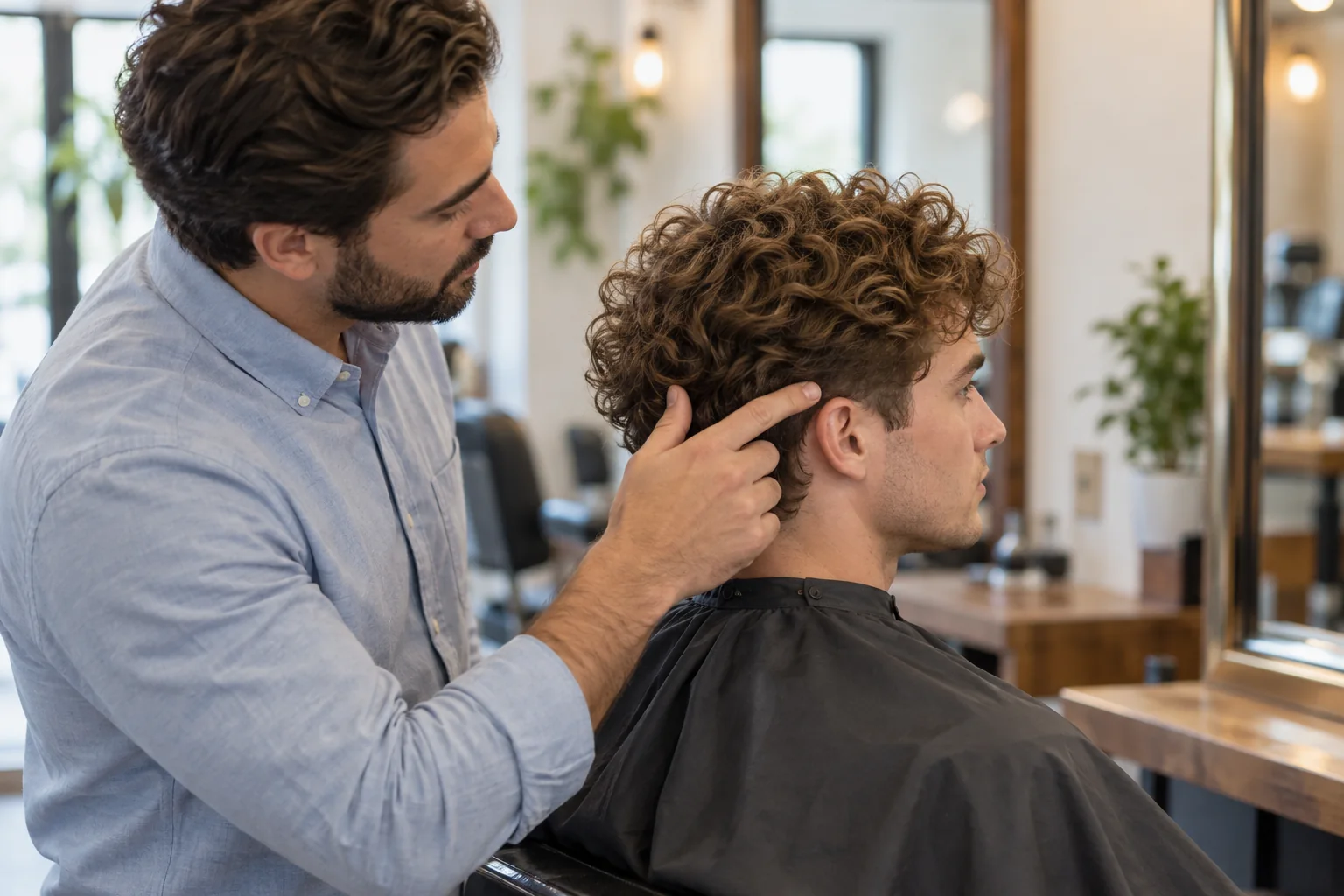
Do not stop at “low taper with curls.” Describe the outcome:
I want the taper limited to the sideburns and nape. Keep the weight above my ears and do not take the blend higher without showing me first. I want the edge soft and shadowed [or very close to skin]. Leave the top long enough to land here when dry, and do not thin the curls without asking me.
Show three views of the same haircut if possible. Point to where the shortest area begins, where you want fullness and where the top should finish after shrinkage. Similar density and curl behavior matter more than a matching curl-type label.
If your barber uses “taper” and “fade” interchangeably, ask: Will the shortest section stay at my sideburns and nape, or continue around the whole head? The answer matters more than the service name.
Avoid the three mistakes that steal curl shape
Letting the taper climb too high. A higher blend removes side weight. That can be useful for a blowout, but it can also make the top look disconnected or overly wide.
Choosing top length while the hair is stretched. Show the desired dry landing point and discuss shrinkage before cutting. The tighter or less predictable the spring, the more carefully the barber should approach the final length.
Thinning dense curls automatically. Removing internal weight can reduce bulk, but careless thinning may leave fuzzy short pieces or weak ends. Ask which area needs weight removed and what the dry result should look like.
How much upkeep does a low taper need?
A soft taper grows out quietly because there is no bright strip of scalp to lose. A skin taper and hard line-up show regrowth sooner, so maintaining that contrast means more frequent edge appointments. Your growth rate and preferred sharpness matter more than a universal schedule.
The top has a separate timetable. A taper cleanup restores the outline but cannot fix a top that has become heavy, flat or uneven. Book a reshape when the curls stop falling into their intended silhouette.
At home, apply a light leave-in or curl styler to damp hair, shape the top in its intended direction and let it set without repeated touching. The five-step curly-hair routine for men explains how to adjust product and drying to your length.
The safest choice if you are still unsure
Start with the natural curly top and a soft taper. Keep the shortest work at the sideburns and nape, preserve weight above the ears and leave extra top length. You can make the taper closer or the top shorter after seeing how your curls settle. Rebuilding fullness takes longer.