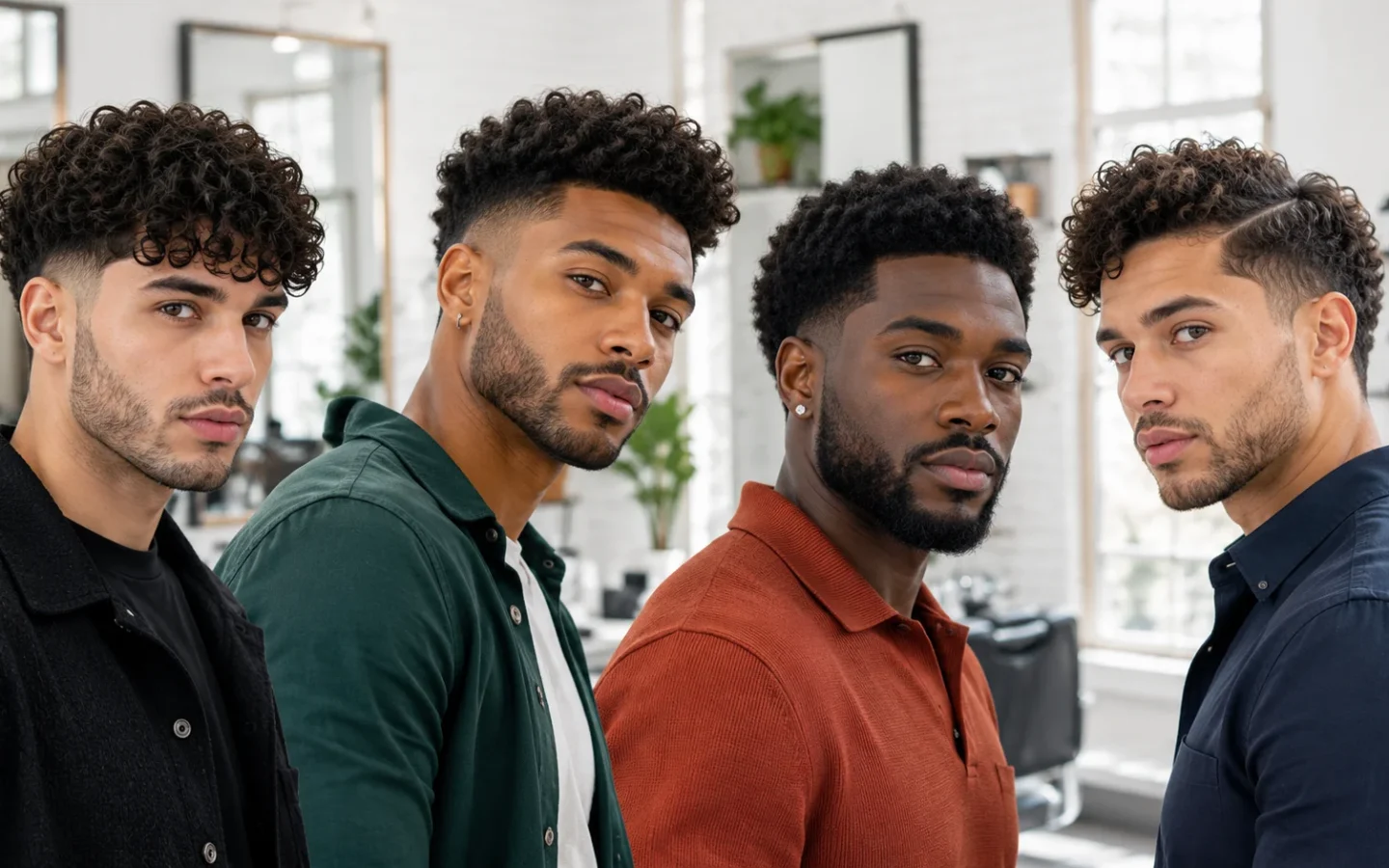
Twenty-five years behind the chair and the same conversation happens every week. Guy walks in. Curls everywhere. He’s been buzzing it down to a quarter inch for years because nobody ever told him short curly hair has options. Real options.
I get it. Short curly hair feels like a gamble. Cut it wrong and you’re either fighting a triangle shape on top, or your curls disappear into something that looks more like a bad perm than the texture you were born with. So most men just play it safe with a buzz and call it a day.
When short curly hair is cut properly, it becomes one of the easiest styles a man can wear. It can look sharp without needing twenty minutes of negotiation with the mirror. You just need a cut that respects your curl pattern and a clear idea of what to ask for.
Why Short Curly Cuts Sometimes Go Wrong
Curly hair can shrink noticeably as it dries. If a barber chooses the final length without accounting for that shrinkage, a cut that looks right while damp may finish much shorter than expected.
Curly hair can be cut wet or dry. Neither method is automatically wrong. What matters is whether the barber understands your curl pattern, checks the shape after drying and leaves enough room for shrinkage.
Layering also needs balance. Too much weight at the bottom can create a triangle shape, while aggressive thinning can separate the curls and encourage frizz. Ask your barber how the cut will sit once your hair is fully dry.
The Five Short Curly Cuts That Actually Work
These are the ones I recommend most. Pulled straight from real clients, real curl patterns, real lifestyles.
If you want something with more shape in the back instead of a clean short cut, a curly hair mullet is the next style worth comparing before you book.
1. The Modern Crop with Curly Top
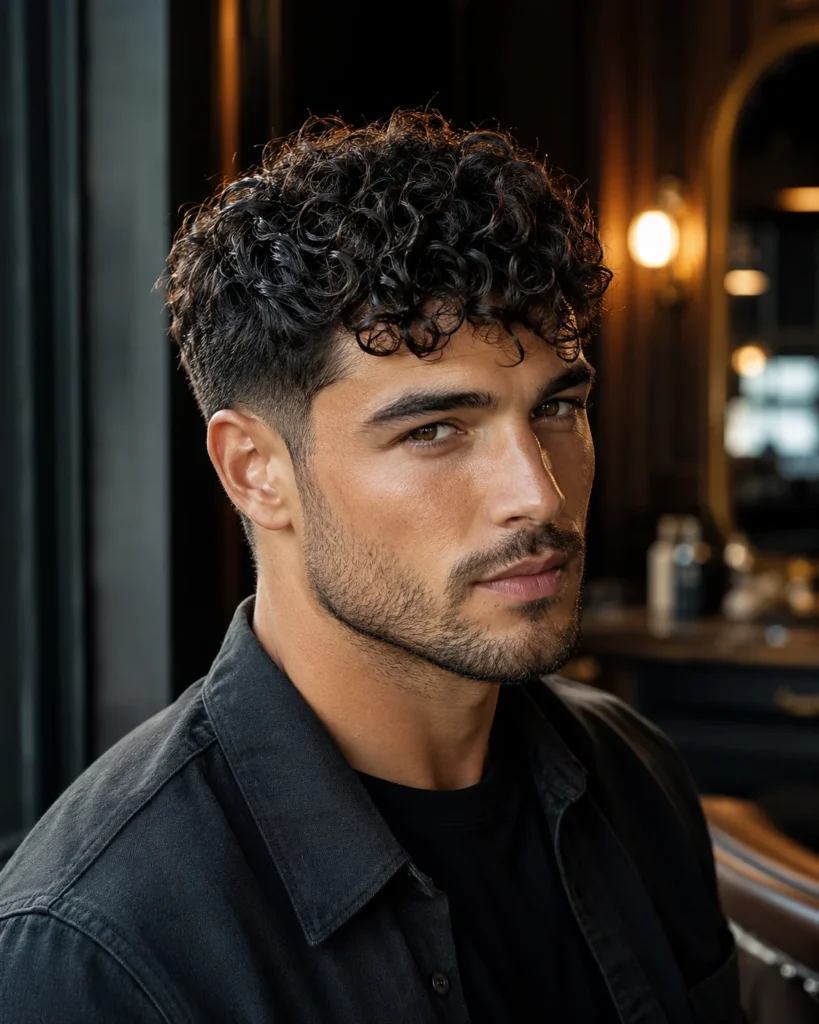
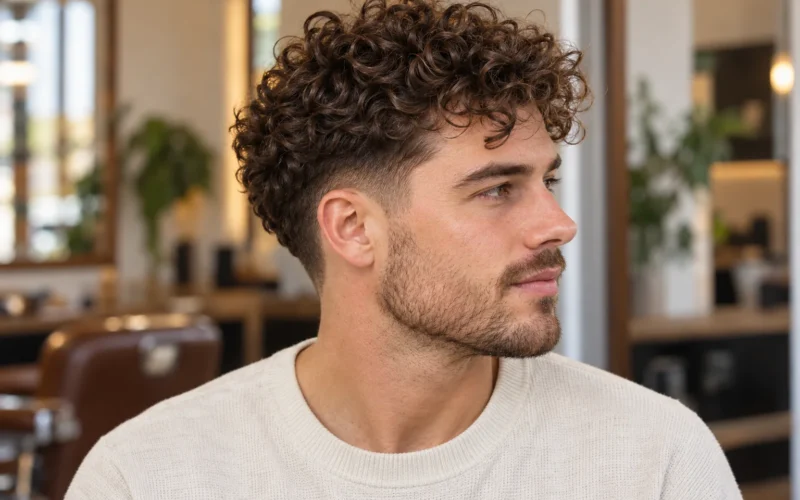
Tight on the sides and back, length kept on top, usually around two inches. The top stays curly and free, the sides stay clean. Works on almost every face shape.
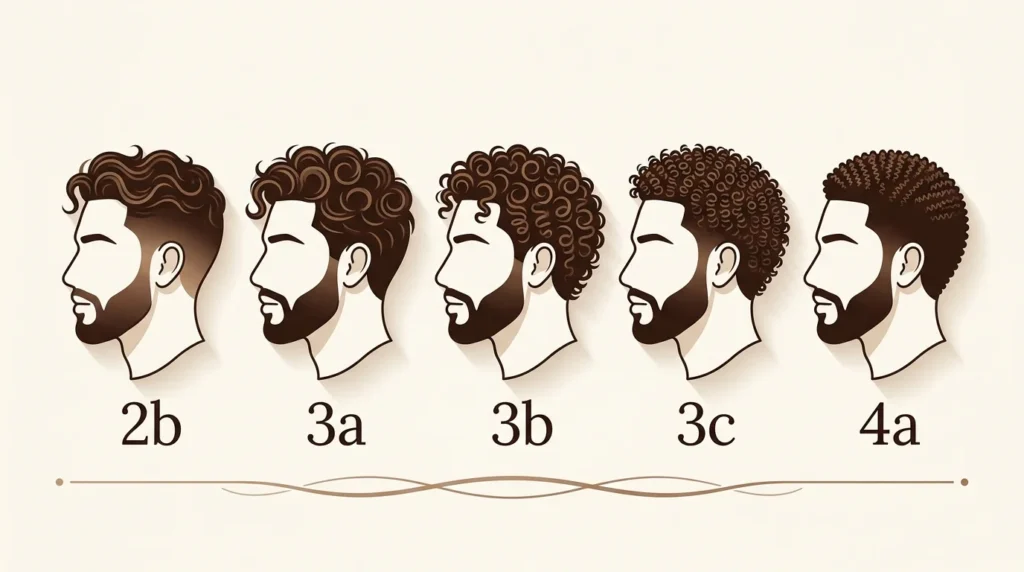
Best for: 2c through 3b curls. Guys who want low effort but visible curl.
What to ask for: scissor cut on top, taper or low fade on the sides, leave the natural curl pattern alone.
2. The Curly Quiff
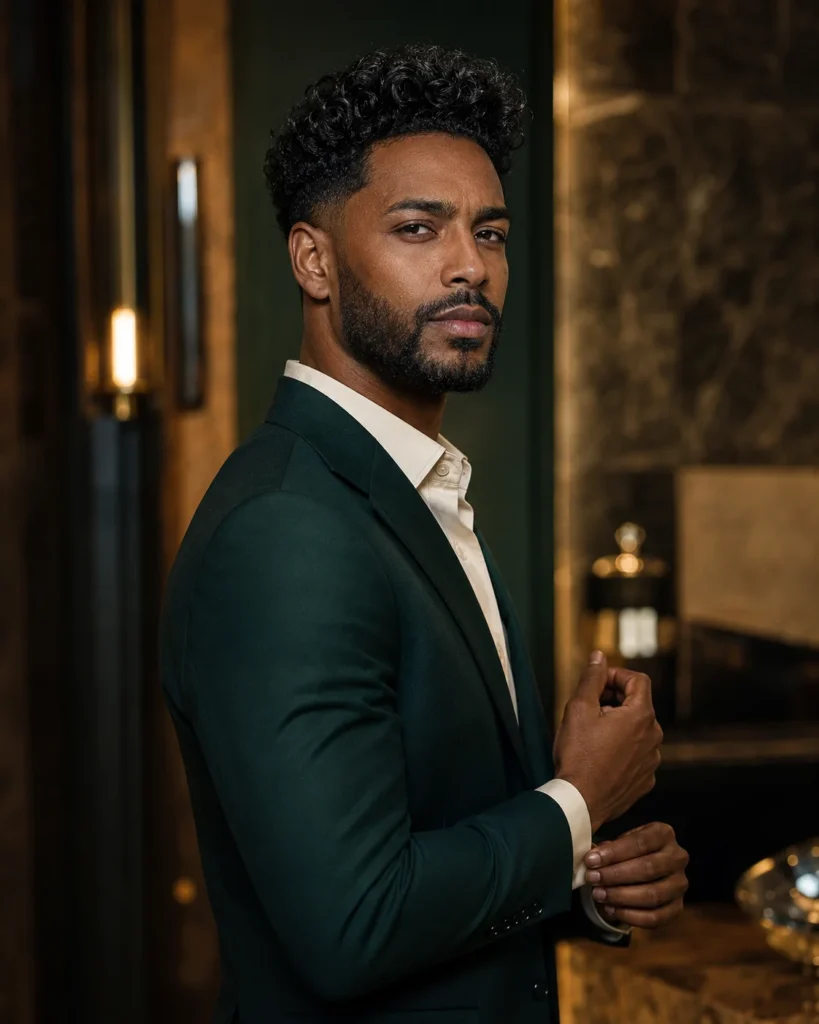
Slightly longer on top than the crop, swept up and back. Gives height. Reads professional but still has personality.
The curly quiff works especially well for men who have been flattening their curls with heavy gel. Keeping some height at the front makes the texture look intentional while the shorter sides stop the style from becoming bulky.
Best for: 3a to 3b curls with decent length already on top.
3. The Taper Fade with Sponged Curls
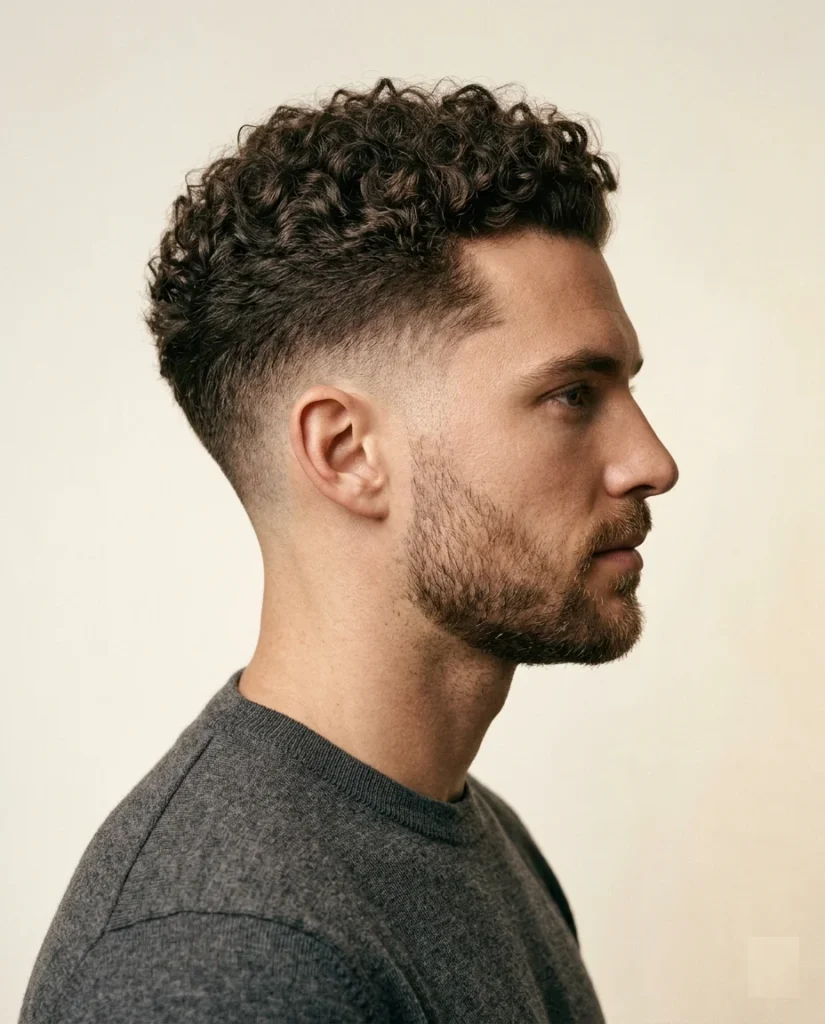
Defined curls stay on top while the sides gradually become shorter. The taper or fade can sit low, mid or high depending on how much contrast you want. Compare the main types of fades before choosing because fade height changes the entire shape of the haircut.
Best for: 3c and 4a curls. The texture does most of the work here.
Ask for a taper rather than a skin fade if you want softer regrowth and fewer maintenance appointments. A skin fade creates stronger contrast but needs more frequent cleanup. These skin fade haircut ideas show when that sharper finish works and when it may be more upkeep than you want.
4. The Short Afro
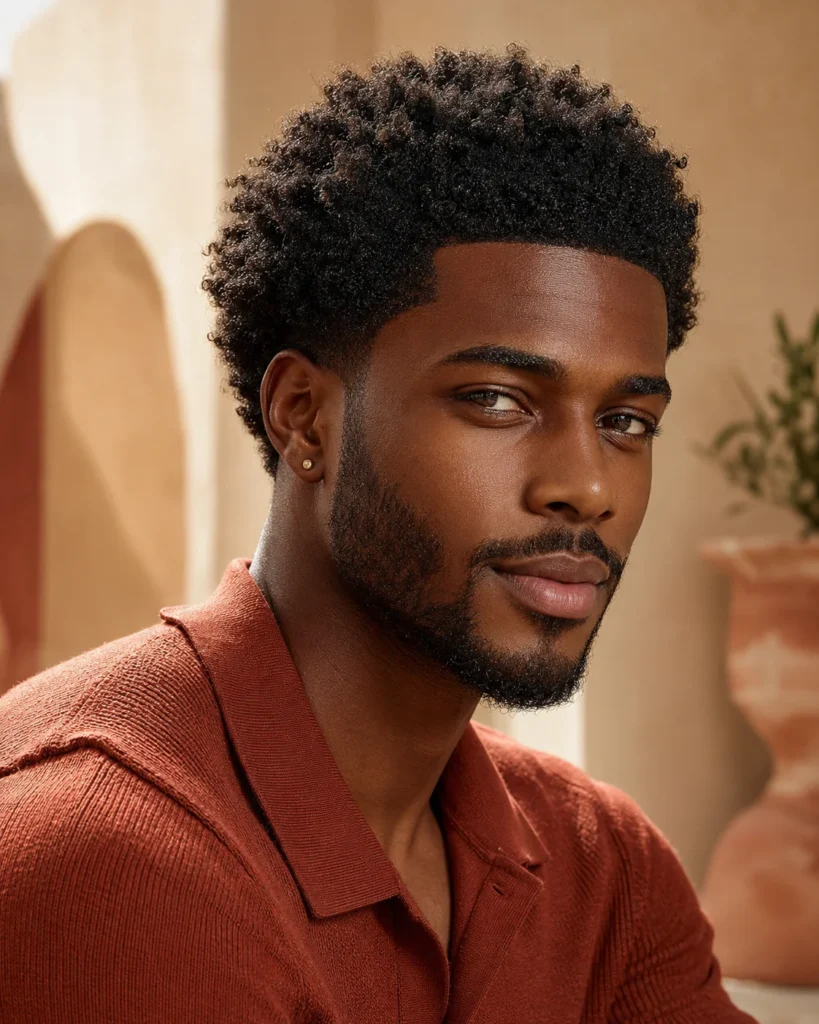
Don’t sleep on this. A well-shaped short afro is one of the cleanest looks you can wear. Even length all around, edge-up at the hairline, picked out for shape.
Best for: 4a, 4b, 4c curl patterns. Coily textures shine here.
What kills a short afro: dry hair. Moisture is everything. A leave-in conditioner or curl cream daily, even when you don’t wash, keeps the shape soft and the curls defined.
5. The Side Part with Curls

Old-school cut, modern execution. The part is sharp. The curls on top stay loose. Sides are tapered, not faded. It works for offices, weddings and any dinner where you want to look like you planned ahead.
Best for: 2b to 3a wavy and loose curl patterns.
Which Cut Fits Your Curl Type
A quick guide to picking the right cut for your texture and lifestyle.
What Short Curly Hair Actually Needs
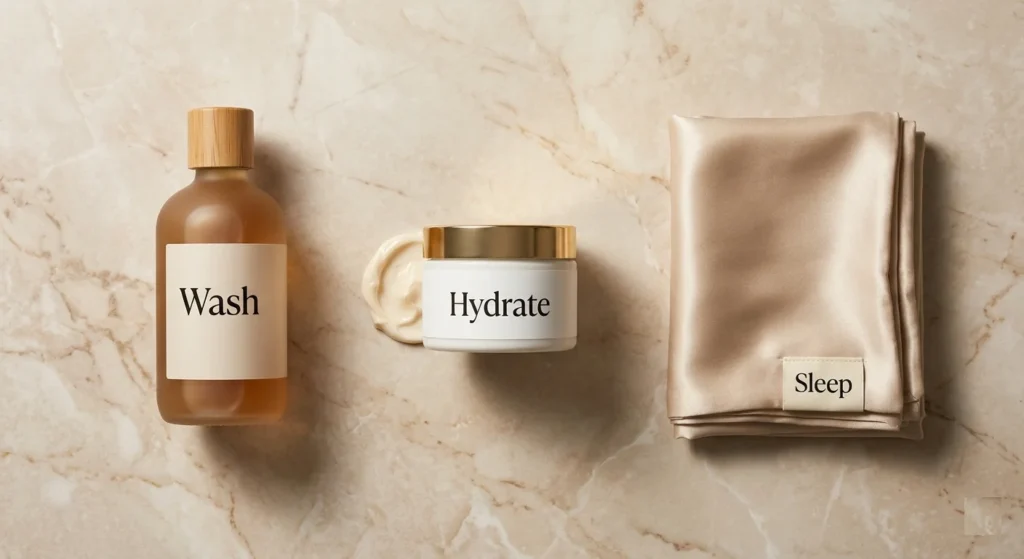
- Short does not mean maintenance-free. The routine can stay simple, but curls still need sensible cleansing, conditioning and styling.
- There is no universal rule that every man should shampoo two or three times per week. Wash according to your scalp, product use and how quickly the hair becomes oily or dirty. Our guide to how often to wash curly hair explains how to find a schedule without drying out your curls.
- The American Academy of Dermatology recommends applying shampoo mainly to the scalp, using conditioner after washing and detangling thick curly hair gently with a wide-tooth comb.
After washing:
- Work a small amount of leave-in conditioner or curl cream through damp hair.
- Start with less product than you think you need.
- Use your fingers or a wide-tooth comb to distribute it.
- Air-dry when practical or use low to medium heat.
- Avoid repeatedly touching the curls while they dry.
If you regularly wake up with flattened or frizzy curls, a satin bonnet or pillowcase may reduce overnight friction. It is helpful, not magical. The haircut still has to do its share of the work.
Choosing a Barber Who Actually Knows Curls
Not every barbershop can cut curly hair properly. Some can. Many cannot. A few useful signs to look for before you sit in the chair:
- They have curly hair clients in the photos on their wall or social media
- They ask about your curl pattern before they start cutting
- They use scissors more than clippers on the top
- They don’t pull your curls straight to measure
If you find someone good, tip well and book your next appointment before you leave. A barber who cuts curly hair correctly is harder to replace than you think.
Final Word From the Chair
Short curly hair is having a moment. Has been for a few years now, honestly. Men’s grooming has finally caught up to what curly-haired guys have known forever, which is that texture itself is the style. You don’t need to flatten it or hide it. If you’re thinking about going the other direction, the long curly cuts that actually hold up cover what to expect from the longer journey.
The cuts in this article have one thing in common. They work with your curls, not against them. Pick the one that fits your lifestyle, find a stylist who knows what they’re doing, and stop buzzing it all off out of frustration.
Your curls aren’t the problem. The cut was.