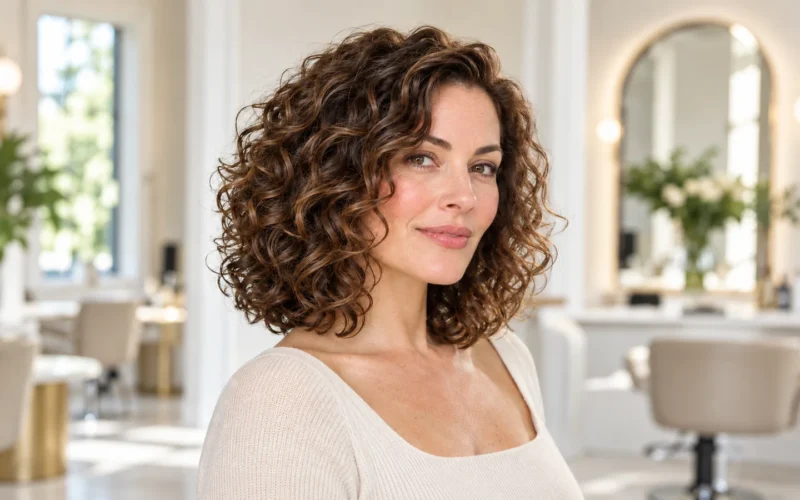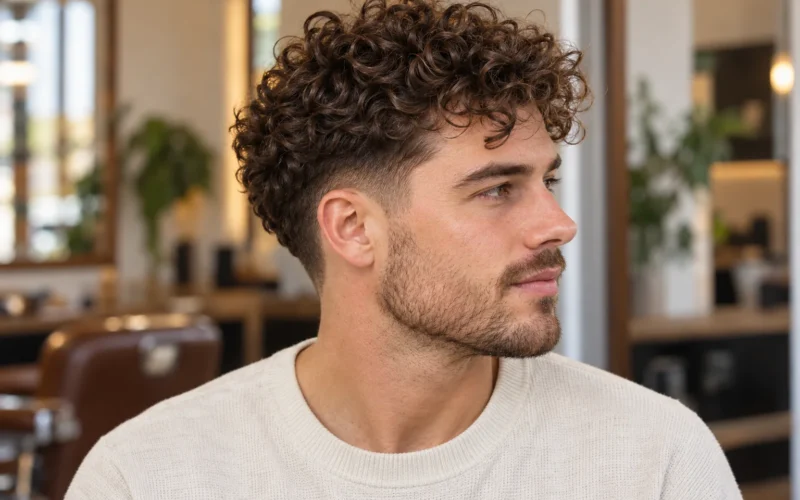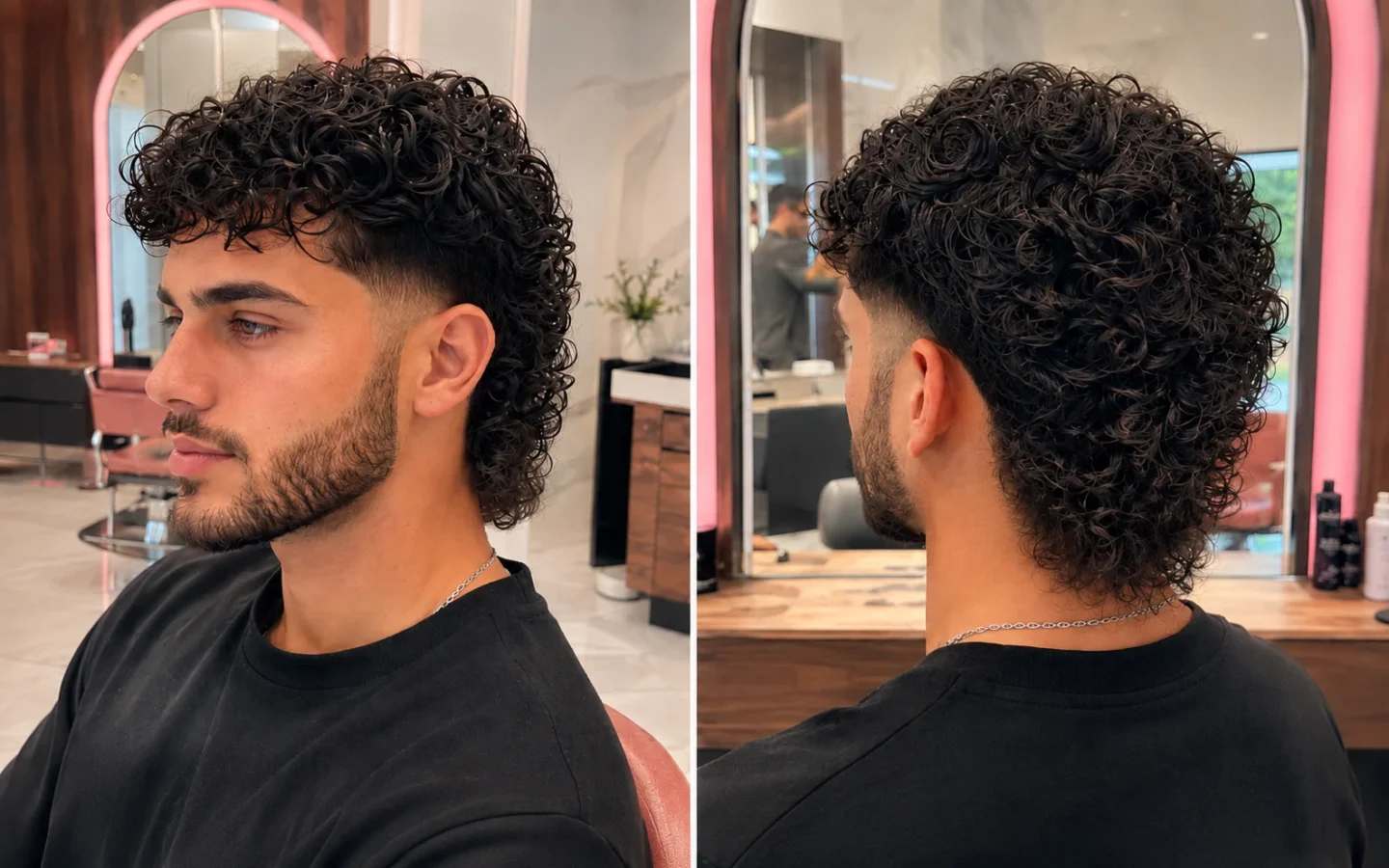
A curly hair mullet can look like a sharp, intentional cut. Or it can look like someone walked out of the chair halfway through. The line between those two outcomes isn’t the curl pattern, it’s how clearly the cut got explained before the clippers came out.
I’ve shaped this haircut on a lot of clients. Some leave thrilled. Some sit back down a week later asking if we can fix the back. The fixable version usually comes down to one thing, the reference photo was wrong, or there was no reference photo at all, just words.
So this isn’t a list of “best mullets.” It’s what to actually screenshot, what to ask for, and what to skip when you’re sitting in the chair telling your barber what you want.
Before You Save That Screenshot
Most guys send me photos of mullets that won’t translate to their hair. Different curl type. Different density. Sometimes the guy in the photo isn’t even curly, the stylist just defined a few pieces for the shoot.
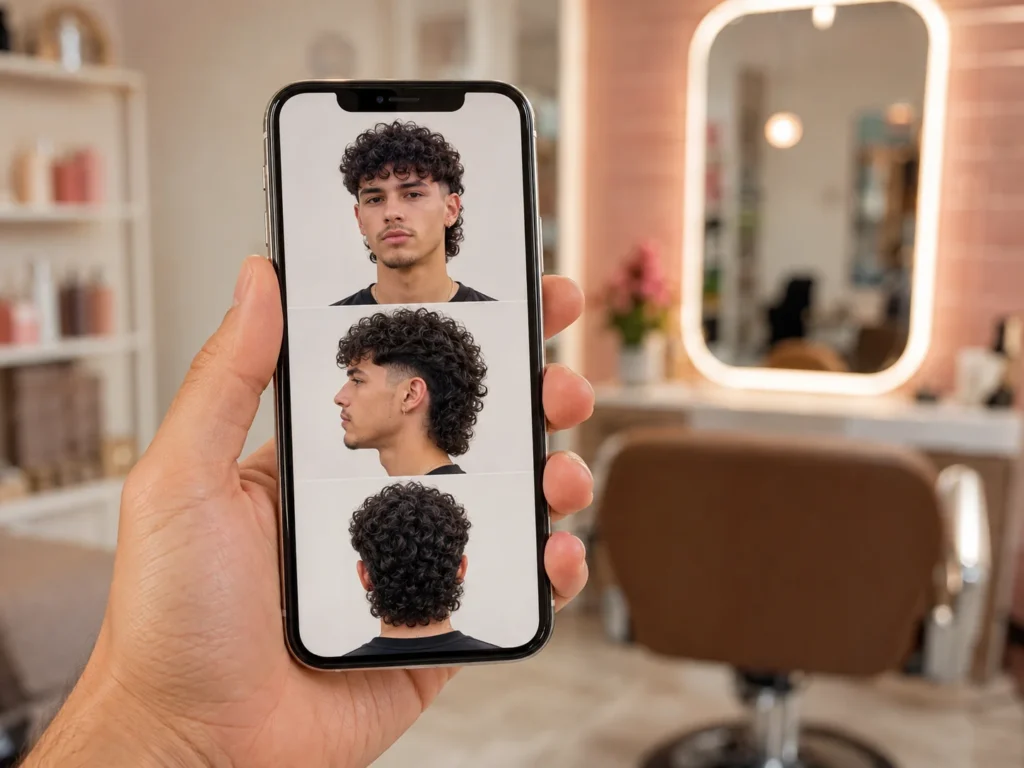
When you’re saving references, check the curl pattern first. If you have type 3A loose curls, a photo of a tight 3C mullet will look completely different on you. Same cut, different result, because curl shrinkage changes everything. A back that looks shoulder-length on tighter curls might sit at the chin on looser ones. If you’re still figuring out what your curls actually do day-to-day, my curly hair routine for beginners walks through the basics that decide how your hair behaves once it’s cut.
Three things matter in the photo:
- The same curl pattern as yours, or close to it
- Front, side, and back view (back view especially, that’s the part you can’t see in the mirror)
- Hair thickness similar to yours
Save two or three angles. One photo from one direction tells the barber half the story.
The Curly Mullet Versions Worth Knowing
There isn’t one curly mullet. There are about five shapes that come through the door, and they’re not interchangeable. Here’s what each one actually means in practice.
Curly mullet styles at a glance:
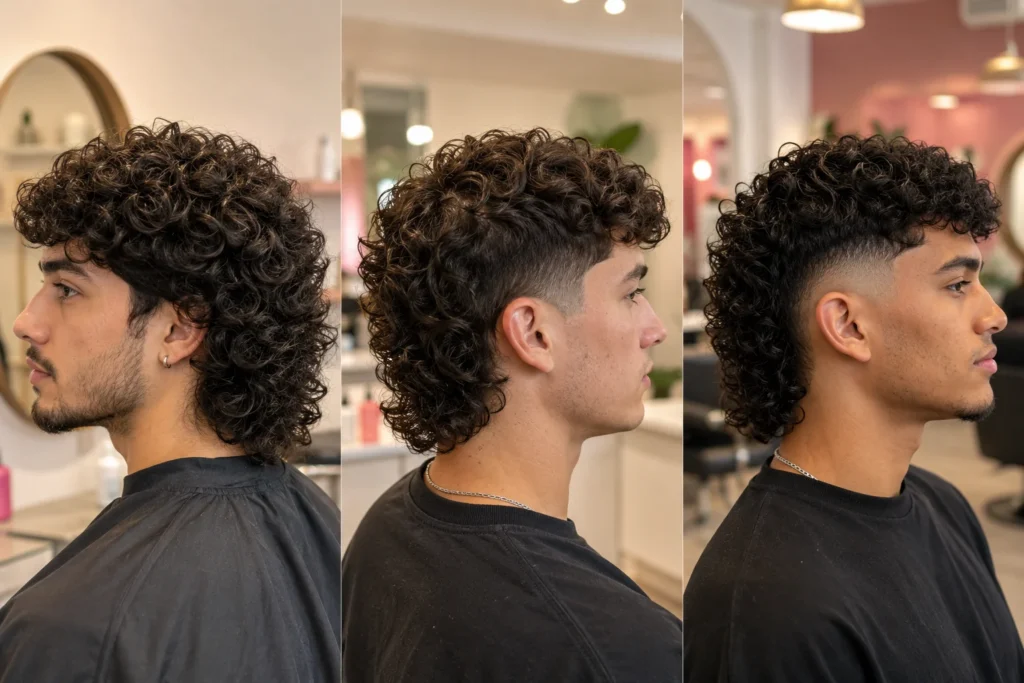
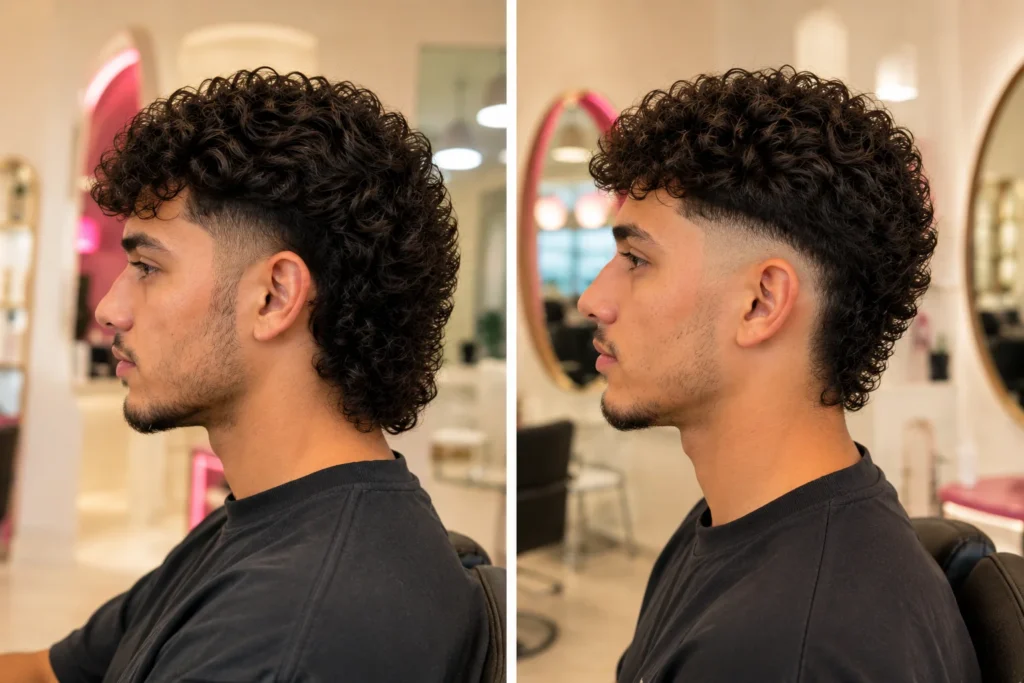
The classic curly mullet keeps the back full, the sides natural or just trimmed for shape, and the top sitting forward. No fade. No taper. It’s the softest version and the most forgiving on different curl types.
The low taper mullet is the same cut but with a taper that starts low, around the ears or slightly below. This is what I recommend to most first-timers. It cleans up the side profile without committing to a hard line.
The mullet fade is sharper. The fade starts higher, sometimes mid-temple or above, and the contrast between the faded sides and the curly back is the whole point. Bolder. Less forgiving if your curl density isn’t strong, because the back has to carry visual weight against the cleaner sides.
The short mullet keeps the back length subtle, maybe an inch or two past the nape. Good if you want the silhouette without anyone calling it a mullet.
The modern mullet haircut is everything above, just less extreme. Shorter back, softer side shape, more texture on top. This is the version showing up in salons right now and it works on most curl patterns.
The version you pick should match how much attention you want the cut to pull. Bigger contrast equals bigger statement. There’s no wrong answer, but you should know what you’re signing up for.
How to Actually Talk to Your Barber About This
Here’s where most curly mullets go sideways. The guy sits down, shows a photo, and says “give me this.” The barber nods. Twenty minutes later the fade is too high, the back is too thin, and the cut doesn’t look anything like the screenshot.
Words matter more than the photo. The photo is the destination, but the barber needs the directions.
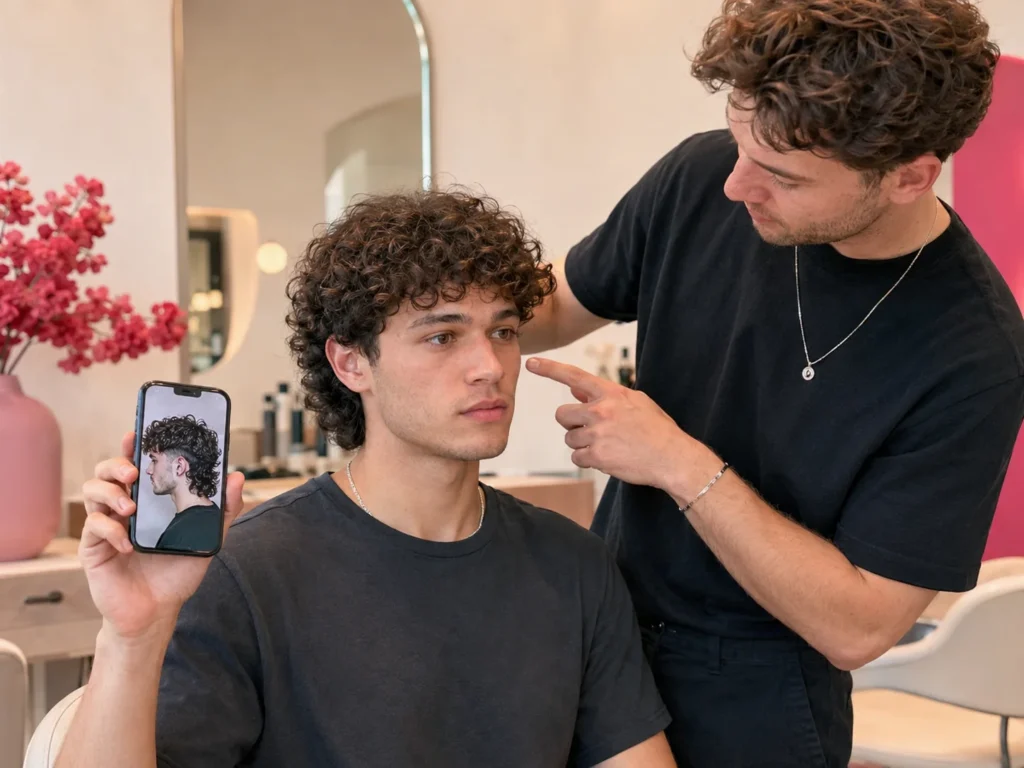
A few lines that actually work in the chair:
“Keep the back full. I want my curls to still form weight at the bottom.”
“Don’t take the fade above my temple. Keep it low.”
“Cleaner sides, not disconnected. I don’t want a hard line between the sides and the back.”
“Shape the top so it sits forward, not puffy.”
“Please don’t thin my curls out. Texturizing too much will make the back look stringy.”
Say these out loud before the cut starts. Not after. A good barber will ask follow-up questions. If yours doesn’t ask anything and just nods, that’s your sign to keep talking.
And don’t be afraid to stop the cut mid-way. Ask to see the back with a hand mirror before the sides go shorter. Once the length is gone, it’s gone for six months.
Which Version Fits Your Curls
Not every curly mullet works on every curl type. Here’s what I see in the salon.
Loose curls (2C to 3A) carry the modern mullet well. The shape stays soft, the back falls cleanly, and the front doesn’t puff out. A low taper mullet also works here. Avoid heavy fades, you don’t have the curl density to balance the contrast. The short curly hairstyles for men guide covers what shorter curl shapes look like on this curl type if you want to compare.
Thick 3B to 3C curls are made for this haircut. Strong curl pattern, real volume, the back holds itself. You can go fade, taper, classic, anything. Just don’t let the barber thin the back too aggressively, it’ll lose the weight that makes the cut work.
Tight curls and coils (4A to 4C) need a different conversation. The shrinkage is significant. What looks like four inches dry might be seven inches stretched. Tell your barber to cut on dry, defined hair, not wet. A wet cut will leave you shorter than you wanted once it dries.
Wavy hair can pull off the modern mullet too, but the back won’t have the same body. You’ll need to commit to styling, otherwise it falls flat. If your wave is loose, a medium curly hairstyles for men approach might suit you better than going full mullet.
Frizz-prone curls of any pattern, this is where styling makes or breaks the cut. The shape can be perfect and still look rough if frizz takes over by hour three.
Styling It So the Cut Actually Holds
A great cut with bad styling looks like a bad cut. I’ve seen guys leave the salon looking sharp and come back two weeks later complaining the mullet doesn’t work for them. Nine times out of ten, it’s the routine, not the haircut.
Wash less than you think you need to. Curly hair doesn’t need daily shampoo, and over-washing kills the curl definition that makes a mullet sit right. Thick, curly hair doesn’t need to be washed daily or even weekly, according to the American Academy of Dermatology. (AAD)
Detangle wet, not dry. Brushing dry curls breaks the curl pattern and creates frizz that no product fixes. Use your fingers in the shower with conditioner in, or a wide-tooth comb. Brushing dry curly hair leads to breakage and frizz, which is exactly what kills the shape of a fresh mullet by week two. American Academy of Dermatology
Leave-in conditioner first, then curl cream, then a light serum if you’re frizz-prone. In that order. Skip steps and you lose definition.
Diffuse on low heat. High heat dries out curls fast. Excessive heat damages every hair type, and on a curly mullet, dry hair means the back loses weight and the silhouette collapses.
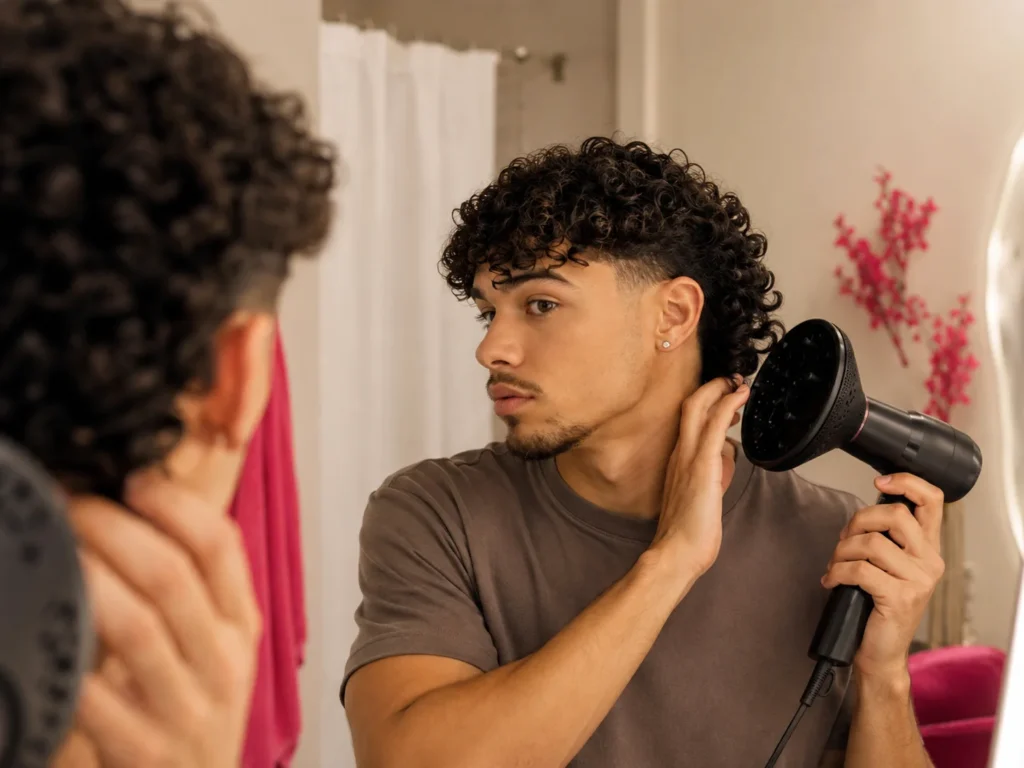
Don’t touch your hair while it’s drying. The cast that forms on top is what holds curl definition. Once it’s fully dry, scrunch out the crunch with a few drops of oil. That’s when the mullet starts to look intentional.
What Actually Ruins a Curly Mullet
Most of the bad ones I see fall into the same handful of mistakes.
- Fade too high. Cuts the curl mass at the back in half, visually. The mullet stops looking like a mullet and starts looking like a regular fade with longer back hair.
- Back too thin. Over-texturizing or razoring the back kills the weight that defines the cut. If your barber reaches for thinning shears, ask why.
- No back-view photo. You showed three front photos. The barber guessed the back. Now you have a back you didn’t ask for.
- Top too heavy. Curls on top need shape too. If the top isn’t cut to sit forward, it puffs up and throws off the proportion.
- Brushing dry curls. Already covered, but it’s the biggest at-home killer of a fresh cut.
- Skipping the trim. A curly mullet needs a shape-up every five to seven weeks. Skip it and the cut grows out into something formless.
- Too much product. Heavy creams weigh curls down and flatten the back. Less is more. If you’re fighting frizz that won’t quit, the answer is rarely more product, it’s usually the wrong product or too much of it.
Common Questions Before You Book
Is a curly hair mullet hard to maintain?
Not if you have a curl routine already. If you don’t, the cut will expose every gap. You’ll need a leave-in, a curl cream, and a willingness to diffuse or air-dry properly. That’s it.
Should I get a fade with my curly mullet?
Depends on your curl density and how bold you want the cut to read. Thick 3B and 3C curls can carry a fade easily. Looser curls usually look better with a low taper instead.
What if my barber doesn’t cut curly hair often?
Find a different barber. Curly hair gets cut on dry, defined sections, not soaking wet. If your barber wets your hair down and starts cutting immediately, you’re getting a straight-hair haircut on curly hair. That’s how mullets end up too short.
Before You Book the Cut
Pick two or three reference photos, not one. Make sure at least one shows the back. Match the curl pattern in the photo to your own, or accept that yours will look different.
Book with someone who cuts curly hair regularly, not someone who fades hair regularly. There’s a difference. If you’re nervous, go with the low taper mullet first. You can always go shorter or sharper at the next appointment. You can’t add length back.
Bring the words too. Photos plus the lines from earlier (fade low, back full, sides clean not disconnected) get you closer to what you actually want than either one alone.