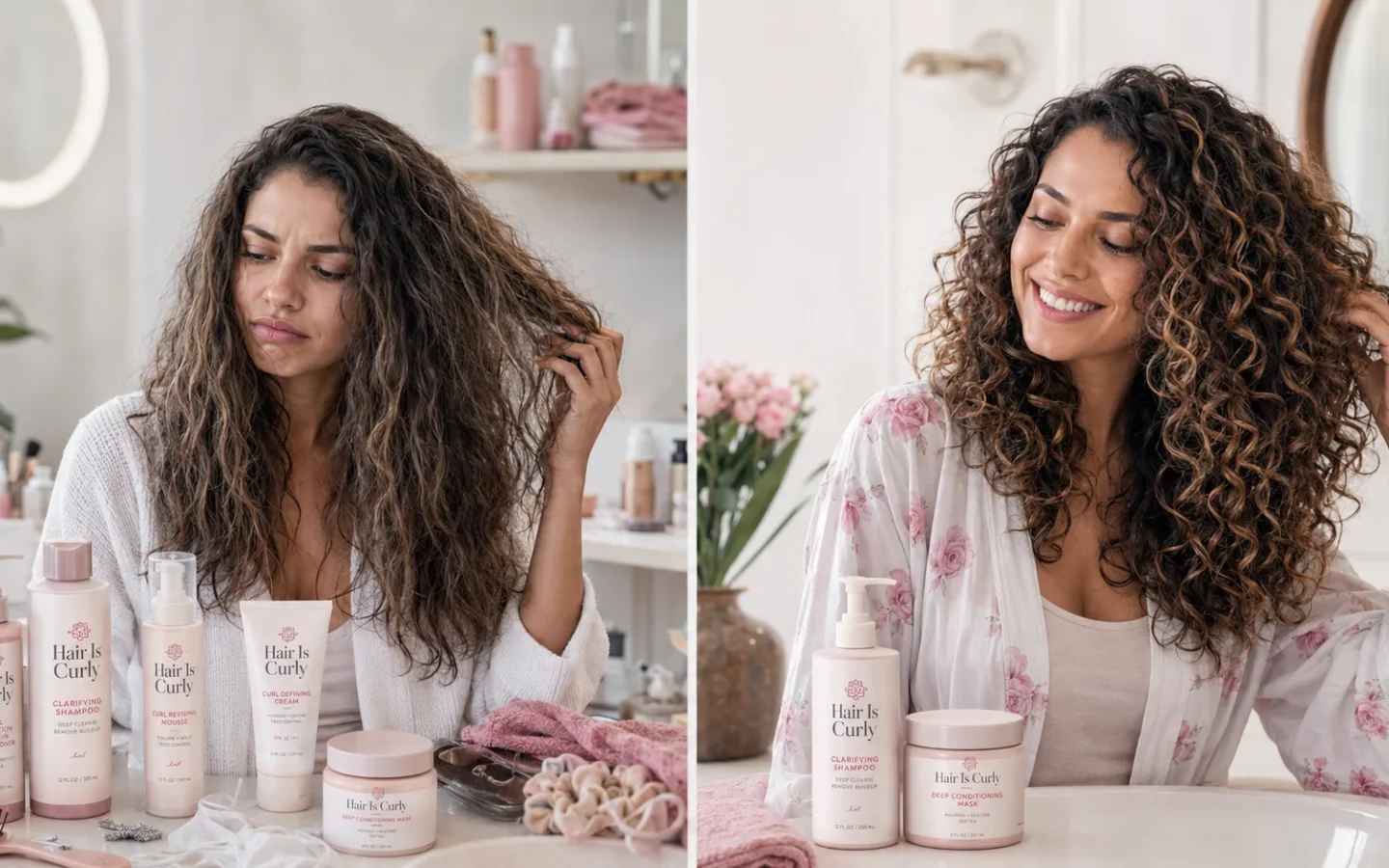
People usually ask this question already half-convinced the answer is no. They’ve heard clarifying shampoo strips hair, ruins curls, fades color, or turns soft ends into straw.
The truth is less dramatic, which is annoying for the internet but better for your hair.
Clarifying shampoo is good when your hair has buildup from styling products, oils, dry shampoo, hard water, sweat, or chlorine. It can make hair feel lighter, cleaner, and more responsive again. It becomes a problem when you use it too often, use a harsh formula on already-dry hair, or skip conditioner afterward.
So no, clarifying shampoo is not automatically good or bad. It is a reset. You use it when your hair needs one.
| If your hair feels… | Clarifying shampoo may help? |
|---|---|
| Heavy, coated, dull, or limp | Yes |
| Greasy right after washing | Often, yes |
| Hard to style or products stop working | Yes |
| Dry, brittle, snapping, or freshly colored | Be careful |
| Flaky, sore, or irritated at the scalp | Not always. That may need a different approach. |
The mistake is treating every bad hair day like buildup. Sometimes your hair needs clarifying. Sometimes it needs moisture. And sometimes it needs you to stop adding three more products and hoping they all become friends.
If your curly hair routine suddenly stops working, clarifying is one of the first things worth checking.
What Clarifying Shampoo Actually Removes
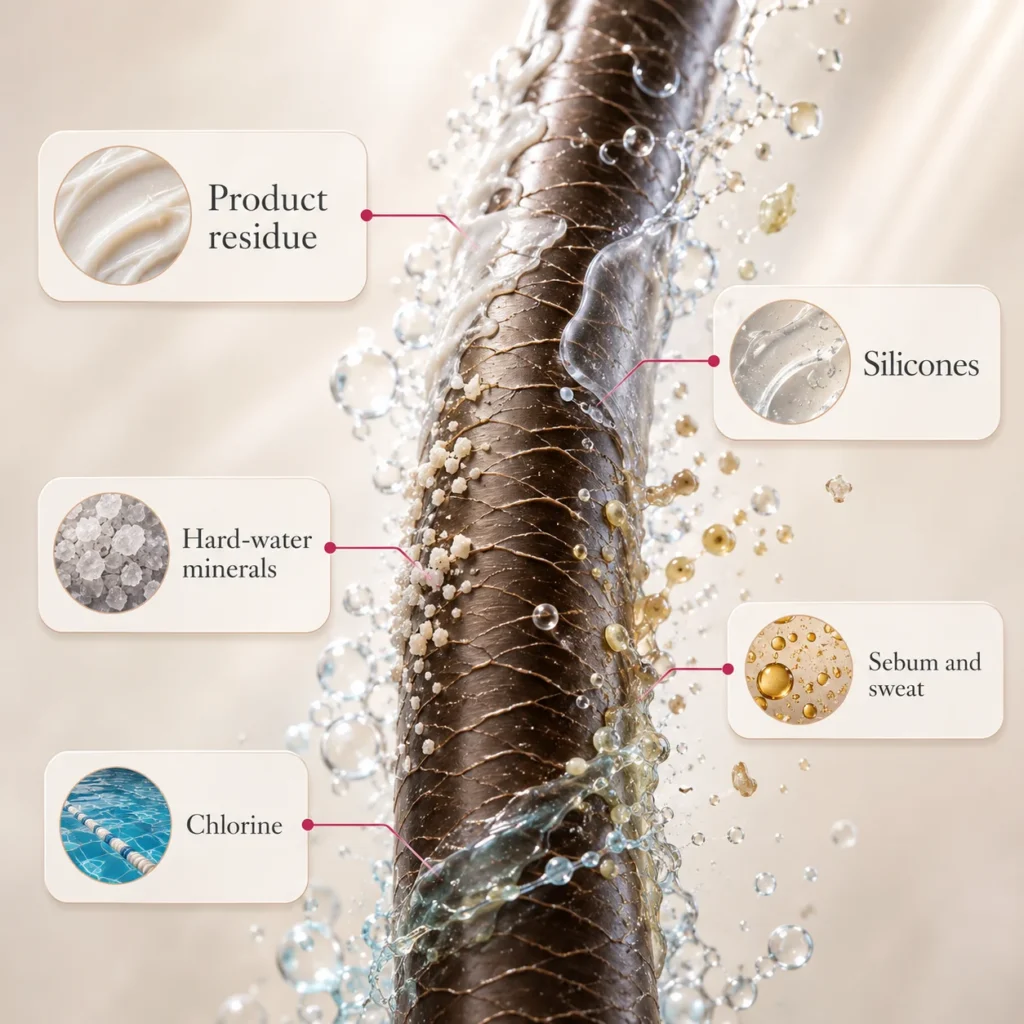
Regular shampoo is made for routine cleaning. Clarifying shampoo goes deeper. It helps remove the stuff that can cling to your hair and scalp even after a normal wash.
| What builds up | Common source |
|---|---|
| Styling product residue | Gels, creams, mousse, hairspray, dry shampoo |
| Oils and sebum | Scalp oil, heavy masks, leave-ins |
| Silicones and conditioning agents | Some conditioners, serums, smoothing products |
| Minerals | Hard water, especially calcium and magnesium |
| Chlorine | Swimming pools |
That buildup can make hair feel dull, heavy, greasy, or strangely dry even when you just washed it. A clarifying shampoo lifts that layer so conditioner and styling products can work properly again.
Some clarifying shampoos are also chelating shampoos, which means they are made to target mineral buildup from hard water. That matters because hard-water buildup and product buildup can feel similar, but they are not always removed equally well by the same shampoo.
Signs You Need Clarifying Shampoo
Buildup gets mistaken for dryness all the time. The clue is that your hair feels coated, not just thirsty.
You may need clarifying shampoo if:
- Your hair feels heavy even after washing
- Curls or waves fall flat faster than usual
- Products sit on top instead of absorbing or styling properly
- Your roots feel oily but your ends still look dull
- Your scalp feels filmy or itchy from product residue
- Hair takes longer to dry than it used to
- Your usual routine suddenly stops giving the same result
If your hair feels rough, brittle, or squeaky before you clarify, pause. That may be dryness or damage, not buildup. Clarifying already-dry hair too often can make the problem worse.
When Clarifying Shampoo Can Be Bad for Your Hair
Clarifying shampoo can backfire when the hair did not need a deep clean in the first place.
Be careful if your hair is:
- Very dry
- Bleached or freshly colored
- Fine and fragile
- Chemically treated
- Already breaking
- Curly or coily and prone to dryness
Color-treated hair needs extra caution because stronger cleansing can make color fade faster. Curly hair also needs a lighter hand because it naturally holds less scalp oil through the lengths.
That does not mean you can never clarify. It means you should use the right formula, use it less often, and always condition after.
How Often Should You Use Clarifying Shampoo?
How often you use clarifying shampoo depends on your hair, your styling products, and your water.
A useful starting point:
| Hair situation | How often to clarify |
|---|---|
| Heavy product use, oily scalp, or regular dry shampoo | About once a week |
| Normal product use | Every 2 to 4 weeks |
| Curly, dry, fine, or color-treated hair | About once a month or only when needed |
| Swimming or hard-water buildup | As needed, ideally with a clarifying or chelating formula |
Dermatology and hair-care sources commonly recommend using stronger cleansing shampoos only occasionally, especially for dry or sensitive hair. Cleveland Clinic’s hair-washing guidance gives a helpful baseline for people who use a lot of styling products, but your real schedule should come from your hair’s behavior, not a calendar.
If your hair feels light and responsive afterward, you probably timed it well. If it feels rough, stiff, or frizzy, you either clarified too often, used something too strong, or did not condition enough afterward.
Is Clarifying Shampoo Good for Curly Hair?
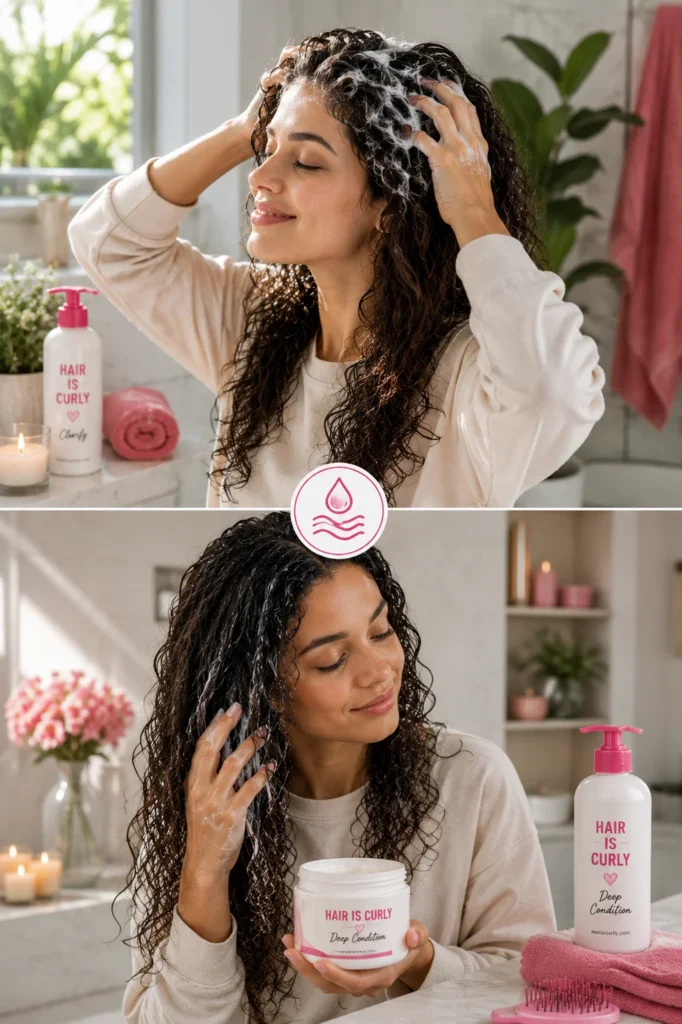
Yes, clarifying shampoo can be good for curly hair, but only when curls actually have buildup. Curly routines often use creams, gels, oils, butters, and leave-ins, so residue can collect faster than people expect. The problem is that curls are also more prone to dryness, so clarifying too often can leave them frizzy or rough.
But curls collect buildup quickly too, because curly routines lean on creams, gels, and butters that layer up. So you’re caught between needing to clarify and not wanting to dry things out.
The way through is simple. Clarify when your curls actually feel weighed down, not on a schedule. Use a gentle or sulfate-free formula. And never skip the deep conditioner after, because for curly hair that step is the whole reason clarifying doesn’t backfire.
If you want specific bottles rather than the general rule, I rounded up the best clarifying shampoo for curly hair, sorted by what your hair’s actually dealing with.
One note for low-porosity curls. If your hair takes forever to get wet and products always sit on top, that’s often buildup plus a cuticle that won’t open easily. Clarifying genuinely helps there, and our guide to high vs low porosity hair explains why your hair behaves that way.
What to Do the Second You Rinse It Out
Clarifying is half the job. The other half is putting moisture back, and skipping it is where most “clarifying ruined my hair” stories come from.
The wash strips buildup, but it takes some natural oil with it. That’s the trade. So follow it with a deep conditioner or mask every time, and leave it on longer than your usual rinse-out. Hair is unusually open right after clarifying, so this is when treatment does the most good.
Two rules I give people. Clarify, then deep condition, never the reverse. And if your ends feel rough a day later, you over-clarified or under-conditioned, so adjust next time. Stripped-then-unconditioned hair frizzes fast, which is exactly the spiral our piece on how to fix frizzy hair walks through.
When to Skip It Entirely
Sometimes the answer isn’t a better clarifying shampoo. It’s not clarifying at all.
If your hair is dry, snapping, or already stripped, clarifying won’t fix that, it’ll deepen it. Sort the dryness first, then clarify only when buildup genuinely returns. And if your scalp is irritated, flaking, or sore, that’s not buildup, and a stronger shampoo is the last thing it needs.
The mistake I see most is people clarifying to chase a “clean” feeling that dryness keeps stealing. Once you understand why hair gets frizzy, you’ll catch when dryness is just pretending to be buildup, and stop reaching for the wrong bottle.
The Short Version
Clarifying shampoo is good when your hair feels coated, heavy, dull, greasy, or hard to style because of buildup. It can be bad when your hair is already dry, fragile, freshly colored, or when you use it too often.
Use it as a reset, not a regular shampoo. Clarify when your hair gives you signs, follow with conditioner, and stop chasing a squeaky-clean feeling. Hair can be clean without feeling stripped.
A Few Things People Always Ask
Can I use clarifying shampoo every day?
No. It’s a deep clean, not a daily one. Daily use strips the oils your hair needs and leaves it dry and brittle.
Will it fade my color?
A harsh one can. If your hair’s colored, use a color-safe clarifier and keep it occasional rather than weekly.
My hair feels dry after I clarify. Did I damage it?
Probably not damaged, just under-conditioned. Clarifying is meant to be followed by a deep conditioner. Skip that and it feels dry. Add it back and the dryness usually sorts itself out.
Is a clarifying shampoo the same as a chelating one?
Close, not identical. All chelating shampoos clarify, but only chelating ones are built to remove hard-water minerals. If mineral buildup is your issue, you want the chelating kind.