I’ve watched this scene play out hundreds of times in my chair. A guy walks in with a screenshot saved from somewhere, sits down, and says “give me a fade.” The barber nods, makes a choice, and twenty minutes later the guy is in the mirror trying to figure out why his haircut doesn’t look anything like the photo.
The problem isn’t the barber. The problem is that “fade” by itself doesn’t mean anything specific. There are at least seven different cuts hiding under that one word, and the wrong one on the wrong face is the difference between sharp and awkward. So before you walk into your next appointment, here are the types of fades actually worth knowing, what each one does to your face, and what to say so you walk out with the cut you wanted.
A Fade Isn’t Just Short Sides
Quick clarification first because the word gets thrown around too loosely.
A fade blends your hair from longer on top down to shorter on the sides and back, often all the way into the skin. That part’s simple. What most people miss is that where the fade starts on your head decides almost everything else about how the cut looks.
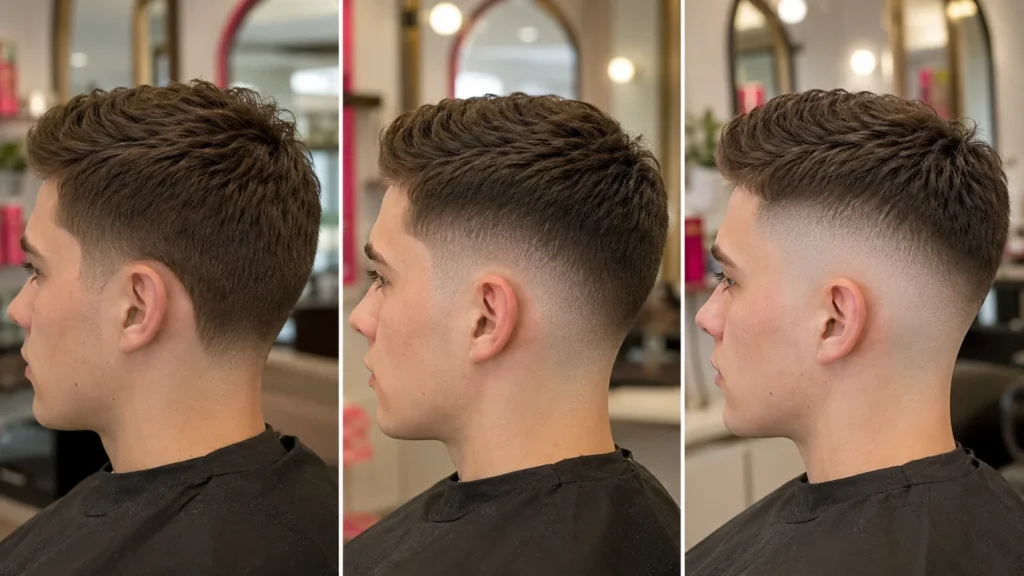
Same fade started an inch higher becomes a different haircut. Same fade taken closer to the scalp becomes a different haircut again. The barber needs to know three things before clippers come out: where the fade begins, how close it goes to skin, and how it connects to whatever length you’re keeping on top. Walking in with just “a fade” leaves all three of those up to someone who doesn’t know your face.
The Different Types of Fades Worth Knowing
Seven main types come through my chair. Some are siblings, some are cousins, and they overlap in ways that confuse people, but each one creates a noticeably different result.
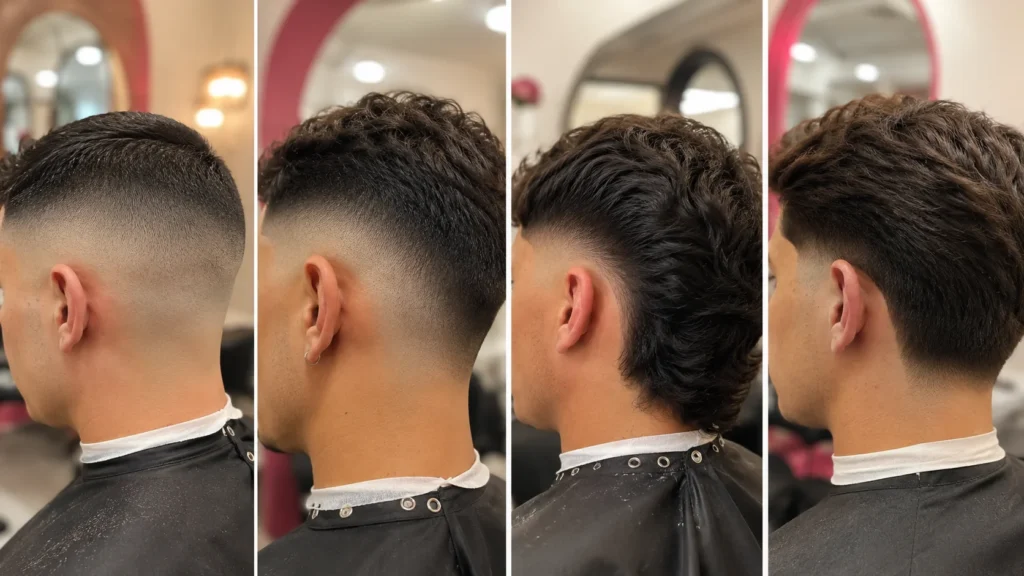
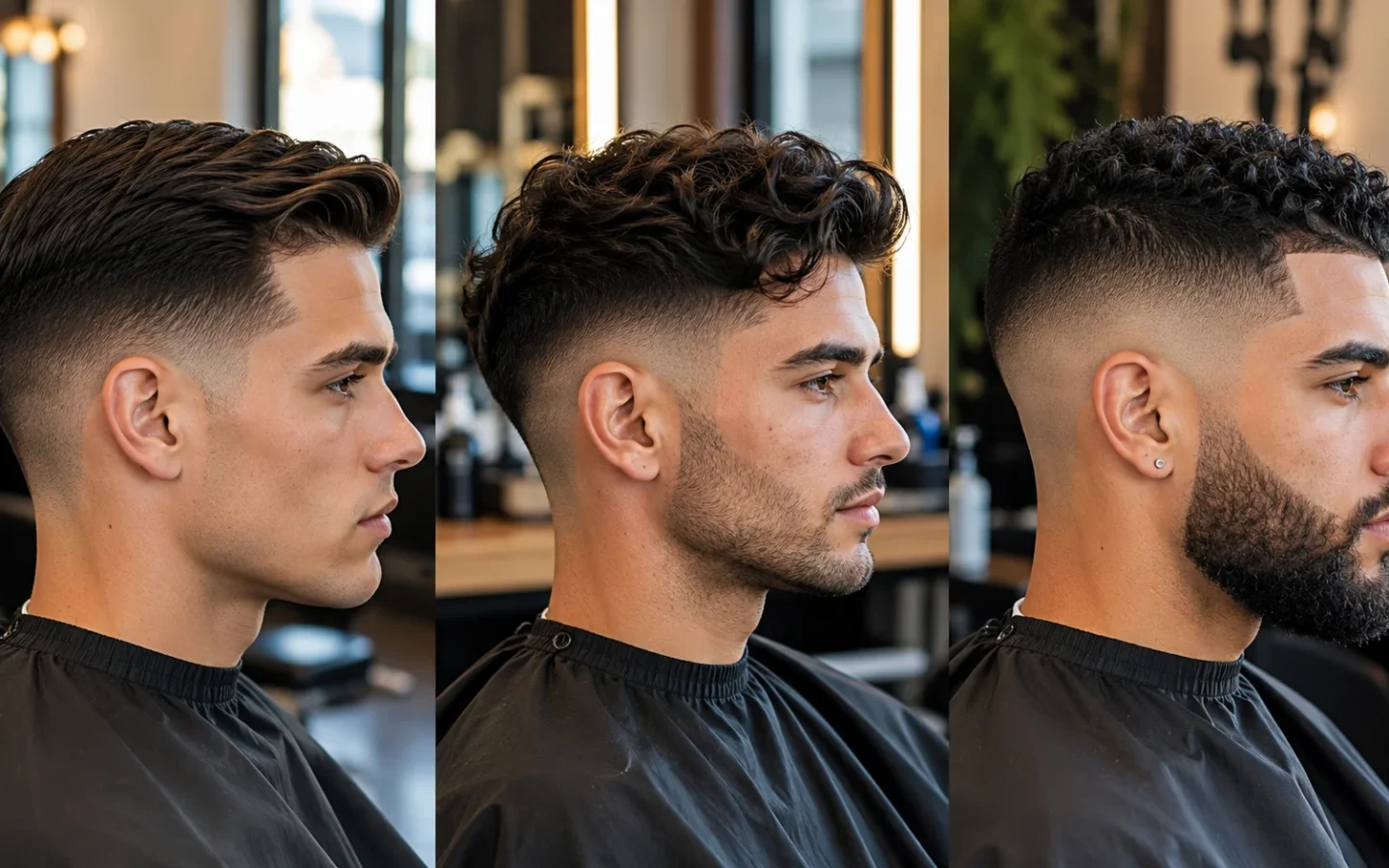
The low fade starts just above the ears and follows the natural hairline around. It’s the safest one. I recommend it to almost every first-timer who’s nervous about how aggressive a fade will look on them, because it cleans up the side profile without making any kind of statement. Works on every hair type I’ve seen.
A mid fade sits between the temple and the ear, which makes it the middle ground most guys actually want when they say “fade” without thinking too hard about it. Stronger contrast than a low. Less drama than a high. If you’re not sure where to start, this is usually it.
Then there’s the high fade, which I’ll be honest about: I push back on this one more than any other. Guys with long or narrow faces ask for it because it looks great on the Instagram model they saw, but on them it elongates the face further and the cut ends up working against them. It’s a bold, sharp look that works best on rounder or squarer face shapes that can carry the contrast.
A skin fade (some barbers call it a bald fade) takes the sides all the way down to bare skin. You can pair it with any starting height, low skin, mid skin, high skin. Sharpest possible look. Also the highest maintenance cut on this list because the skin-level part fills in fast and you’ll be back in two to three weeks if you want it staying crisp.
The taper fade is where most of the confusion happens. A taper haircut is technically a type of fade, but a fade isn’t a type of taper. In practice when someone asks me for a “taper fade,” they almost always mean a softer, gradual blend that doesn’t go to skin. I’ll explain the difference properly in a section below.
Drop fade. Curves down behind the ear instead of running straight across, following the actual shape of your head. Pairs especially well with longer hair on top, or with a curly hair mullet where you want the back to feel intentional.
Burst fade radiates out from around the ear in a circular shape and leaves the back longer than the sides. You’ll see it on mohawks, faux hawks, and creative textured tops. Statement cut. Don’t pick it if you want something you can grow out cleanly, the shape doesn’t transition well.
The temple fade is the lightest version of all of these, just a soft fade around the temples and sideburns with the rest of the sides kept longer. Good if you want a clean edge without anyone calling your haircut a fade.
Names can stack. A low drop fade exists. So does a high skin fade. The vocabulary builds on itself once you know the parts.
Quick Guide Before You Show Your Barber
Here’s the table I wish every guy had on his phone before booking. Cross-reference the look you want with what to actually say.
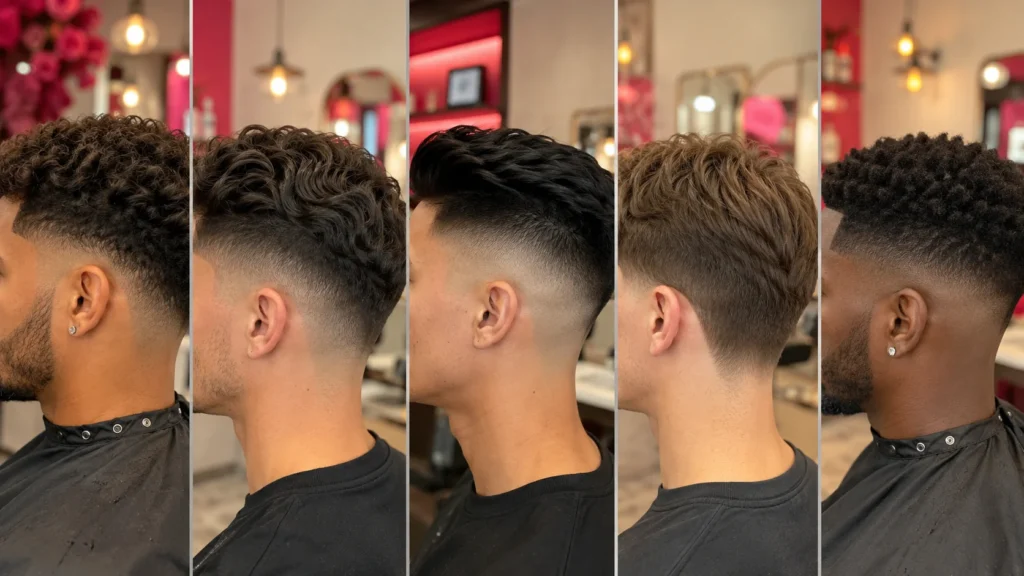
Match the look you want with the words that get you there:
Read the row that matches what you’re imagining. Save it. That’s the language to use when you sit down.
Which Fade Suits Your Hair Type
This is where most online fade guides fall apart. They list the cuts but skip the part that actually matters: your hair behaves differently than the guy in the photo, and the same fade won’t land the same way on different textures.
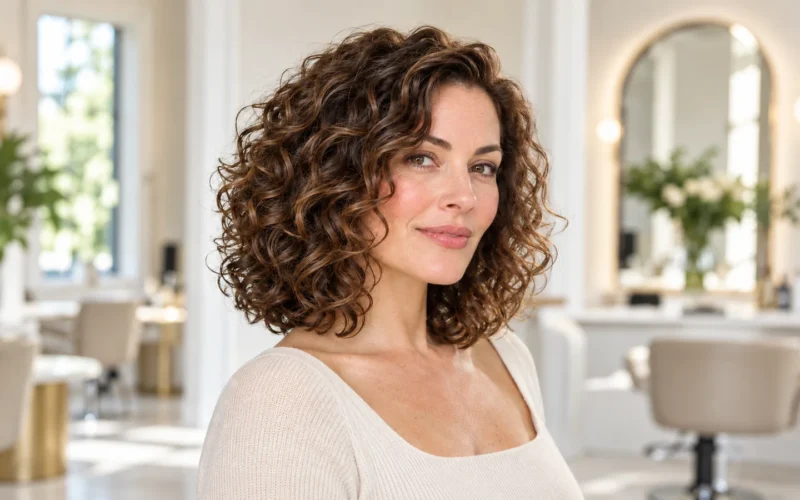
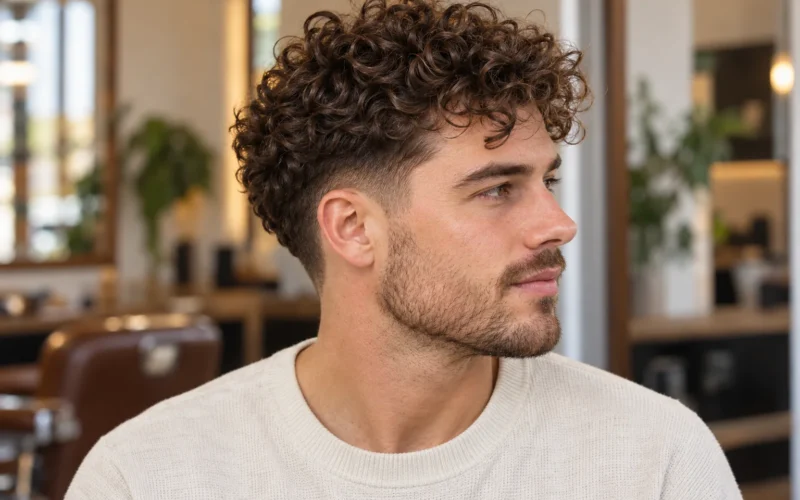
Curly hair. Curls have weight and volume on top, so a fade gives them somewhere to sit. Low and mid fades work beautifully because they keep proportion. Skin fades and high fades create harder contrast, which can look incredible if you have density to back it up, or harsh if your curls are loose. The biggest mistake I see is barbers wetting curly hair down and cutting it short, then the client gets home and realizes the shrinkage left them with two inches less than they wanted. Curls need to be cut on dry, defined hair, and if you want to see what shorter curly cuts look like before deciding on fade height, these short curly options give you a sense of what’s possible up top.
Wavy hair carries fades well because the waves give the top movement without the bulk that curls bring. Mid fades and drop fades are particularly flattering on waves because they highlight the texture without competing with it. The thing wavy guys forget: your waves will look flatter immediately after the cut and bounce back over a week as the hair settles, so don’t panic in the chair.
Thick hair. A fade is genuinely useful for thick-haired clients because it removes bulk without losing the top. Fades reduce bulk and create a cleaner profile on thick textures, which is why I’ll often suggest a mid or high fade for guys whose thickness makes other cuts feel heavy. Pairing thick hair on top with a medium-length curly approach plus a fade is one of the easiest ways to make thick hair feel manageable.
Fine hair is the opposite story. Fades can make fine hair look thinner because they expose more scalp. If your hair is fine, I’d actually steer you toward a taper instead of a fade, or at the lightest, a temple fade. The hair on top needs to keep its visual weight, and a high fade will work against that.
Coily and tightly textured hair carries fades exceptionally well, the contrast between coiled top and clean sides is part of what makes the cut feel intentional. The challenge isn’t the cut, it’s the maintenance. Coily hair shrinks more than any other texture, so the fade line will look different wet versus dry. Tell your barber to cut dry and to leave slightly more length than you think you want.
Taper vs Fade, Because People Mix Them Up
Short answer because this could be its own article.
A taper transitions gradually and usually leaves visible hair at the bottom. A fade transitions more sharply and often goes all the way to skin. Tapers are evenly cut all around, while fades dramatically change hair length and go from long to short quickly.
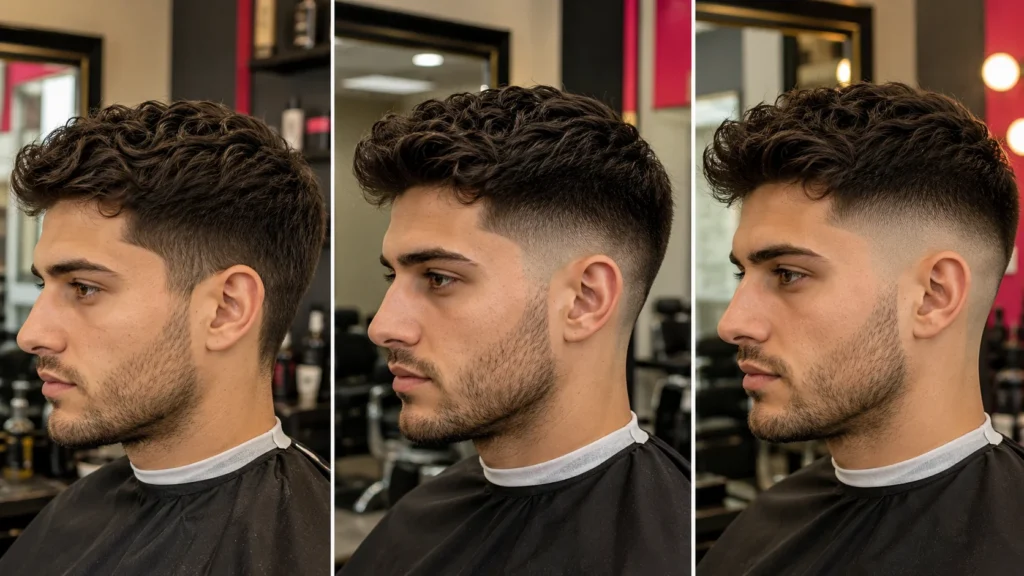
If you ask for a “taper” you’ll get something softer and conservative. If you ask for a “fade” you’ll get something with more contrast and shorter sides. If you ask for a “taper fade,” your barber is going to make a judgment call, because that term means different things in different shops. Always show a photo if you use that phrase.
How to Choose by Face Shape
I’ll keep this narrower than a full face shape guide, since our face shape pillar covers the styling side of that conversation. For fades specifically, the question is just: where should the fade sit on your head given the shape of your face?
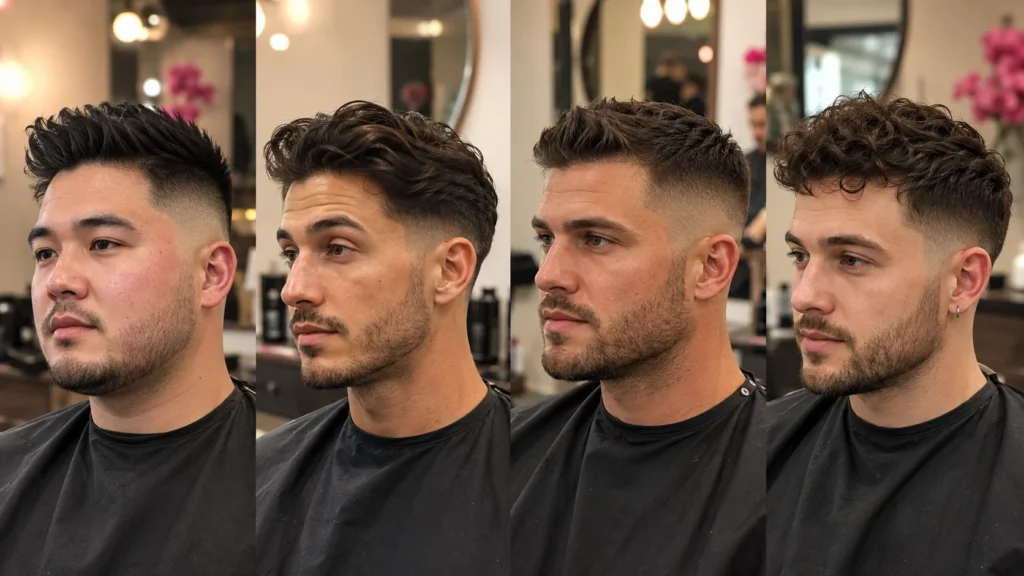
Round faces benefit from height and vertical lines, which a mid or high fade can deliver because they pull the eye up. A low fade tends to widen the silhouette, which is usually the opposite of what a rounder face wants. The cut round face guide here goes deeper into the styling decisions that pair with this.
Long or oval faces should generally avoid high fades. The extra vertical line stretches the face further, and what looks sharp on someone with a square jaw looks gaunt on someone with a longer face. Low fades and tapers are friendlier.
Square faces have flexibility. Most fades work because the jaw can carry the contrast. The only call here is whether you want to soften the jaw (lower fade, softer blend) or accentuate it (high fade, skin contrast).
Heart-shaped and triangular faces, where the forehead is wider than the jaw, do better with fades that don’t add visual width at the temples. A drop fade or low fade keeps the balance. A high fade can pull attention to the wider part of your face and throw the proportion off.
What to Actually Say in the Chair
This is the section that’s worth screenshotting. Photos are useful, but a barber needs verbal direction to translate the photo to your head. Here’s what I tell clients to bring with them:
If you want something subtle, say: “I want a low fade, soft blend, not skin. Keep enough weight on the sides so the cut grows out evenly.”
For more contrast without going extreme: “I want a mid fade, blended into the top, not a hard line. Don’t take it above my temple.”
For the sharp, modern look: “I want a high skin fade. Clean line where it meets the top. Show me before you take it shorter.”
When in doubt about how high the fade should sit, ask the barber to mark the starting line with a comb or clipper before they cut, and look at it in the mirror first. Once the line is set and the clippers start, the height is decided. Any barber worth booking will be happy to pause for that.
One more line that saves haircuts: “Don’t thin out the top.” Texturizing scissors are useful when used carefully, but over-texturizing flattens volume and ruins the proportion fades depend on. Especially relevant if your hair has any curl, wave, or natural body, because excessive thinning often shows up as frizz or limpness once the cut grows out a few weeks.
Before the Clippers Start
Choose two or three reference photos, ideally one front view, one side view, one back. Look at the fade height in each photo, that’s the variable that changes most between cuts. Decide if you want skin or just short, decide where the fade should start, and bring those two answers with you.
Book with someone who cuts your hair type regularly. A barber who specializes in straight-hair fades is going to struggle on curly hair, and the reverse is also true. Worth asking before you sit down.
And if you’re nervous, go softer than you think. You can always go shorter at the next appointment. You can’t add length back for a month.