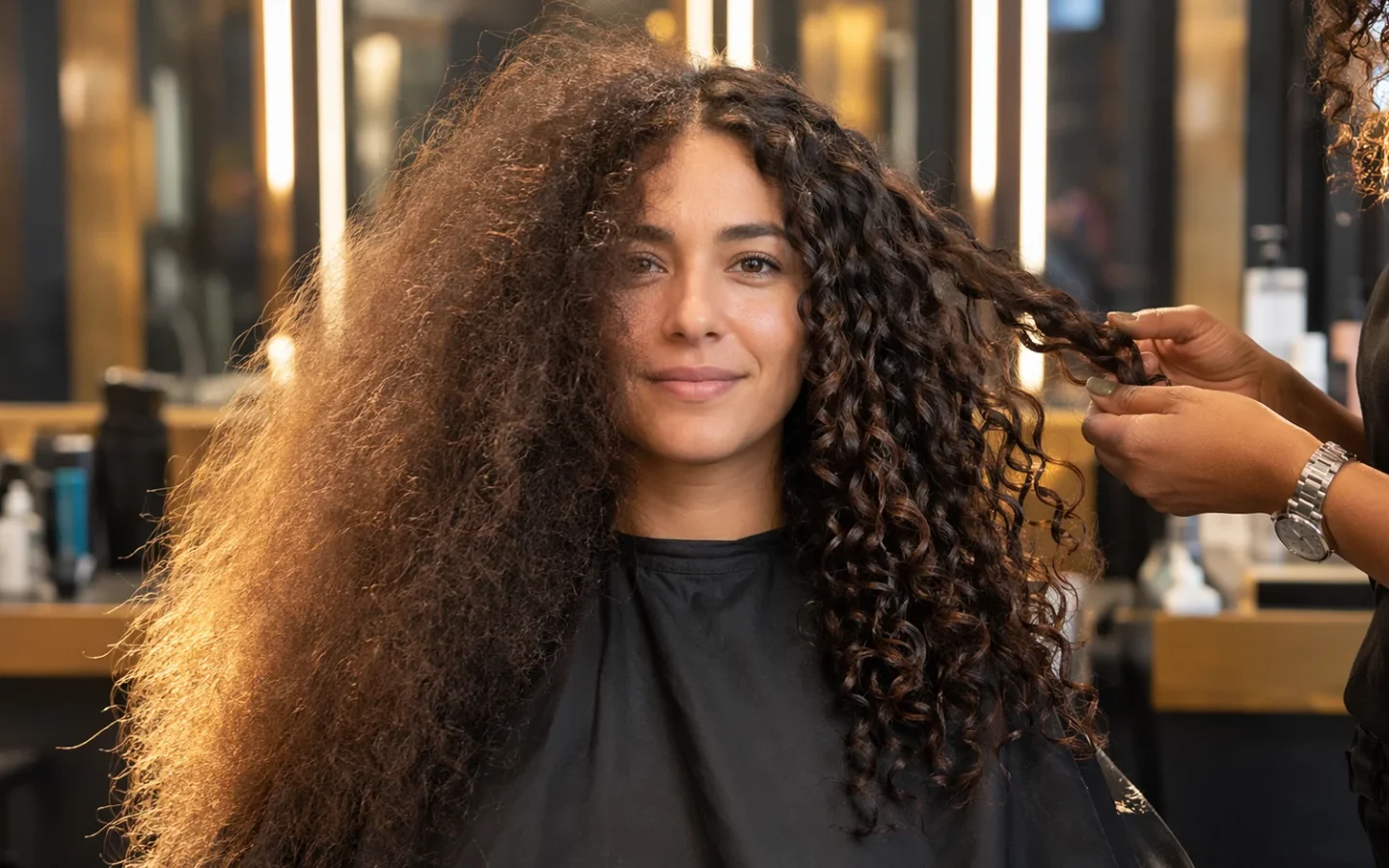
Twenty-five years behind the chair and the number one thing clients get wrong about frizz? They treat it like it’s one problem. High porosity frizz, low porosity frizz, heat damage, humidity. Each one needs a completely different approach, and using the wrong fix on the wrong type makes it worse. I’ve watched it happen hundreds of times.
If you haven’t figured out which type you’re dealing with yet, Tim breaks down the science of why hair gets frizzy better than anyone I know. Start there. This article is the action plan.
Read Your Frizz Before You Reach for a Product
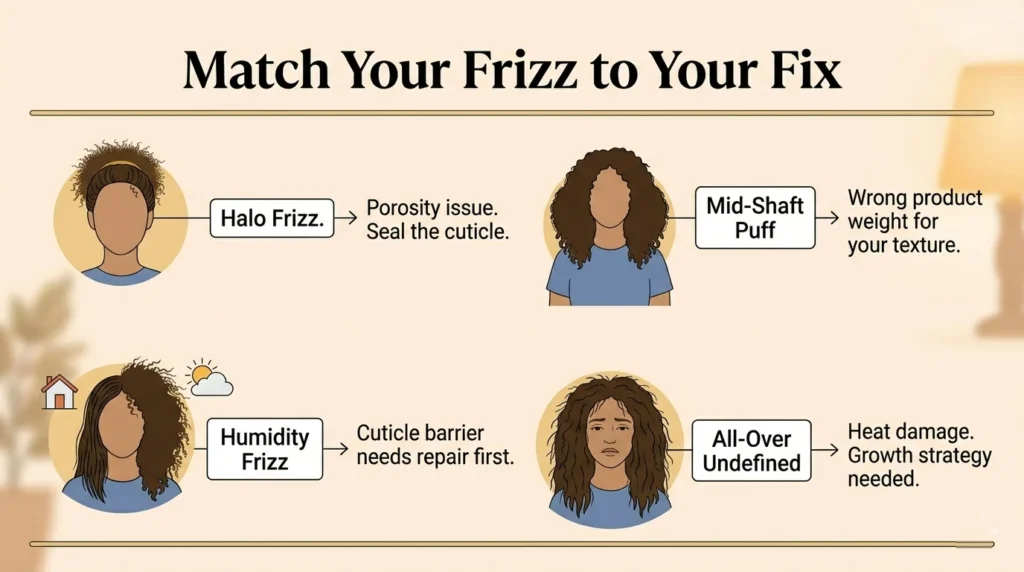
Halo frizz sitting on top like a crown? Porosity. Mid-shaft puffiness where length loses all definition? Product weight is wrong for your texture. Looks fine indoors, explodes outside? Humidity response, different fix entirely. Uniformly rough and undefined root to tip? That’s structural damage, and honesty matters more than products there.
Knowing which one you have changes every decision that follows.
High Porosity: Stop Moisturizing. Start Sealing.
The most common mistake I see. Client has four moisturizing products, hair still feels dry an hour post-wash. They think they need more hydration. They don’t. They need to stop moisture from leaving.
Gaps in the cuticle mean moisture floods in and rushes right back out. If you’ve never looked at your hair this way before, understanding high vs low porosity hair makes this behavior a lot easier to recognize. Research confirms that damaged cuticles lose their barrier function, and protein-based treatments with hydrolyzed fragments can temporarily restore some of that structure.
The sequence that actually works:
- Protein first (hydrolyzed rice protein or keratin) to patch cuticle gaps
- Moisture on soaking wet hair, not towel-dried damp. Water carries the conditioner deeper.
- Seal with a lightweight frizz control serum before drying. This is the step everyone skips, and it’s the one that makes everything else stick.
Cut immediately: clarifying shampoo every wash, skipping conditioner, applying products to dry hair expecting absorption.
Low Porosity: The Opposite Problem
These clients describe something that sounds impossible. Hair feels weighed down AND frizzy. That’s because products are sitting on the surface, building up, while the strand underneath stays dry.
Heat opens the cuticle for low porosity hair. That’s the whole game. Warm water when washing. A warm towel wrap during conditioning. The same conditioner that did nothing at room temperature works completely differently with twenty minutes of gentle heat.
Go lighter on everything. Water-based leave-ins, glycerin, aloe. And co-washing exclusively? Trap. If products can’t get in easily, they can’t get out easily either. You need a gentle clarifying wash regularly or everything just layers on top of itself.
The Product Order Nobody Talks About
Good products, wrong sequence, still frizzy. I see this constantly.
Most clients layer products based on whatever order they grabbed them off the shelf. But the cuticle is only fully open when hair is wet, and it slowly closes as hair dries. That window matters. Miss it and half your products are just sitting on top doing nothing.
The general order that works for most textures:
- Leave-in on wet hair while the cuticle is still open
- Cream or curl definer if you need definition and weight
- Gel or styler for hold
- Lightweight oil or serum last to seal, not first
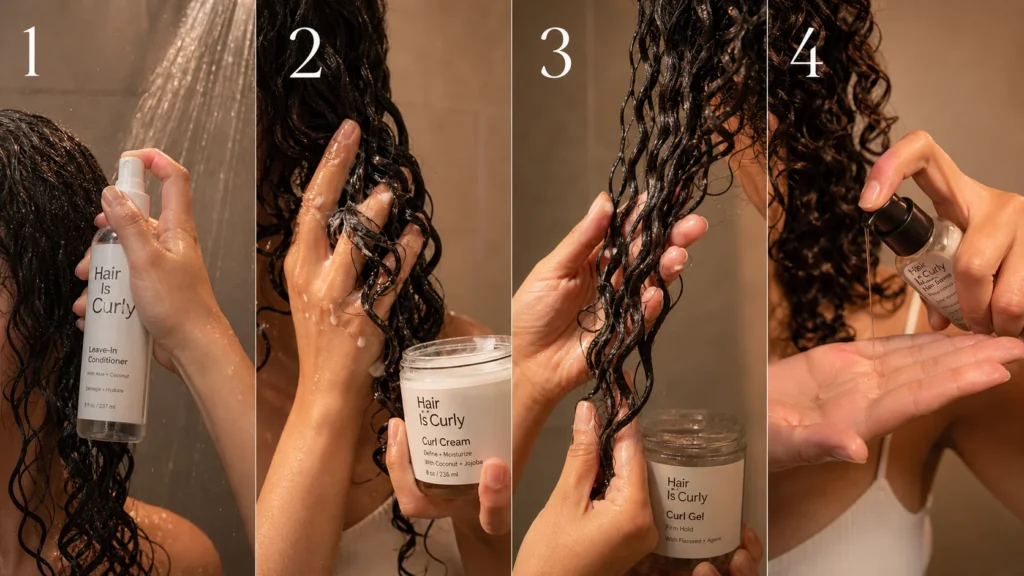
Putting oil on before your leave-in is like waterproofing wood before painting it. Nothing sticks after that.
Now adjust by type. High porosity, go heavier at that sealant step. Low porosity, skip the cream entirely and go straight from leave-in to a light gel. Wavy hair? Less is almost always more. A leave-in and a light frizz control serum is often enough without the extra layers collapsing your wave pattern.
Humidity Doesn’t Cause Frizz. It Exposes It.
Every summer somebody sits in my chair saying they “can’t do anything” with their hair when it’s humid. And I get it. But humidity is a trigger, not a cause.
When the cuticle is already compromised, hair pulls moisture from the air aggressively. Swells unevenly. Strands push against each other. No anti-humidity spray fully overrides what’s happening structurally. Research from the NIH showed that the cuticle plays a much bigger role in moisture management at higher humidity levels than previously understood. Basically, the worse your cuticle condition, the harder humidity hits.
So what actually helps?
Consistent cuticle sealing after every wash. Not just on humid days. Every wash. Build the barrier before the humidity tests it. On high-humidity days specifically, apply your products to wetter hair than usual. More water on the strand slows down that frizzing process during drying because there’s something buffering the cuticle during the transition.
Fighting humidity with products before fixing the cuticle underneath is like mopping around a leak. The floor stays wet.
The Nightly Habits Quietly Undoing Your Routine
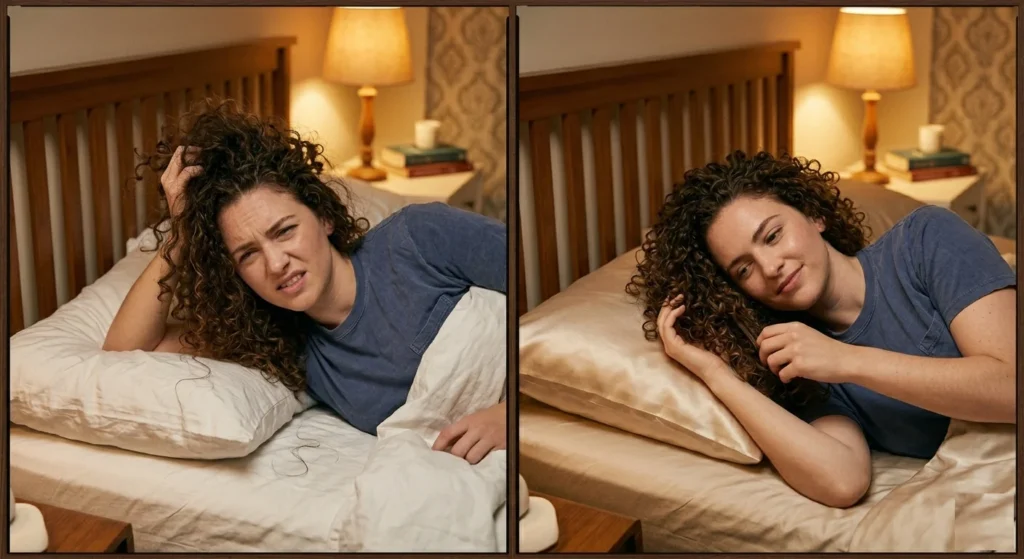
You can nail your wash day perfectly and still wake up frizzy. Cotton pillowcases create friction overnight. The cuticle lifts, hair tangles, and by morning you’ve got frizz that has nothing to do with your products.
Silk or satin isn’t luxury advice. It’s practical. The surface doesn’t grip the hair shaft the way cotton does. Less friction, flatter cuticle by morning.
For curly and coily hair specifically, a loose pineapple or silk bonnet overnight keeps the curl pattern intact. Not because it looks cute, it doesn’t. Because less morning manipulation means less frizz from that manipulation.
The other one? Rough towel drying. Terry cloth creates micro-friction while hair is at its most vulnerable, wet and swollen. A microfiber towel or cotton t-shirt blots without that friction. Small swap, consistent difference.
These kinds of small changes work best when they’re part of a consistent curly hair routine built around your hair type.
Heat Damage Frizz: The Honest Conversation
This is the one where I have to be straight with people. If your frizz comes from years of flat ironing or blow drying on high heat, there’s a ceiling on what products can do.
Repeated high heat changes the protein bonds inside the cortex. That’s not surface-level stuff you can condition away. I can usually spot it quickly in consultations. The curl pattern looks zigzag instead of a natural S-shape, strands pull in opposite directions, and the texture feels stiff and straw-like in sections.
Protein treatments help temporarily. A good leave-in keeps things manageable day to day. But the damaged length has to grow out. New growth gets protected differently going forward. Lower heat settings, always with a protectant, less frequent use overall. That’s the real fix. Not what anyone wants to hear, but the alternative is spending another two years cycling through products wondering why nothing sticks.
If your hair “hasn’t been the same” since you started straightening regularly, you’re not imagining it. The curl pattern disrupted at the cortex level doesn’t fully bounce back the way surface frizz resolves.
What Clients Actually Ask Me About Fixing Frizz
How long before a new routine works?
Three to four wash days minimum. One wash tells you almost nothing. Your hair needs time to adjust to the moisture balance shifting. People quit after one try and blame the product when the product never got a fair shot.
My hair is frizzy at the roots but smooth at the ends. What’s going on?
Usually a distribution issue. Try applying your leave-in to the roots first before working it down. Could also be scalp oil not moving through the hair properly, especially common with tighter curl patterns.
Why does my hair get frizzier the more I touch it while drying?
Every time you touch drying hair you disturb the cuticle and break apart the curl pattern as it forms. Apply products, scrunch once, walk away. That last part is genuinely hard for most people but the difference is significant.
Is frizz genetic?
Partly. Natural porosity and curl pattern are genetic. But a lot of what people assume is “just my hair” is actually accumulated damage sitting on top of a natural tendency. Fix the damage layer and you might discover your hair behaves better than you thought it could.
What I Want You to Take Away
Frizz is fixable when you stop treating it as one generic problem. Figure out your porosity. Be honest about heat damage if it exists. Get your product order right. Protect your hair overnight. And give your new routine at least a month before you judge it.
If you’re still sorting out what type of frizz you’re dealing with, Tim’s breakdown of why hair gets frizzy in the first place is the best starting point. Diagnosis first, fixes second. That order matters as much as your product order does.