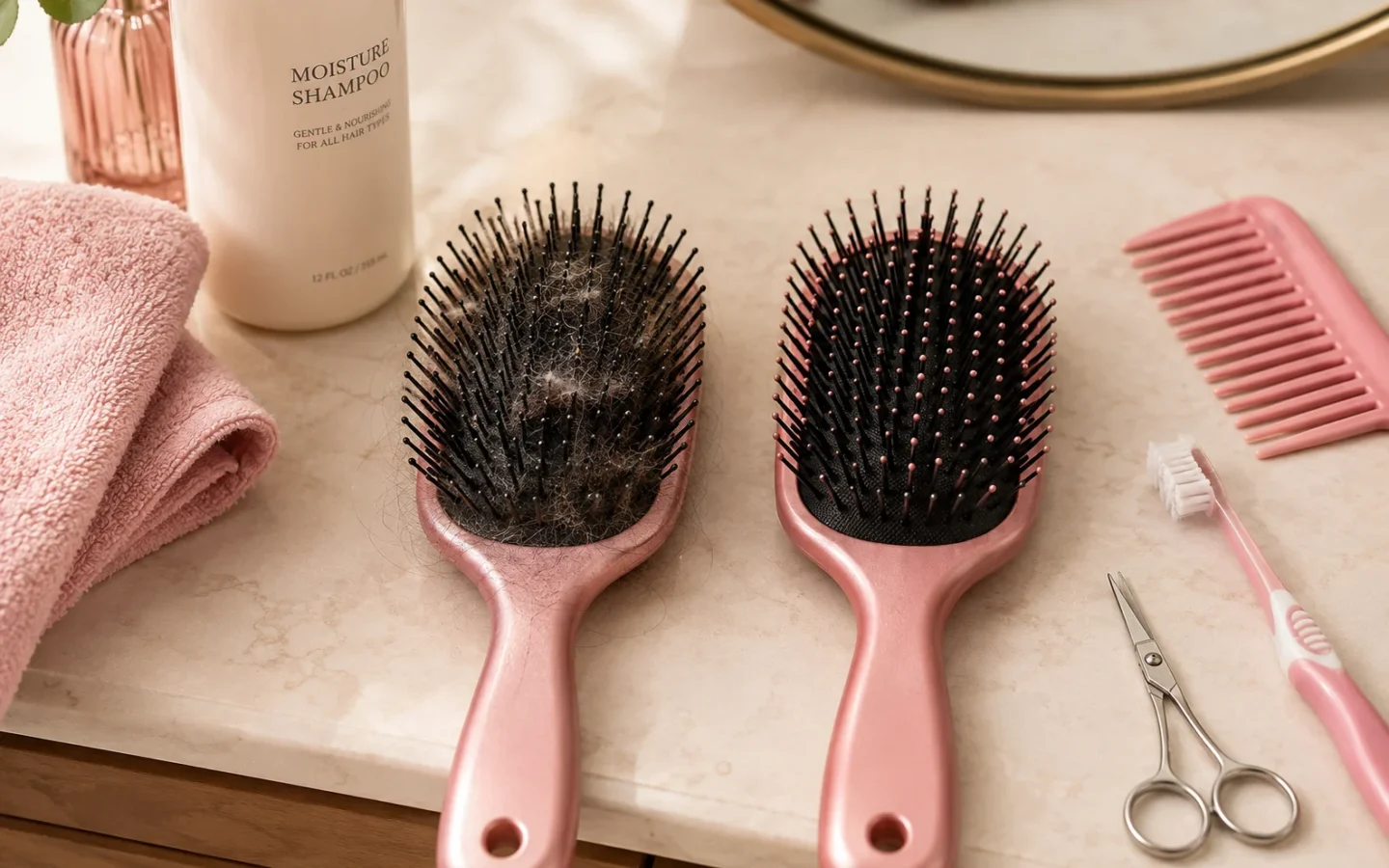
Press your fingers into your hairbrush bristles right now. Feel that grit? Pull out the gray fuzz sitting at the base. That little mat is shed hair, scalp oil, dead skin, and old product, all of it sitting on the tool you drag through clean hair every morning.
Most people never clean their brush. They replace it when it gets gross and start the cycle over. But a dirty brush undoes the work your shampoo just did, and on the wrong scalp it makes real problems worse.
I deal with the fallout in my chair often. A client swears their flaking is a shampoo issue, we try three products, nothing sticks. Then I ask when they last cleaned their brush. The answer is usually never.
Ten minutes fixes it. Here’s how.
What a Dirty Brush Does to Your Scalp
Think of your brush as a sponge that never gets wrung out. It holds onto everything it touches:
- Sebum, the natural oil from your scalp
- Dead skin cells that shed from the scalp daily
- Product residue that hardens into a sticky film at the bristle base
- Dust and pollution from the air around you
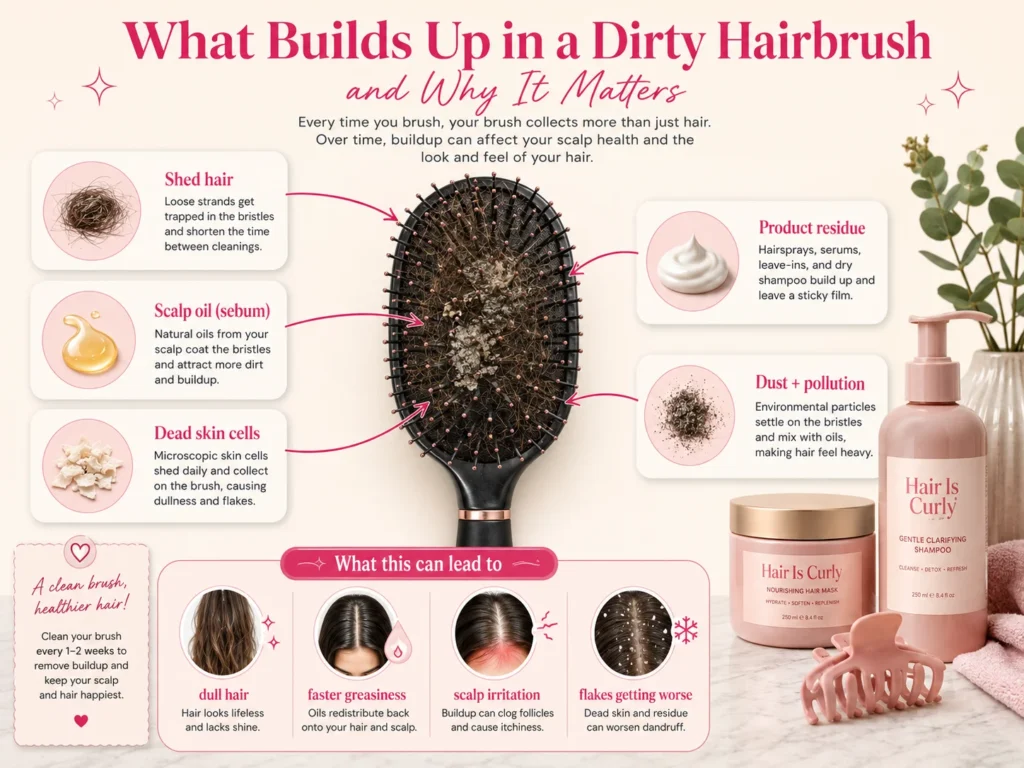
Every brushstroke through that buildup redeposits it onto clean hair and back onto your scalp. On a healthy head, that mostly means dull hair and faster greasiness. On a scalp prone to flaking, it’s worse. A brush packed with oil, dead skin, and product keeps feeding that residue back onto your scalp, and the American Academy of Dermatology notes that oil overproduction on the scalp can trigger dandruff. A dirty brush is a steady supply of exactly that.
I’m not telling you a dirty brush causes scalp disease. I’m telling you it makes existing issues harder to control. I’ve seen clients clear up stubborn flaking just by cleaning their tools and changing nothing else.
How Often Should You Clean It?
No universal rule here. It depends on how much product you put in your hair.
| Your Routine | Clean Your Brush |
| Heavy styling products (gel, cream, spray) | Once a week |
| Light or occasional product | Every 2 to 3 weeks |
| No product, fine hair | Every 2 weeks, pull hair out weekly |
You’ll want to remove shed hair more often than a full clean. It’s normal to lose a good amount of hair daily, and most of what comes out on the brush settles into the base. The AAD’s everyday hair care guidance covers how shampooing to the scalp clears built-up product, dead skin, and oil, which is the same residue your brush keeps recycling if you never clean it.
The simple tell: if you see fuzz or feel grit when you press the bristles, you’re overdue.
What You’ll Need
Honestly, whatever’s already in your bathroom. A comb or a pen to lift the hair out. Your regular shampoo. An old toothbrush. A towel. If a brush has gone months without attention, baking soda helps, but most of the time you won’t touch it.
Actually Cleaning It
Start by pulling the hair out. Run a comb point or a pen under the mat and lift it free. If it’s really wedged in, snip across it with scissors and pull it out in chunks.
Most people quit right here. Hair’s gone, brush looks clean, job done. Except it isn’t. The bristles are still slick with oil and whatever product you’ve been piling on, and that’s the part that actually matters.
So here’s the rest of it:
- Fill a sink with warm water and squirt in some shampoo. Swish it till it foams.
- Scrub the base, not just the bristles. Where the bristles meet the cushion is where the greasy gunk hides. An old toothbrush gets in there.
- Rinse under cool water. Don’t leave shampoo sitting in the brush. No sense getting residue out just to swap it for soap.
- Dry it bristle-side down on a towel. Water needs somewhere to drain. Let it pool in the cushion and you’ll grow mildew in there.
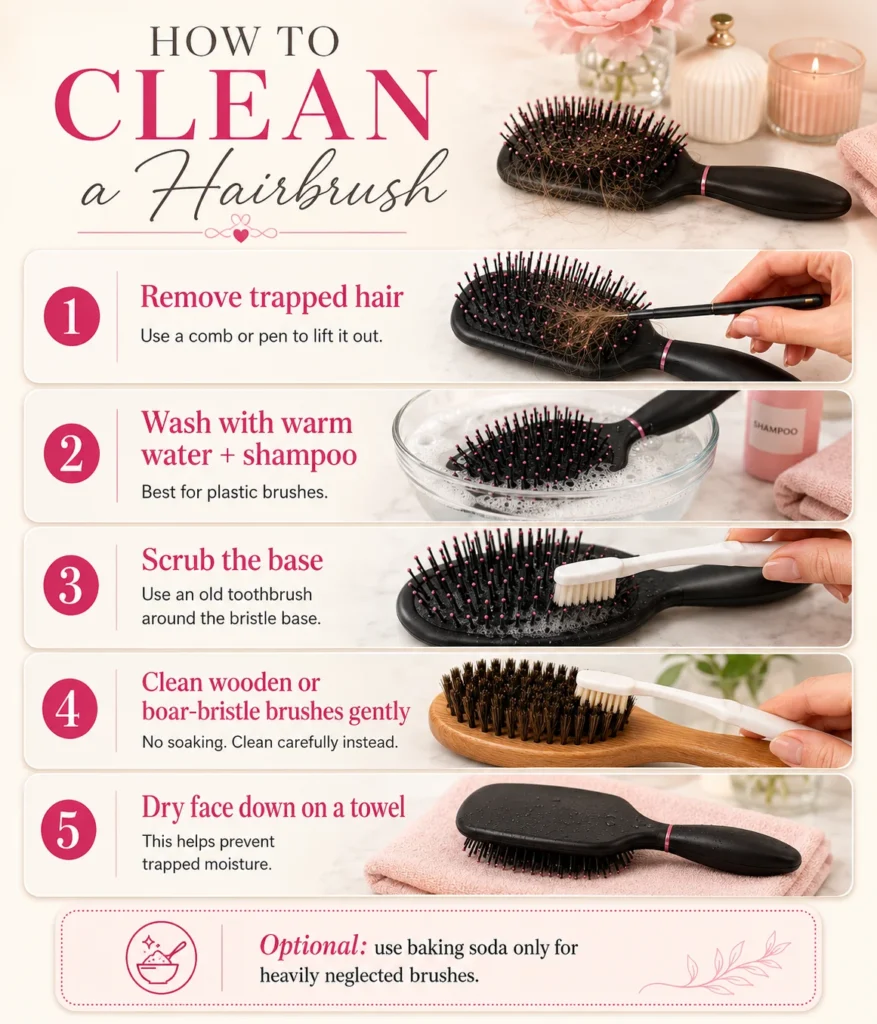
One catch before you start: the brush type changes the rules.
| Brush type | What to do |
|---|---|
| Plastic / synthetic | Safe to soak. Drop it in for a few minutes, then scrub. |
| Wooden / boar bristle | Never soak. Water warps the wood and loosens the glue holding bristles in. Dip the toothbrush instead and spot-clean, keeping the base dry. |
A couple of extra notes:
Baking soda, only if the brush is truly neglected. A spoonful in the water, soak it half an hour, scrub as normal. You won’t need it on a brush you clean regularly.
Curly and coily hair, if you use thick creams and butters, your brush gums up faster than someone using a light mousse. Clean it weekly and give the base extra attention. None of your wash-day effort counts for much if the brush undoing it is filthy, same reason a good curl routine only works when the tools touching your hair are clean.
When the Brush Is Past Saving
A clean brush still wears out. Cleaning just delays it.
Daily users tend to get six months or so out of a brush. Lighter use, maybe a year. But I’d ignore the timeline and watch the brush instead, because it shows you when it’s done.
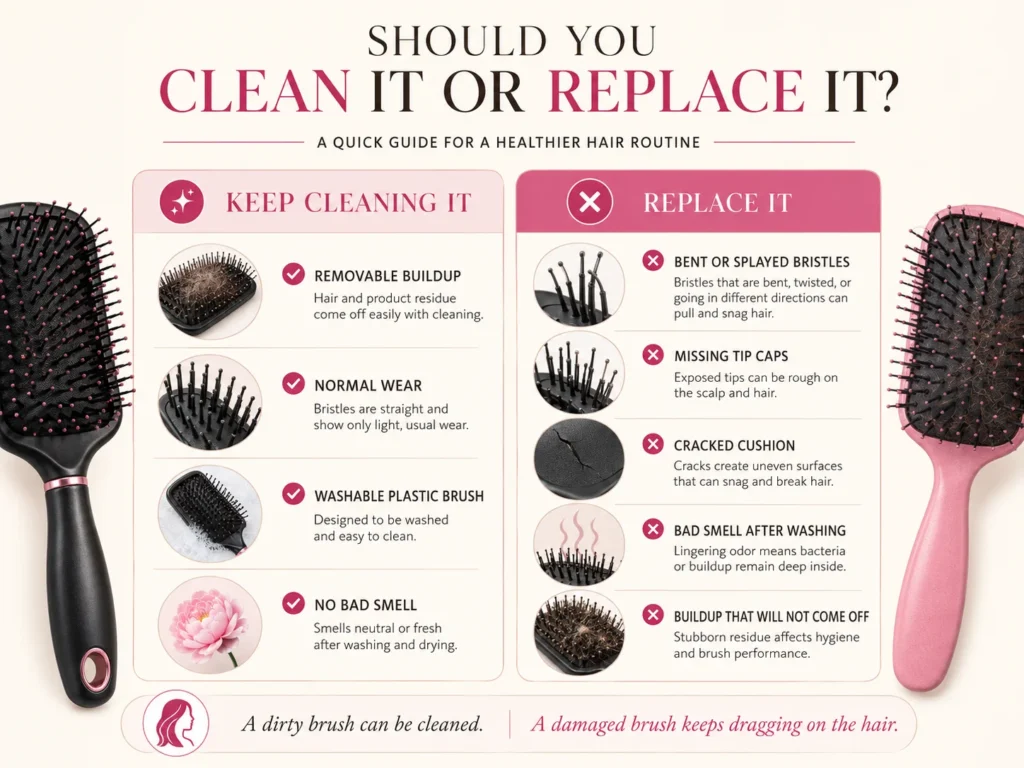
Splayed or bent bristles are the first thing. A bristle that’s lost its shape drags instead of glides, and that drag turns into snags and breakage over time. The little rounded caps on the bristle tips matter too. Once those wear off, the bare bristle ends scrape at your scalp every time you brush, which is the opposite of what you want.
Then there’s the brush you simply can’t get clean. You wash it properly and the base still feels coated, or there’s a smell that survives the soap. That means buildup has packed into spots your toothbrush can’t reach, or a crack in the cushion is harboring bacteria down inside. Keep using it and you’re working old grime into freshly washed hair every morning. Not worth it. Replace it.
A Few Questions I Get Asked
Can I just rinse it with water?
You can, and it’ll clear the loose hair and dust. What water won’t do is break down the oily film, and that film is the whole reason the brush is dirty in the first place. A bit of shampoo does what plain water can’t.
What about vinegar?
Some people swear by a diluted vinegar soak, and for the occasional deep disinfect on a plastic brush, it’s fine. I wouldn’t bother with it as a regular thing. Warm water and shampoo already handle what most brushes need.
It still smells after I wash it. What’s going on?
Probably means the smell isn’t coming from anywhere you can scrub. Bacteria gets into the cushion or down into a hairline crack in the base and just sits there. If a genuine wash didn’t shift it, the brush has reached the end of its life. Time for a new one.
One Last Thing
A brush is the one tool that touches your hair and scalp every single day, and almost nobody thinks about it. You wash everything else. You replace your toothbrush. The brush just sits there collecting whatever it collects, and you keep running it through clean hair.
Give it ten minutes every week or two. Your scalp will be in better shape for it, and honestly, so will whatever you spent on shampoo.



2 Comments on How to Clean a Hairbrush the Right Way