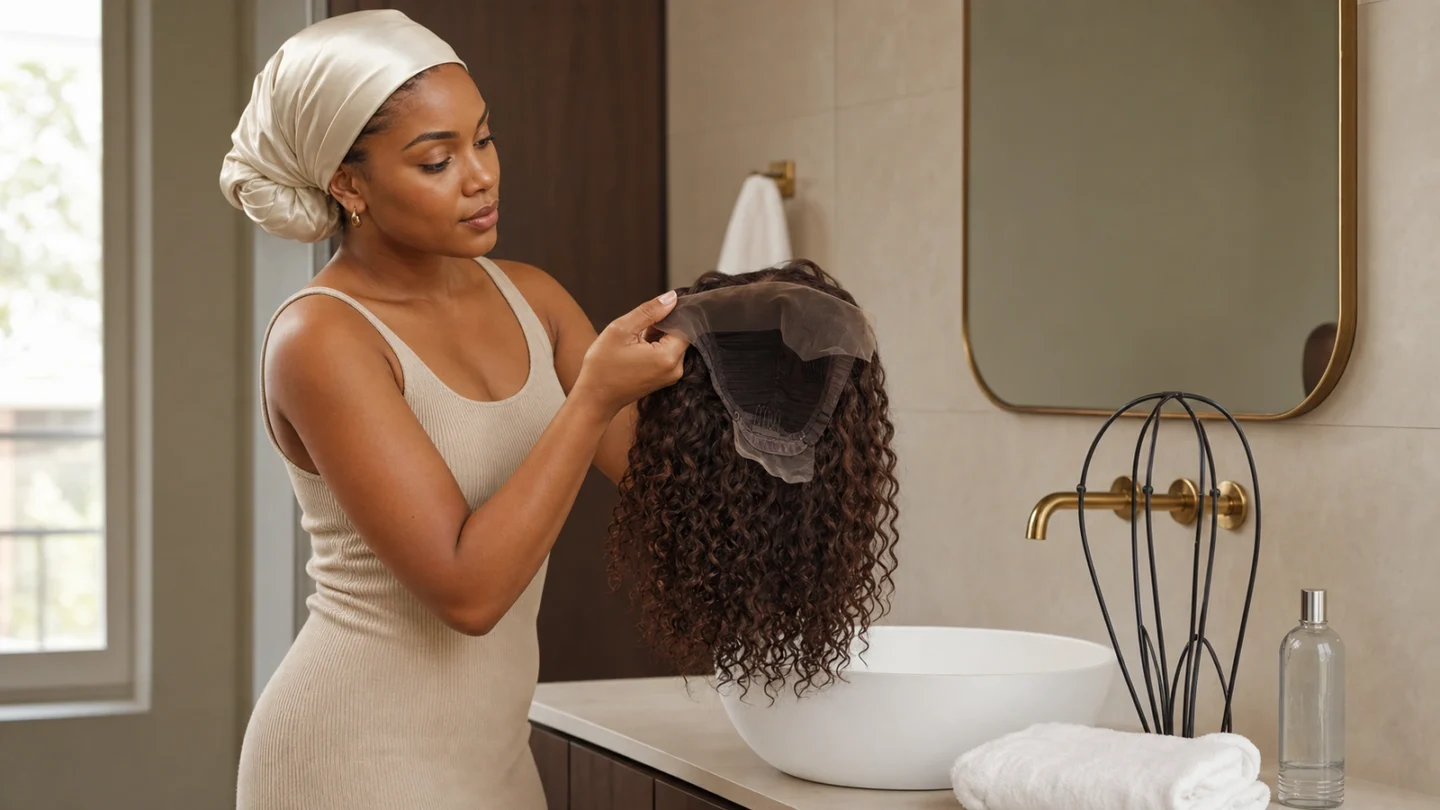
The first wash can feel risky. The wig needs cleaning, but the curls still look good, and nobody wants to find out afterward that the routine was too rough.
Yes, you can wash a synthetic wig without losing its factory-set curls. On an undamaged standard synthetic wig, cool water, gentle handling and complete air-drying are usually enough. The American Cancer Society notes that preset curls should return once the wig is completely dry.
This guide is for a curly synthetic wig that has been removed, not one that is installed or glued down. A new wig does not automatically need washing. Inspect it, photograph any defects and check the seller’s return policy before wetting it, cutting the lace or removing its tags.
Before Washing, Check the Fiber
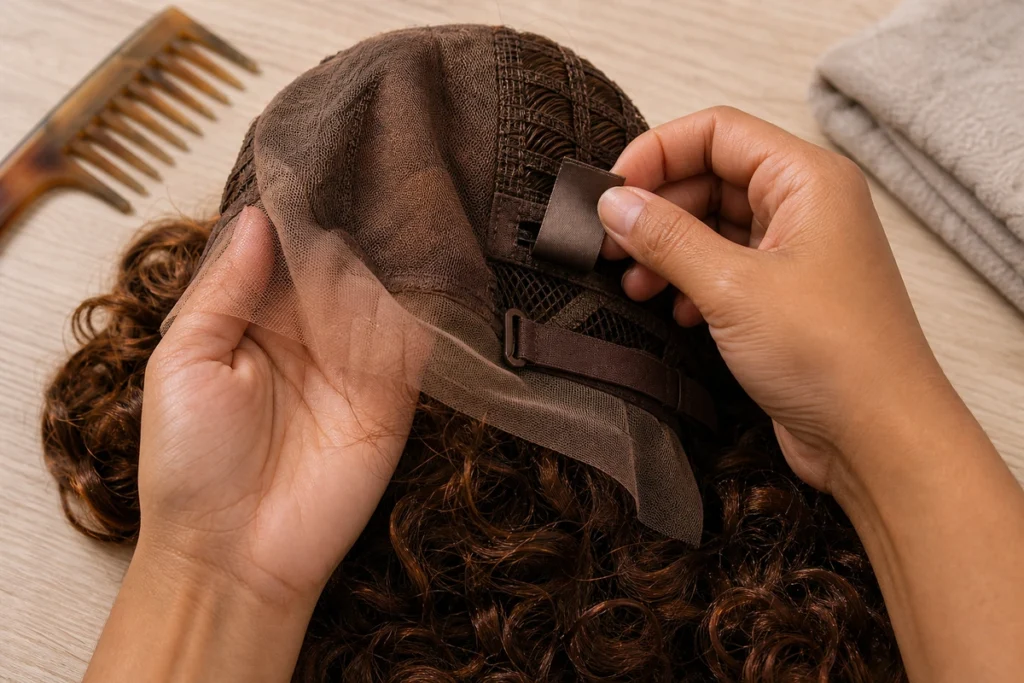
The label changes what you can safely do.
- Standard synthetic: This fiber is made to retain a preset style. Keep it away from blow-dryers, curling irons and flat irons.
- Heat-friendly synthetic: Cool water is still the safe washing default, but approved tools and temperature limits vary. Some heat-friendly fibers retain the last heat-set shape through washing rather than resetting to the style they had in the box. HairUWear’s fiber-specific guidance is one example.
- Human/synthetic blend or unknown fiber: Do not guess from the way the hair looks or feels. Avoid direct heat and ask the seller or manufacturer how that wig should be washed.
Once you’ve identified the fiber, gather synthetic-wig shampoo, cool water, a clean colorfast towel and a ventilated wig stand. A wide-tooth wig comb, synthetic-safe conditioner or hairnet belongs in the routine only if the care guide calls for it.
Before the wig gets wet, hold the cap securely and loosen easy tangles with your fingers, starting near the ends. An approved wide-tooth wig comb may help, but a regular hairbrush can split curly sections into a fuzzy cloud.
Stop if the wig is tightly matted or severely frizzed from friction. Washing removes sweat, dirt and product residue; it is not a substitute for careful detangling or fiber repair.
How to Wash a Synthetic Wig Without Flattening the Curls
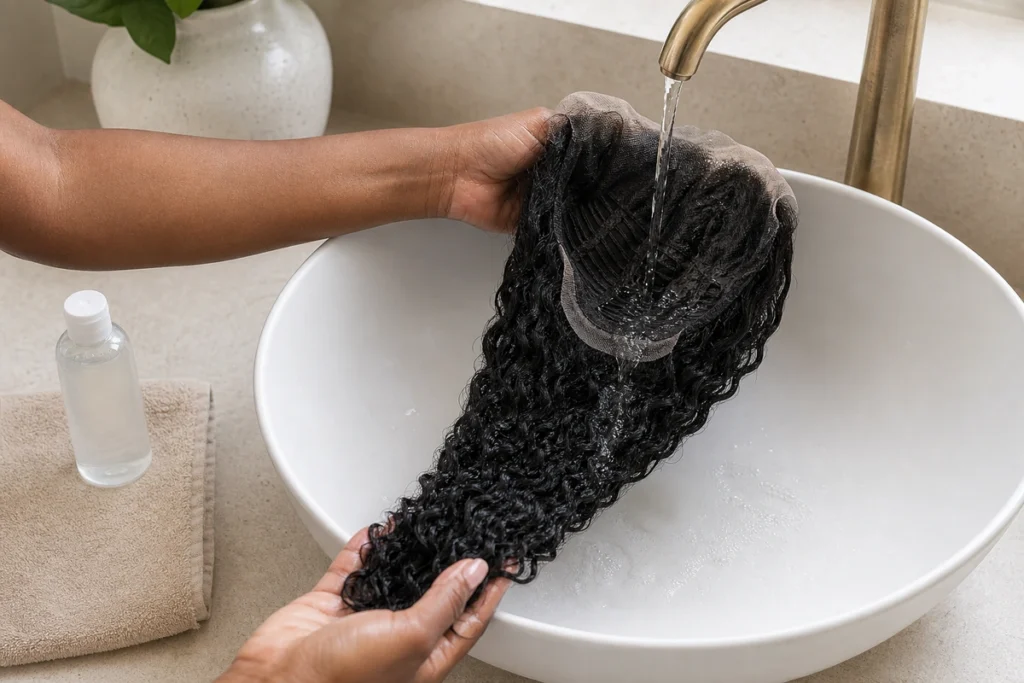
- Choose the washing method first. Use cool water, but do not assume every wig should be submerged. HairUWear allows a short basin soak for some of its fibers, while Jon Renau’s curly-wig instructions use cool running water.
Follow the method listed for your wig rather than combining the two. For a basin wash, mix the amount of shampoo stated on the bottle into the water before adding the wig. With running water, let the water travel from the cap toward the ends instead of piling the hair into the sink. - Clean with as little movement as possible. Synthetic-wig shampoo is the safest default. If you do not have it, waiting is better than experimenting with the nearest household cleaner. Care instructions conflict here: CancerCare currently permits ordinary or baby shampoo, while the American Cancer Society and many wig manufacturers recommend products made for wigs. Your wig’s instructions should settle that disagreement.Move the wig gently through the prepared water, or smooth the diluted shampoo down the fibers if the running-water method is required.
Do not scrub the curls together, bunch them in your hands or massage them as you would your scalp.Sweat and skin oil collect inside the cap, so clean that area with light fingertip pressure. Be especially careful around lace, wefts and hand-tied sections. - Rinse, then condition only if it is allowed. Rinse with fresh, cool water until no suds remain. Support longer curls with one hand so their wet weight is not hanging entirely from the cap. Do not twist or wring the wig.Conditioner is optional, not an automatic next step. Use only a synthetic-safe product that is compatible with the wig, and follow its directions because a rinse-out conditioner and a leave-in spray are not interchangeable.
Keep it away from the base when instructed; some manufacturers warn that conditioner around hand-tied areas can loosen knots and contribute to shedding. Regular conditioner, deep masks, oils and fabric softener are not reliable substitutes for a product formulated for that fiber. - Blot the wig and regroup the curls gently. Lay the wig on a towel, fold the towel over it and press. Rubbing it back and forth creates friction at exactly the point when the wet fibers are easiest to stretch. The curls may hang longer or look flatter now.
Water has weight, especially on dense or longer styles, so the wet appearance is not the final result. If damp styling is permitted, bring separated strands back into their natural curl groups with your fingers. A loose finger twist can tidy an intact curl, but it cannot reset fiber that has been permanently stretched or heat-altered. Do not comb the wet wig unless its care guide specifically allows it. - Give it enough time to air-dry. Place the wig on a ventilated stand, or dry it flat if that is recommended for its construction. Avoid putting a wet wig on a solid mannequin head because some manufacturers warn that it may stretch the cap. Long curls may need support while they dry. When the brand recommends it, loosely cradle the lengths in the hairnet supplied with the wig. Ellen Wille’s curly synthetic care guide recommends this to reduce the pull from water weight.
Keep the wig away from direct sunlight, heaters and open flames. Do not use a blow-dryer on standard synthetic fiber. Plan for several hours rather than trying to speed things up. Wait until the cap and fibers are fully dry, then shake the wig lightly and separate the curls with your fingers. Use a wig comb only if the style and its instructions permit it.
If the Curls Still Look Wrong After Drying
Wait until the wig is fully dry before troubleshooting. Wet curls are not a reliable preview.
- Smooth but flat or clumped: Separate the curl groups lightly with your fingers. If one smooth section has lost its grouping, wrap it loosely around a finger and release it. Stop if the fiber does not settle; repeated pulling will not improve it.
- Sticky or waxy: Too much product, an incompatible product or an incomplete rinse may be responsible. Check the product and wig instructions before washing it again.
- Rough, fused, suddenly frizzy or tightly matted: Friction, heat exposure, rough washing, an incompatible product or pre-existing damage are all possible. Appearance alone cannot prove which one caused it.
Stop handling the wig if you notice severe tangling, unusual shedding, loose knots or damaged lace. Photograph the problem and contact the seller, manufacturer or a qualified wig professional instead of trying another wash, steam treatment or an unverified heat setting.
A gentle wash can clean the wig and allow an intact preset style to return. It cannot repair melted fibers, severe matting or a curl pattern that has been permanently changed. If a heat-friendly wig needs reshaping, use only the method and temperature limit provided for that exact fiber. There is no universal safe heat setting.
When Does a Synthetic Wig Need Washing Again?
Let the condition of the wig decide. Odor, visible dirt, sweat inside the cap, sticky product buildup or stiff movement are better signals than an inflexible calendar.
If the wig is clean but the odor returns while you wear it, check whether the source is your scalp rather than the fibers. This guide explains why your scalp can still smell after washing.
Cleveland Clinic’s general guidance suggests washing a synthetic wig at least monthly and more often with daily wear, while manufacturers may recommend a wear count instead. A wig used occasionally does not need another wash simply because a certain number of days has passed.