Greasy roots before work are frustrating enough. A dry shampoo that replaces the shine with a chalky patch creates another problem. For a hair care brand developing a product, that difference needs to be addressed long before the first production run.
Dry shampoo manufacturers develop a finished product by matching oil-absorbing ingredients with the intended hair color, texture, fragrance and dispensing system, then testing the formula in its final packaging. Choosing a starch is only one part of the job. How much product lands on the roots, how it feels after drying and whether the nozzle keeps working matter too.
That is why brands comparing custom dry shampoo OEM manufacturers should evaluate the complete sample rather than choose a supplier from an ingredient list alone.
What does private-label dry shampoo development involve?
Private-label development lets a brand work with a manufacturer to produce a product under its own name. The brand does not need to build a factory. Depending on the arrangement, it may select an existing formula, request agreed changes or commission a custom formulation.
Ask what “custom” includes. A different fragrance and label are a different project from changing the powder system, tint or aerosol delivery. Establishing that distinction early makes sample feedback and quotations easier to compare.
The starting brief should also describe what dry shampoo can realistically do. The American Academy of Dermatology explains that it absorbs oil without actually cleaning the hair. A fresh-looking root area is the goal; the product still belongs between regular washes.
Which ingredients affect oil absorption and feel?
Rice starch and tapioca starch are common options in dry shampoo development. Corn starch and ingredients such as silica also appear in some formulations. Their proportions, processing and behavior in the finished blend help determine the result.
For example, ingredient supplier AGRANA offers rice-starch bases developed for dry shampoo systems, including white and colored options. This illustrates why the specific ingredient grade matters alongside its familiar name.
A powder that absorbs oil well still needs to disperse and leave an acceptable feel on hair. “Contains rice starch” does not establish that a finished spray will feel light or look invisible. Evaluate those qualities in the sample, at the application amount recommended on its proposed label.
Why do some dry shampoos leave a white cast?
White residue can reflect the formula, the amount applied, uneven distribution or a poor match with the user’s hair color. Adding more powder to improve oil absorption can also make the finish harder to blend. The development task is to balance those competing needs.
Beslocosmetics lists micronized rice and tapioca starches, translucent or tinted formula options, and fragrance customization among its dry shampoo offerings. These are options to discuss during sampling, rather than proof that every version will perform identically on every head of hair.
For a useful comparison, follow each sample’s directions and assess the roots in daylight after the stated settling and blending time. Record visible residue and how the hair feels. A tinted sample should also be checked for unwanted color transfer during normal handling.
On curly hair, do not make vigorous brushing the only way to achieve a good finish. Test whether the product can be worked into the roots without disturbing the curl pattern. Our advice on using dry shampoo on curly hair explains that consumer side of the problem.
The aerosol formula and packaging need to work together
Aerosol dry shampoo uses a pressurized dispensing system. The valve controls release, while the actuator, the button the user presses, helps shape the spray. A promising formula still needs to work with the selected components.
- Spray distribution: Can the user target the roots without depositing a heavy patch in one spot?
- Valve and actuator: Does dispensing stay consistent after repeated use and periods between applications?
- Container compatibility: Has the proposed formula been assessed in the actual can and component combination?
- Pack integrity: What pressure, leakage and other relevant finished-pack checks will the manufacturer perform?
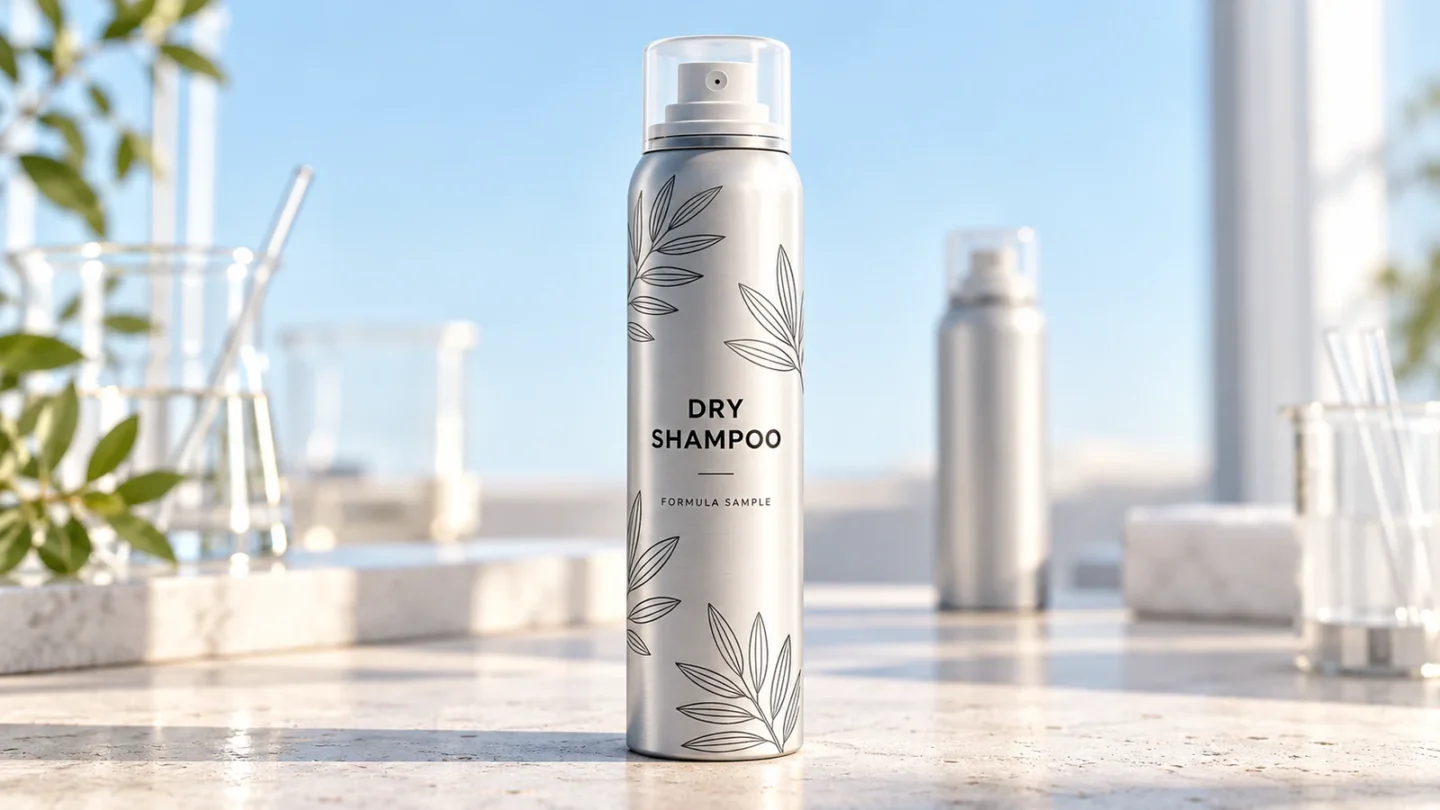
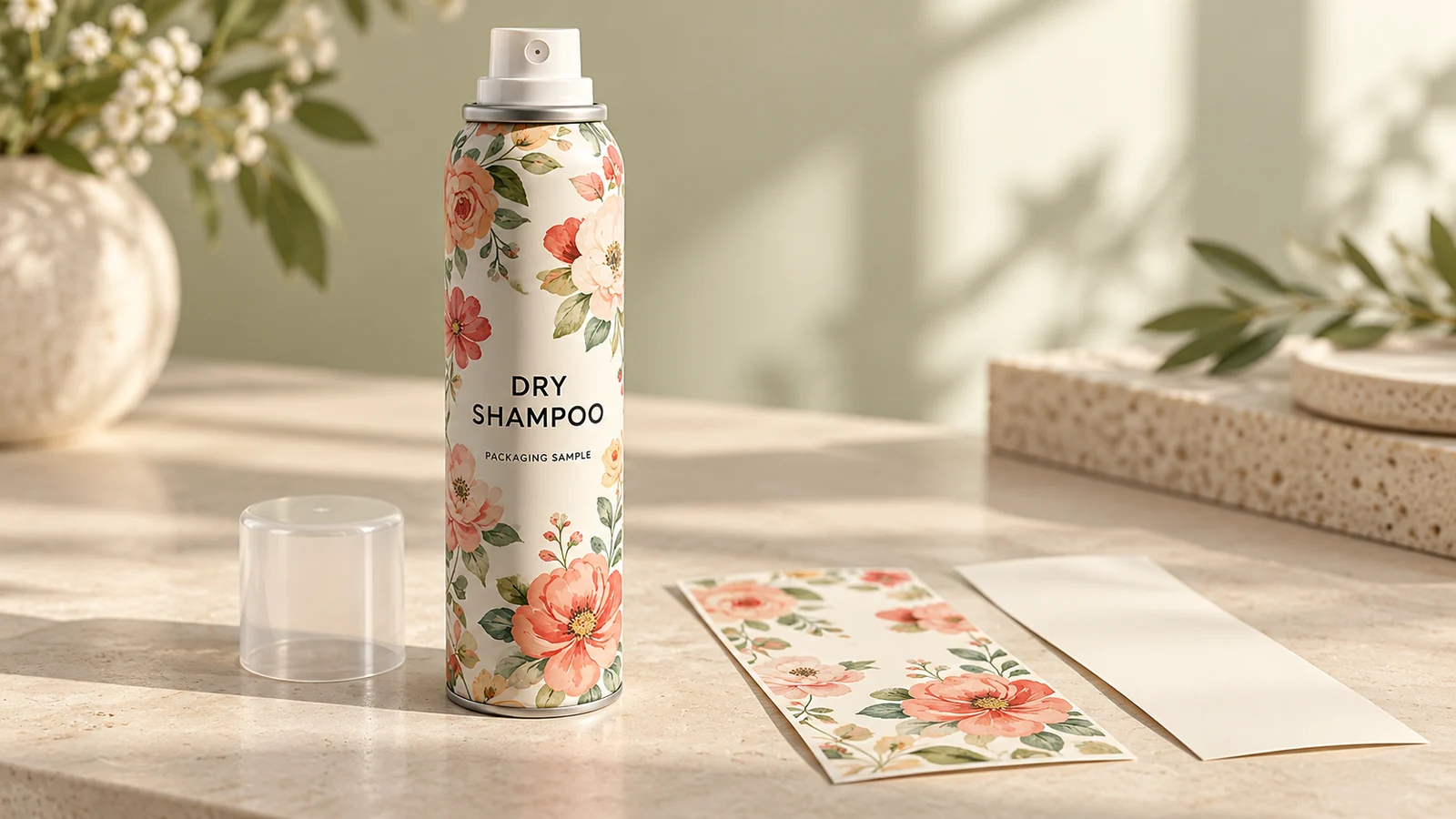
Aluminum cans are one packaging option. Size, finish and decoration can support the brand’s identity, but the attractive prototype also needs to be the version that gets tested.
Match the formula brief to the intended customer
A product described as suitable for every hair type still needs a clear testing plan. Fine strands, dark hair and defined curls present different practical questions.
- Fine hair: Look for oil absorption without a heavy, stiff finish or loss of movement. Fine strand diameter does not automatically mean thinning hair.
- Dark hair: Assess visible powder at the roots and compare any tint with the intended shade range.
- Curly or wavy hair: Check root application and blending while preserving definition. Coating the lengths unnecessarily can make the style feel overloaded.
- Customers who avoid fragrance: Discuss a fragrance-free option instead of assuming a strong scent makes the product feel fresher.
Use the same written criteria for each sample round. “Less gritty after blending” gives a formulator clearer feedback than “make it better.”
From product brief to finished dry shampoo
The development process usually moves through six connected stages, although sampling and packaging decisions may require several revisions.
- Define the brief. Specify the intended customer, format, finish, fragrance preferences, packaging and market.
- Review samples. Establish whether the starting point is an existing base or a custom formula. Record each sample version and the changes requested.
- Select the packaging. Agree on the can, valve, actuator, decoration and proposed directions before final approval.
- Approve the finished combination. Review the formula in the intended pack, including its spray, residue and feel. Keep an agreed reference sample.
- Confirm quality checks and documentation. Request the relevant stability, compatibility and finished-product records, plus clear acceptance criteria.
- Plan production and delivery. Confirm the approved specifications, batch identification, lead time and aerosol transport arrangements.
For example, Beslocosmetics describes private label hair product services that include customer-supplied formulas, bulk filling and full-service formulation with sample creation. Confirm which responsibilities are included in the arrangement being quoted.
What should a brand check before approving production?
Ask for evidence that relates to the actual product. The FDA’s cosmetic manufacturing checklist covers areas including material and finished-product controls, batch records and retained samples. A general quality statement is less useful than knowing what will be checked, recorded and supplied for your batch.
Before signing off, put the approved formula version, packaging components, label artwork and acceptance criteria in writing. If you also need to compare supplier capability and costs, use our checklist for choosing an aerosol hair care manufacturer.
The next useful step is a focused sample brief: describe whose roots the product needs to refresh, what an unacceptable result looks like and how you will judge an improvement. That gives the manufacturer something concrete to develop and gives the brand a sound basis for approval.