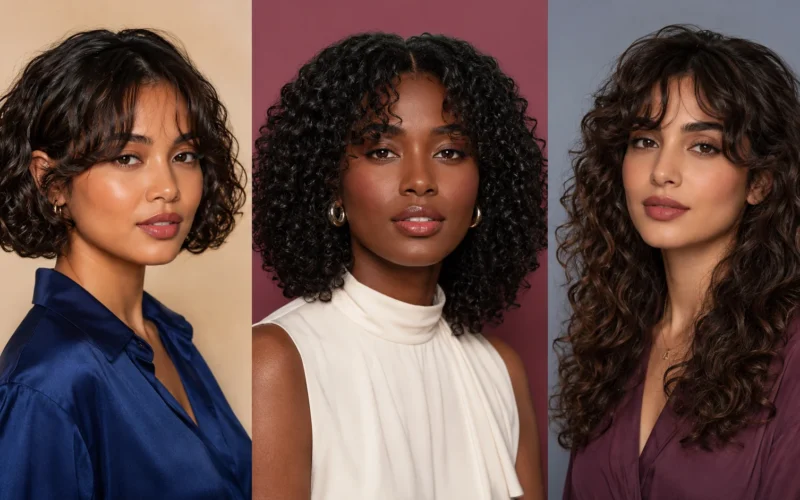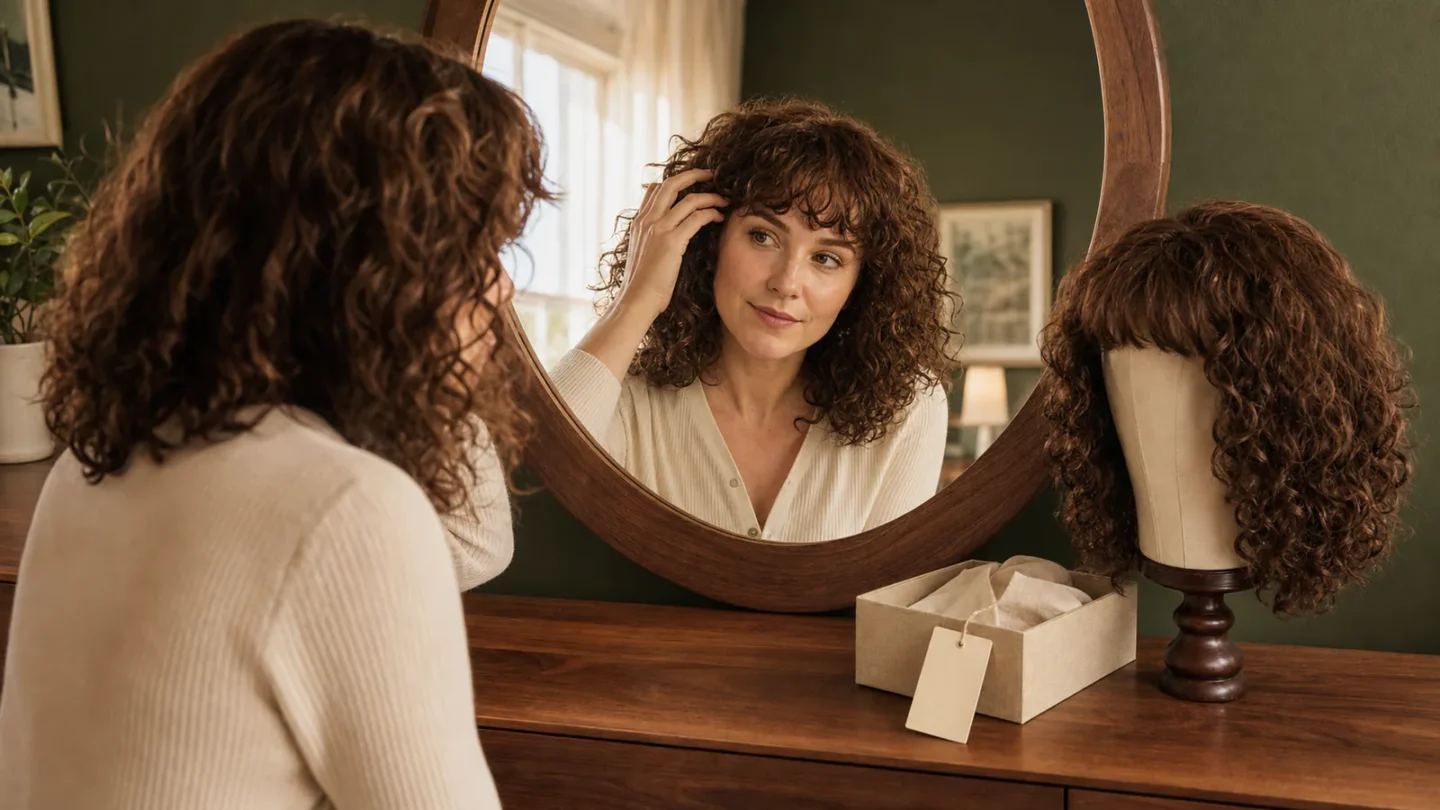
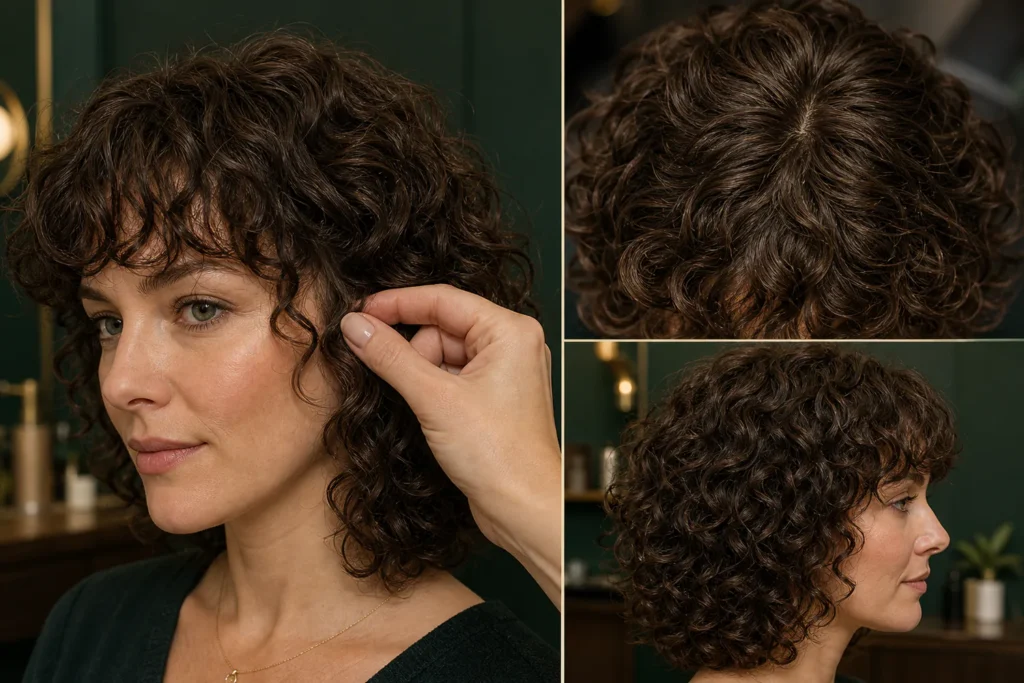
A curly wig with bangs can make the front edge easier to manage, but the fringe still has to look as though it belongs to the rest of the wig. The most convincing options usually get four things right: cap fit, density, crown shape and the transition from bangs to curls.
I’d judge the fringe before the color. If the bangs look disconnected from the crown, even a beautiful curl pattern will struggle to rescue the front.
Look for bangs that break into natural-looking pieces, continue into the temple curls and leave enough room for adjustment. Be wary of a very thick shelf of hair, a puffed-up crown or a listing that shows one immaculate front view and absolutely nothing from the side. Studio lighting is helpful. It can also be a talented little liar.
Which Type of Curly Bangs Should You Choose?
Choose the effect you want rather than treating face-shape rules as law. Our hairstyle-by-face-shape guide can help you compare visual proportions, but forehead coverage, glasses, part placement and your preferred amount of volume are more useful starting points for a wig.
| Bang style | What it changes visually | What to check before buying |
|---|---|---|
| Full curly bangs | Covers most of the forehead and can conceal the front edge of a basic cap | Make sure the fringe is not much denser than the side curls or cut into one heavy, blunt block |
| Wispy curly bangs | Keeps the front lighter and lets more skin show through | The hairline, roots and crown need to look believable because the fringe provides less coverage |
| Curtain bangs | Opens the center of the face and blends into longer side pieces | Check that the part looks realistic and that both sides fall into the main curl pattern |
| Side-swept bangs | Creates an off-center shape and offers more flexibility around the forehead | Look for enough length to sweep the fringe without exposing a hard front edge |
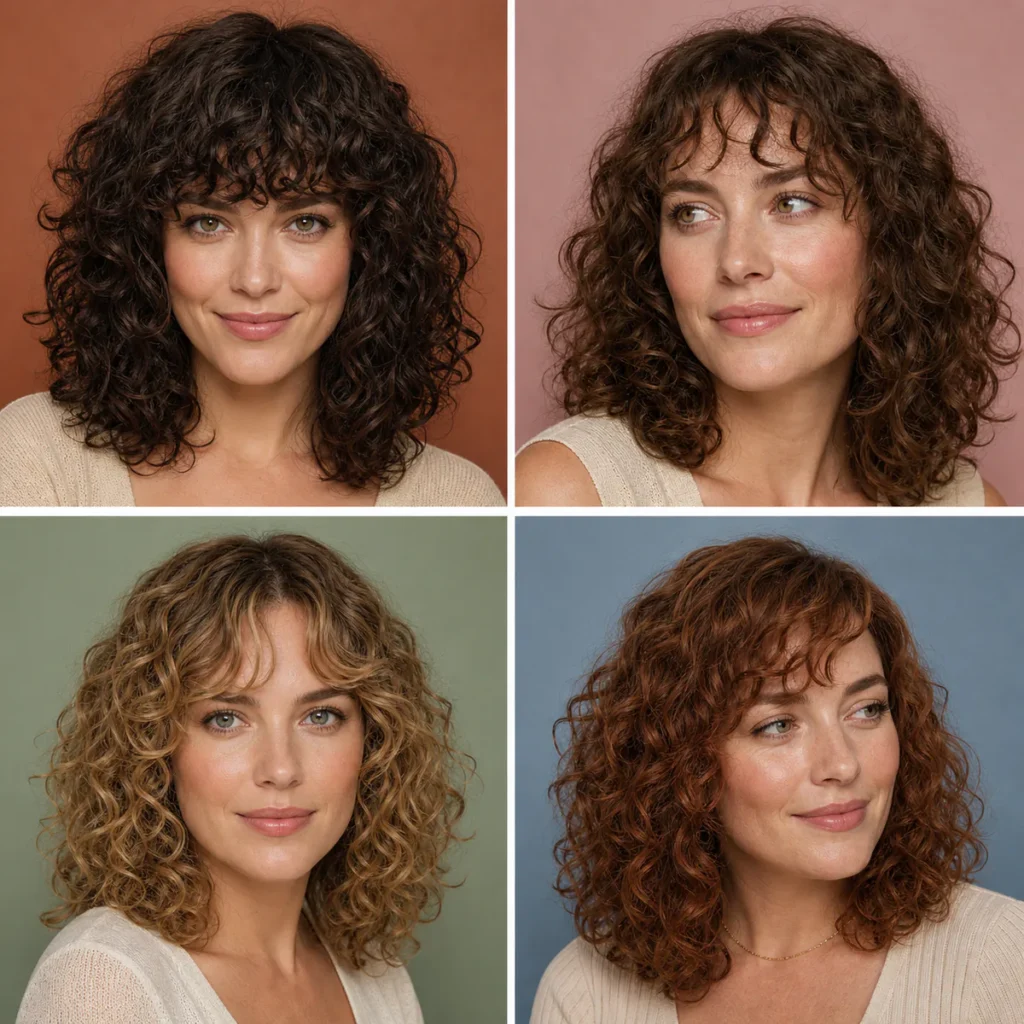
If curtain fringe is the look you are considering, our guide to curtain bangs for curly hair can help you compare lengths and shapes before you shop. The styling methods will differ on a wig, but the visual references are still useful.
What Makes a Curly Wig With Bangs Look Natural?
No single feature makes a wig look natural. The fringe, crown and cap have to work together.
The fringe should connect to the rest of the wig
Study the point where the bangs meet the temples and crown. The transition should look gradual, with a few curls bridging the shorter fringe and longer lengths. A severe gap can make the bangs look like a separate piece attached to the front.
The curl direction matters too. Identical rows can look overly set; slight variation usually reads more naturally.
Density should make sense from front to back
Thin is not automatically natural, and thick is not automatically fake. The density needs to make sense across the style. Sparse bangs against extremely full lengths can expose the construction; dense bangs under a bulky crown can create the “helmet” effect shoppers worry about.
I pay close attention to the top and side views. Jon Renau’s guide to wig density shows how cap construction can make a hand-tied style lie flatter and move differently from a wefted one.
Read the Listing Beyond the Glamour Photograph
Before buying, check for:
- A front view in ordinary light
- Both side profiles
- A clear crown or parting view
- Video showing how the curls move
- Customer photos taken in ordinary light
- Exact fiber and cap-construction details
- Bang length as well as overall length
- Available cap sizes and the brand’s measurement chart
- Return conditions for cut lace, removed tags, washing or styling
Customer videos are particularly useful because movement reveals what a posed photograph can hide. Watch the crown as the wearer turns. Look for sudden bulk, visible cap material or a fringe that separates from the side curls.
Do not rely on the product name alone. “Glueless,” “beginner friendly” and “pre-styled” do not tell you whether the cap will fit. Texture names such as water wave, Jerry curl and kinky curly are useful search filters, but compare the actual curl size and root pattern in photographs because labels are not a substitute for seeing the wig.
I would leave a listing behind if it gives no useful measurements, does not identify the fiber or cap construction, hides the crown in every photograph, or makes the return conditions difficult to find.
Does a Wig With Bangs Need a Lace Front?
Not always. Full bangs can cover the front edge, so paying extra for a lace front may be unnecessary if you never plan to expose the hairline. Jon Renau likewise notes in its synthetic-wig guide that a lace front may be less important for someone who prefers bangs or fringe.
The right construction depends on what the style reveals:
| Cap feature | Most useful when | Tradeoff to consider |
| Basic or open-wefted cap | Full bangs cover the front and breathability or budget matters | Parting flexibility may be limited, and some designs may look fuller at the crown |
| Lace front | Wispy, curtain or side-swept bangs may expose the front hairline | Lace is delicate and does not correct poor sizing |
| Monofilament top or part | The fringe opens enough to show the part or crown | It usually costs more than a basic cap |
| Hand-tied cap | Natural movement, a flatter fall or scalp comfort is a priority | It is generally a premium construction |
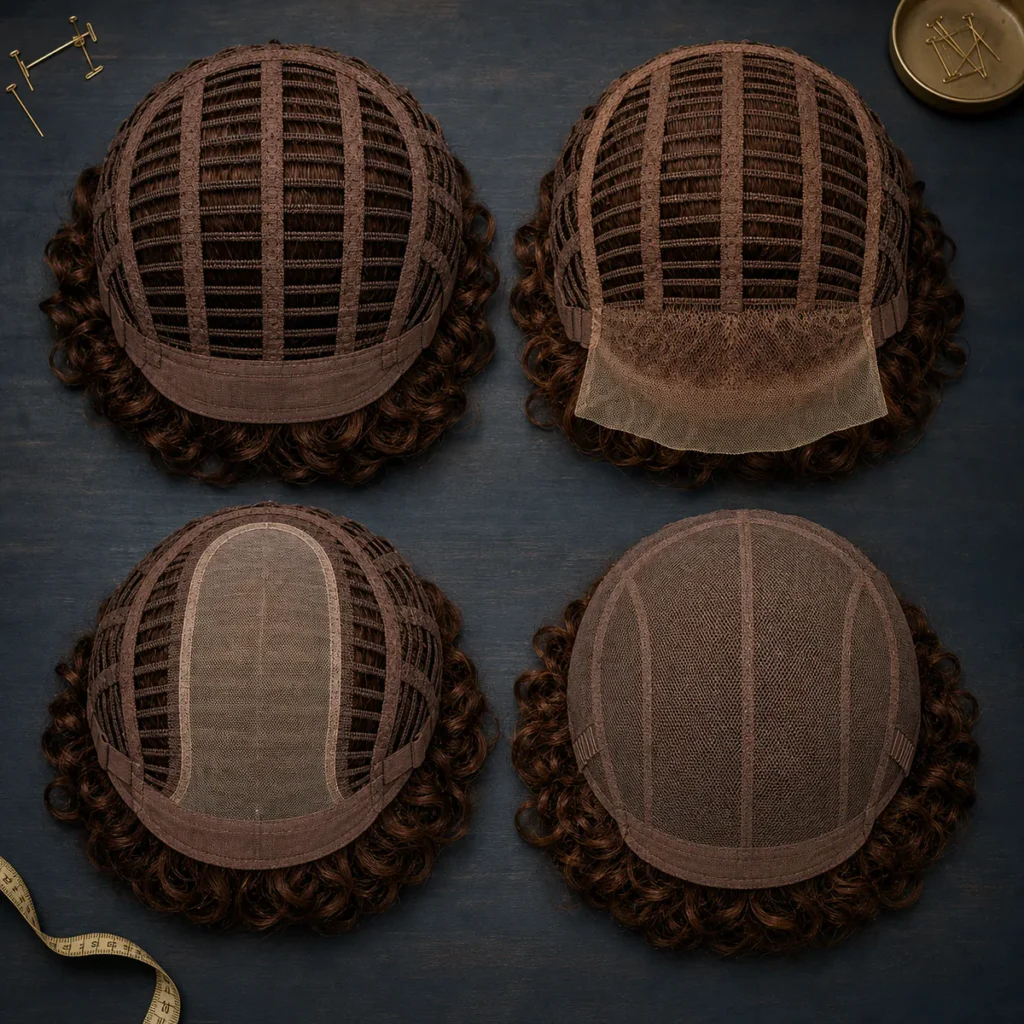
Many wigs combine these features. The National Alopecia Areata Foundation’s cap guide explains that lace front, monofilament, hand-tied and wefted sections can be used together to balance realism, comfort and cost.
My rule is simple: pay for the construction you will actually see or benefit from.
How Cap Fit Changes Where the Bangs Land
A cap that is too large may bunch or shift; one that is too small can ride up or feel tight. Either problem changes where the bangs land. Measure with your natural hair prepared the way you plan to wear it under the wig, then use a soft tape to record:
- Circumference around the hairline and nape
- Front hairline to nape
- Ear to ear over the top
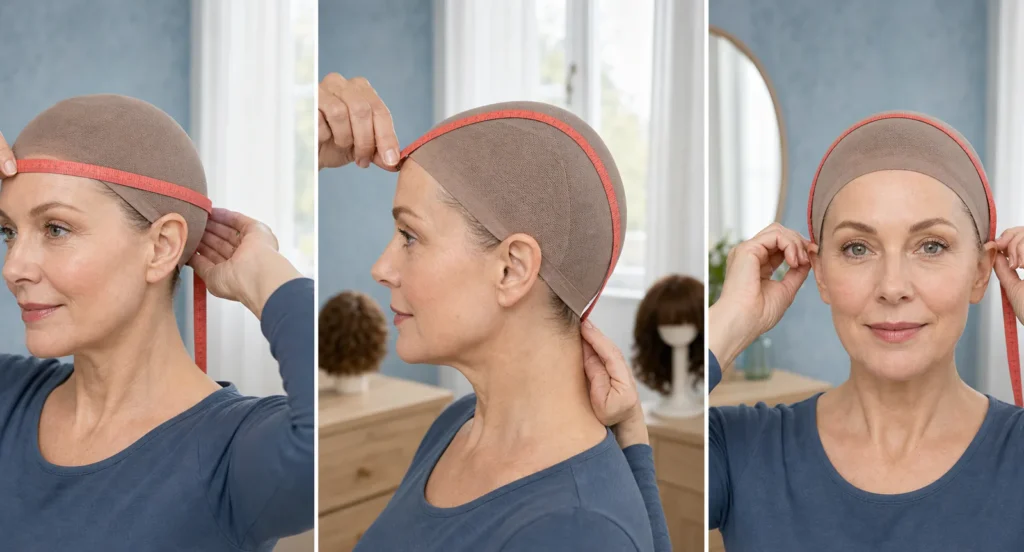
The American Cancer Society’s wig guide recommends comparing these measurements with the individual brand’s chart because sizing can vary. If your numbers fall into different sizes, follow the seller’s instructions rather than assuming an average cap will fit.
Put the wig in its correct position before judging the fringe. Pulling the whole cap lower to shorten the bangs can place the hairline too close to the eyebrows and move the ear tabs out of position. Also try it with your glasses if you wear them regularly.
Synthetic or Human Hair: Which Is Better Here?
Neither fiber guarantees a natural result. As the American Cancer Society explains, synthetic is usually lower maintenance, while human hair offers more restyling freedom at a higher cost and with more upkeep. Heat-friendly synthetic is a separate category, so check the instructions for that exact fiber before using any hot tool.
Inspect the Wig Before You Cut, Wash or Style It
Once the wig arrives, pause before reaching for scissors. Return policies commonly require the wig to remain unaltered, with its tags, lace and original condition intact. Read the seller’s exact terms first.
Use this order:
- Photograph the wig, tags and any visible defect.
- Prepare your natural hair and put on the cap or grip you plan to use.
- Position the wig correctly, align the ear tabs and let the curls settle without applying product.
- Check every angle in daylight, then record a short turning video with your glasses on if you wear them.
- Decide whether the issue can be adjusted or the wig should go back.
A short side-view video often reveals bulk or shifting that a front-facing mirror misses.
If you are used to fine or thinning hair, unfamiliar fullness can look startling at first. Give yourself a moment to assess the whole shape, but do not explain away a cap that bunches, slips or exposes its construction.
Adjust it or return it?
- Adjust: The bangs are slightly long or the front is somewhat heavy, but the cap fits and the construction looks right. A wig stylist may be able to trim or shape it.
- Return or exchange: The cap bunches, slips, rides up or feels painfully tight. Cutting the bangs will not solve a cap problem.
- Return or choose another construction: Wispy bangs expose a hard front edge you intended to show.
- Contact the seller: The density, curl pattern or color differs substantially from the listing, or the lace, stitching or hair arrived damaged.
Only trim after deciding to keep the wig. Fit it in its final position and let the curls become completely dry and settled. For meaningful reshaping, I would use a stylist who understands wigs. Headcovers likewise recommends cutting bangs while the wig is being worn and choosing a stylist familiar with wig customization. Curly fringe can spring shorter than expected, so small cuts matter. Do not use heat unless the manufacturer confirms that the exact fiber is heat-friendly and provides a temperature limit.
My Buying Verdict
For a first curly wig with bangs, I would choose slightly longer fringe, balanced rather than extreme density, clear photos from several angles, exact cap measurements and a return policy I can understand before checkout.
If two wigs look equally appealing, buy the one that gives you better information. A prettier glamour shot may win the scroll, but accurate sizing, customer videos that show movement and a fringe with room for adjustment are far more likely to help once the box arrives.