Your curl lengths still look good. Your roots look like they made different plans overnight. Washing everything would fix the oil, but it would also mean detangling, styling and drying all over again.
Dry shampoo can buy you time when the problem is limited to oily roots. It works best in a small amount, on fully dry hair and only where oil is visible. It is a poor fix for an itchy scalp, product-coated curls or roots that are flat but not actually oily.
First decide whether the problem is oil
Dry shampoo absorbs oil. It does not add curl definition, remove old styling product or clean the scalp. That distinction saves many disappointing applications.
| What you notice | Does dry shampoo fit? | Better next move |
|---|---|---|
| Shiny roots and a separated, oily-looking part | Yes, as a temporary refresh | Treat only the visible oily zones |
| Roots are flat but feel clean | Usually no | Change drying direction or use root clips |
| Hair looks greasy again soon after washing | Not as the main solution | Check the wash routine and product placement |
| Scalp is itchy, burning, tender or heavily flaky | No | Stop adding powder and address the scalp problem |
| Roots are oily but the ends are dry or frizzy | Only at the roots | Refresh the lengths separately |
If oil returns unusually fast or the hair already looks greasy after washing, start with the causes in our greasy-hair troubleshooting guide. If the real question is whether you should wash sooner, use the curly-hair wash-frequency guide instead of trying to train the scalp with more powder.
Choose a format by the problem you want to avoid
A fine aerosol can cover a part line quickly, but it is easy to overspray. Loose or pump powders give more control, yet pale particles may be obvious on dark roots. Tinted formulas can reduce a white cast, but too much pigment may transfer to fingers, clothing or bedding.
If your scalp reacts easily, fragrance-free is a more useful label to check than a vague promise such as “clean” or “natural.” The American Academy of Dermatology recommends choosing for your hair type and color and changing products if the scalp or hair feels parched.
No format needs to coat the curl lengths. The absorbent material belongs where the oil is, usually around the part, hairline and crown. Spraying the ends can turn softness into a dry, gritty feel without making the scalp look cleaner.
How to use dry shampoo without breaking up your curls
- Start on fully dry hair. Powder mixed with damp roots can clump and become harder to blend.
- Expose only the oily areas. Make a few loose sections with your fingers instead of combing through the curl lengths.
- Use less than you think. Follow the distance on the label for an aerosol, or tap a tiny amount of powder onto the root area. You can add more after checking the result.
- Wait for the product’s stated time. Immediate rubbing moves fresh powder around before it has absorbed much oil.
- Blend at the roots. Use clean fingertips with light, short movements. Do not rake through the lengths or scratch with your nails.
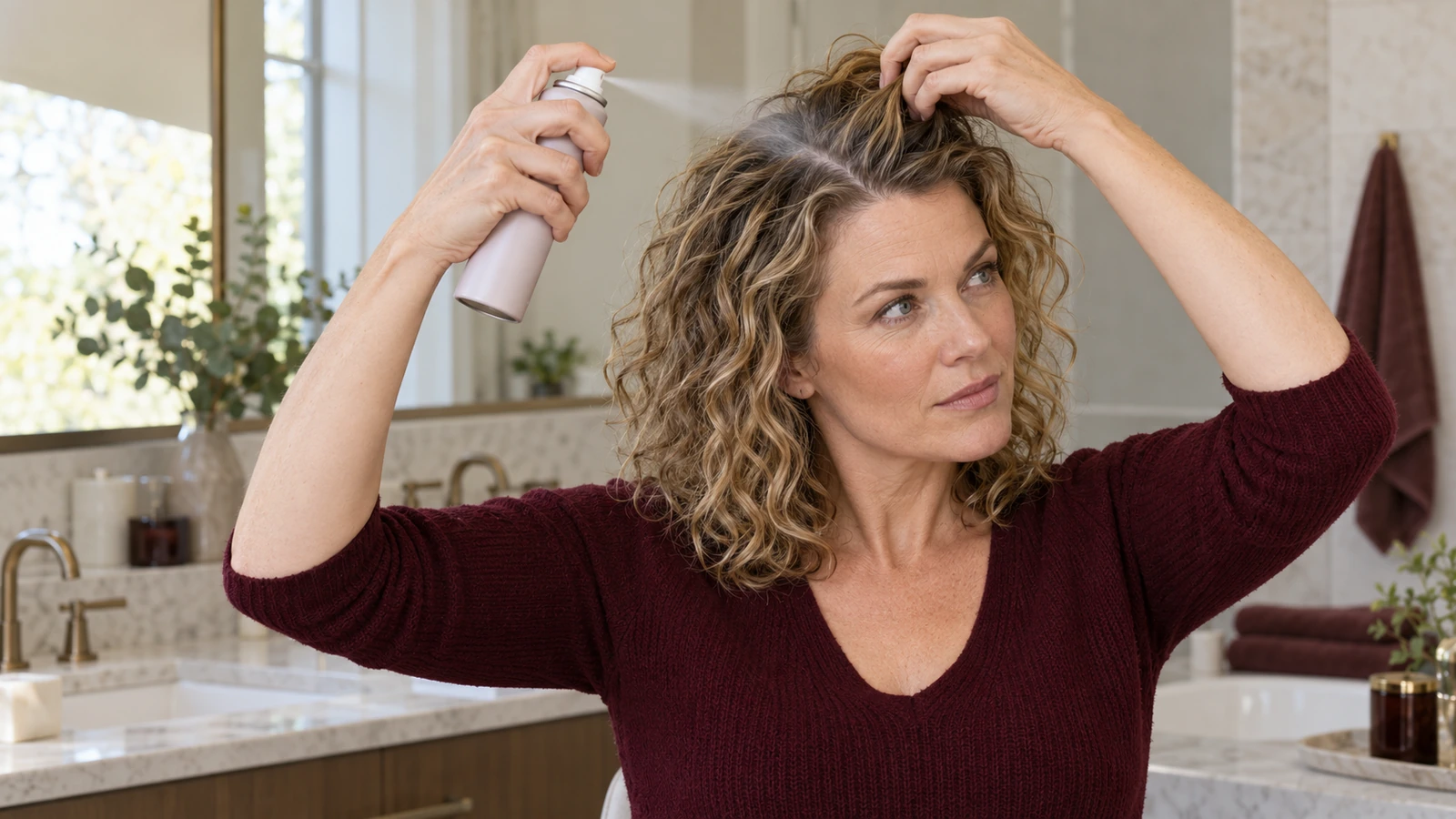
Check the part and hairline in daylight. If you still see a pale patch, use fingertips or a brief stream of cool air to disperse what is already there. Adding another layer usually makes the residue more visible, not less.
Use aerosols in a ventilated room and avoid breathing the spray cloud. Poison Control specifically recommends good ventilation because powders and aerosols can irritate the lungs of susceptible people.
Treat oily roots and tired lengths as separate jobs
Curly hair can have an oily scalp and dry-looking ends at the same time. Dry shampoo addresses the first problem only. If the lengths need definition, refresh them after the root product has settled, keeping water and refresher away from the powdered scalp area.

A light mist may reactivate yesterday’s styler. Adding cream, oil or more absorbent powder to the entire head can create a heavy middle ground where the roots still look dull and the curls feel coated. The day-two curl refresher guide helps match the lengths to softness, hold or detangling without pretending one spray fixes every issue.
Know when another application should become a wash
Dry shampoo changes how oily hair looks; it does not remove oil, dead skin, microorganisms or the previous layer of dry shampoo. The AAD advises washing with regular shampoo and water after one or two dry-shampoo applications rather than using it as a replacement for cleansing.
Wash sooner if the roots feel stiff or gritty, the powder no longer blends, odor remains, or the scalp starts itching or burning. Regular shampoo is often enough. If repeated product layers leave curls dull and heavy even after an ordinary wash, a properly timed clarifying wash may make more sense than stacking another absorbent product.
Stop using the product if you develop persistent irritation. A tender, inflamed or worsening scalp is not an invitation to scrub harder or cover the area with more fragrance.
Make the first test small
Do not make a wedding morning or work presentation the first time you test dry shampoo. Try it on one oily section at home. Photograph the part before and after, then check the roots again several hours later for chalkiness, stiffness, itching and lost curl shape.
If a tiny root-only application absorbs the shine while the lengths stay untouched, the product has a useful place in your routine. If the roots still feel greasy under a layer of powder, wash them. The goal is one easier day, not proving how long you can avoid water.