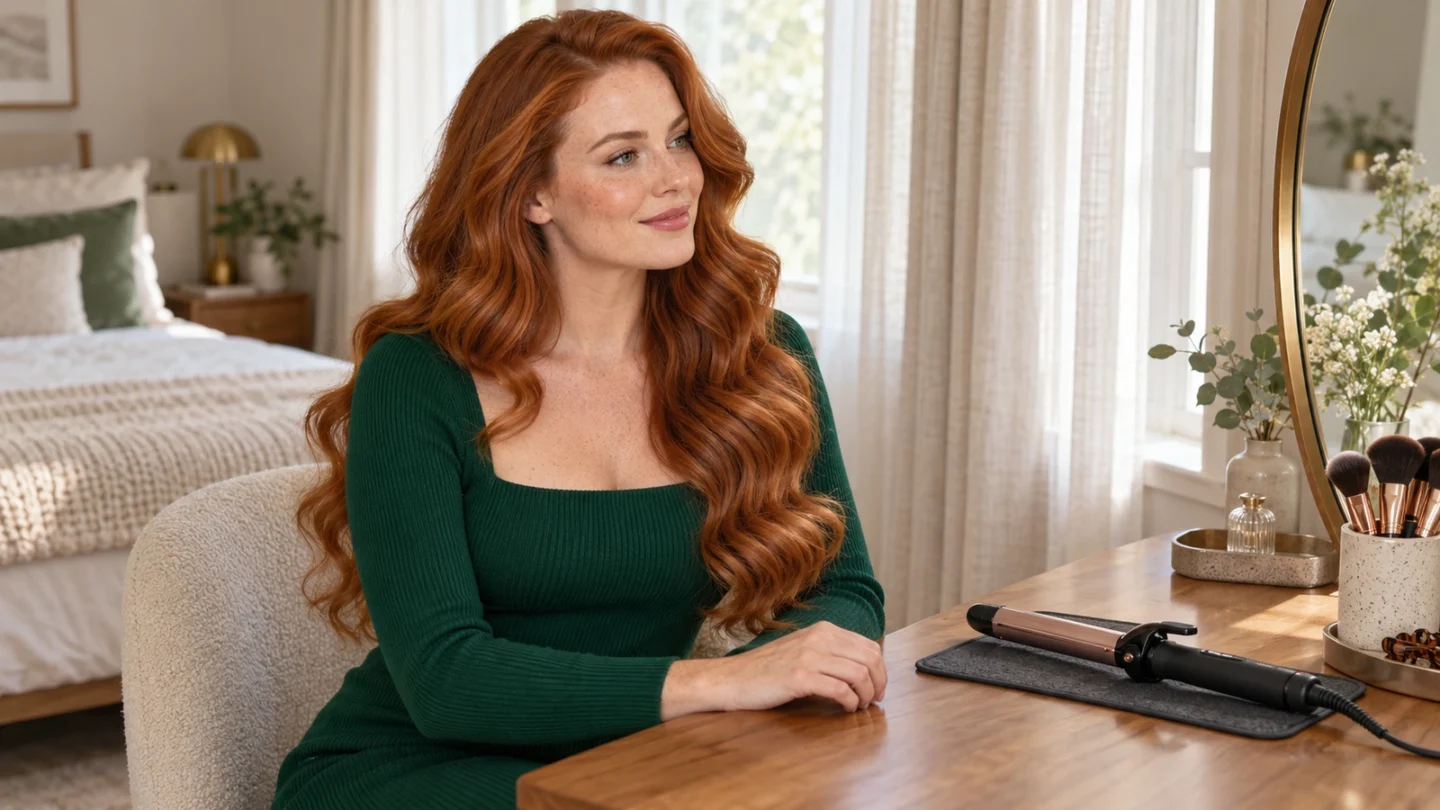
You save glossy Hollywood waves, undone beach waves, and springy ringlets. Then you grab the curling iron at the back of the drawer and get a result that looks nothing like the reference.
The tool may be the reason. Curling iron sizes control the basic diameter of the curl, while the clamp or wand shape changes how polished or relaxed it looks. Start with the finish you want, then adjust for your hair length and how quickly your hair drops a curl.
Choose the curl first, then check your hair length
The quick rule is simple: a smaller barrel makes a tighter curl, and a larger barrel makes a looser wave. Hair length changes that result. A short section may barely wrap around a large barrel, while long, heavy hair can stretch the same curl as it cools.
| Barrel size | Likely result | Useful starting point | Watch for |
|---|---|---|---|
| 14–16mm (about 1/2–5/8 inch) | Tight ringlets and defined spirals | Short hair, detail work, or hair that drops curls quickly | Slower on long or dense hair |
| 19mm (about 3/4 inch) | Springy curls and vintage texture | Pixies, bobs, shoulder-length hair | Can look tighter than expected until brushed out |
| 25–26mm (about 1 inch) | Classic curls and bouncy waves | Most lengths and first-time buyers | Long, heavy hair may relax the curl |
| 28–32mm (about 1 1/8–1 1/4 inch) | Loose curls, beach waves, and polished waves | Medium to long hair | May create only a bend on short hair |
| 38mm (about 1 1/2 inch) | Large, soft waves and blowout-style movement | Long hair and relaxed finishes | Limited hold on short hair or hair that drops shape quickly |
Treat the chart as a starting point, not a promise. Section size, cooling time, layers, density, and the weight of your hair all change the finish. If you are between two sizes and your hair loses curl quickly, the smaller barrel is usually easier to loosen later.
Wand or tong: which one suits you?
A tong, or classic curling iron, has a spring-loaded clamp that holds the ends while you roll the section up. The clamp keeps tension even, which makes a tong easier to control if you are new to heat styling. It also produces smoother, more uniform curls. Clamp too tightly or start at the very end, though, and you may leave a dent.
A wand has no clamp. You wrap each section around the barrel by hand and slide it off after the recommended contact time. The curls tend to look softer and less matched, which suits lived-in styles. A heat-resistant glove helps protect the wrapping hand. A conical wand is wider at the base and slimmer at the tip, so one section can have a looser curve near the root and a tighter turn toward the end.
Use heated curlers only on fully dry hair and follow the tool manufacturer’s directions. The American Academy of Dermatology warns that excessive heat can damage any hair type and recommends keeping curling-iron contact brief. Apply heat protectant as directed on its label, work with manageable sections, and avoid repeatedly reheating the same piece.
Barrel size decides the curl, but your hair decides the hold
Hair needs enough length to wrap securely around the barrel. A 38mm barrel on a chin-length bob may create a gentle bend and little else. Long hair works the other way: its weight can pull curls looser, so going one size smaller than the finished look you want often gives the curl room to relax.
Density changes technique more than it changes the target style. Thick or dense hair usually needs smaller sections so the heat reaches the full section evenly. Fine hair may lose a loose wave quickly, but higher heat is not the automatic fix. Try a slightly smaller barrel, let the curl cool completely, and then soften it with your fingers or a brush.
For a current example of how tool shape and barrel diameter map to different finishes, the ghd hair curlers range includes clamp tongs and clipless wands from 14mm to 38mm. Its wands and tongs use a fixed 185°C setting, so the barrel and technique determine whether the result is a ringlet, classic curl, or loose wave.
1. Glossy Hollywood waves
Reach for a 32mm (1 1/4-inch) tong, or a 25–26mm (1-inch) one if your hair is fine, very long, or reluctant to hold a wave. Curl every section in the same direction, away from the face, so the curls can join into one continuous S-shape. Pin each curl in a loose loop while it cools.
Once the hair is completely cool, brush through with a paddle or boar-bristle brush so the curls merge into soft, sculpted waves. A deep side part sharpens the shape. Brushing can flatten some root volume, so add lift at the roots before you smooth the lengths.
2. Undone beach waves
A conical wand is an easy route because the taper creates variation from root to end. A straight 25mm or 32mm wand also works. Use 1–2-inch sections, alternate the direction of each wrap, and leave the last inch off the barrel. That straighter end keeps the wave relaxed instead of overly curled.
Skip the brush if you want separation. Let the waves cool, shake them out with your fingers, and use a light texture spray only if your hair needs extra grip.
3. Bouncy bobs and short curls
Short hair usually needs a slimmer barrel, around 19–25mm (3/4–1 inch), so the section can wrap fully. A tong is useful because the clamp grips short ends that can slide off a wand. Take vertical sections and curl the mid-lengths. Leave the ends out for a modern bend, or turn them under for a rounder, retro finish. For more cut-specific ideas, see these ways to style short hair.
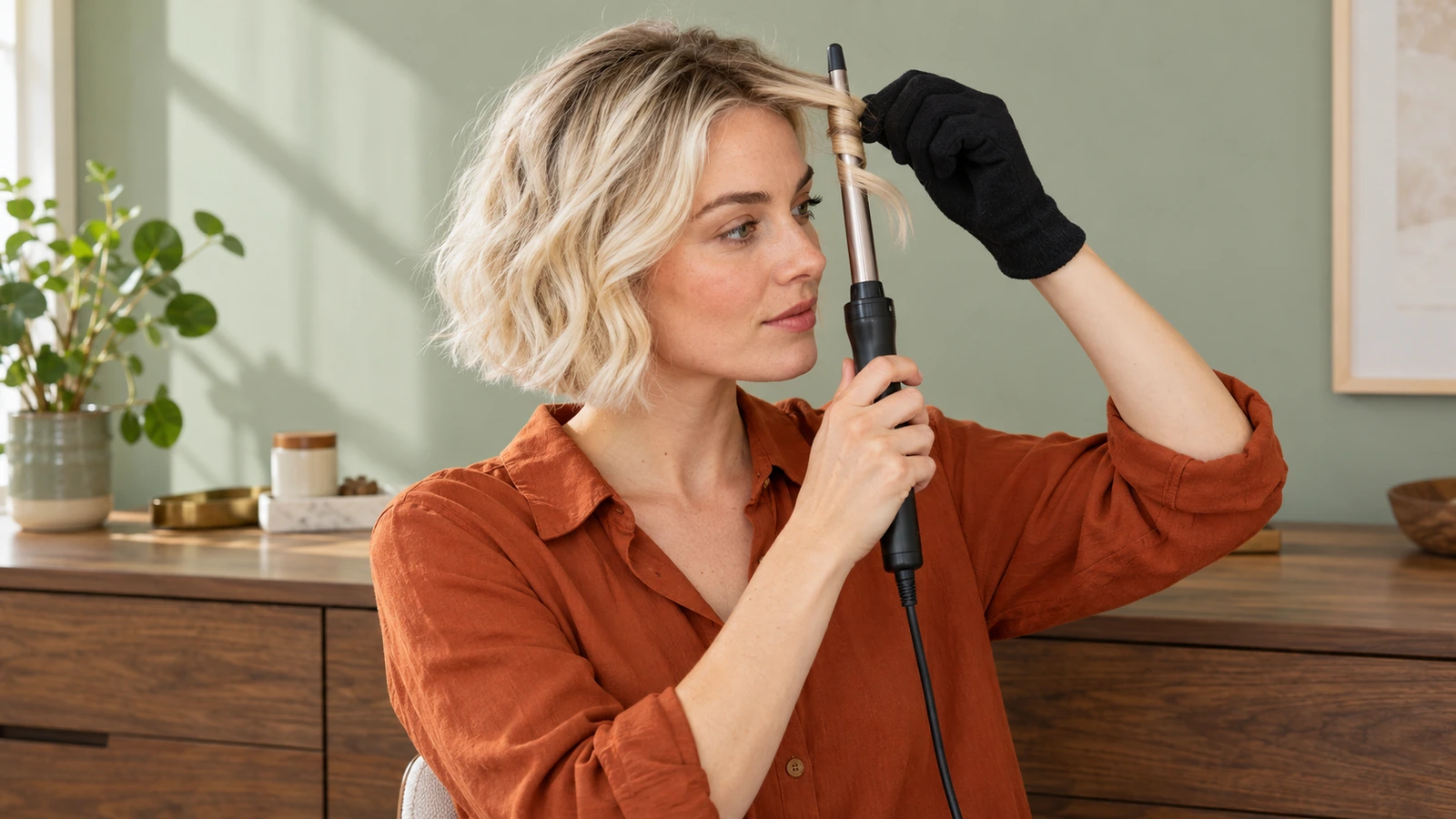
On a pixie, a 14mm or 19mm wand can add texture through the top without making the style look set. Work with very small pieces and stop as soon as the bend forms. The shorter the hair, the more important it is to keep the hot barrel away from the scalp and use a glove where the tool instructions recommend one.
4. Springy ringlets and spiral curls
Ringlets sit at the slim end of the range, usually 14–19mm. Hold the wand vertically and wrap small sections from root to tip, placing each turn beside the previous one rather than stacking hair on top of itself. Overlapping thick layers can make the curl uneven because the outer hair receives more heat than the hair underneath.
This style takes longer on dense or long hair, so allow more time than you would for waves. Let every ringlet cool before separating it with your fingers. Brushing will turn a defined spiral into a softer, fuller finish. If your hair is naturally curly, a slim barrel can also redefine a few stretched pieces without restyling the whole head.
If the result is wrong, change one variable
- The curl is too loose: go one barrel size smaller or use a narrower section before adding more heat.
- The curl is too tight: let it cool, then brush or finger-comb it. Next time, use a wider barrel or a larger section.
- The ends have a clamp mark: reduce clamp pressure and start slightly above the ends instead of trapping them flat.
- One side looks different: keep section width, wrap direction, and cooling time consistent before blaming the tool.
The best barrel is the one that gives your hair enough definition to relax into the style you want. Choose by curl shape first, rule out sizes your length cannot wrap around comfortably, and use technique to fine-tune the finish.