Winter hair problems usually come from three places: dry indoor air, friction from hats and collars, and curls getting flattened before they have finished setting. The cold matters, but the way you stay warm often creates the frizz, static, and dents you see in the mirror.
The quickest fix depends on the symptom. For flyaways, reduce static and add light moisture. For fuzz at the crown or nape, reduce fabric friction. For a flat band across your curls, make sure they are fully dry and change how they sit under your hat. These ten swaps cover all three problems without asking you to rebuild your routine.
1. Swap your plain knit hat for a satin-lined one
A wool or acrylic beanie rubs against your hair every time you turn your head. That friction can separate curl clumps, roughen the surface, and leave a flat band where the brim presses down.
A smooth lining gives your hair less drag while you move. Kitsch offers satin-lined winter headwear that combines a warm knit exterior with a smoother surface against the hair. Check the current product details for fit and materials before choosing one.
Already have a hat you love? Wear a thin satin scarf or cap underneath it. Gather longer curls loosely toward the top or back first so the brim is not pressing straight down on your roots.

2. Keep your hair away from wool scarves and coat collars
The back of the neck is where winter frizz often appears first. A scarf, hood, and coat collar can brush the same ends for hours during a commute, leaving them tangled and puffy even when the rest of your hair still looks defined.
On heavy-coat days, wear longer hair in a loose bun or low twist that sits above the collar. If you prefer to wear it down, place a smooth scarf between your hair and a rough wool layer. Twists and braids also stand up to repeated collar contact better than loose curls.
3. Let your curls dry completely before you head out
Curls tend to hold the shape they dry in. Pull a hat over damp hair and the hat can become the mold, leaving compressed roots and a visible line around the head.
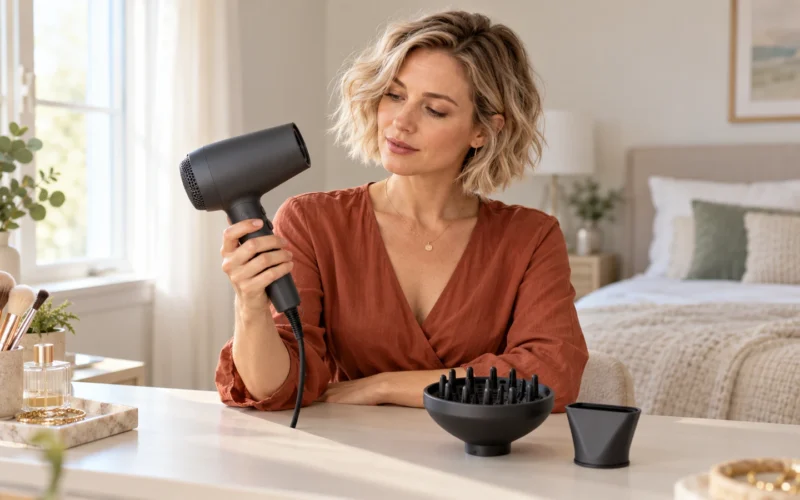
Give yourself a few more minutes with a diffuser on low heat and low airflow, or move wash day to the evening so your hair has time to dry before it meets a hat. Do not raise the heat just to rush the process. A dry, flexible curl has a better chance of springing back after the hat comes off.
4. Turn the shower down a few degrees
Long, very hot showers feel good in January, but they can leave the scalp and lengths feeling tighter and drier afterward. Keep the water comfortably warm instead of scalding, especially while rinsing shampoo and conditioner.
A cold rinse is optional, not a requirement for shiny hair. What matters more is avoiding excessive heat and using enough conditioner for your texture. Try the warmer-to-lukewarm routine for two weeks and judge it by how your hair feels at the end of wash day.
5. Trade the bath towel for microfiber or a cotton T-shirt
Rubbing curls with a terry bath towel pulls apart the clumps you just formed. Waves show the change quickly because looser bends need less friction to lose their pattern.
Squeeze and blot with a microfiber towel or a soft cotton T-shirt, working upward rather than dragging the fabric down the hair. The American Academy of Dermatology advises against rubbing hair dry and recommends gentle handling with a wide-tooth comb for textured or tightly curled hair.

If you plop, use the same smooth fabric and avoid twisting it so tightly that it flattens the crown. For more help finding the source of fuzz, see how to fix frizzy hair.
6. Put the plastic comb away
Static gets worse when the air is dry and friction transfers an electrical charge to the hair. That is the flyaway cloud you may see after pulling off a sweater or knit hat.
Detangle with your fingers or a wide-tooth comb while conditioner is still in your hair, then leave dry curls alone as much as possible. If you need a comb on dry hair, a smooth wooden or carbon-fiber option may create less static than basic plastic. Use it gently and only where needed.
7. Trade your summer styler for something richer
The light gel or mousse that held your curls in July may not give enough slip in a heated winter room. Try layering a small amount of leave-in conditioner or curl cream under your usual gel before replacing the whole routine.
Coily and tightly curled hair may benefit from a richer base because the ends can feel dry quickly. Waves usually need less. Start with a light leave-in so you do not solve frizz by weighing the pattern flat.
Some people also find that products with a large amount of glycerin feel unpredictable in very dry weather. This is not a universal rule. If your usual styler suddenly feels crunchy or leaves a halo, compare it with a lower-glycerin formula for several wash days and change one product at a time.
8. Add a humidifier to your bedroom
Forced-air heating lowers indoor humidity, which is why static often becomes noticeable soon after the heat goes on. A bedroom humidifier can add moisture to the room where you spend several hours each night.
More humidity is not always better. The U.S. Environmental Protection Agency recommends staying at or below 50 percent indoor relative humidity, cleaning portable units regularly, and reducing use if moisture appears on windows or walls. Follow the manufacturer’s cleaning directions and do not let water sit in a dirty tank.
9. Swap your cotton pillowcase for satin
A cotton pillowcase can create friction while you turn in your sleep, and dry bedroom air adds another source of static. A satin pillowcase, bonnet, or loose pineapple tied with a satin scrunchie helps keep curl clumps together until morning.
Choose the option that stays on without pulling your hairline or trapping your curls too tightly. For a routine matched to your curl length, see how to sleep with curly hair.
10. Keep a quick hat-hair fix in your bag
Re-wetting your whole head at a desk or in a restroom is rarely practical in winter. When the hat comes off, rub a pea-size amount of leave-in conditioner or curl cream between your palms until they are barely coated. Lightly smooth the top layer, then scrunch only the sections that need help.
A small spray bottle of plain water or your usual curl refresher also works. Mist lightly, flip your head over, and shake at the roots to lift the flattened area where the brim sat. Then stop touching it. Repeated smoothing can turn a quick repair into more frizz.

You do not need every swap at once. Start with the problem that appears first: a lined hat for crown frizz, a smoother collar barrier for tangled ends, or a small refresh for a flat root line. A single well-chosen change is easier to judge and more likely to stay in your winter routine.