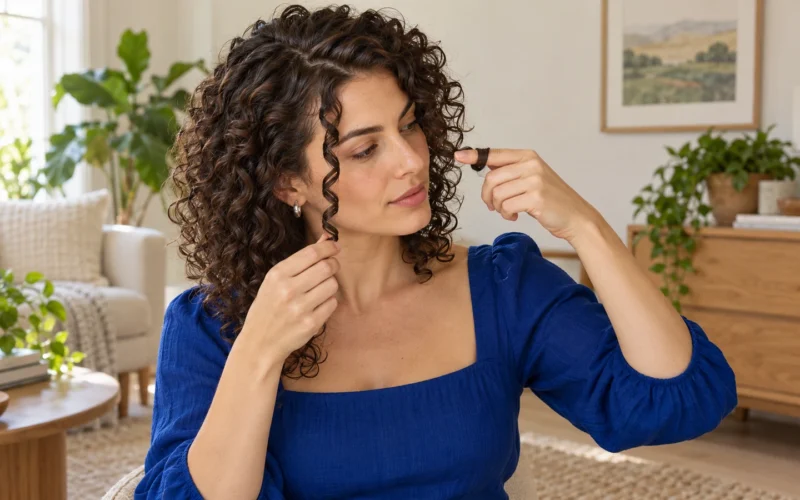
Your curls look good when you turn off the light. By morning, the crown is flat, the front pieces are stretched and one side looks as if it slept through a small storm. The answer is not automatically a bonnet, a pineapple or more product.
The best way to sleep with curly hair is to keep it dry, reduce rubbing and choose a loose setup that solves your specific morning problem. Long curls often respond well to a high pineapple inside a roomy bonnet. Short curls may need two loose mini pineapples, small clips or simply a satin pillowcase. If a method pulls, crushes or overheats your hair, it is the wrong setup for you.
Start with what goes wrong by morning
Curl pattern matters, but length, density, bangs and sleeping comfort usually make the faster decision. Match the protection to the failure you can actually see.
| What you wake up with | Try tonight | What may be causing it |
|---|---|---|
| Flat crown, defined ends | Move the pineapple closer to the forehead or use loose crown clips | The roots dried or rested in their usual flat position |
| Stretched front curls or bangs | Leave the shortest pieces out or make separate mini pineapples | One high ponytail is pulling pieces that barely reach it |
| Crushed short curls | Use two to four loose sections, a roomy bonnet or a satin pillowcase | The hair cannot gather high enough to stay off the pillow |
| Tangles at the back | Add a bonnet or scarf, or use loose twists if changing the pattern is acceptable | The underneath layers are rubbing and moving all night |
| A bonnet that slips off | Change the band or size and keep a satin pillowcase as backup | The bonnet is too large, too tight or overloaded with hair |
This is the distinction most overnight guides miss: preserving a finished wash-day pattern is different from setting a new shape. Braids, twists and Bantu knots can protect hair, but they also reshape it. Choose them when that is the result you want, not when you want the same ringlets tomorrow.
Use the pineapple for length, not because everyone recommends it
The pineapple method is a very high, very loose ponytail. It keeps much of the curl length above the areas that press into the pillow. It works best when the hair is long enough to reach the top of the head without stretching the front, nape or fragile hairline.
Flip forward, gather the hair near the forehead and slide on a soft satin scrunchie. Do not wind it repeatedly until it feels secure. One loose pass is often enough; the bonnet or pillowcase provides the second layer of control. Keep the ends free rather than twisting them into a bun.
If the pineapple gives you straight roots, a dent or a headache, stop tightening it. The American Academy of Dermatology warns that repeatedly wearing tight styles can create damaging tension. A sleep style should not hurt, sting or leave the hairline pulling.
A bonnet should hold curls up, not pack them down
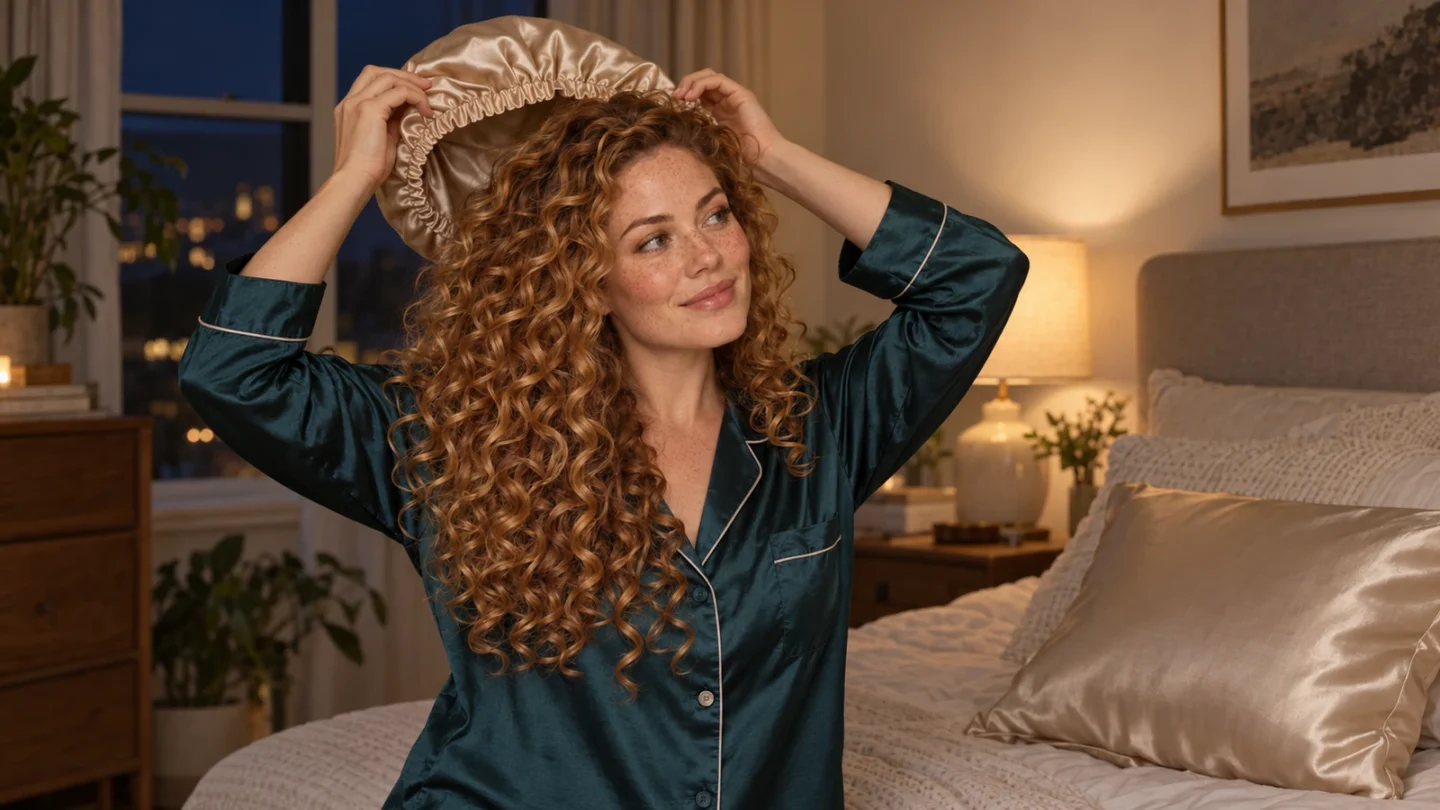
A bonnet is useful when loose curls escape a pineapple, dense hair tangles underneath or you move beyond the protection of a pillowcase. Fit matters more than the word on the label.
The band should stay at the hairline without pressure, and the pouch should have enough room for the curl length to sit above or around the head rather than under the neck. If long, dense hair is compressed into a shallow bonnet, the fabric may reduce rubbing while the cramped shape still flattens the curls. If the bonnet falls off, a smaller or adjustable band is usually a better fix than pulling a tight tie over it.
Silk is a fiber; satin describes a smooth weave and can be made from several fibers. There is no strong reason to assume an expensive silk option will preserve every curl better. Choose a smooth, breathable item that fits, stays on and can be washed regularly. A satin pillowcase is also a practical no-bonnet option and a useful backup when a covering slips.
Short curls need smaller sections

Short curls often fail the standard pineapple because the nape and sides cannot reach the top. Forcing them upward stretches the longest pieces and leaves the rest on the pillow anyway.
Divide the hair into two to four loose sections instead. Secure each once with a small satin scrunchie, or use smooth, snag-free clips to lift only the sections that flatten most. Leave short bangs free if gathering changes their shape. A roomy bonnet can contain the remaining pieces, while a satin pillowcase protects any curl that escapes.
For a curly pixie, skip the ponytails if they are impractical. Arrange the curls in the direction you want them to rest, sleep on a smooth pillowcase and refresh only the crushed areas in the morning. Protection should shorten the reset, not create a complicated hairstyle before bed.
Do not seal soaking-wet curls into a sleep setup
When a late wash day collides with bedtime, a wet pineapple or closed bonnet can leave the roots damp, stretch the lengths and press curls into unpredictable angles as they dry. It may also feel hot and uncomfortable. Aim for fully dry hair before gathering it.
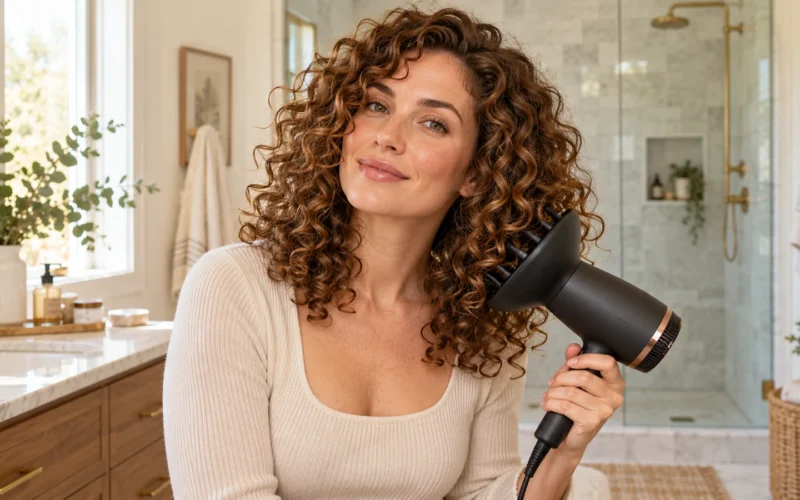
If time is short, use controlled airflow to dry the roots and set the outside of the curl clumps first. Our guide to diffusing curly hair without frizz explains how to hover before moving or cupping the hair. Avoid brushing, pulling or repeatedly rearranging wet hair just to make it fit. The AAD notes that wet hair generally breaks more easily when brushed, while tightly curled hair is an exception that is usually best detangled wet and conditioned.
Use less product at night than you think
Adding cream or oil every night can make morning curls softer, but it can also collapse fine hair, weaken hold and speed up buildup. Protection cannot compensate for a style that had too little hold or never dried properly.
Start with dry hands and no extra product. In the morning, release the hair and give the roots several minutes to settle before judging it. Then wet or refresh only the pieces that lost their shape. If several sections need help, match the formula and amount to the problem using our guide to curl refresher sprays for day-two frizz.
Run a three-night test instead of changing everything
- Take one photo before bed and one before touching your hair in the morning.
- Keep your wash-day products and drying method the same.
- Test one setup for three nights: pineapple, mini sections, bonnet or pillowcase.
- Judge the crown, front pieces, underside tangles and comfort separately.
- Change only the part that failed, such as bonnet size or pineapple position.
No method can freeze every curl in place. The useful goal is simpler: preserve most of the shape without pain, heavy buildup or a full morning restyle. Start with the way your curls fail overnight, then choose the least complicated setup that fixes it.