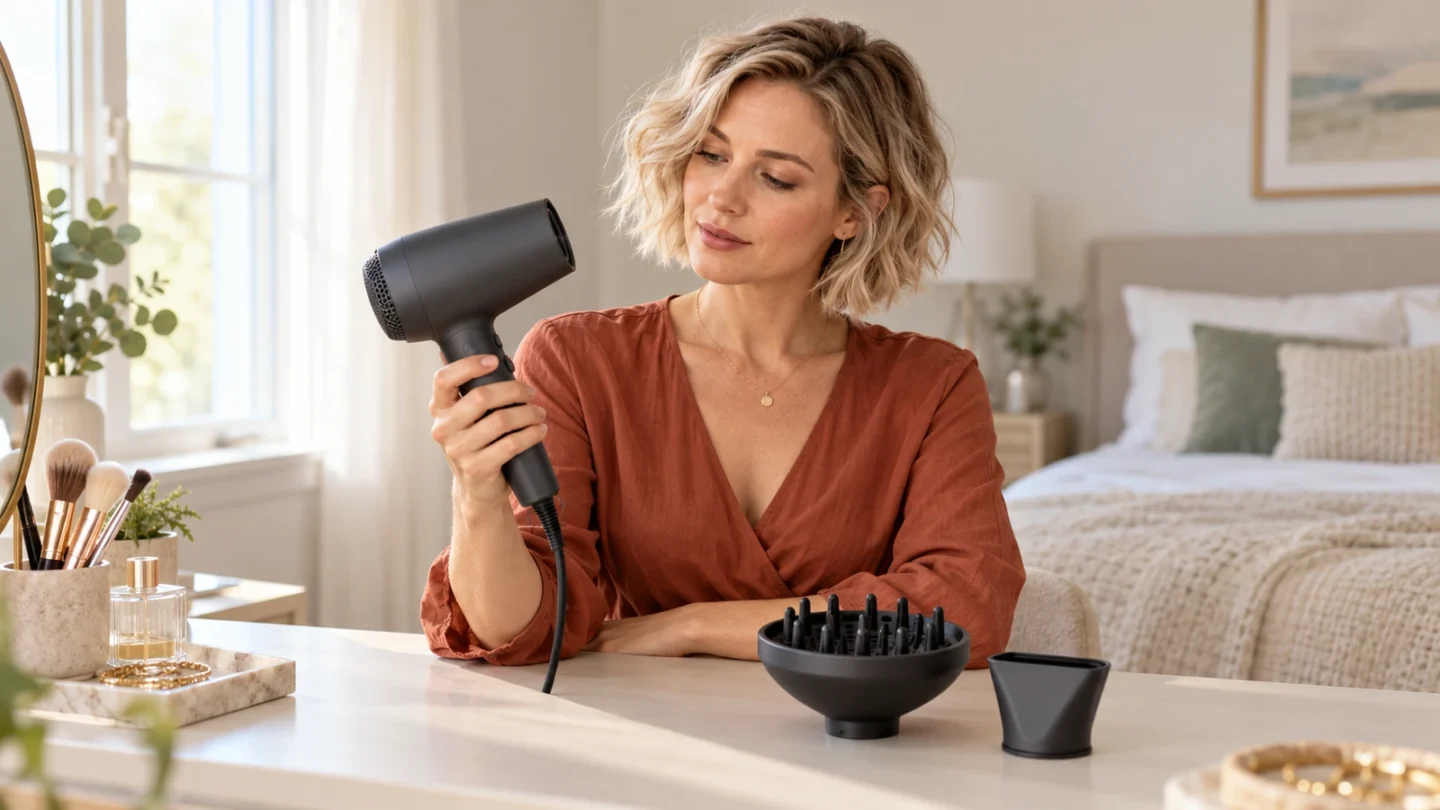
A hair dryer should make your routine easier, not force you to choose between a wall of wattage numbers and vague technology claims. The right model depends on how much hair you have, how fragile it is, the finish you want and how often you dry it.
Start with three practical checks: can you control heat and airflow separately, does the dryer accept the attachment your style needs, and is it comfortable enough to hold for your usual drying time? Those details matter more than a long feature list.
Match the dryer to your hair and styling goal
Your hair type plays an important role in determining which hair dryer will work best. Texture is only part of the decision. Density, length, chemical processing and the style you create also affect how much airflow and heat control you need.
| What describes your hair | Prioritize | Be cautious with |
|---|---|---|
| Fine, thin or easily flattened | Low heat, controllable airflow, lightweight handling and a narrow concentrator | Using maximum heat just to create volume |
| Thick, dense or long | Sustained airflow, comfortable balance, an easy-to-clean filter and several settings | Judging drying speed from wattage alone |
| Wavy, curly or coily | A secure diffuser, low-speed control and enough room in the diffuser bowl | A powerful blast that separates curl clumps |
| Bleached, relaxed, color-treated or breaking | Reliable low and medium heat, shorter sessions and gentle handling | Assuming a premium technology label prevents damage |
Fine and thin hair
Fine strands can dry quickly but may be more vulnerable to excessive heat. Look for settings that let you lower the temperature without losing all airflow. A concentrator nozzle can direct air at the roots for lift, but keep the dryer moving rather than holding it on one spot.
Thick, dense and long hair
Dense hair often needs sustained airflow more than extreme heat. Check the weight with the cord and your preferred attachment fitted, because a front-heavy dryer becomes tiring during a longer session. A removable filter also matters when the dryer is used frequently.
Curly and wavy hair
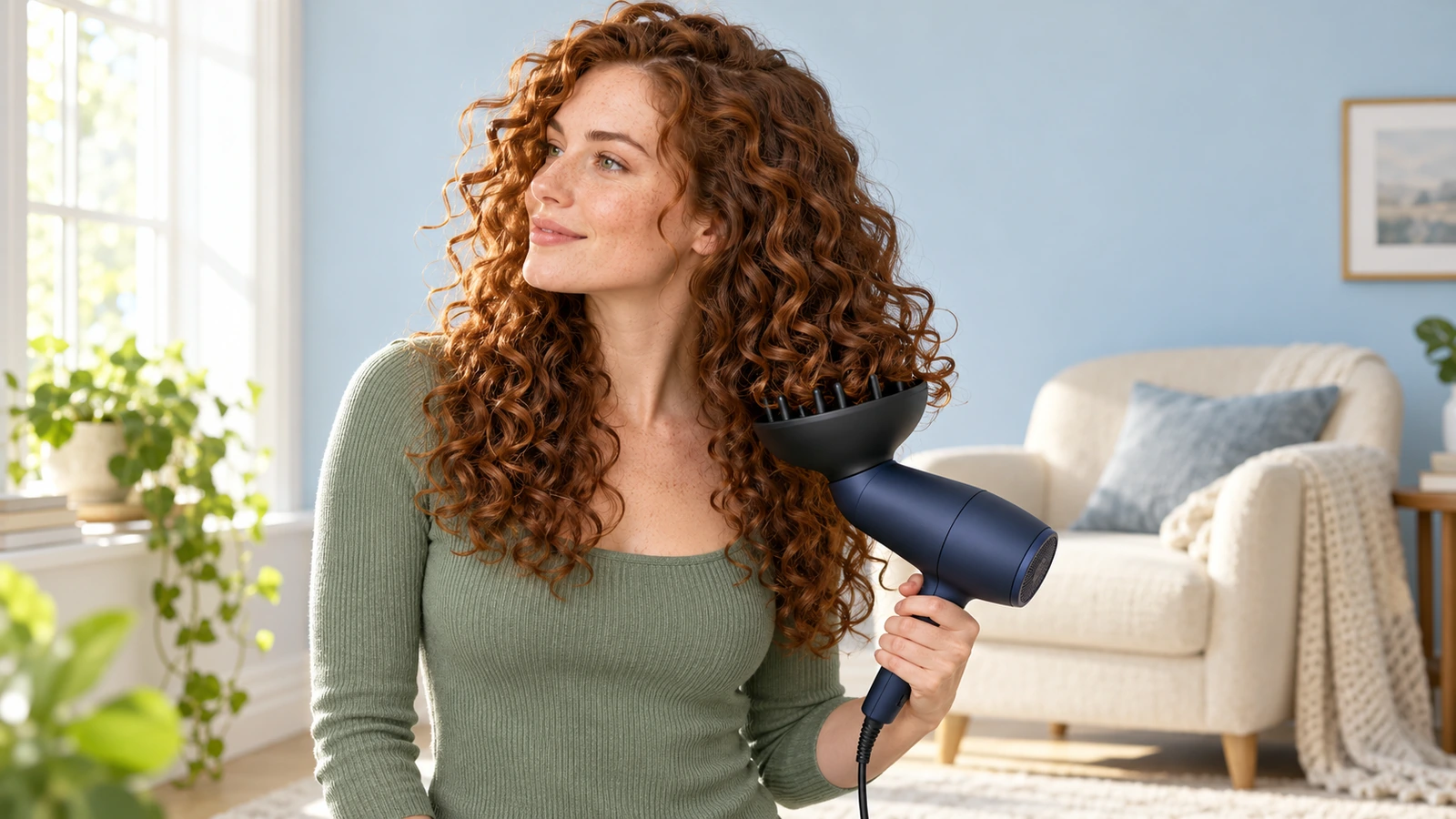
A diffuser spreads airflow across a wider area, helping curls dry without being blown apart. Bowl size, finger length and attachment security are more useful checks than simply seeing the word “diffuser” in the box. If you want a step-by-step technique after choosing the tool, follow our guide to diffusing curly hair without creating extra frizz.
Focus on controls before technology labels
Heat and speed settings
Heat controls temperature; speed controls how quickly air moves. Separate controls are useful because they may let you combine stronger airflow with moderate heat. A cool-shot button can help finish a style, but it cannot undo earlier heat exposure.
The American Academy of Dermatology recommends low or medium heat and a heat-protectant product. That is especially important for fine, dry, damaged or chemically treated hair.
Wattage and real drying performance
Wattage describes electrical power use, not airflow or drying time by itself. Motor design, fan efficiency, temperature control and the nozzle all affect how a dryer performs. Treat wattage as one specification, not a shortcut for quality.
If you travel, voltage deserves its own check. A plug adapter changes the plug shape; it does not convert voltage. Buy a dual-voltage model only when the manufacturer clearly lists the supported settings and follow its instructions.
Ionic, ceramic and tourmaline claims
Ionic dryers are commonly marketed for reducing static and creating a smoother finish. Ceramic and tourmaline are usually promoted for heat distribution. These features may suit your routine, but the label does not tell you the temperature at your hair or guarantee less damage. Compare the settings, handling, warranty and return policy before paying more for a technology name.
Choose attachments you will actually use
- Concentrator nozzle: narrows airflow for brush styling, root lift and a smoother finish. Keep it moving along the hair rather than pressing it against the scalp or strands.
- Diffuser: spreads airflow for waves and curls. Check that it stays attached when tilted and that replacement parts are available.
- Comb or pik attachment: can help guide and stretch textured hair. Smooth teeth and secure attachment matter because rough edges or wobbling can snag.
- Gentle-air attachment: may soften or redistribute airflow, but verify how it changes the settings instead of relying on the name.
An attachment is only useful if it matches the finish you create. Someone who always wears natural curls may value a large diffuser, while a person who regularly uses a round brush may care more about a slim concentrator. Buying a large kit of unused attachments is not better value.
Check comfort, maintenance and safety
Hold the dryer if you can. Notice the grip size, balance, button placement and whether the cord pulls at your wrist. A lighter number on the box does not always feel better when a diffuser shifts the weight forward.
Look for an intake filter you can inspect and clean according to the manual. Lint can restrict airflow and contribute to overheating. Stop using a dryer with a damaged cord, loose plug, intermittent power, sparks, smoke or unusual heat.
In the United States, the Consumer Product Safety Commission says handheld dryers need integral immersion protection, usually provided by a block-shaped circuit-interrupter plug. That protection is a last line of defense, not permission to use a plugged-in dryer near a sink, bath or wet hands.
Use the dryer without concentrating heat
Gently remove excess water with a microfiber towel or soft T-shirt. Do not rub or twist the hair aggressively. Apply heat protectant according to its directions, then choose the lowest effective temperature for the result you need. If you are still building the rest of your wash day, our beginner curly hair routine shows where drying fits.
Keep the dryer moving and maintain a comfortable distance. A laboratory study found more surface damage as temperature increased; in that experiment, continuous movement at 15 centimeters caused less damage than closer, hotter drying. The study does not establish one safe setting for every dryer, but it supports avoiding close, stationary high heat. You can review the hair-drying study and its exact test conditions.
Drying technique matters as much as the purchase. A well-controlled midpriced dryer can be more useful than a premium model used on maximum heat every day.
Decide what is worth paying for
A basic dryer may be enough for occasional use when it offers separate settings, a comfortable grip and the attachment you need. Spending more can make sense for lighter balance, quieter operation, stable temperature control, a durable motor or a better-fitting diffuser.
Before buying, compare the full package: included attachments, replacement availability, filter cleaning, cord length, warranty, return window and local voltage. The best choice is not automatically the hottest, most powerful or most expensive model. It is the dryer you can control comfortably and use correctly for your own hair.
Quick answers before you buy
What wattage is best for a hair dryer?
There is no single best wattage. Thick or long hair may benefit from a dryer built for sustained airflow, but wattage alone does not measure drying speed. Compare controls, airflow, attachment fit and handling.
Is an ionic dryer better than a regular model?
Not for everyone. Ionic technology may help with static and a smooth finish, but hair condition, heat level and technique still matter. Treat it as one feature, not proof of healthier drying.
Can a hair dryer be used every day?
Frequent drying increases cumulative heat exposure. When daily use is necessary, remove excess water first, use heat protectant, select a lower effective temperature and keep the dryer moving.