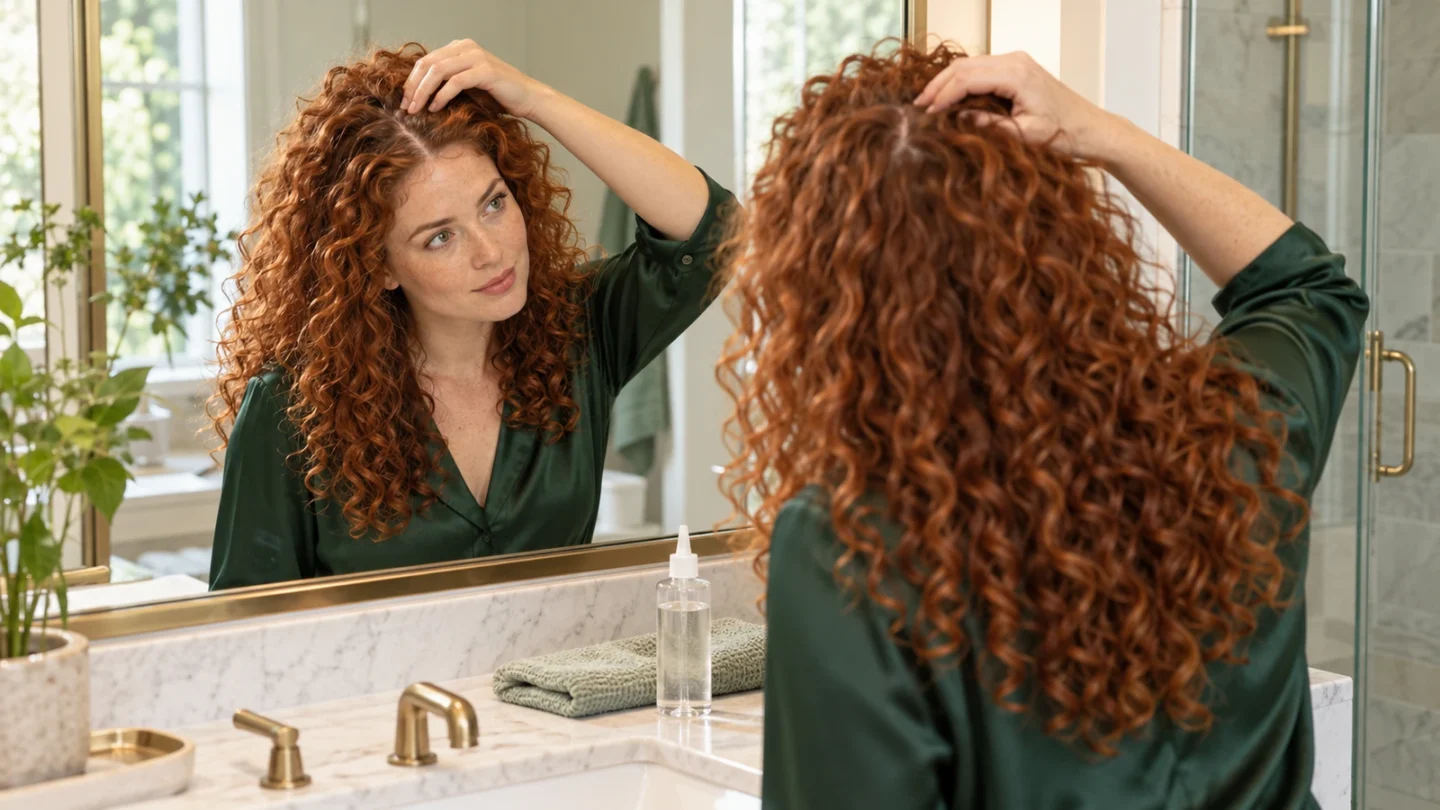
Your scalp still feels coated after shampooing, so another round of scrubbing sounds logical. Sometimes it is. But if the real problem is irritation, dandruff or inflamed skin, more friction can make a difficult scalp angrier.
The short answer: exfoliate only when you have signs of stubborn surface residue or scale and your scalp is not sore, red, burning or broken. First make sure shampoo is actually reaching the skin. If an ordinary thorough wash clears the coating, you do not need an extra exfoliating step.
First decide what you are trying to remove
“Buildup” is a convenient word, but it can describe several different things. Styling residue, sebum and dry shampoo sit on the surface. Dandruff and some scalp conditions can also cause flakes or scale, but they are not proof that the scalp needs harder scrubbing.
| What you notice | What it may suggest | Best first move |
|---|---|---|
| Waxy residue near the roots after several days of cream, oil, gel or dry shampoo | Product and oil buildup | Shampoo the scalp thoroughly before adding an exfoliant |
| Hair feels coated or rough after clarifying, especially with hard water | Mineral residue or hair damage, not necessarily scalp scale | Use the clarifying versus chelating test |
| Recurring greasy or dry flakes with itch | Dandruff or another scalp issue may be involved | Choose treatment for the cause, not a cosmetic scrub |
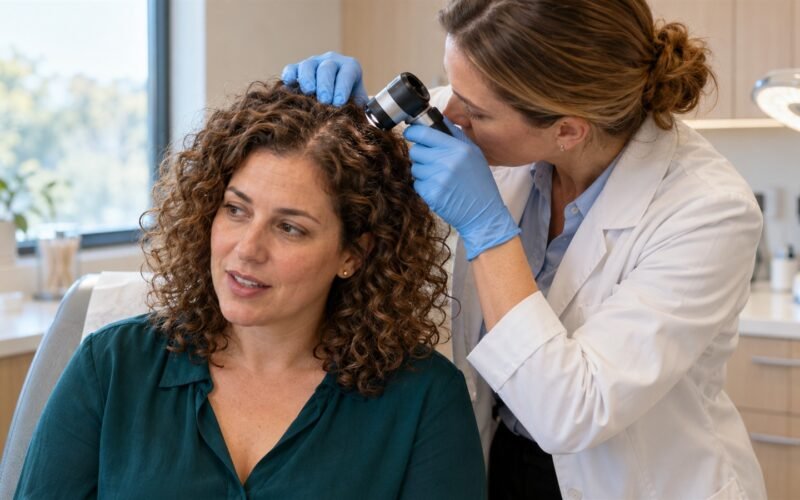
| Burning, tenderness, obvious redness, crusting, oozing or broken skin | Irritation, injury or a condition that needs assessment | Skip exfoliation and get medical advice |
The American Academy of Dermatology notes that dandruff, dry scalp and other conditions can look similar. You do not need to identify a medical condition at home. You only need to recognize when “scrub harder” is the wrong experiment.
Chemical or physical exfoliation?
A physical exfoliant uses friction. That may come from fine particles, a soft silicone scalp brush or your fingertips. It gives immediate feedback, but gritty formulas can be awkward to spread and rinse from dense curls. Pressure is also difficult to judge when the scalp already itches.
A chemical exfoliant uses an ingredient that loosens material on the skin surface. Salicylic acid is a common example. DermNet describes it as a keratolytic that softens keratin, which is why it appears in some products for scaly skin. That does not mean stronger is better. Treat it as an active ingredient, follow the product label and do not stack it with another scalp acid or scrub in the same wash.
For curls, a liquid or shampoo format is often easier to place on the scalp than a coarse jar scrub. If you prefer a brush, choose flexible tips and use it to distribute shampoo gently, not to scrape until the skin feels squeaky.
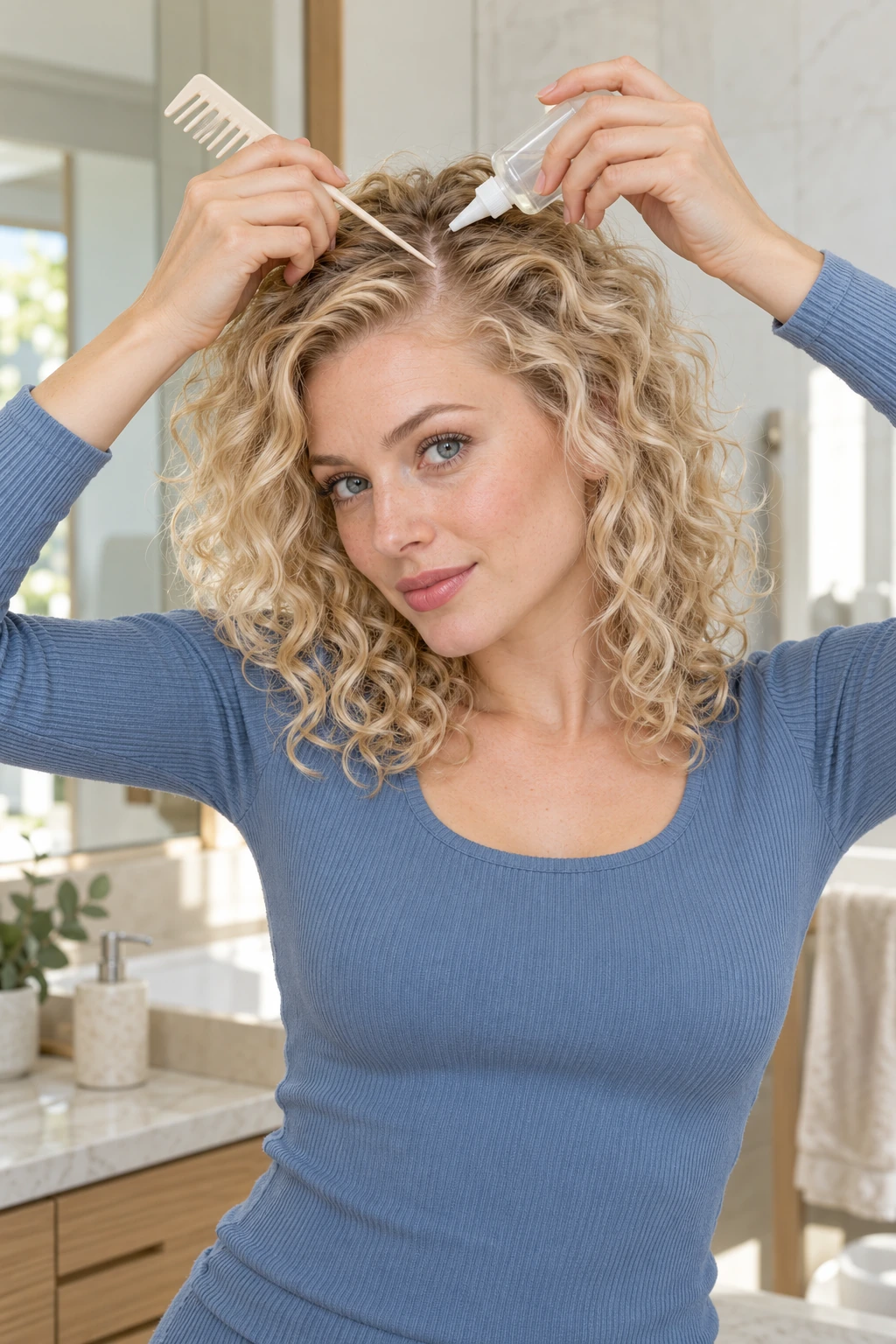
How to exfoliate your scalp without roughing up your curls
- Read the label before wetting your hair. Some treatments go on a dry scalp before shampoo; others are shampoos used on wet hair. The formula decides the timing and contact time.
- Divide curls into four to six loose sections. Make clean partings with your fingers so the product reaches skin instead of coating the top layer of hair.
- Apply only to the scalp. Use a nozzle or small amounts along each part. Keep gritty product away from the lengths, where it adds friction without solving the scalp problem.
- Massage with finger pads, not nails. Use light pressure and short movements. Scratching is not a deeper clean.
- Rinse longer than feels necessary. Dense curls can hold particles and cleanser near the roots. Lift sections and let water move directly across the scalp.
- Condition the lengths. Put conditioner where curls need slip, usually from the mid-lengths down, rather than immediately coating the freshly cleansed scalp.
Do not set a weekly schedule just because a creator or product roundup does. Start with one use at the label’s lowest recommended frequency, then judge the result after the next few wash days. A comfortable, clean scalp is the goal. Tingling, tightness and extra flaking are not proof that a treatment is “working.”
When clarifying is enough
If the problem appeared after layering stylers, extending wash day or putting oils and conditioner close to the roots, a proper shampoo may be all you need. Apply it to several scalp partings, massage gently and rinse completely. A second light lather is more controlled than adding a scrub, acid and brush at once.
Clarifying cleans oil and styling residue. Exfoliating acts on material at the skin surface. Those jobs overlap, so using both every time can be unnecessary. If the coating disappears after shampoo, stop there. If the concern is odor rather than residue, use the timing clues in our guide to why a scalp can smell after washing.
Flakes do not automatically mean “exfoliate”
Powdery specks along the hair can come from dried styling products, especially when a leave-in and gel do not layer well. The one-curl gel flake test helps separate a product problem from flakes that begin on the scalp.
Recurring scalp flakes with itch, greasy scale or a rash deserve a different response. The AAD says dandruff shampoos can treat mild to moderate scalp seborrheic dermatitis, but the active ingredient and directions matter. A cosmetic scrub does not replace an antifungal or other treatment recommended for a diagnosed condition.
Stop if your scalp feels worse
Rinse immediately if a treatment causes burning, increasing pain, swelling or intense itch. Do not exfoliate over scratches, sores, sunburn or a recent reaction to hair color or another product. Also pause if you already use a prescribed scalp medication, unless the clinician who prescribed it says the products can be combined.
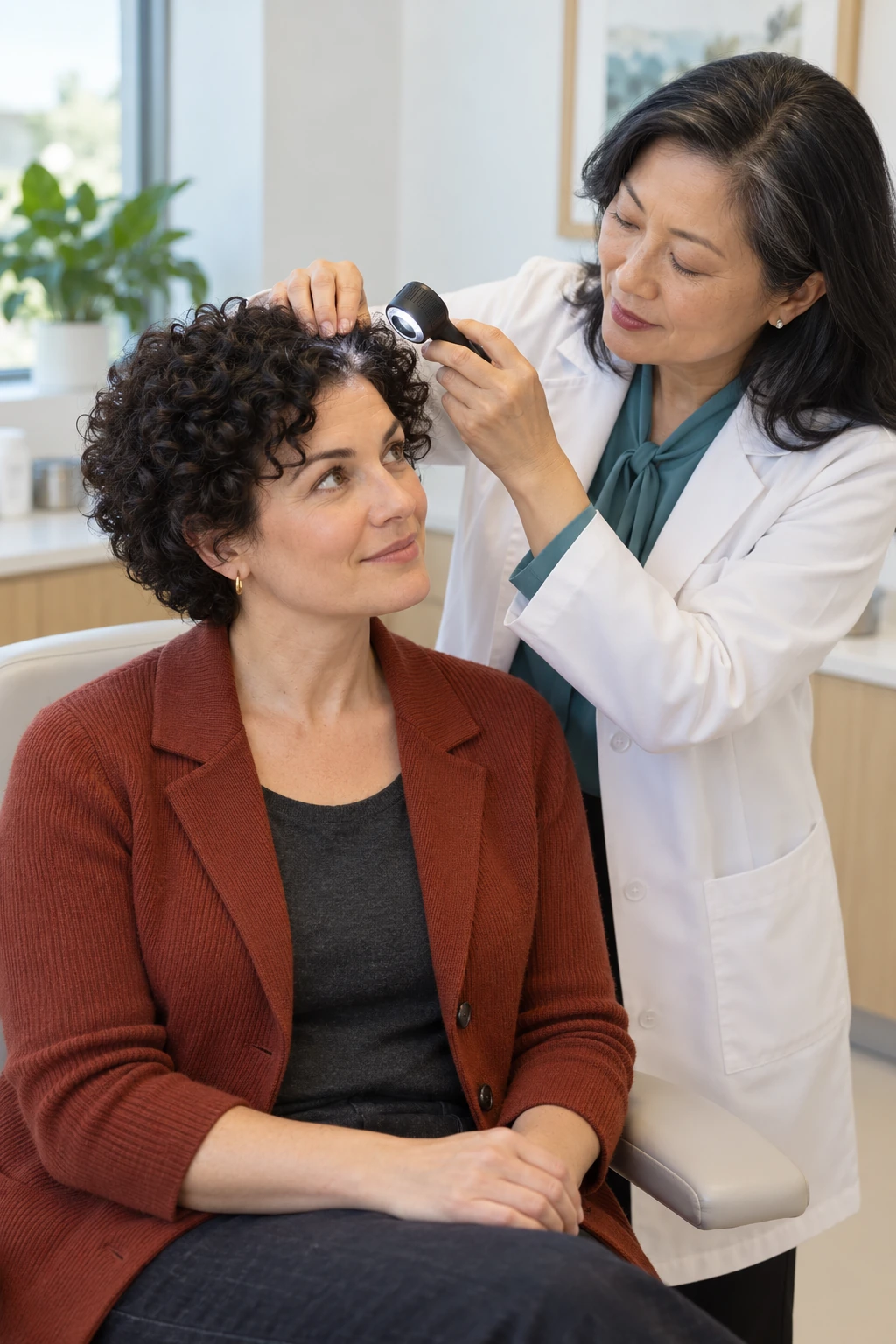
Book a dermatologist if scale is thick or spreading, the scalp bleeds or oozes, you see a persistent rash, hair is breaking or shedding in patches, or sensible over-the-counter care is not helping. This is especially important because scrubbing and scratching can worsen scalp psoriasis.
If the scalp is comfortable and ordinary cleansing leaves genuine residue behind, one carefully placed exfoliant can be useful. If the skin is asking for relief, not polish, listen to that distinction first.