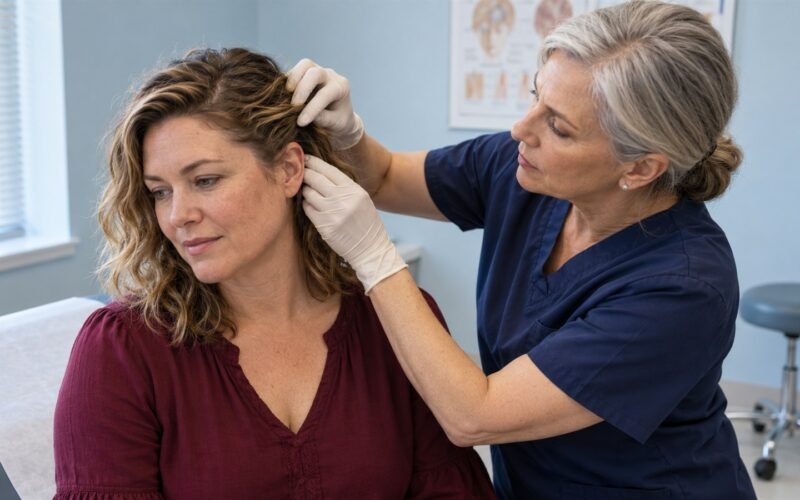
A dermatologist for hair loss does more than glance at your part and recommend a serum. The visit usually combines a detailed history, a close examination of your scalp and hair, and selected tests when the cause is not obvious. The clinic’s photography, records, insurance checks and follow-up systems matter too, because a useful diagnosis is only the first step. You also need a treatment plan you can access, understand and track.
Not every appointment includes bloodwork, a biopsy or an immediate diagnosis. Those decisions depend on the pattern of loss, scalp findings, medical history and what the dermatologist still needs to rule out. Knowing that beforehand makes the visit feel less mysterious and helps you arrive with information the clinician can actually use.
When a dermatologist is the right next step
Hair shedding after an illness, a stressful event or a major weight change may improve with time, but guessing is risky when the loss is rapid, patchy, painful or accompanied by redness, scaling, sores or a visibly changing hairline. A dermatologist can distinguish shedding from breakage and look for signs of inflammation, infection, scarring or patterned thinning.
The American Academy of Dermatology explains that the evaluation often starts with questions, a scalp and nail examination, and a gentle test of how easily hairs release or break. Blood tests or a scalp biopsy may be considered when the findings suggest a disease, deficiency, hormone imbalance or infection.
Age also changes the decision. If thinning began later in life, our guide to hair loss after 65 explains which changes deserve quicker medical attention and how age-specific health factors can shape the workup.
What to prepare before the appointment
A useful timeline often tells the dermatologist more than a bag of half-used products. Write down when you first noticed the change, whether it began suddenly or gradually, and whether the loss is all over or concentrated in one area. Photos taken in similar lighting can help show whether the part, temples or curl density have changed.
Bring a current medication and supplement list, relevant laboratory results, previous biopsy reports and the names of treatments you have tried. Be ready to discuss recent illness, surgery, pregnancy, weight change, diet changes, family history, tight hairstyles, extensions, chemical services and scalp symptoms. These details help separate possible triggers that can look similar from the outside.
Follow the clinic’s preparation instructions. Some hair-loss clinics ask patients to remove camouflage fibers, hairpieces or weaves so the scalp is visible. Others allow normal washing and styling. Northwestern Medicine advises patients to bring prior records and notes that testing decisions are made from the history, examination and clinical findings rather than performed automatically.
What the dermatologist may do during the visit
The consultation usually begins with questions about timing, symptoms, family history and health changes. The dermatologist then looks at the distribution of thinning, the condition of the scalp and the hair shafts themselves. They may also examine the eyebrows, nails or other areas when those findings could clarify the pattern.
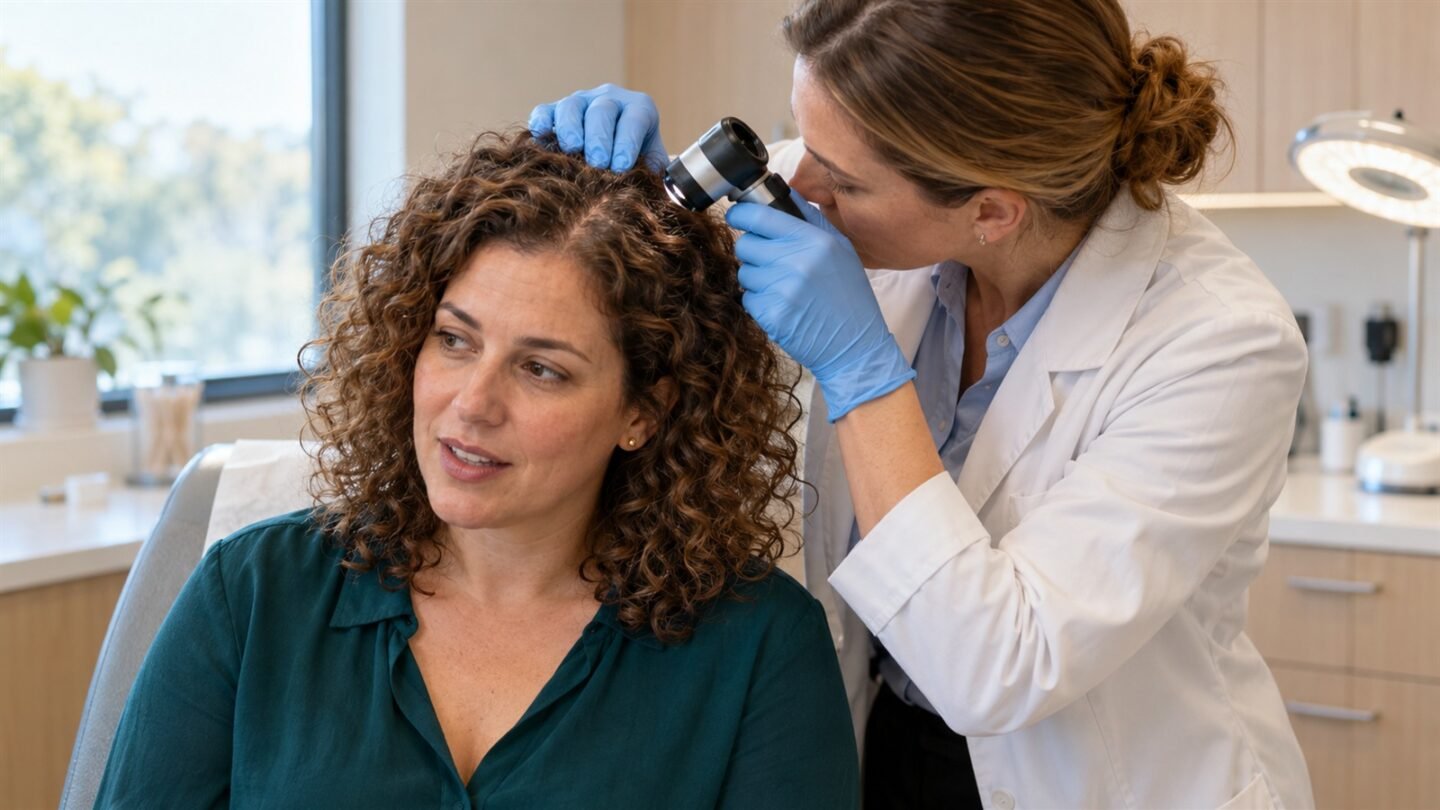
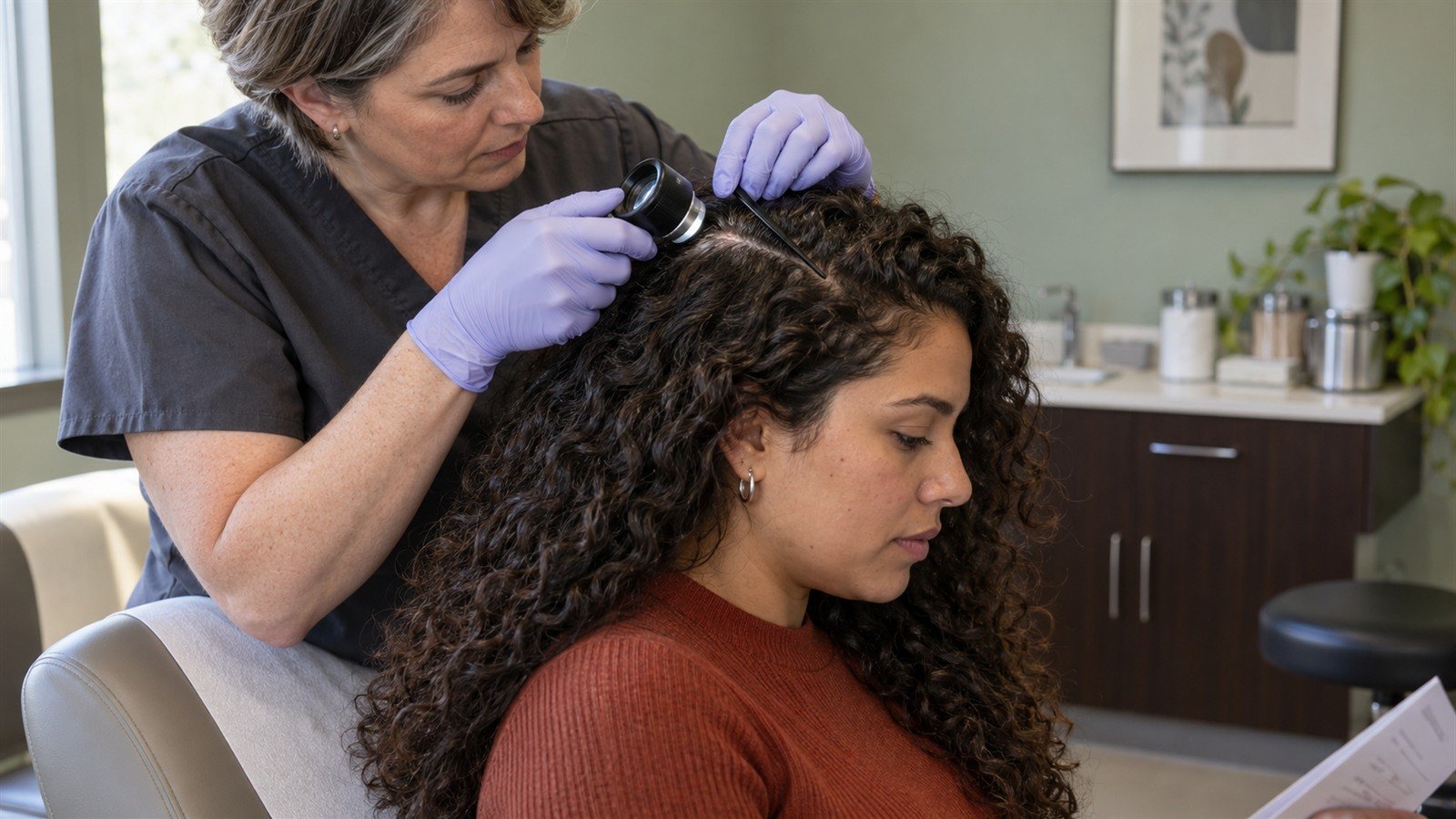
A gentle hair-pull or tug test can help assess active shedding and breakage. A dermatoscope, sometimes called a trichoscope when used on hair and scalp, magnifies follicular openings, hair-shaft differences, scale and inflammation that may not be obvious to the naked eye.
Laboratory tests are targeted, not a universal checklist. A clinician may request them when the history suggests anemia, thyroid disease, nutritional deficiency or another medical contributor. A scalp biopsy is generally reserved for cases where the diagnosis remains uncertain or where inflammatory or scarring hair loss needs a closer look. It is not a routine requirement for everyone who notices extra hair in the shower.
How imaging and digital records support the diagnosis
Hair grows slowly, and memory is not a reliable measuring tool. Standardized scalp photographs can document density, part width and affected areas so future visits compare the same location under similar conditions. UCLA’s Hair and Scalp Disorder Clinic describes photography as part of progress tracking after the initial assessment.
An electronic health record can keep the history, photographs, pathology reports, medication list and laboratory results together. That matters when more than one clinician is involved or when treatment changes over several months. A complete record does not replace a careful examination, but it reduces the chance that an important result or previous reaction disappears between visits.
Teledermatology can work for some follow-ups and preliminary reviews, especially when clear photographs are available. It has limits. Changes that require magnification, a pull test, a culture or a biopsy still need an in-person examination.
Why the administrative side affects your care
The work around the examination is easy to overlook until something stalls. Before the visit, staff may confirm insurance eligibility, collect referral information and request earlier records. Afterward, they may coordinate laboratory work, pathology, prescriptions, prior authorization and follow-up scheduling.
Dermatology also crosses medical, surgical and cosmetic care, which are not always covered in the same way. The note needs to describe what the clinician found, what was done and why it was medically necessary. Some practices use experienced in-house teams or outside dermatology billing services to manage procedure codes, documentation requirements and payer follow-up. For the patient, good administration should mean clearer estimates, fewer avoidable denials and less confusion about whether a service is considered medical or cosmetic.
This challenge is not unique to dermatology. Procedure-heavy specialties often need more documentation than a straightforward office visit. Oral surgery can involve both medical and dental benefits, which is why some practices use specialized oral surgery billing services. The comparison is administrative, not clinical: in both settings, the record has to connect the diagnosis, the procedure and the reason it was needed.
What happens after the appointment
The next step depends on the diagnosis. The plan may involve watchful waiting, a change in hair-care habits, treatment for a scalp condition, a topical or oral prescription, injections or a referral for another procedure. No single hair-loss treatment fits every cause, and visible improvement often takes months rather than weeks.
If a prescription needs prior authorization, ask who will contact you and when to follow up. If the dermatologist recommends a procedure, request a written explanation of the medical goal, likely costs and whether insurance review is needed. For persistent flaking or irritation that has not improved with antifungal shampoo, our guide to why Nizoral may not be working can help you describe the pattern without assuming every flake has the same cause.
Before leaving, make sure you know how to use each treatment, which side effects deserve a call, when photographs or lab work will be repeated, and what the clinician expects to see by the next visit. Follow-up is where a possible diagnosis becomes a tested plan.
Questions worth asking before you leave
- What diagnosis best fits the pattern, and what findings support it?
- Do I need testing now, or would it only be useful if the first plan fails?
- Is the loss likely to be temporary, manageable or potentially scarring?
- What result is realistic, and how long should I wait before judging the treatment?
- Which side effects or scalp changes should prompt an earlier call?
- Is the recommended service medical or cosmetic for billing purposes?
- When should I return, and how will progress be measured?
The visit should turn uncertainty into a plan
A good dermatologist visit for hair loss connects what you have noticed at home with what the clinician can see, test and track. The technology helps document change. The administrative work helps tests, prescriptions and follow-up move without unnecessary delays. Neither part replaces medical judgment, but both can determine whether a careful diagnosis becomes practical care.