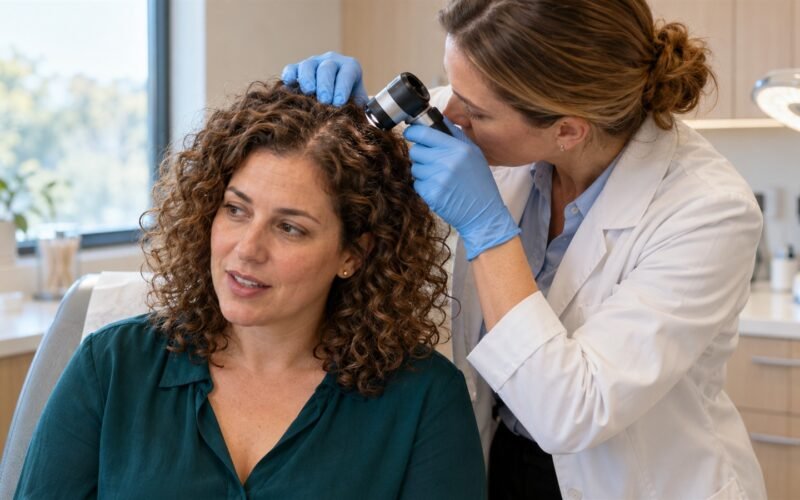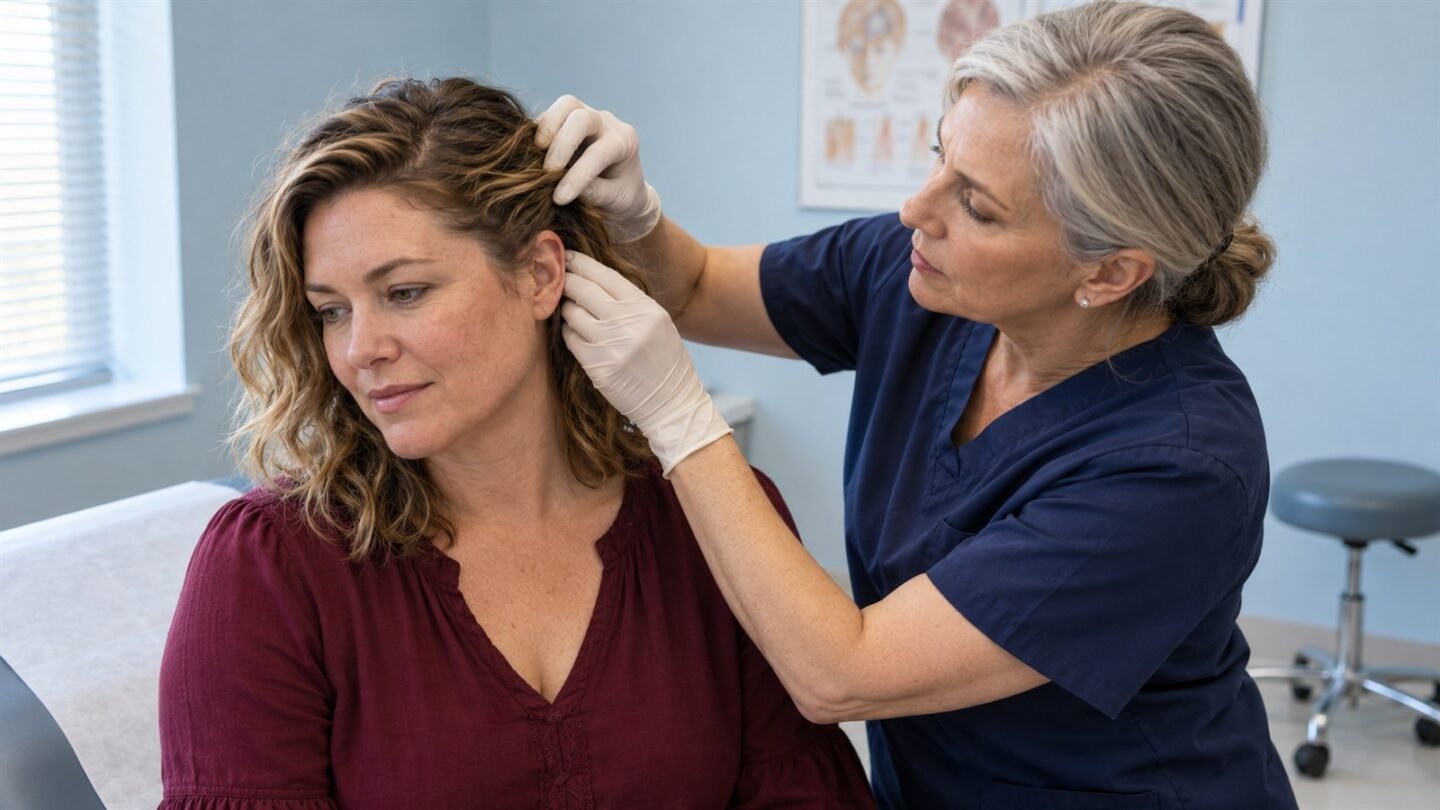
An itchy or burning scalp after shampoo does not automatically mean you are allergic to it. Shampoo can irritate already sensitive skin, trigger allergic contact dermatitis, or simply coincide with dandruff or another scalp condition. Timing and location offer useful clues, but appearance alone cannot confirm the cause.
Stop using a suspected product while the reaction settles. Then document what touched your scalp instead of replacing your whole routine at once. That gives you a better chance of finding the trigger without creating five new suspects.
Health note: This guide cannot diagnose a shampoo allergy. Seek urgent help for trouble breathing, dizziness, widespread hives, or swelling of the lips, tongue, face, or throat. Get medical advice for a painful, blistering, oozing, spreading, or persistent rash.
Is it allergy, irritation, or something else?
Both irritant and allergic contact dermatitis can itch, burn, redden, flake, or swell. The difference is how the reaction begins. An irritant directly damages the skin barrier. An allergy is an immune reaction to a specific substance after sensitization. You can therefore become allergic to an ingredient you previously used without trouble.
| Pattern | What it may suggest | Best next step |
|---|---|---|
| Burning or stinging during washing or soon afterward, especially on cracked or inflamed skin | Irritation from the formula, cleansing strength, heat, friction, or frequent washing | Stop the product, rinse well, and let the scalp recover |
| Itchy rash that develops later, often more than 12 hours after contact, and returns with the same product | Possible allergic contact dermatitis | Save the label and ask about professional patch testing if it recurs |
| Rash around the hairline, ears, eyelids, face, or neck as well as the scalp | A rinse-off product may have run onto thinner or more visible skin | Review every wash-day product, not shampoo alone |
| Greasy scale or recurring flakes without a clear product-timed rash | Dandruff or another scalp condition | Use condition-appropriate care and seek advice if it persists |
| White dust sits on the curls while the scalp feels calm | Dried styler or product incompatibility | Check for residue before treating the scalp |
DermNet notes that cosmetic reactions may be irritant or allergic and can appear beyond the application site. A calm-looking scalp does not rule out a product reaction because the ears, eyelids, face, and neck may show it more clearly.
Timing is a clue, not a diagnosis: irritation from repeated exposure can also take days or weeks to develop. Delayed contact allergy often peaks around 48 hours after exposure.
What does a shampoo reaction look and feel like?
Possible shampoo allergy symptoms include persistent itching, burning, stinging, tenderness, redness, dry scale, small bumps, swelling, or a weeping rash. Redness may be subtle on brown or Black skin, so compare warmth, swelling, texture, tenderness, and color with nearby unaffected skin.
The location matters. Shampoo travels while you rinse. Check the hairline, behind the ears, the sides of the face, eyelids, neck, shoulders, and upper back. Conditioner, hair color, leave-in products, fragrance, or laundry products on a towel or pillowcase can produce a similar pattern.
A 2022 systematic review of scalp allergic contact dermatitis found hair dyes, shampoos, and conditioners among the commonly implicated product groups in published cases. Those clinical reports do not tell us how common shampoo allergy is in the general population, but they support looking beyond the center of the scalp and considering the whole routine.
Common triggers can hide behind broad label terms
Fragrance, preservatives, surfactants, and botanical extracts can all matter. Fragrance is especially difficult to trace because a US label may use a collective term such as fragrance or perfume instead of listing every component. The FDA also says terms such as “hypoallergenic,” “fragrance-free,” and “for sensitive skin” have no federal definition. Treat those claims as shopping clues, not guarantees.
In a database audit of more than 1,000 skincare products, SkincareLab found that 26.1% listed at least one ingredient from the older EU 26-allergen reference set, while 14.1% listed three or more. That is a snapshot of its skincare database, not an estimate of shampoo allergy or personal reaction risk.
The reference set is also changing. The European Commission expanded individual fragrance-allergen labeling, with transition periods for products already on the market. A longer ingredient list can improve transparency, but it still cannot tell you which substance caused your rash.
Preservatives such as methylisothiazolinone or methylchloroisothiazolinone and the surfactant cocamidopropyl betaine, or impurities related to it, are other recognized patch-test findings. Sulfates are often blamed online, but strong cleansing and allergy are different problems. A detergent can irritate a disrupted scalp without being the ingredient to which you are allergic.
What to do after a suspected reaction
Shampoo reaction: what should you do next?
Start at the top. Follow the first route that fits your symptoms.
1. Breathing trouble, faintness, widespread hives, or swelling of the lips, tongue, face or throat?
YES → Seek emergency help now. Call your local emergency number. Do not wait to photograph products.
NO ↓
2. Is the rash painful, blistering, oozing, spreading or worsening?
YES → Get medical advice promptly. Stop the suspected product. Do not try it again to confirm the cause.
NO ↓
3. Stop, rinse and document
Stop the suspected shampoo and rinse thoroughly with lukewarm water. Photograph the affected skin and the bottle label. Record when symptoms began and which products you used.
THEN CHECK PROGRESS ↓
4. Not improving after stopping, or does the reaction return?
YES → See a clinician. Bring your photos, labels and timeline. A dermatologist may recommend professional patch testing.
NO → Continue avoiding the suspected product. Improvement alone does not prove an allergy or identify the ingredient.
This chart guides next steps; it cannot diagnose the cause. If symptoms become severe or worsen, use the earlier routes.
- Stop the suspected shampoo. Rinse the scalp and hair thoroughly with lukewarm water. Do not keep using it to “confirm” the reaction.
- Photograph the pattern. Take clear pictures of the scalp, hairline, ears, face, and neck before the appearance changes.
- Save the evidence. Keep the bottle or photograph the complete ingredient list, product name, lot number, and purchase date. Formula changes can make an old online label unreliable.
- Simplify, but do not overhaul. Pause recent additions and use only a small number of previously tolerated products. Introducing several new “sensitive” products makes the culprit harder to identify.
- Record the timeline. Note when you washed, how quickly symptoms began, where they appeared, and every product used that day.
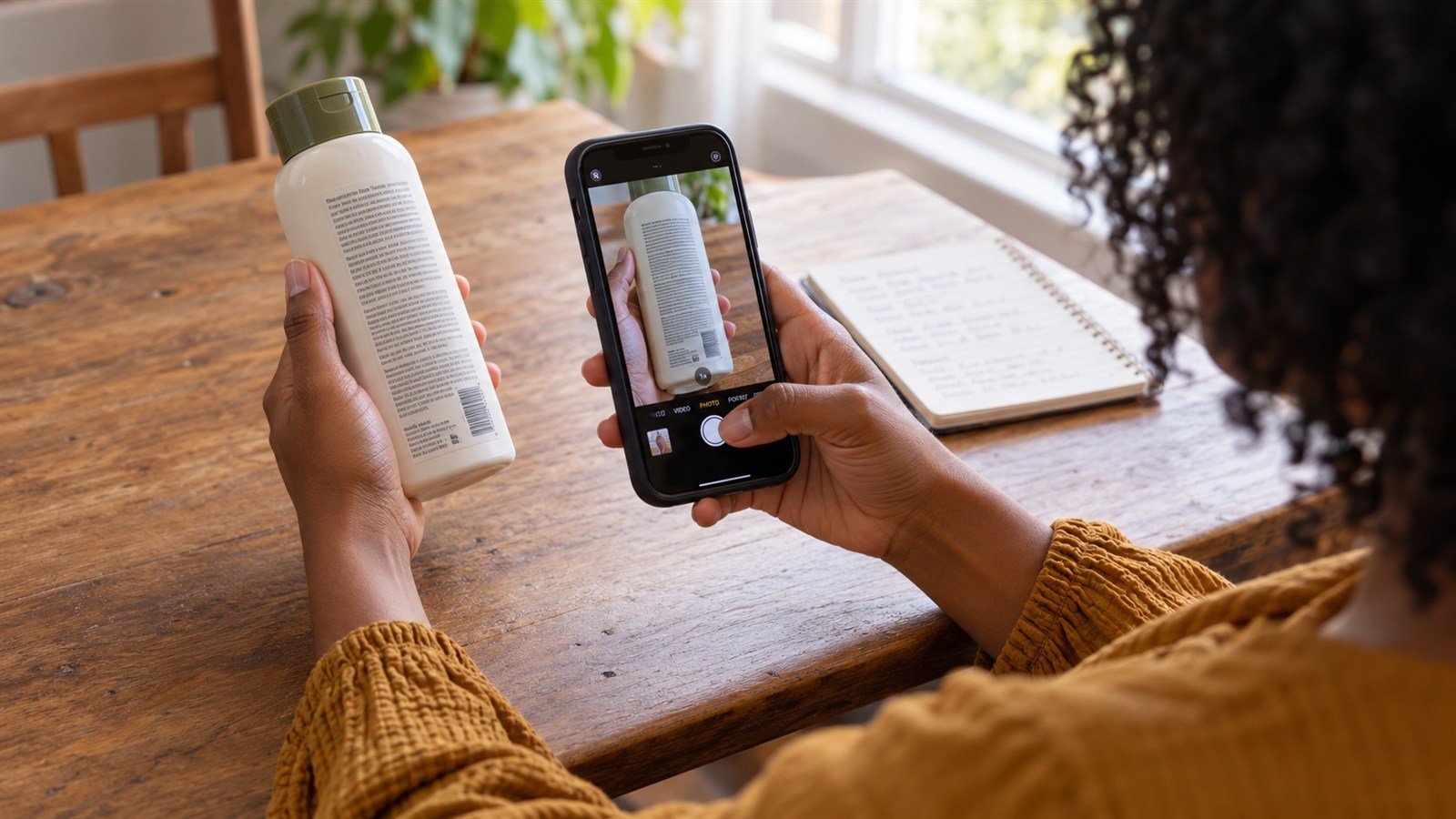
If symptoms are severe, worsening, or not improving after the suspected product is removed, seek medical advice. Do not reintroduce a product that caused swelling, hives, breathing symptoms, blistering, or a widespread reaction.
Do not leave shampoo on your skin as a home patch test
A common online tip is to place shampoo on the forearm or behind the ear and leave it there. That can create an irritant reaction because rinse-off cleansers are not designed for prolonged skin contact. It also cannot reliably identify the responsible ingredient.
Medical patch testing uses standardized allergens in controlled concentrations and is read over several days. The American Academy of Dermatology explains that patch testing looks for delayed skin allergies, not immediate breathing or food allergies. Bring your products and photographs to the appointment. A dermatologist decides whether and how the products or individual ingredients should be tested.
Patch testing is most useful when the rash keeps returning, several products share possible triggers, or avoiding the obvious product has not solved the problem. A negative standard panel does not prove that every hair product is safe because not every relevant ingredient appears in a basic series.
When shampoo may not be the real cause
Dandruff, seborrheic dermatitis, eczema, psoriasis, infection, sweat, tight hairstyles, hot water, and scratching can all create an itchy or flaky scalp. Styling products may also be responsible even when shampoo gets blamed because washing is when symptoms become noticeable.
If the scalp feels comfortable and the white material sits along the curls, use our guide to tell dried gel from dandruff. If a medicated shampoo has not helped recurring scale, review why Nizoral may not be working before increasing frequency. When many products and exposures seem suspicious, this sensitive-scalp investigation guide explains how to change one variable at a time.
The most useful first question is not “Which shampoo should I buy?” It is “What touched the affected skin, and when did the reaction begin?” Stop the likely trigger, keep the label, simplify the routine, and seek professional patch testing when the pattern persists or returns.