Choosing hair oil for curly hair starts with the job you want it to do: smoother ends, a little shine, a softer gel cast, or protection before shampooing. The result depends on the amount and what is already coating your curls.
I’ve used oils on clients’ curls in my salon work. My advice is to choose one reason to try an oil first. Rough ends, a crunchy finish, and a dry-feeling wash day call for different adjustments. If your curls already feel soft and move freely, you may have little to gain from another layer.
Start with what you want the oil to do
Oil adds lubrication and changes how the surface of the hair feels. That can make strands slide against each other more easily or make flyaways look less noticeable. It doesn’t supply water. If the hair feels rough after washing, look at your conditioner and how you use it before adding more oil. Our basic curly-hair routine explains that wash-and-condition foundation.
Also check the bottle. A pure botanical oil and a formulated finishing serum can feel very different. For example, the Verb Ghost Oil ingredient list starts with silicones, followed by plant oils and other ingredients. You’re applying the whole formula. When someone describes an oil as lightweight, I want to know which formula they mean and how much they used.
| Your goal | When to try it | What to watch |
|---|---|---|
| Smoother-looking ends or a little shine | A small finishing application on dry curls | The curls should keep their movement |
| Soften a crunchy gel cast | After the gel is fully dry | Try dry hands first, then a trace of oil if needed |
| Try pre-wash protection | On the lengths before shampooing | Use an amount you can wash out comfortably |
| Address scalp itching or thinning | Find the cause before choosing a scalp product | A finishing oil may add residue without addressing the problem |
Which oils are worth considering?
Coconut oil has the clearest case for pre-wash use. In a 2003 study on hair fibers, it reduced protein loss in damaged and undamaged hair when used before or after washing, compared with mineral and sunflower oils. This was a laboratory hair study. It doesn’t establish the best routine for every curl pattern or show that coconut oil reverses existing damage.
If coconut oil leaves your curls stiff, coated, or awkward to cleanse, you don’t need to keep using it because a study found a benefit. Try a smaller pre-wash amount on the ends, or leave it out. A product containing a little coconut oil can also behave differently from applying the pure oil.
Argan oil is a reasonable finishing option to try for shine and smoother-feeling ends. Pure argan can still weigh fine strands down. An “argan treatment” may spread more easily because its formula contains silicones or other carriers. Check the ingredients and directions before treating the two as interchangeable.
A 2022 systematic review of coconut, castor, and argan oils found little clinical evidence supporting argan oil for hair growth or improved hair quality. That limits the stronger claims you can make about it, even if you like its cosmetic finish.
Jojoba is another option for a small finishing application. It is a liquid wax used as an emollient in cosmetics. Treat it as something to assess by feel and appearance. It can help coat the ends, but there isn’t a reliable clinical rule that makes it the best choice for fine curls or a particular porosity. Start conservatively.
Castor oil is thick and can be hard to distribute. That makes it easy to overapply when you only want a little shine. The same systematic review found weak evidence for improving luster and no strong evidence for growth. If your strands are fine or your roots flatten easily, I’d start with a less viscous option instead of trying to spread a heavy coating through the whole head.
Before shampooing: coat the lengths lightly
For a pre-wash trial, spread a small amount of coconut oil over your palms and smooth it onto dry mid-lengths and ends. Work in a few loose sections so you can feel where it has gone. Aim for a light coating rather than saturated hair. Scalp application isn’t necessary for this purpose.
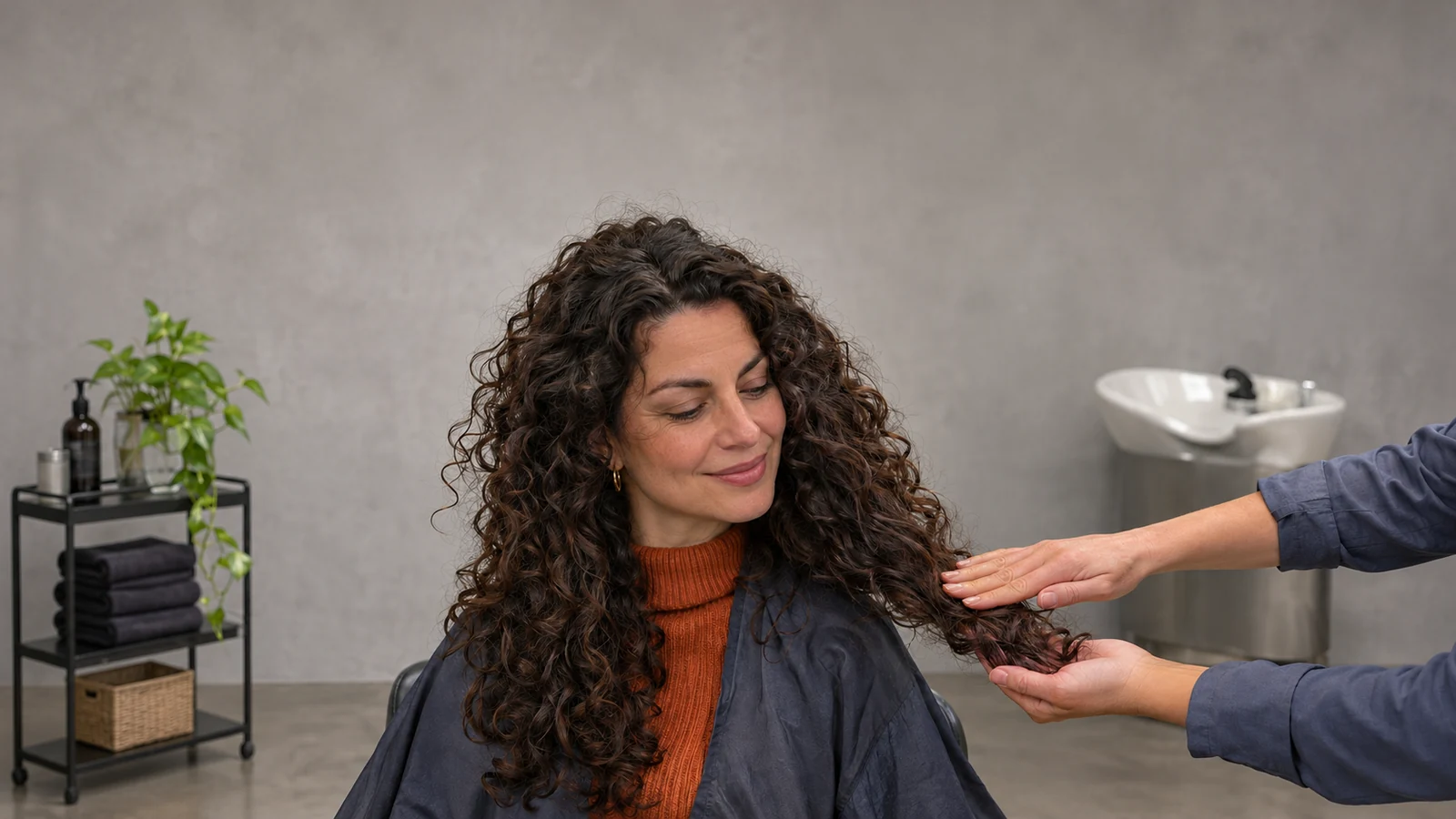
You can start with a short period before washing, such as 20–30 minutes, and assess the next wash day. That is a practical trial, not a proven optimum. Shampoo and condition as usual. If removing the oil means repeatedly washing until your lengths feel stripped, reduce the amount or skip the treatment. Don’t add more oil to compensate for a harsh wash-out.
On damp hair or dry curls?
On damp hair, oil becomes part of your styling layers. If your usual conditioner and styler already give you softness, an extra coating may leave the finished curls limp. Keep the routine the same for the first trial and change only the oil amount. Follow the directions if you’re using a formulated serum intended for damp hair.
For finishing, wait until the curls are dry. You can see which ends need attention and judge the effect before adding more. For fine strands, try one small drop spread thinly between both palms, then lightly smooth a few ends. This is an adjustable starting point. A pump, a drop of thick castor oil, and a drop of a thin serum are different amounts and textures.

Long or dense hair may need another light pass, applied section by section. Coarse strands may tolerate more coating, but a full-looking head of hair can still have fine individual strands. Let the finished result guide you. A faint sheen on your palms is enough to begin with, and your roots usually need less than your ends.
To soften a gel cast, let it dry first
Cup a fully dry curl group and gently lift it toward the scalp, then release. Try clean, dry hands first. If you want more slip, spread a trace of oil over your palms and repeat with light pressure. There is no need to rake through the curls.

Scrunching while the gel is still drying can disturb the groups you’re trying to keep together. Oil also won’t create hold if the styler never formed a cast. If that’s the issue, check why your gel cast isn’t forming before changing the finishing step.
When the result feels greasy, stiff, or stringy
Greasy ends, flat roots, or curls that collapse after application are reasons to use less next time, keep it lower on the lengths, or skip that finishing layer. More oil is unlikely to improve the same result. If the hair is already coated, cleanse it at the next suitable wash rather than repeatedly layering refresh products over it.
If the clumps split apart, consider how much you handled them as well as how much oil you used. Smooth the outside of a curl or cup it gently. Pulling your fingers through a set curl can separate it. Our guide to stringy curls after drying helps distinguish that from a problem that began earlier in styling.
Roughness after oiling doesn’t identify “protein overload” or prove a porosity type. The formula, the amount, residue, and the wash routine can all affect the feel. Leave the oil out for a wash and compare. Persistent frizz may need a change in conditioning, hold, or handling. Adding shine alone won’t keep the curl shape in place.
Stop using a product that makes your scalp itch or burn and wash it off. If irritation persists, get medical advice. An already itchy or flaky scalp needs its own assessment before you experiment with more scalp oil.
Keep rosemary and growth claims separate
Rosemary essential oil belongs in a different conversation from smoothing the ends. In a 2015 trial involving 100 people with androgenetic alopecia, participants used rosemary oil or 2% minoxidil for six months. Both groups had increased hair counts at six months, with no statistically significant difference between groups. Neither had a significant increase at three months, and scalp itching increased in both groups.
A manufacturer-funded 2025 trial also reported gains with rosemary-lavender and rosemary-castor blends over 90 days. Because these were combined formulas compared with coconut oil, it can’t tell us what rosemary or castor alone would do.
These trials don’t establish rosemary as a replacement for hair-loss treatment or validate every blend. Essential oils can irritate skin. Use a product formulated for scalp application according to its directions, and avoid applying undiluted rosemary essential oil. If you’re seeing ongoing thinning, find out why before making oil your growth plan.
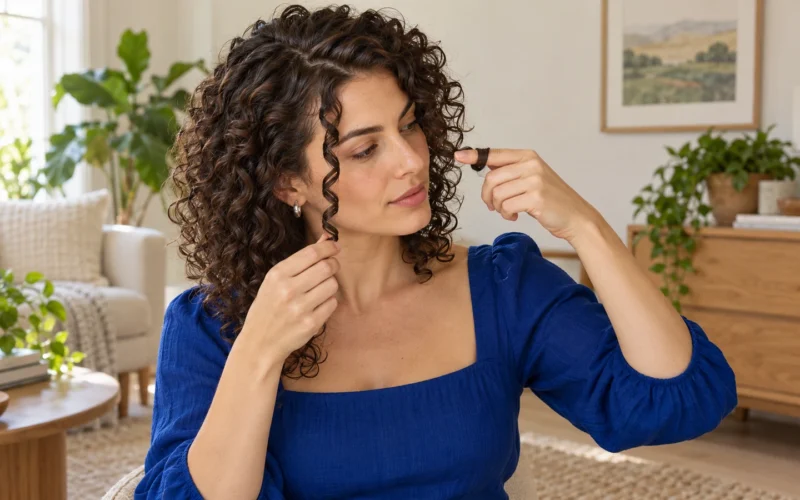
Images are generated illustrations of application techniques.