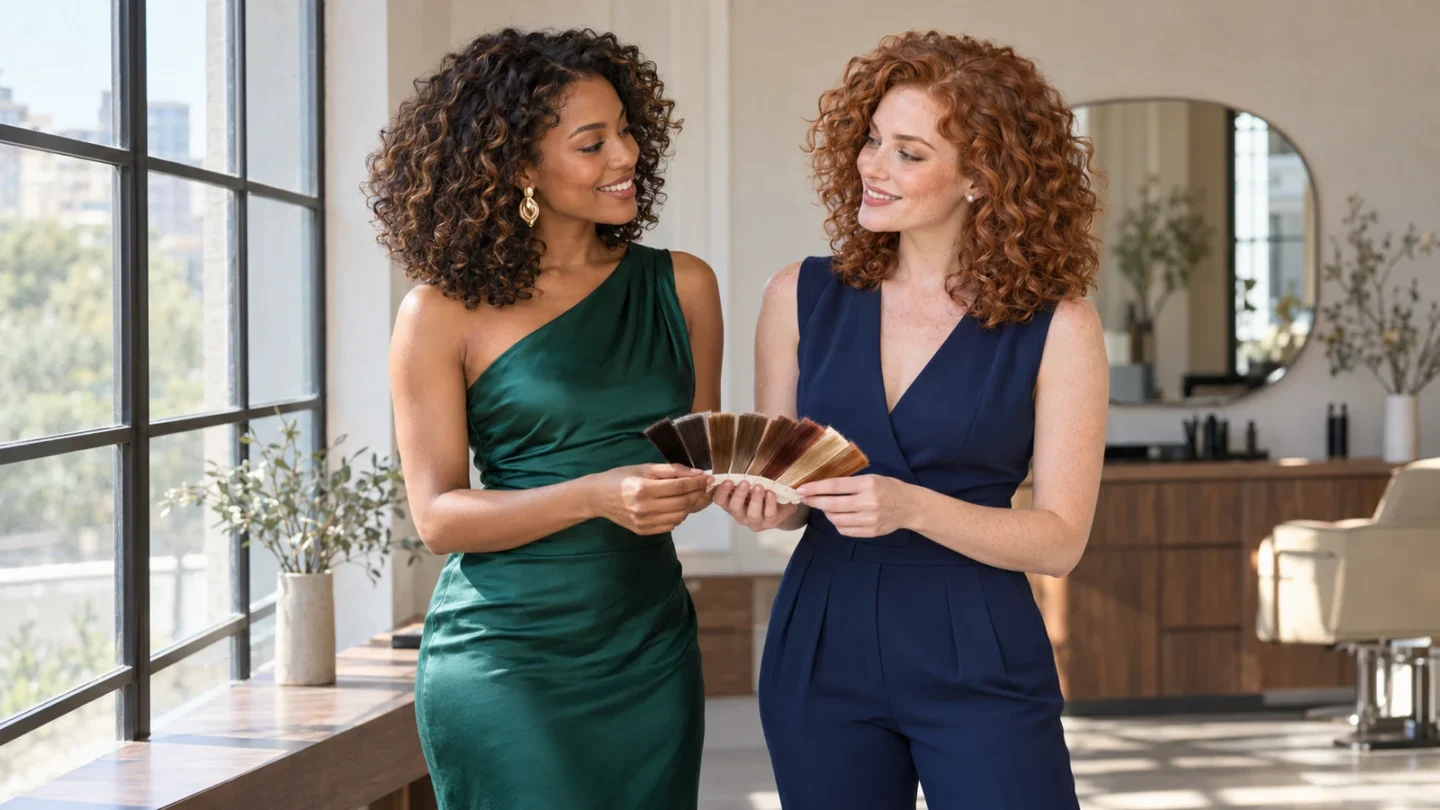
The best hair color for curly hair is not one universal shade. It is the color that gives you enough contrast to show between the curls without asking your hair to tolerate more lift or maintenance than you want.
Start with three facts: your natural base, how much lightening the result requires, and how often you are willing to refresh it. Curl type matters for placement, but it does not decide whether you “should” be brunette, copper, blonde, gray, or vivid. That is good news, because it leaves room for taste.
Choose the change before you choose the shade
A saved photo shows the finish, not the work needed to reach it. Two people can request the same caramel curls and need completely different services. A medium-brown base may need a controlled lift; near-black hair may need more sessions to reach the same brightness. Previously colored hair adds another variable because color does not reliably lift color.
Before a consultation, decide which change you actually want:
- More richness: deepen or shift the tone while keeping the overall level close to your base.
- More dimension: keep depth between selected lighter curls so the pattern reads clearly.
- More brightness: lighten the face frame, ends, or most of the head.
- A major transformation: accept visible regrowth, toning, and a longer color appointment.
If your curls are already snapping, unusually rough, or losing their shape, pause before choosing a high-lift result. A strand test can show how one small section responds before the whole head is committed. Ouidad’s color guidance also recommends considering curl pattern and placement rather than applying one highlighting method to everyone.
| Color route | Best starting point | Typical lift | Upkeep |
|---|---|---|---|
| Espresso or mocha gloss | Dark brown to black | None or very little | Low |
| Cherry cola or burgundy | Dark brown to black | None for subtle color, some for brighter red | Medium |
| Caramel ribbons | Dark brown | Moderate, on selected curls | Medium |
| Bronde balayage | Medium to dark brown | Moderate | Low to medium |
| Copper or auburn | Light to medium brown | Varies by target brightness | Medium to high |
| Bright face frame | Brown to dark blonde | Moderate to high, on a small area | Medium |
| Gray blending | Any base with natural gray | Depends on the plan | Low to medium |
| Platinum or pastel | Light blonde is easiest | High from a dark base | High |
1. Espresso or mocha gloss for richer dark curls
This is the sensible first move when dark curls look flat but you do not want visible highlights. A neutral espresso adds depth; mocha keeps more brown warmth. The change is subtle indoors and more dimensional in daylight, which suits anyone who wants polished color without turning every wash day into color management.
Ask for a translucent gloss or demi-permanent formula if you want tonal change rather than a hard line of permanent regrowth. Bring a daylight reference, because “dark chocolate” can mean cool brown to one person and reddish brown to another. Our mocha and dark-chocolate shade comparison shows where those undertones separate.
2. Cherry cola or burgundy when you want color that reveals itself in light
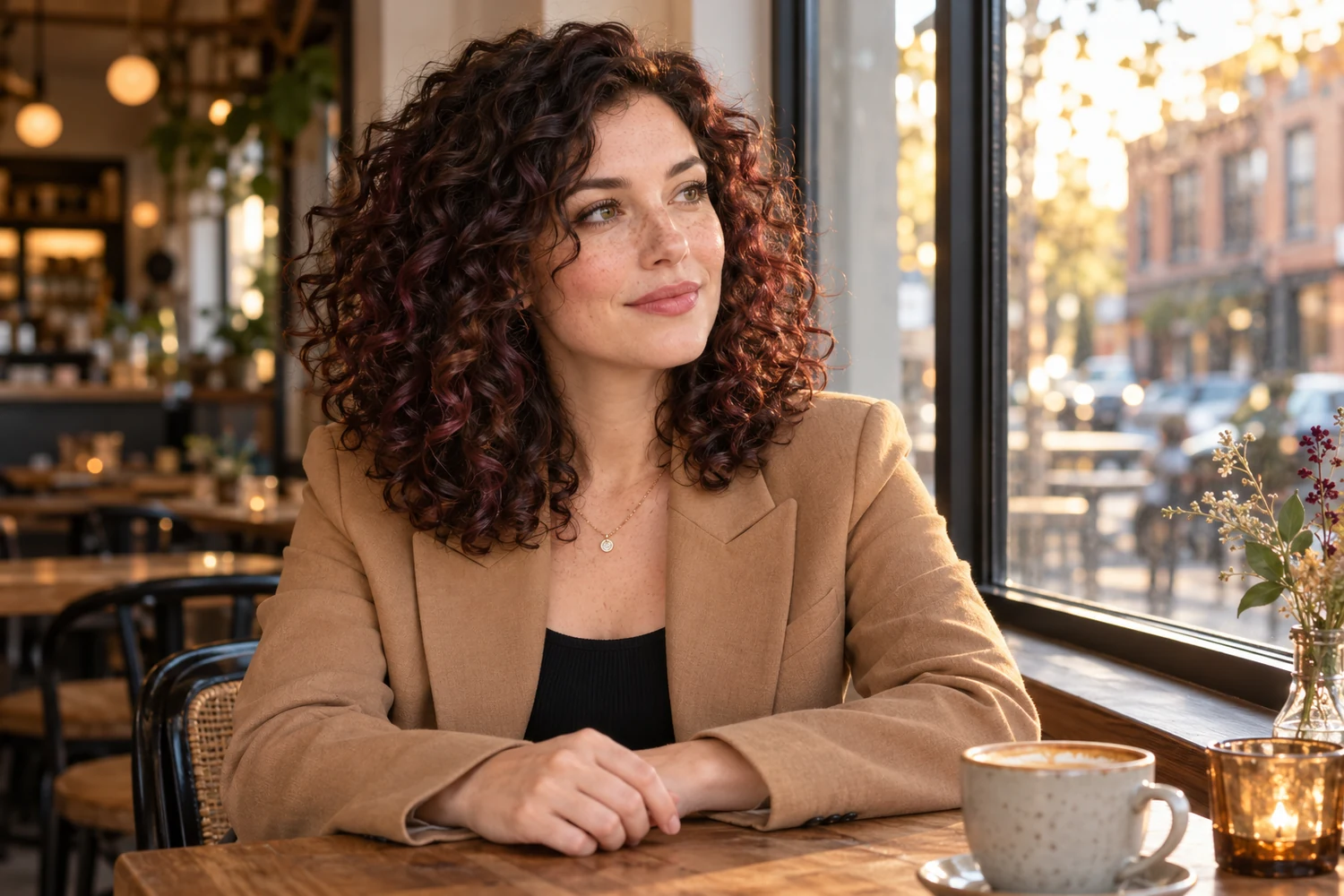
Red-violet tones give a dark base a noticeable change without automatically requiring blonde-level lift. The darker the starting hair, the more the result may read as a reflection rather than a bright red. If you expect a vivid wine shade on near-black hair, ask whether pre-lightening is part of the plan.
Red pigments also tend to show fading sooner than a neutral brunette, so choose the family as carefully as the first-day color. Cherry cola leans deep red-brown; burgundy usually carries a stronger wine or violet direction. Compare our cherry-cola ideas for dark hair with the broader burgundy shade guide before your appointment.
3. Caramel ribbons that follow the curl pattern
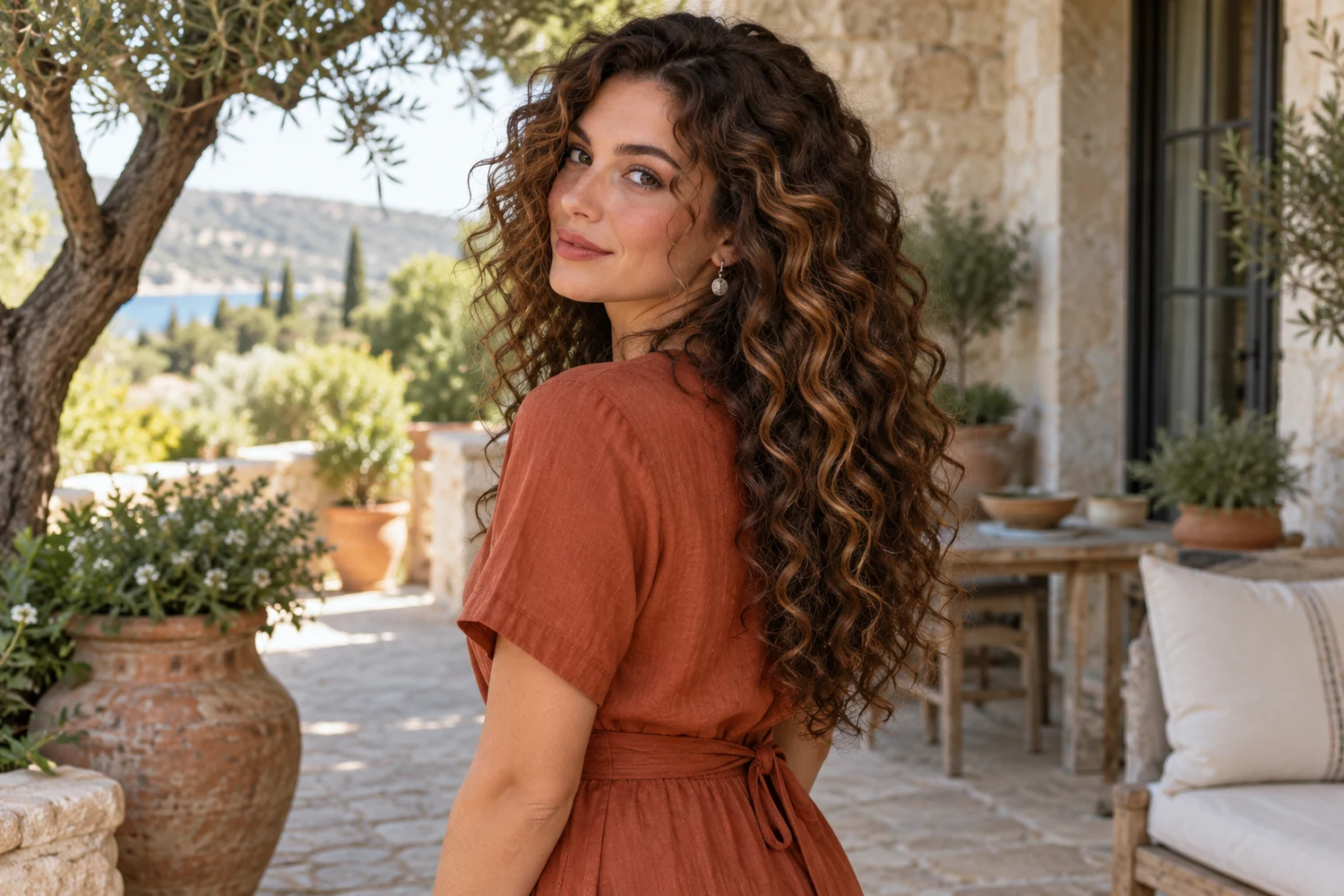
Caramel works when the goal is dimension, not maximum brightness. The strongest version is painted through selected curl groups, with enough dark hair left between them to create separation. Very fine highlights everywhere can merge into one lighter mass; thick, evenly spaced streaks can look striped when the hair moves.
The exact caramel should relate to your base. Golden caramel looks warmer, beige caramel is quieter, and toffee sits deeper. See the placement differences in our guide to caramel highlights on dark brown hair.
4. Bronde balayage for softer grow-out
Bronde sits between brunette and blonde. It is useful when you want an overall lighter impression but still want your natural depth to do some of the work. A shadowed root and hand-painted mids and ends usually create a softer grow-out than highlights placed tightly from the scalp.
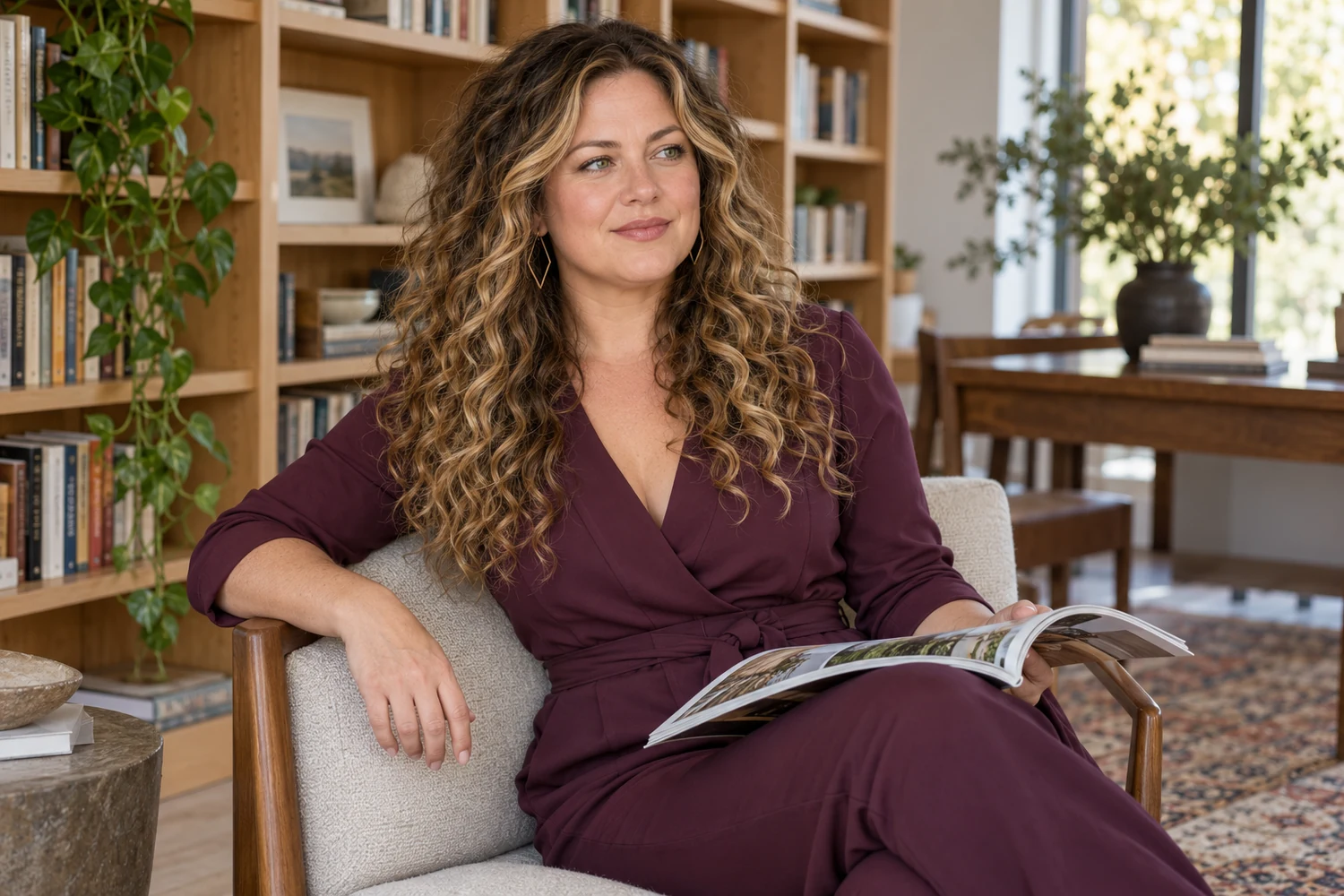
Balayage is a placement method, not one color. Show the colorist where you normally part your hair, how much shrinkage you have, and how you wear it most days. Color painted only while curls are stretched can land differently once they spring back.
5. Copper or auburn for visible warmth
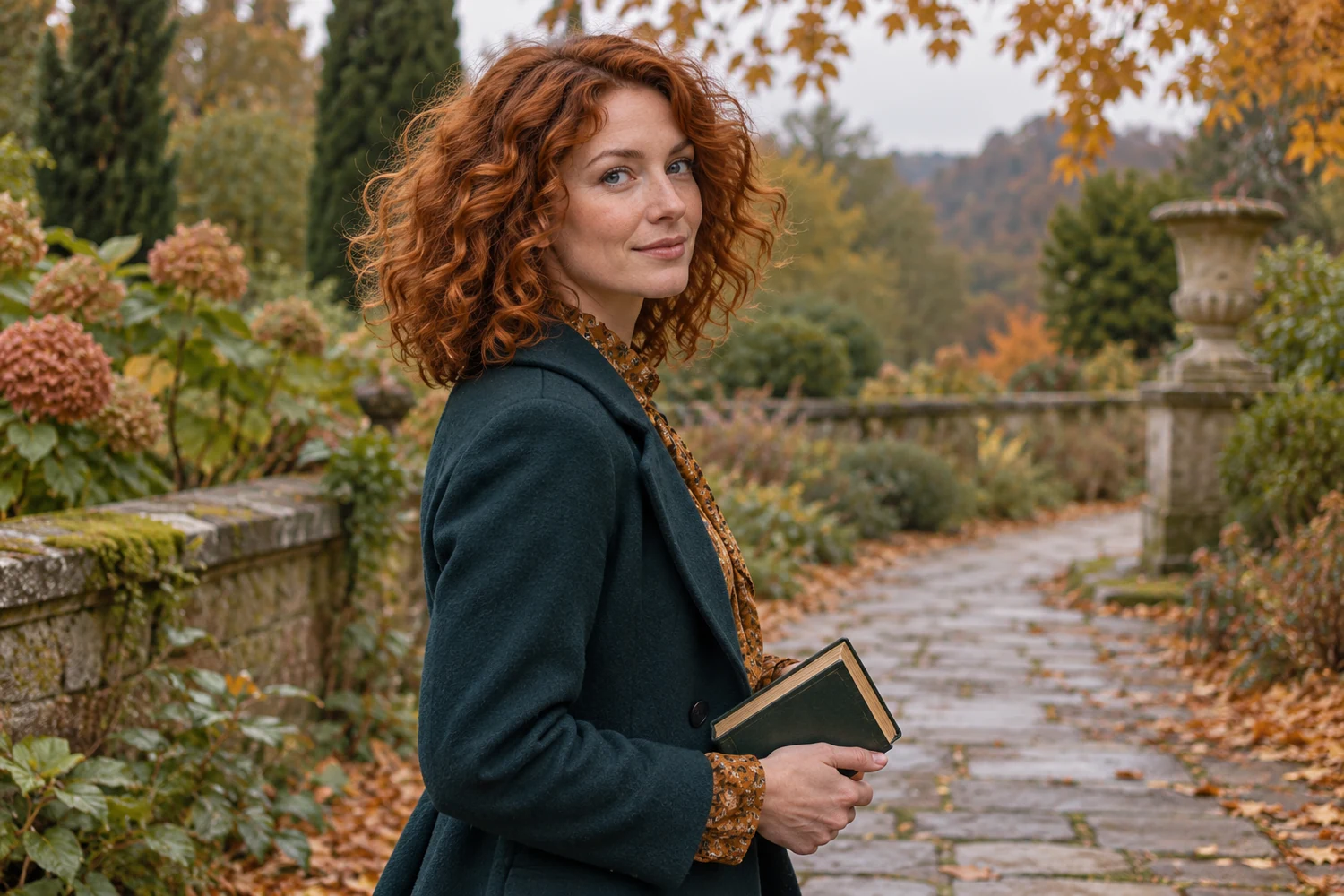
Copper is brighter and more orange-gold; auburn is deeper and browner. Both can make curl definition look stronger because warm and dark areas catch light differently. The easy mistake is choosing a reference based only on skin tone while ignoring the starting base. A pale copper over light brown hair is a different project from the same target over permanent black dye.
Warm shades can lose intensity between appointments. If you dislike frequent toning, choose a deeper auburn closer to your natural level rather than the lightest possible copper.
6. A brighter face frame for high contrast without lightening everything
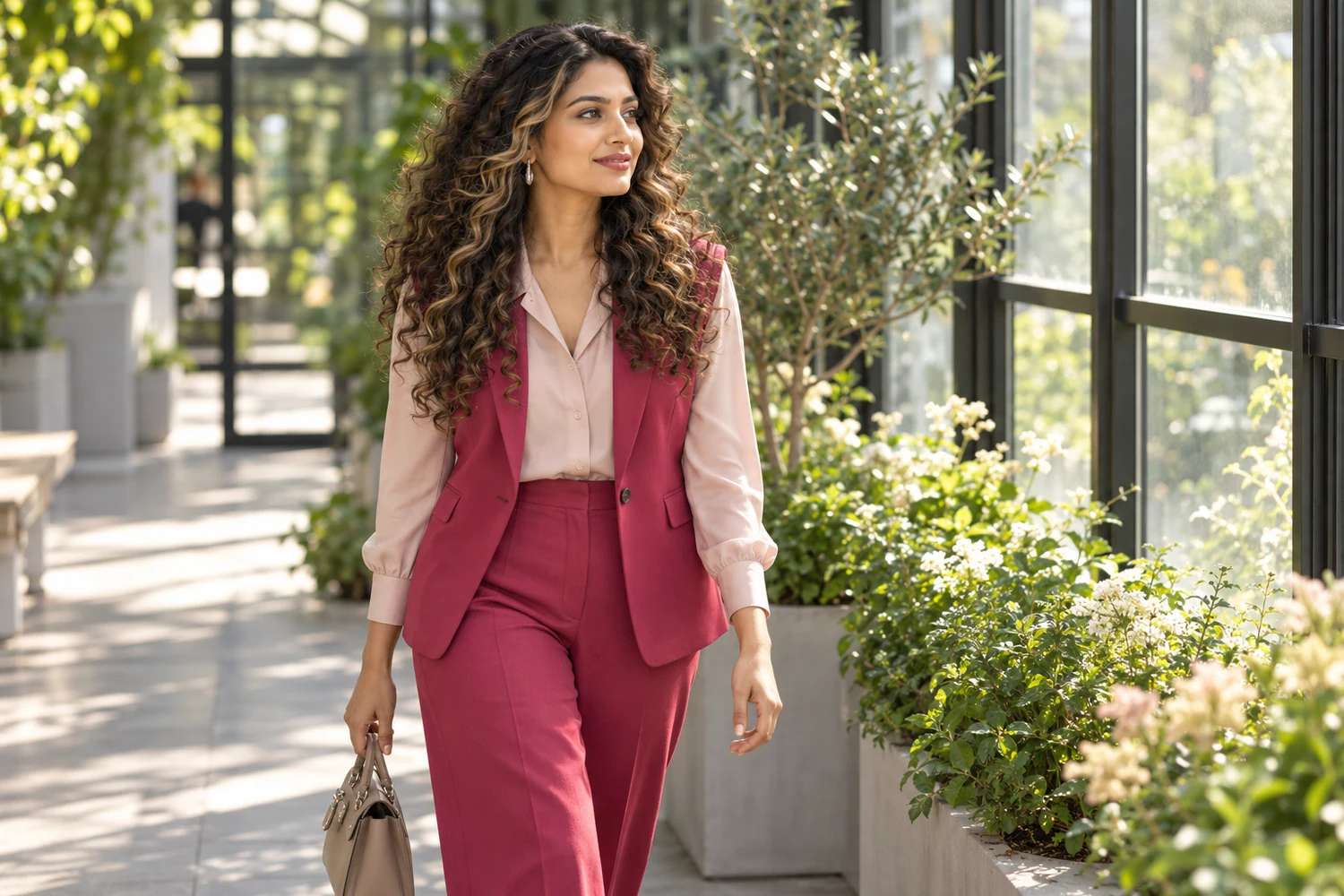
A face frame concentrates brightness where it is most visible. That can deliver a bigger visual change with fewer lightened sections than a full head of highlights. It is especially effective when the front curls naturally fall together and the rest of the hair remains deep.
Ask for brightness that still connects to the interior color. Two solid pale blocks can overpower fine curls, while pieces that are too delicate may disappear into dense hair. A colorist should adjust the section width to your density, curl grouping, and usual part.
7. Gray blending that works with regrowth

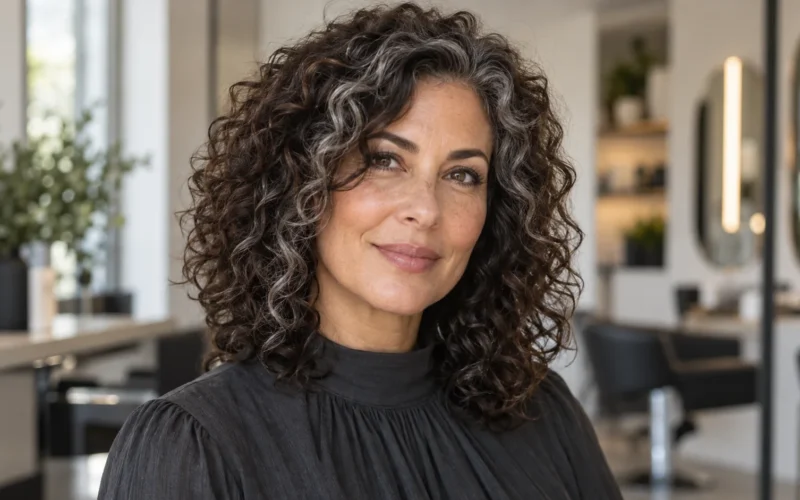
Gray blending does not mean covering every silver strand. The goal is to reduce the contrast between the gray and the remaining base so new growth looks intentional. On dark curls, that might mean cool highlights, lowlights, a demi-permanent glaze, or a combination chosen around the existing gray pattern.
Photograph your hair in natural light before the consultation and note where the gray is concentrated. Our gray-blending guide for dark curly hair explains how the options change when the temples are much lighter than the back.
8. Platinum, pastel, or vivid color when the transformation matters most
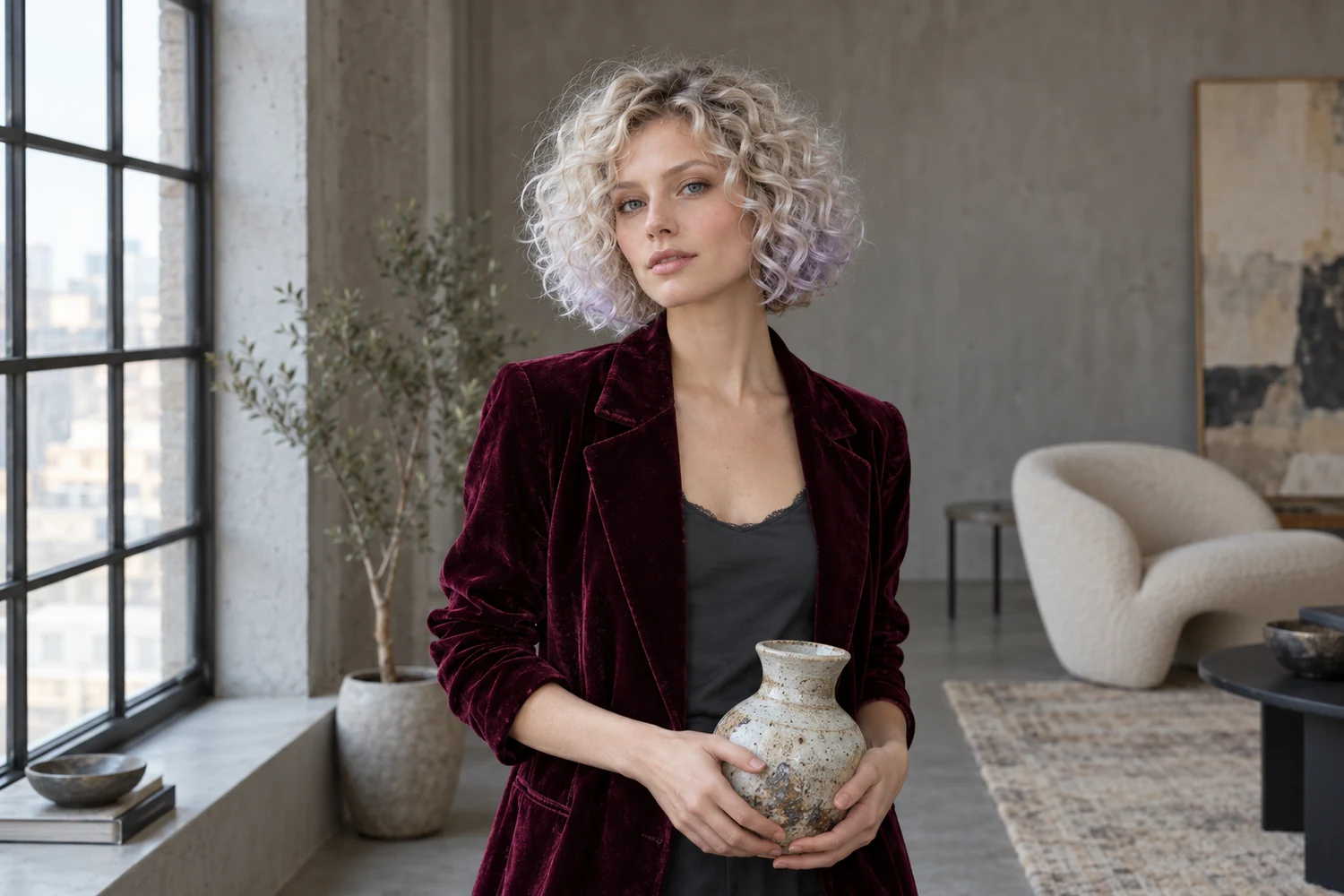
Pastels need a light canvas. Bright fantasy colors may tolerate a slightly darker base, but their clarity still depends on what sits underneath. From dark hair, this route often requires the most lift, the most time, and the clearest limit on how far the hair can safely go in one visit.
Do not let a color target become more important than the condition of the curl. Read the warning signs in our guide to bleached curly hair losing strength or definition, and agree in advance on a stopping point if the strand test is not encouraging.
What to ask for at the consultation
A useful request names the result and the boundary. Try: “I want visible caramel dimension, but I want to keep a dark root, avoid thick stripes, and limit the lightening to selected curls.” That gives a colorist more to work with than a photo and the word “balayage.”
- Show your hair dry, in its usual part, before it is detangled or stretched.
- Share any permanent dye, henna, bleach, relaxer, or smoothing history.
- Ask what must be lifted, what can be deposited, and whether the target needs more than one session.
- Request a strand test for a major lightening service or uncertain color history.
- Agree on the maintenance plan: toner, gloss, root service, vivid refresh, or gradual grow-out.
For home color, follow the product directions exactly. The FDA advises a skin patch test before every use, even if you have used hair dye before, because reactions can develop over time. A skin test checks allergy risk; a separate strand test checks the color result and how that section of hair tolerates the process.
The simplest decision rule
If you want the lowest commitment, stay close to your natural level and change tone. If you want curls to look more separated, keep your base and add selective dimension. If you want a much lighter or pastel result, treat hair condition and session planning as part of the color choice, not an afterthought.
The most flattering result is not automatically the boldest. It is the one that still looks intentional after several washes, works with the way your curls group, and has a maintenance schedule you will actually keep.