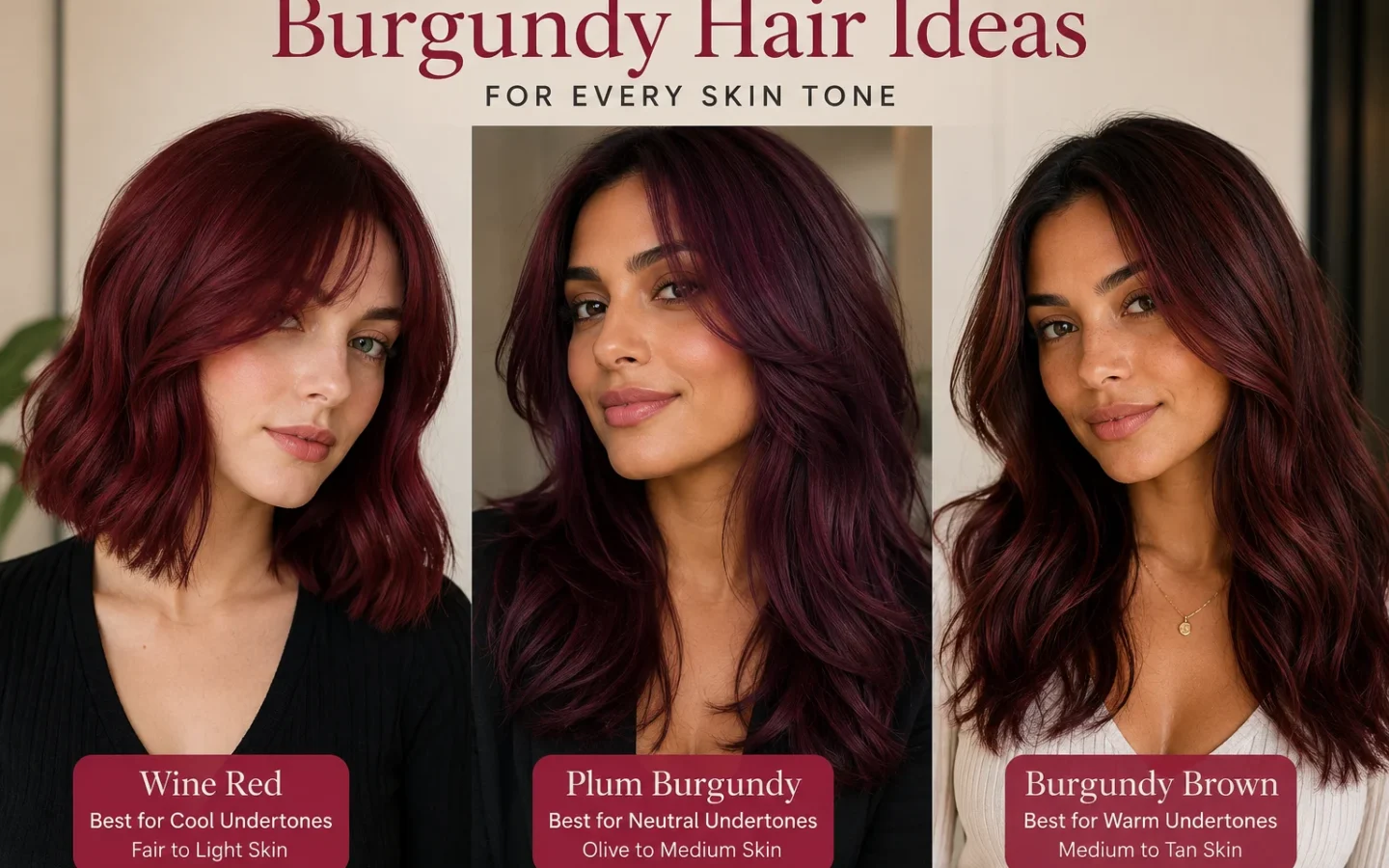
My own burgundy is soft. More wine than purple, the kind that just looks dark brown until I step into good light and it goes red. I picked it on purpose. And still, almost every week, someone asks me what color it “actually” is.
That question is the whole reason this guide exists.
Burgundy isn’t one shade. People treat it like it is, then get frustrated when the box on the shelf turns out three tones away from the photo that made them want it. Wine, plum, maroon, black cherry, that brown-with-a-secret version. All burgundy. All completely different on your head.
So I’m skipping the giant scroll-forever gallery. You came for ideas, sure, but what you really need is the shade that won’t fight your skin, and a clear thing to show your colorist so you don’t end up explaining it with your hands. Let’s get you there.
So What Counts as Burgundy, Exactly
It all lives in the red family, dark end, rich side. After that it scatters.
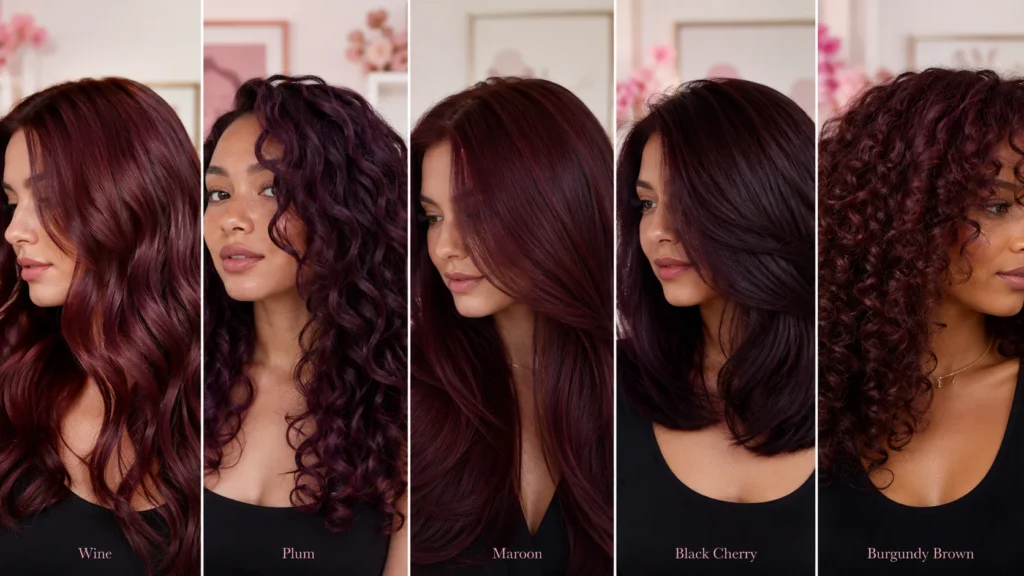
A few I’d point you toward depending on what you’re after:
- Wine red hair is the soft, muted one. Easiest to wear, hardest to regret.
- Deep burgundy hair color goes dramatic. Reads nearly black inside, then catches the light and surprises people.
- Plum burgundy lets a little violet in. Cooler, a bit editorial, photographs moody.
- Maroon hair color runs browner and earthier. Lowest fuss of the bunch.
- Burgundy brown is basically brunette hiding a red streak that only shows in sun.
- Black cherry is the darkest, glossiest take, and it’s stunning on a deep base.
You don’t need to memorize all that. You just need to know they’re not interchangeable. The trouble starts when someone walks in showing a plum photo while saying “maroon,” and walks out with neither. Pick your direction first.
The Part Everyone Skips: Your Undertone
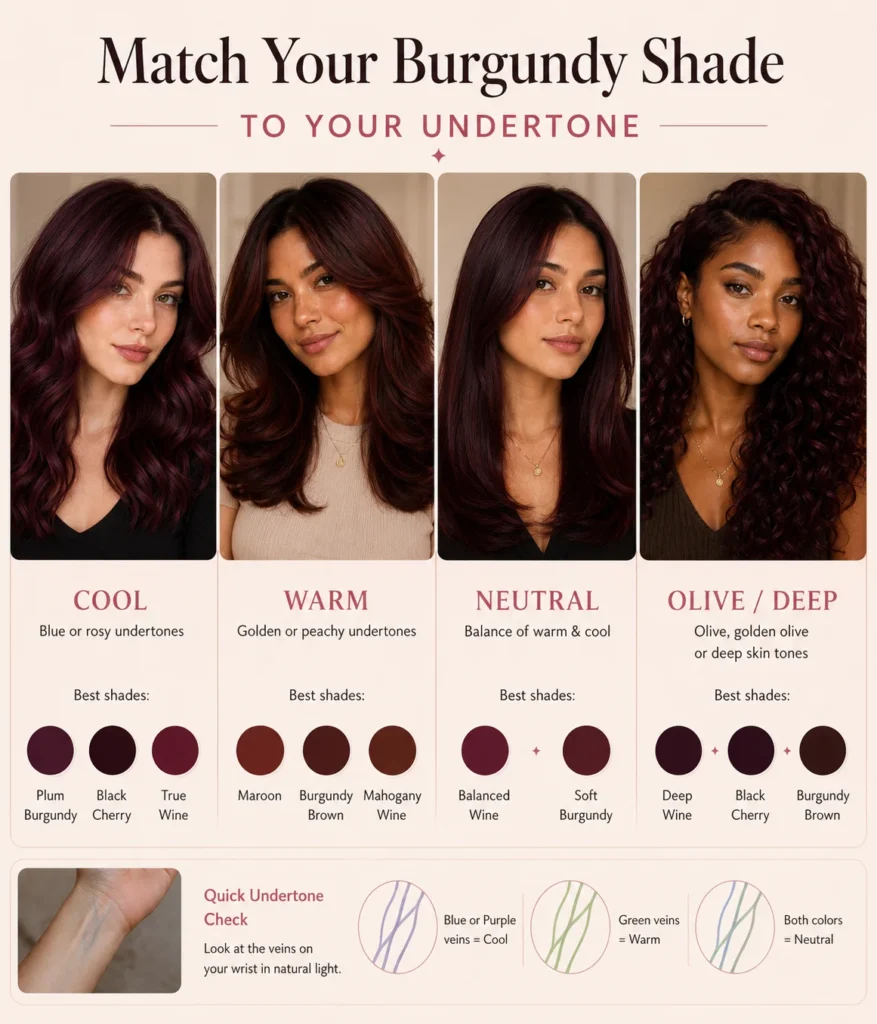
Here’s where it goes right or wrong, and it has nothing to do with how fair or deep your skin is. It’s about what’s underneath. Your undertone, the thing that stays put whether you’re tan in July or pale in January.
Quick way to check? Look at the veins on your inner wrist in real daylight. Bluish or purple, you lean cool. Green, you lean warm. Can’t tell, probably neutral. The gold-or-silver jewelry test backs it up if you’re stuck, and Garnier walks through both if you want a second opinion before you commit to anything permanent.
Then it’s simple. Cool skin wants cool burgundy, warm skin wants warm burgundy. That’s the rule colorists actually go by, and Revlon sorts the red-family shades the same way I’d sort them by eye.
Roughly how it shakes out:
If you’re cool-toned, the blue-based burgundies are yours. Plum, black cherry, true wine, anything with a violet whisper. Steer clear of warm copper-leaning reds, they clash.
Warm-toned? Go the other way. Burgundy brown, maroon, the mahogany side of wine. A cold blue-violet on warm skin just looks harsh, like the color’s sitting on top of you instead of belonging.
Neutral people get to be smug here. Most of it works on you. Only the very extreme cool or warm ends might tug wrong.
Olive skin loves depth, so deep wine and burgundy brown sit beautifully, but bright cherry can pull a little muddy, so I’d test that one carefully.
And deep skin? This isn’t a “be cautious” note, it’s the opposite. Rich burgundy, black cherry, red-violet read incredible on deep complexions because there’s depth for the color to play against. More room, not less.
Going Burgundy on Dark Hair Without Bleaching Your Life Away
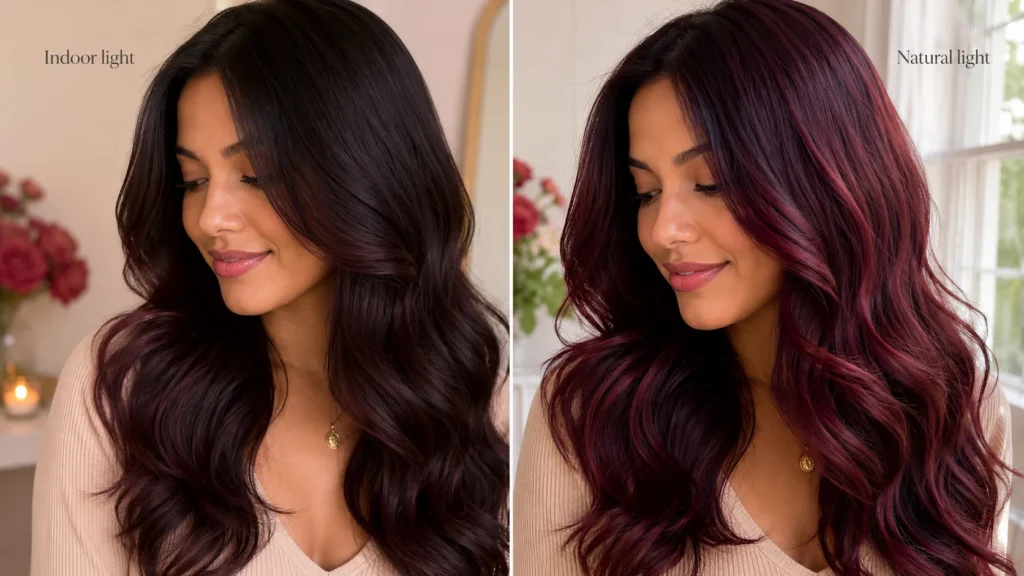
Dark hair, listen up, because this is the question I get most.
You probably don’t need to bleach. That’s the good news nobody leads with. Burgundy is a dark, saturated color, so on brown or black hair it can grab and show up beautifully without lightening first, especially the deeper shades like black cherry or true wine. The richer your base, the more forgiving this gets.
Where it earns its drama is in the light. Indoors your dark burgundy might read as a slightly off brown. Then you walk past a window or someone’s phone flash hits, and the red blooms. I love that about it. It’s a color with a secret, and it photographs like one.
Want it more visible day to day without committing to the whole head? Burgundy highlights on black hair are the move. A few face-framing pieces, or chunkier streaks if you want it bolder. You keep your dark base, you skip most of the upkeep, and You keep your dark base, you skip most of the upkeep, and you still get the color story. Whether burgundy highlights grab well depends a lot on how your hair holds pigment, which is really a porosity thing, so it’s worth knowing before you book.
The one honest catch: if you want a bright, light maroon on very dark hair, that’s when bleach enters the chat. Bright needs a lighter canvas. So if your heart’s set on the vivid end, know that going in. The deep end is the no-bleach end.
Full Color, Highlights, or Ombré? Pick Your Commitment Level
This is really a question about your life, not your hair. How much maintenance are you actually signing up for? Be honest with yourself before your colorist has to be.
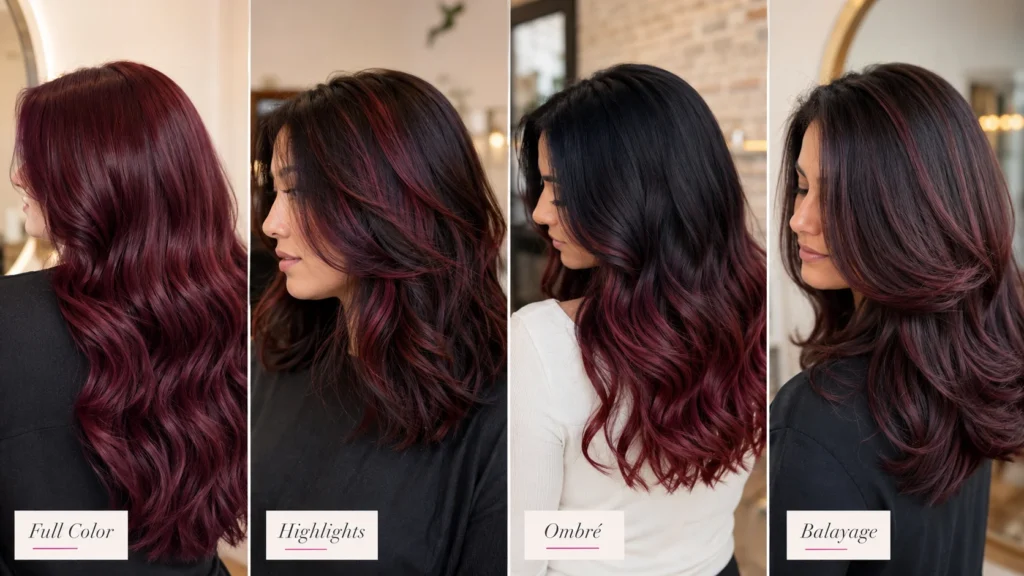
Full color is the boldest and the most upkeep. Every strand burgundy, roots showing the second your natural color grows in, fading that you’ll be chasing. Stunning, high-commitment.
Highlights are the soft landing. Burgundy woven through, easy grow-out, way less salon time. If you’re burgundy-curious rather than burgundy-certain, start here.
Ombré is the low-commitment drama. Natural up top melting into burgundy through the ends. Roots are a non-issue because they’re meant to be there, and burgundy ombré reads expensive when it’s blended right.
Balayage is the one that looks the most lived-in and costs the most to get that way. Hand-painted, soft, grows out like it was always supposed to look like that. If your budget allows and you want “I woke up like this,” it’s worth it.
My take after watching all of these on plenty of people? If it’s your first burgundy, do not start with full color. Start with highlights or ombré, live with it a few months, see how the shade wears on you in real light and real photos. You can always go all-in later. Going backward is the expensive, damaging direction.
The Maintenance Talk Nobody Wants to Hear
Burgundy fades. All of it, but the red and violet shades fastest, because those pigment molecules are big and they wash out quicker than darker browns hold on. So before you fall for a shade, know what keeping it looks like.
A few things that actually matter:
- Wash less, and wash cool. Hot water opens the cuticle and lets color bleed.
- Use a color-safe shampoo, and skip anything clarifying or sulfate-heavy unless you want to strip the color you paid for.
- A color-depositing gloss between salon visits refreshes the tone for almost no money.
- If you’ve got curls, the dryness fight gets real after coloring, so don’t skip the deep conditioning.
That last one’s not a throwaway. Color processing roughens the hair, and if yours already trends dry or frizzy, burgundy can push it over the edge. Sorting frizz after coloring early saves you from blaming the color for what’s really a moisture problem.
Before You Sit in That Chair
Quick, because this is the stuff that actually saves your appointment.
Bring two or three reference photos, not one. One photo lies. Three shows your colorist the through-line of what you’re after. And pull them in natural light if you can, since burgundy looks like a different color under salon bulbs.
Then ask, straight out: will my hair need lightening for this, how fast will it fade, and is a gloss worth it for upkeep? A good colorist will tell you the truth even when it’s “that bright maroon isn’t happening on your hair without damage.” Listen when they do.
What I’d Actually Tell a Friend
If you asked me over coffee, I’d say start softer than you think you want. Wine or burgundy brown, matched to your undertone, eased in with highlights or ombré. See how it lives on you through a few washes and a hundred photos before you commit the whole head.
Burgundy is one of those colors that looks expensive and intentional when it suits you, and tired and off when it doesn’t. The difference isn’t the shade being good or bad. It’s whether it was the right burgundy for you in the first place. Get that part right and you’ll be the one getting asked, every week, what color your hair actually is.