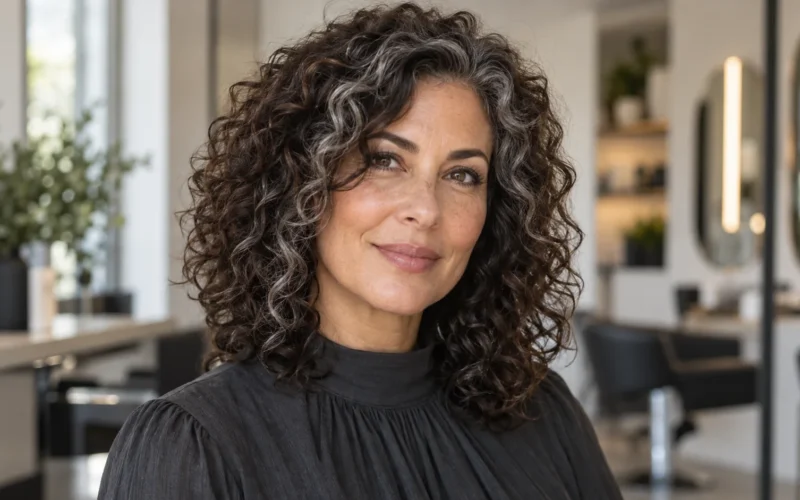
Humidity does not care how long you spent getting ready. Curls can puff up, roots can collapse and makeup can start moving before lunch.
Adding more product rarely fixes it. The better approach is lighter moisture, enough hold, fully dried curls and thin makeup layers. Each product needs one clear job.
| If this happens | Try this first |
|---|---|
| Curls expand as soon as you go outside | Use less curl cream and apply a stronger-hold gel |
| Roots look flat | Keep creams away from the scalp and use mousse at the roots |
| Hair feels stiff or coated | Reduce the number of styling products |
| Foundation separates | Apply thinner layers and powder only where makeup moves |
| Eyeliner transfers | Choose a creamy liner that sets after application |
| Hair is suddenly shedding or thinning | Speak with a dermatologist rather than treating it as ordinary frizz |
Why Your Usual Routine May Stop Working After 50
Hair can become drier, finer or less dense with age. Gray strands may also feel coarser than pigmented hair, so one head can contain several textures at once.
Hormonal changes may contribute. The Cleveland Clinic explains that lower estrogen levels can affect hair growth, fullness and moisture. That does not mean every frustrating wash day is caused by menopause, though. Coloring, heat damage, medications, scalp conditions and ordinary buildup can produce similar symptoms.
Start with what you can see and feel:
- If the roots are oily but the ends are dry, treat them as two separate areas.
- If curls are limp and coated, cleanse before adding more moisture.
- If the hair feels rough but stays reasonably clean, improve conditioning.
- If the curl pattern has become looser, use lighter products and more hold.
- If shedding or thinning is the main concern, styling advice is not enough.
The old routine may not be bad. It may simply belong to an earlier version of your hair.
Clean the Scalp Without Stripping the Curls
A humid-weather routine starts in the shower, not beside a growing collection of styling bottles.
Apply shampoo mainly to the scalp. Massage with your fingertips, then rinse thoroughly. There is no need to scrub the lengths unless they are heavily coated with oil, dry shampoo or styling residue.
Condition from the mid-lengths to the ends. Fine or low-density curls may need less conditioner than thick, coarse hair. If the roots regularly dry flat, keep rich masks and buttery conditioners away from the scalp.
Buildup often looks like dryness. Hair can feel dull, rough and strangely resistant to every product you add. If that sounds familiar, use a clarifying shampoo occasionally, then return to your normal cleanser. Clarifying every wash can leave already-dry curls feeling worse.
Use Less Moisture and More Useful Hold
Curl cream and gel are not interchangeable.
Curl cream adds softness and helps dry hair feel more flexible. Gel holds the curl shape while it dries. In humid weather, adding cream without enough hold can leave hair soft for an hour and fluffy for the rest of the day.
A simple routine works for most people:
- Apply a small amount of leave-in conditioner or curl cream to wet hair.
- Add mousse at the roots if you need lift.
- Smooth or scrunch gel through the lengths for hold.
- Leave the curls alone while they dry.
- Scrunch out the firm cast only when the hair is completely dry.
Fine curls may need mousse plus a light gel. Coarse or dense curls can usually handle more cream and a stronger gel. The HairIsCurly guide to mousse versus gel for curly and wavy hair explains which one to choose for volume, definition and frizz control.
Do not add cream, mousse, gel, oil and hairspray simply because they are all sitting on the shelf. Hair styling is not a roll call.
Dry the Hair Completely Before Going Outside
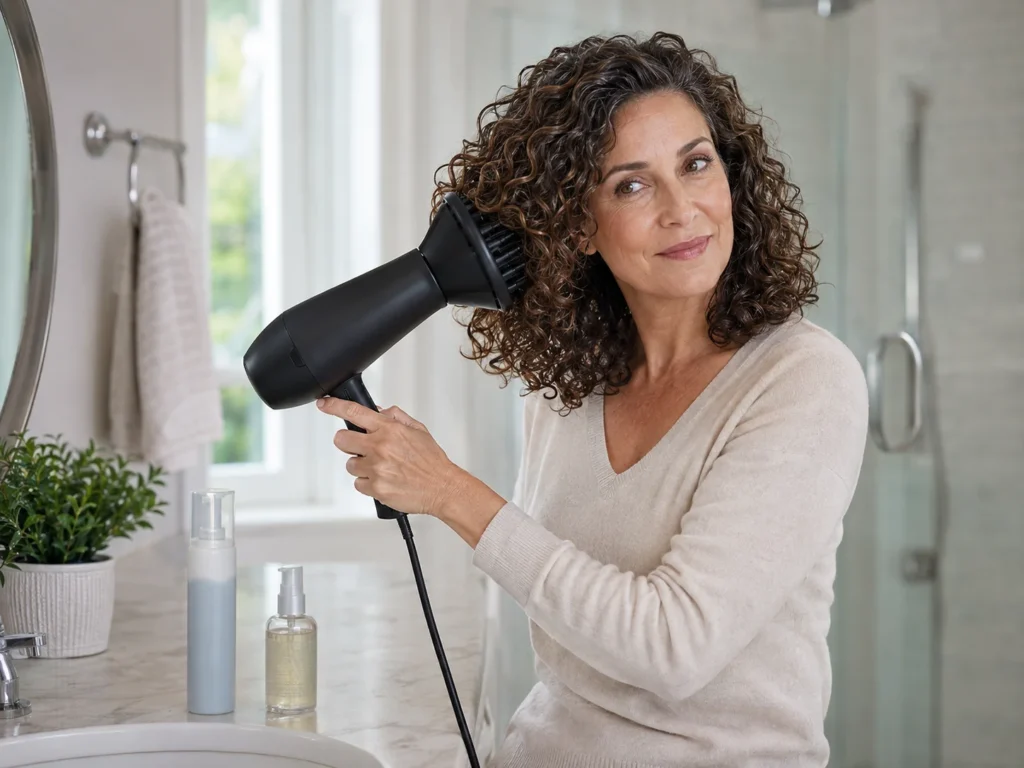
Half-dry curls and humid air are an unreliable partnership.
When damp hair meets additional moisture outside, the curl clumps can swell, separate and lose the shape you created. Allow enough drying time before leaving home.
If you diffuse, use low or moderate heat and keep the airflow controlled. Cup sections gently rather than chasing individual curls around your head. Touching them repeatedly creates separation before the style has set.
Air-drying is fine when time allows. Just resist checking the curls every three minutes. They are still there.
Once the hair is fully dry, scrunch out the gel cast with clean, dry hands. Use one or two drops of lightweight oil only if the ends feel stiff. Oil can soften the finish, but too much can flatten fine curls.
If frizz appears even before you step outside, the cause may be application rather than weather. Rough towel drying, styling hair when it is nearly dry and breaking the cast too early are covered in this guide to fixing frizzy hair.
Keep Mature Makeup Light in Humid Weather
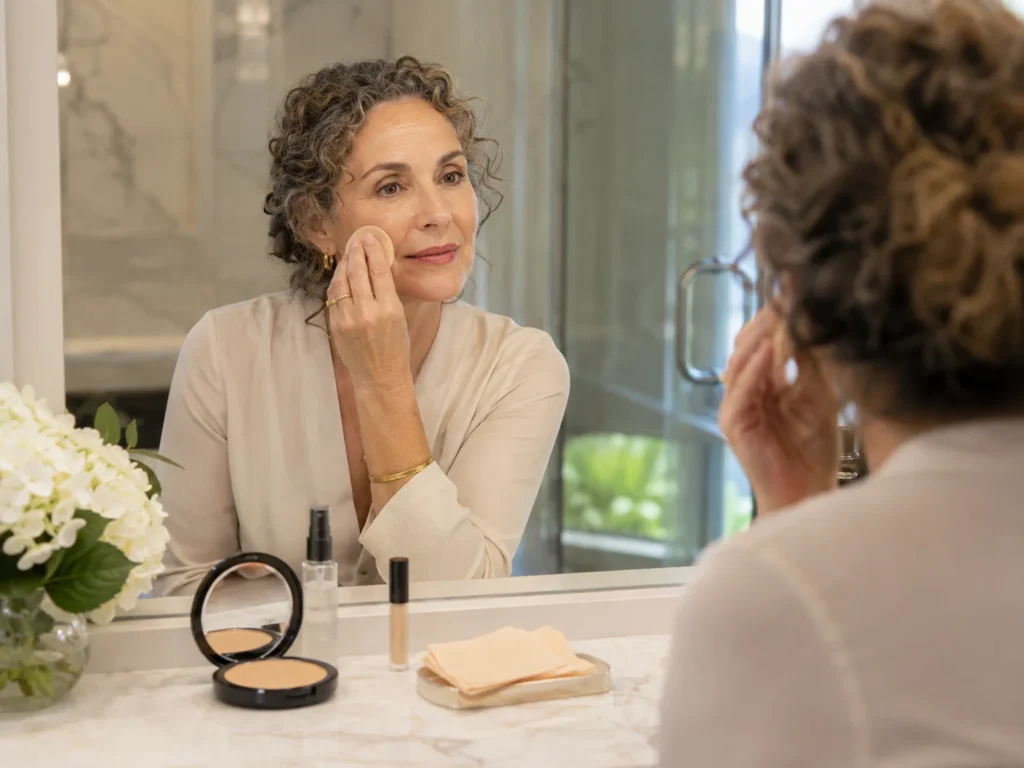
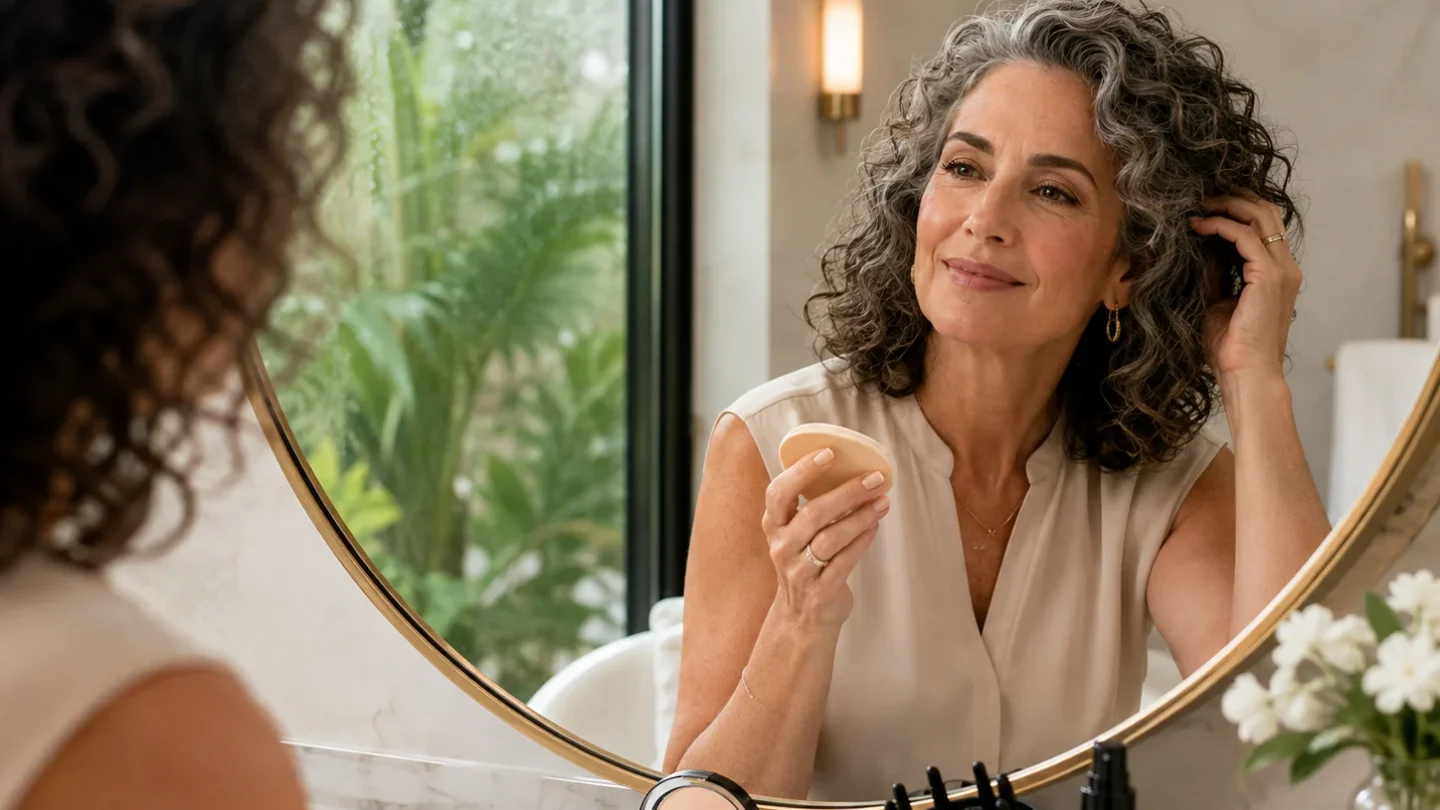
Makeup tends to last better when each layer is thin and allowed to settle.
Apply skincare and sunscreen first, then give them time to absorb. If the skin still feels slippery, adding primer and foundation immediately can create layers that slide against one another.
Use foundation only where you want coverage. Press it into the skin with a sponge or brush instead of applying a thick coat everywhere. Conceal smaller areas separately.
Powder can help around the nose, chin and forehead, but it does not need to cover the entire face. Too much powder can make dry areas look flat while still failing to stop movement where the skin becomes warm or oily.
Setting spray can soften a powdery finish and improve wear, but the finish matters. A very matte formula may feel tight on dry skin, while an overly dewy spray can add shine where you do not want it. GlowOver50’s review of testing setting sprays after 50 compares hold, finish and comfort across several formulas.
Hold the bottle at the distance stated on its label, close your eyes and use a light mist. More spray is not automatically more protection. At some point, it is simply rain with better packaging.
Choose Eye Makeup That Stays Soft but Defined
Humidity can make eyeliner transfer into the crease or collect beneath the lower lashes. Mature eyelids may also be drier or more textured, so a pencil that requires heavy pressure is not a pleasant solution.
Try this instead:
- Remove excess skincare from the eyelid before applying makeup.
- Use a thin layer of eye primer if products regularly crease.
- Apply liner close to the upper lashes rather than drawing a thick stripe.
- Choose brown, charcoal, plum or navy when black looks harsher than you want.
- Give the formula time to set before opening the eye fully.
- Keep lower-lash definition light if your eyes water in warm weather.
A creamy pencil should glide without dragging, then stay in place once set. This comparison of eyeliners for mature eyes is useful for checking texture, smudging and shade options.
Five-Minute Humidity Rescue
When the weather wins a round, avoid starting the whole routine again.
For a frizzy top layer: Wet your palms, add a tiny dot of gel and press the surface gently. Do not rake through dry curls.
For flat roots: Lift them with your fingertips or a wide pick. Adding curl cream near the scalp will usually make them flatter.
For a shiny complexion: Blot first, then add a small amount of powder. Applying more foundation over oil often creates a patchy second layer.
For separated makeup: Press the area with a slightly damp sponge. Blend what is already there before adding anything new.
For smudged liner: Clean the mark with a cotton swab, then use a small brush to repair the concealer. Wiping the entire eye usually turns one smudge into a renovation project.
When It Is More Than a Humidity Problem
A change in texture is not automatically concerning. Sudden or substantial hair loss deserves more attention.
The American Academy of Dermatology recommends seeing a board-certified dermatologist when you notice thinning, a widening part or a receding hairline. Patchy loss, scalp pain, persistent itching and heavy shedding should also be assessed rather than covered with volumizing products.
Humidity may be responsible for today’s frizz. It should not receive the blame for every hair change after 50.
A workable routine is usually quite small: clean roots, conditioned ends, lightweight moisture, enough hold and fully dried curls. Keep the makeup thin, set only what moves and carry a few useful touch-up products. That is far easier than spending the day negotiating with the weather.