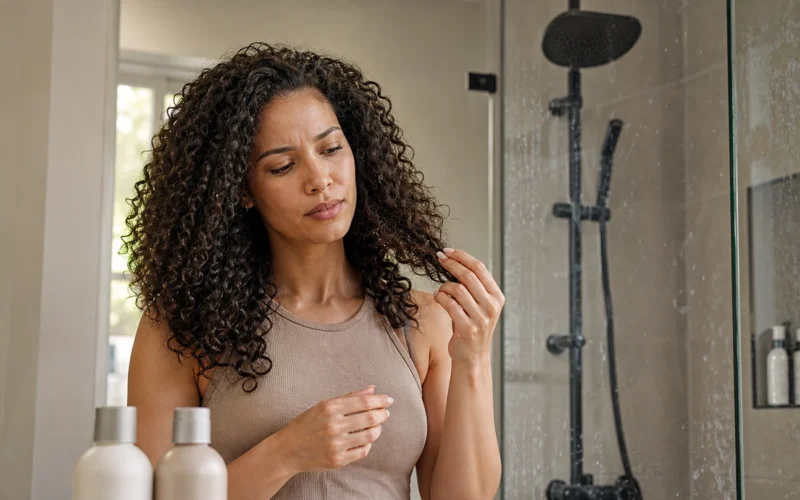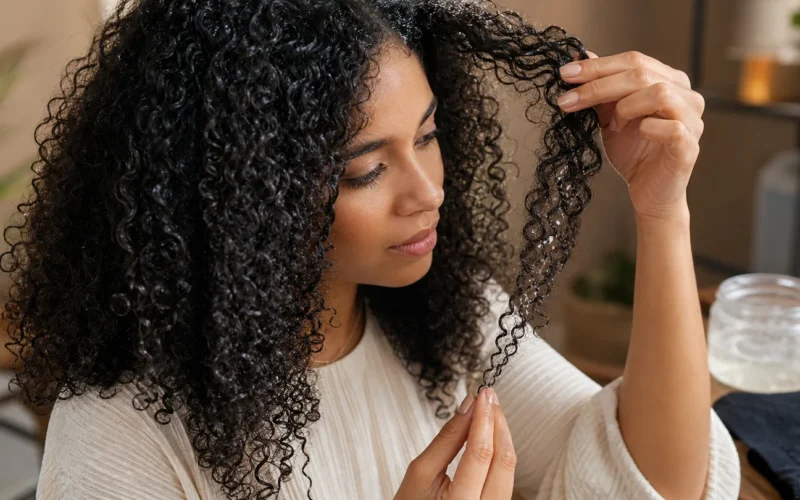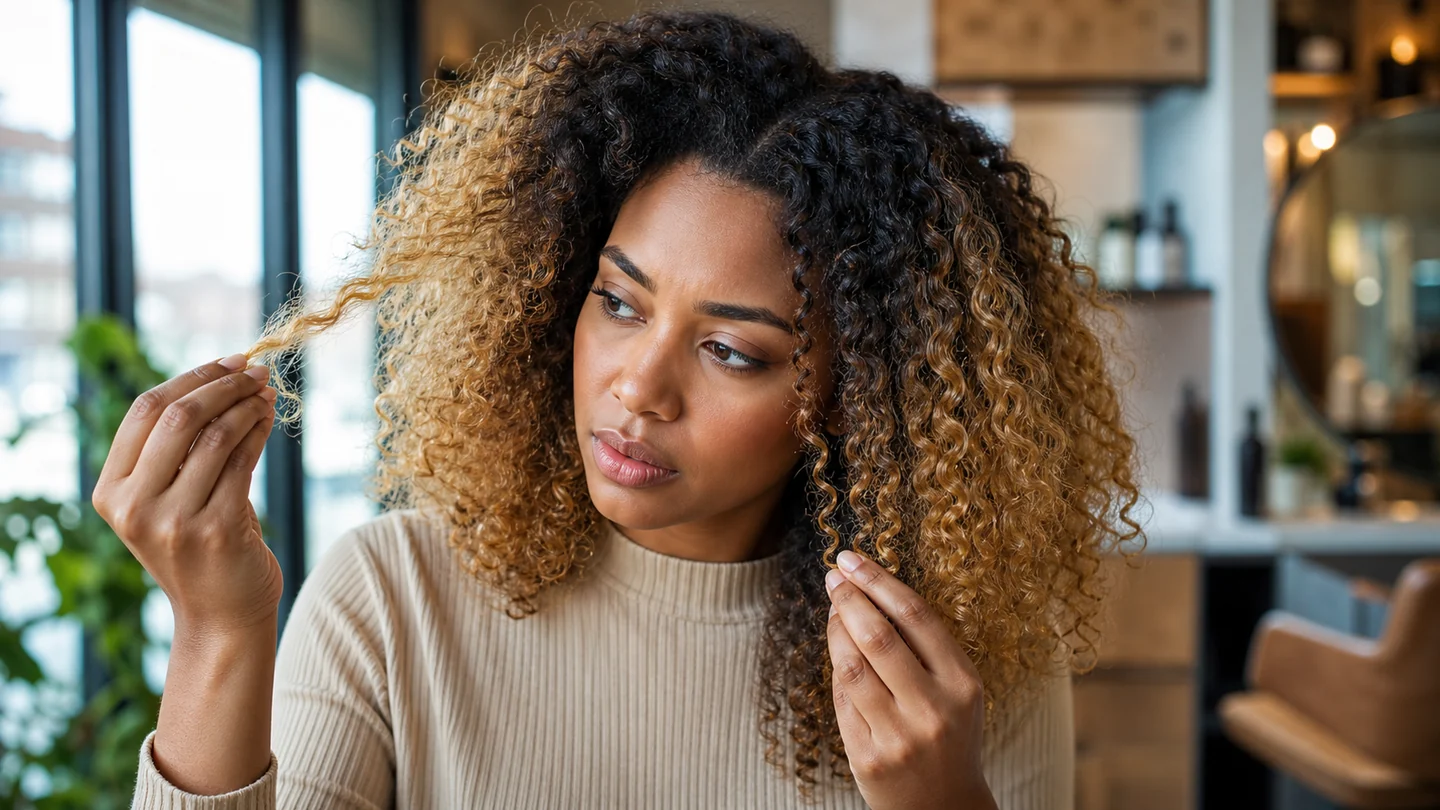
You bleached your curls for a brighter color. Now the roots still spring up while the lightened ends hang limp, frizz or turn almost straight when wet. So, did bleach ruin your curls, and can you get them back?
Mild roughness and poor definition may improve with conditioning and gentler styling. Hair that feels gummy, stays stretched or snaps easily is more seriously overprocessed, and no mask can return that section to virgin hair. If your ringlets now resemble tired commas, first work out whether they need better conditioning, less stress or a gradual trim.
What bleach changes inside curly hair
Lightener has to oxidize pigment inside the hair. It does not politely stop at the melanin. A microscopy and protein study of bleached hair found damage in both the cuticle and cortex, with more protein loss as bleaching became more severe.
That structural change can make strands rougher, more porous and weaker. Because a curl needs enough strength and elasticity to spring back, damaged sections may clump poorly, frizz faster or hang straighter than the untreated roots. Our guide to high- and low-porosity hair explains why newly bleached lengths may suddenly absorb water and products differently.
Check the damage before choosing a treatment
| What the hair does | What it suggests | Best next move |
|---|---|---|
| Feels rough or dry but still springs back and forms curls | Raised friction and moisture-management problems | Condition well, reduce heat and use lighter styling layers |
| Looks looser or frizzier but is not breaking | The treated section may be weakened or weighed down | Simplify styling, add hold and monitor elasticity |
| Feels mushy or gummy when wet, stretches without returning, or snaps | Serious overprocessing | Stop bleach and heat; get a professional damage assessment |
| Has split, thin or see-through ends | Physical loss that products cannot rebuild permanently | Trim gradually before splits and breakage travel farther |
Conditioners can improve slip, reduce friction and temporarily fill damaged areas. They matter, but they are not time machines. A scientific review of hair structure and conditioning explains that the hair fibre is made of dead cells, so it cannot biologically renew itself. Cosmetic treatments can improve how damaged hair behaves while the affected length grows out.
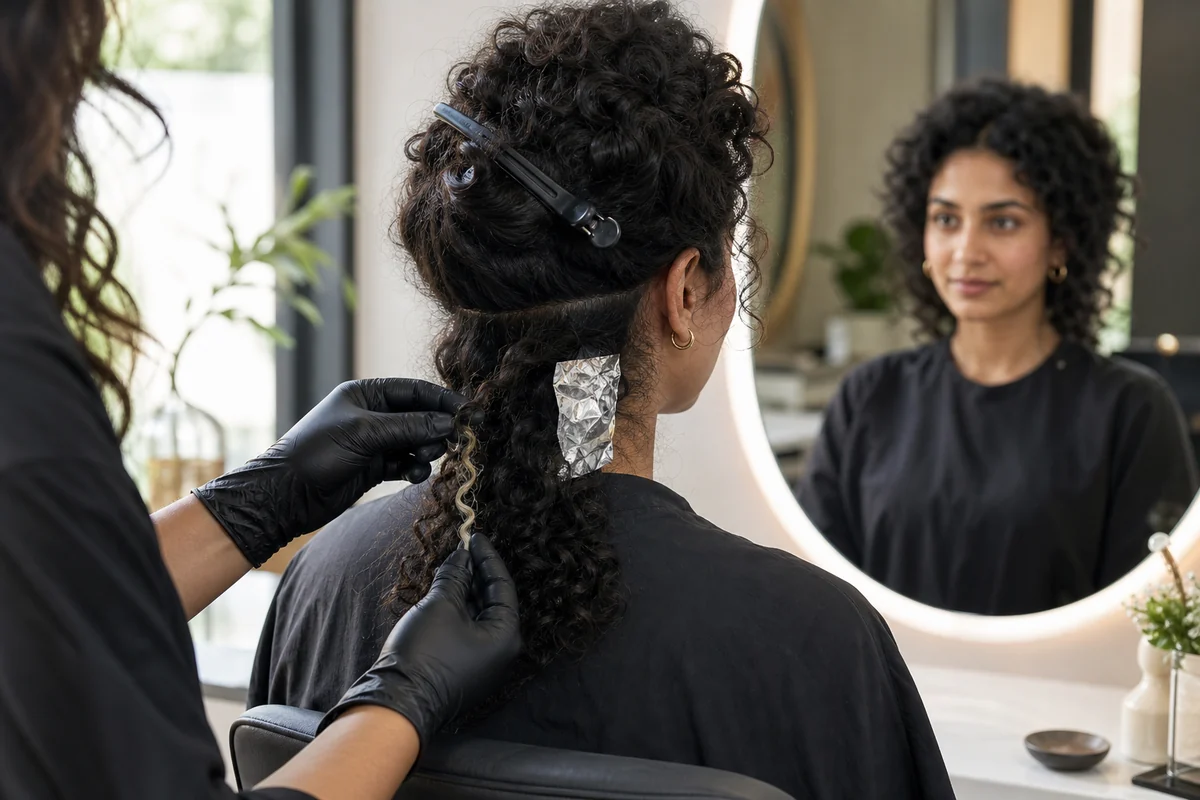
Before bleaching curly hair, lower the risk
There is no truly damage-free bleach. The useful goal is controlled lightening with enough hair strength left to keep the pattern wearable.
- Start with a strand test. Test a hidden curl using the planned formula and assess its color, feel and elasticity after it is washed and dry, not only while the lightener is on.
- Share your chemical history. Tell the colorist about previous bleach, permanent color, relaxers, perms and smoothing treatments. A dark strand may already be chemically busy.
- Choose the smallest useful lift. The American Academy of Dermatology notes that lightening more than three shades requires higher peroxide volumes and causes more damage. Partial highlights may meet the visual goal with less hair exposed than an all-over platinum change. For a lower-commitment reference, see these caramel highlight ideas.
- Do not overlap old lightened lengths. Repeatedly processing the most fragile area compounds damage.
- Follow every product warning. Use the required skin test for accompanying color products and do not bleach an irritated, scratched or inflamed scalp.
Care for bleached curls without adding more damage
- Pause further chemical services. Do not chase uneven color with another full bleach session while the hair is fragile.
- Clean the scalp gently. Massage shampoo into the scalp and let the rinse move through the lengths instead of rubbing them together.
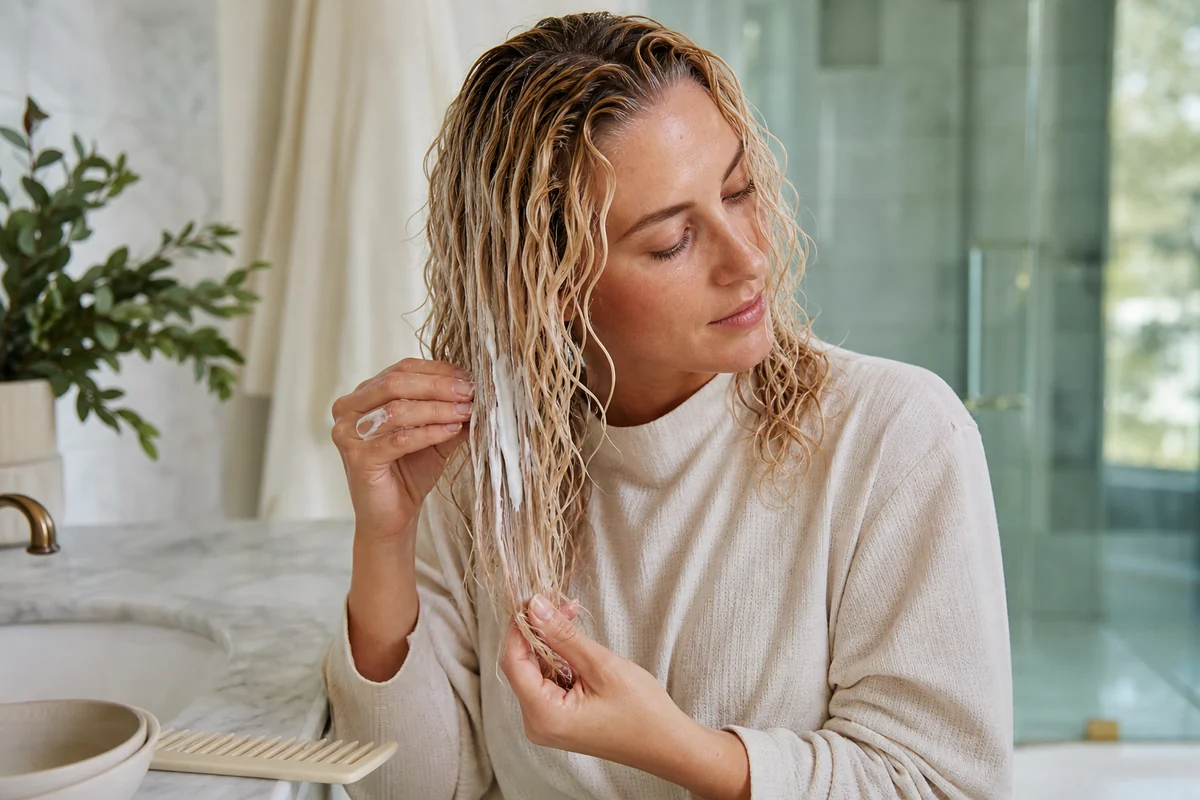
- Condition after every shampoo. Concentrate on the lightened mid-lengths and ends. Detangle while the hair has plenty of slip, using fingers or a wide-tooth comb.
- Match treatment to feel. Rough, tangly hair needs lubrication and conditioning. Very soft, overly stretchy hair may benefit from an occasional protein-containing or bond-building treatment used exactly as directed. Neither category needs five overlapping masks.
- Reduce heat and tension. Air-dry when practical or diffuse on a low setting. Skip tight buns, aggressive brushing and repeated passes with hot tools.
- Use lighter stylers first. A leave-in plus mousse or gel may hold a loosened pattern better than several heavy creams. If choosing between stylers feels like chemistry homework, compare curl cream and gel before layering both.
These steps follow the same low-friction principle in the AAD’s guidance for preventing further hair damage: condition after shampooing, handle textured hair gently while damp, limit heat and avoid pulling.
Will your curl pattern come back after bleaching?
Sometimes the pattern looks much better once dryness, buildup and heavy styling are corrected. That is a change in manageability and definition, not proof that the bleached fibre returned to its original structure.
If a section remains limp, gummy or broken after careful conditioning, the realistic plan is to protect it, style it gently and trim it as new hair grows. New growth is not the previously bleached strand, so it can show your natural pattern again. A severe scalp burn is different and needs medical assessment.
Does bleached hair hold curls better?
It can appear to. A rougher, more porous surface may give styling products extra grip, and removing old pigment or buildup can change how the hair feels. Bleach can also make the pattern frizzier or weaker. More grip is not the same as healthier hair. Sandpaper has excellent grip too.
Stop experimenting when the warning signs are obvious
Rinse immediately and follow the product directions if bleaching causes intense burning. Hospital dermatology guidance warns that hair bleach can irritate the scalp and damage the hair shaft. Seek prompt medical advice for blistering, swelling, open sores, worsening pain or a suspected chemical burn. The scalp is not the place to “wait and see” whether beauty is simply being dramatic.
For the hair itself, widespread snapping, gummy wet strands, rapidly thinning ends or sections that break with gentle handling call for a professional assessment and a firm pause on bleach. The goal is no longer perfect definition. It is keeping the remaining fibre attached while healthy growth replaces it.