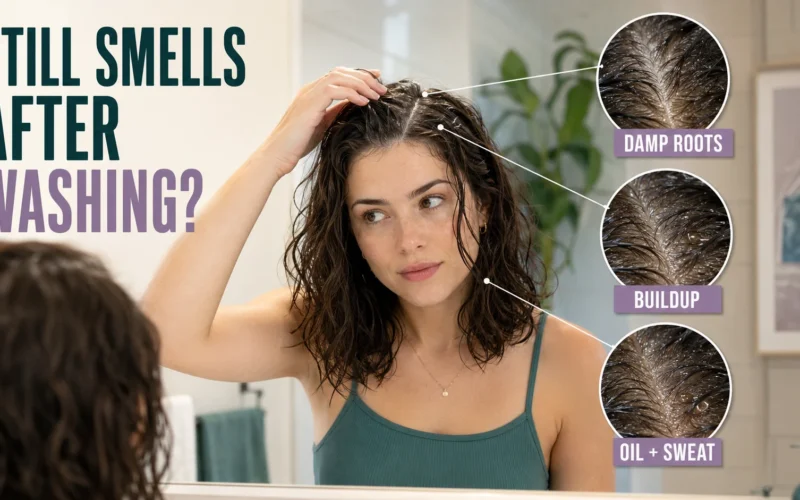
By tomorrow afternoon the roots will be flat again. You already know it. You washed last night and the clock’s been ticking ever since.
So why does my hair get greasy so fast? I get asked that almost daily, usually half annoyed, sometimes a little sheepish, like greasy hair is a hygiene confession. “I literally washed it last night,” people add, kind of defensive. I know. That’s not the problem. Nine times out of ten the oil isn’t the villain at all. It’s everything you’re doing to fight it.
Let me walk you through what’s really happening, because the cause is almost never the thing people blame.
The short version: Your hair doesn’t make oil, your scalp does, and how fast you go greasy comes down to your glands, your hair type, and how you wash. Shampoo the scalp not the lengths, keep conditioner off the roots, and match your wash days to your scalp instead of some rule online. Below, I’ll help you spot your exact grease pattern, fix the post-wash grease, and tell when it’s actually a scalp issue worth seeing someone about.
Your hair doesn’t make oil. Your scalp does.
One fact reframes the whole mess. Hair can’t produce oil. Not a drop. Every bit of grease you see started in the sebaceous glands down in your scalp and slid down the strand from the root, which WebMD’s oily hair guide lays out plainly. So “greasy hair” is really a scalp situation, not a hair one.
That’s the lens I work from as a trichologist. I barely glance at the lengths first. The scalp tells the story.
So why do some people go shiny in hours while a friend coasts for four days? Mostly the glands, and the glands take orders from hormones. Puberty cranks them up. So can some birth control, a bad stretch of stress, or just the genes you inherited along with that oily T-zone. Damp weather makes it worse, because less oil and sweat evaporate when the air’s already heavy.
Then hair type decides how fast you actually notice. Fine hair shows oil almost the second it appears, since there’s so little surface for it to spread over that it sinks flat fast. Thick or tightly coiled hair can carry days of the same oil before anyone can tell. Same scalp behavior. Completely different clocks.
First, figure out your grease pattern
Before you change a single product, work out which kind of greasy you are. The timing and the spots usually give it away.
| When it goes greasy | What’s usually behind it | Where to look first |
| Flat and oily within a day, sometimes hours | fast glands, fine hair, sweat, or washing wrong | how you shampoo the scalp, and your rinse |
| Greasy again right after you washed it | leftover residue, a rushed rinse, conditioner too high | rinse longer, keep conditioner off the roots |
| Oily roots but dry, frizzy ends | scalp oil meeting thirsty lengths | treat the two zones as separate problems |
| Greasy with flakes or a nagging itch | possible dandruff or an irritated oily scalp | the scalp, not the strands |
| Worse after dry shampoo | powder quietly stacking up | wash it out properly, lean on it less |
| Greasy soon after brushing | a dirty brush dragging old oil back through | clean the brush |
Most people are two of these at once. That’s the trap, honestly. Each row wants a different move, so one bottle of shampoo was never going to answer all of them.
Greasy again by tonight? Your wash is the suspect
You washed it this morning. Stringy by dinner. Feels like betrayal.
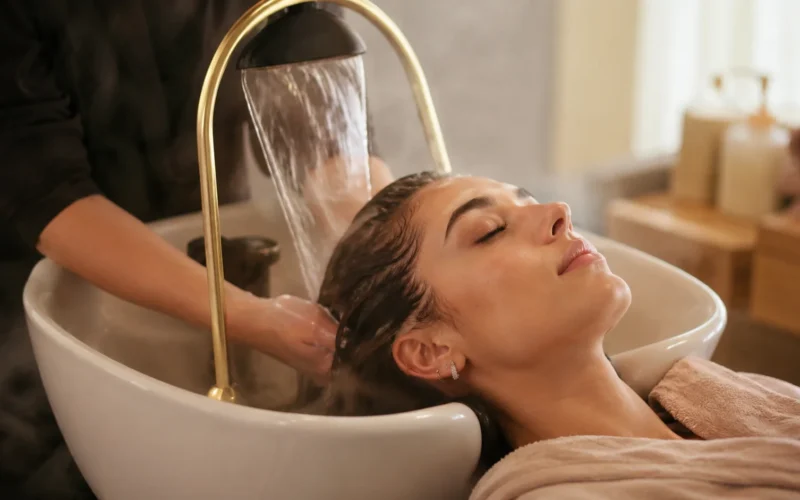
Usually the shampoo did its job and the routine undid it. The biggest culprit is a lazy rinse. Leave a film of shampoo or conditioner sitting on the scalp and it grabs oil and irritates the skin, so you grease up sooner, not later. Two more keep showing up: conditioner creeping onto the roots, which is basically oil as far as your hair is concerned, and scrubbing the mid-lengths while the scalp, the actual oil factory, gets a polite pat.
So rinse like you’re already late and then rinse a bit more. Keep conditioner on the ends. And give the scalp the attention you’ve been spending on your ponytail.
Oily roots, dry ends: two problems in one ponytail
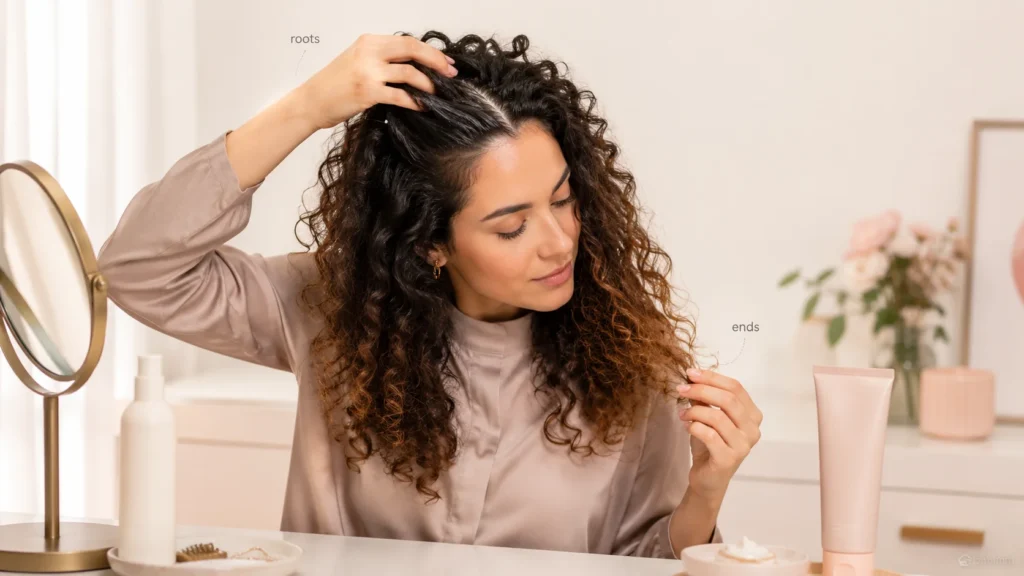
This pairing confuses everyone. Greasy at the scalp, dry and frizzy at the tips, same head, same day. How does that happen?
Because they aren’t one problem. They’re two. The scalp is pumping oil right where the glands sit, but that oil has to travel the whole length of the strand to reach the ends, and on long, curly, or porous hair it never finishes the trip. Roots drown. Ends stay parched. Why your hair gets frizzy is usually this exact story: oil stuck up top, nothing making it to the bottom.
So treating the whole head the same way is the trap. You strip the dry ends trying to rescue the oily roots, and now both ends of the problem are angrier.
Split the routine by zone:
- Shampoo and scrub the scalp only. That’s where the oil actually lives.
- Keep conditioner, oils, creams, and masks down on the mid-lengths and ends, nowhere near the roots.
- If products seem to sit on your hair instead of sinking in, you may lean low-porosity, and high vs low porosity hair explains why that keeps oil and residue trapped up top.
The goal was never less oil everywhere. It’s oil where it belongs and moisture where it’s gone missing.
Does “hair training” actually work?
You’ve probably been told to just wash less and your scalp will “retrain” itself to make less oil. I get asked about this all the time, so let me be straight with you.
Sort of. Not really. Not the way people mean it.
You can genuinely stretch your wash days. Your hair adjusts, you stop over-stripping, and styling gets easier once you’re not panic-washing at 7am. What you can’t do is bully your oil glands into producing less by white-knuckling through a greasy week. They take orders from hormones and genetics, not from your patience.
And there’s a catch nobody mentions. If your grease shows up with itching, flakes, or a sour smell, leaving it on longer trains nothing. It feeds the issue, because the yeast behind most dandruff lives on scalp oil. More oil sitting longer can mean more flaking, not less.
The honest version: wash on the schedule your scalp actually needs. Dermatologists land in the same place, that how often you wash should match how oily your hair really gets rather than some rule invented online, as Medical News Today’s rundown on greasy hair points out. Fine and oily might mean daily. Thick or curly might mean once or twice a week. Your scalp sets the pace, not a “hair training” challenge.
What actually helps (without going overboard)
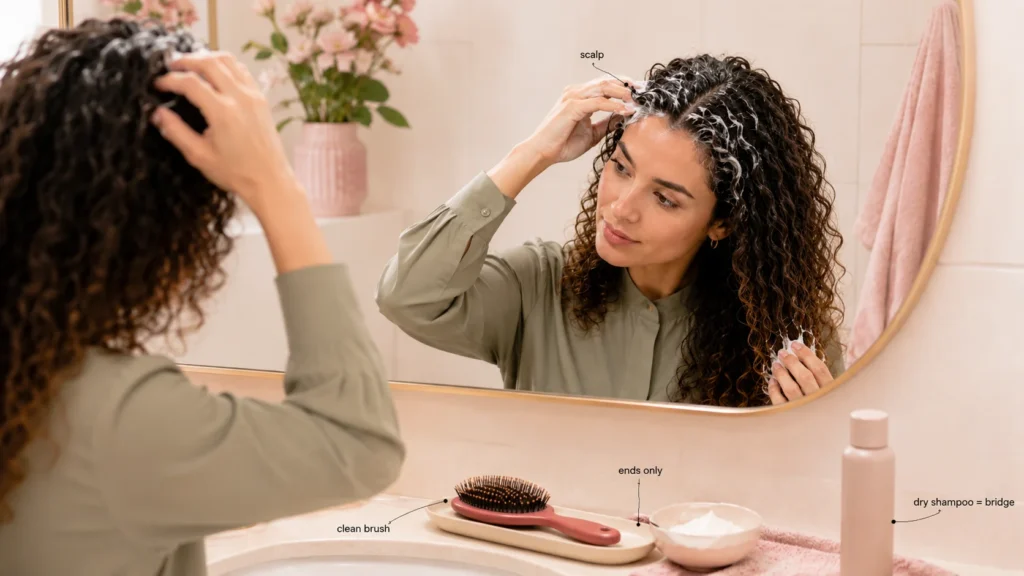
You don’t need a shelf full of bottles for this. Honestly, most of it is free.
Start with the wash itself. Fingertips on the scalp, not the lengths. Work it in, then rinse way longer than you think you need to, because leftover residue is half the battle. Conditioner? Ends only. Roots never asked for it.
A few more that punch above their weight:
- When products stop working and your hair feels coated, reset with a clarifying shampoo. Not every wash. Just when buildup’s the real story.
- Clean your brush. Sounds petty. It isn’t. A greasy brush smears yesterday’s oil right back through clean hair, so give your hairbrush a proper clean every week or two.
- Dry shampoo is a bridge, not a wash. Lean on it for days straight and it cakes up, irritates the scalp, and you’re worse off.
- Easy on the heavy oils and shine serums near the roots. And stop touching your hair all day. Every poke moves oil down the strand.
That’s it. Small stuff, stacked up.
When it’s not really about the oil
Here’s where I get serious for a second.
Most greasy hair is just oil being oil. But sometimes the grease is a symptom, not the problem. The clue is what comes with it. Flakes? An itch that won’t quit? Redness, soreness, a smell? That’s not a sebum issue anymore.
That combination usually means dandruff or seborrheic dermatitis. The AAD’s overview of seborrheic dermatitis calls it a common scalp rash with greasy, yellowish scale, and it points out that dandruff is basically its mildest version. The real giveaway is the inflammation, the redness underneath, not just the oil on top.
So if that’s you, stop swapping shampoos and go see a dermatologist or trichologist. A flaky, angry scalp gets thicker and itchier when you ignore it, and scratching it just invites infection. Five minutes with the right person beats five months of guessing.
What I tell people on their way out the door
One thing. If you take nothing else from this, take this: quit fighting the oil and start reading it.
How fast it shows up. Where it sits. What else comes with it. That’s your scalp talking. Listen to it instead of drowning it in product.
Wash the scalp, not just the hair. Keep the heavy stuff off your roots. Clean whatever touches your head. Then give it two weeks before you panic, because nine times out of ten, “my hair gets greasy so fast” isn’t a scalp that’s broken. It’s a routine that needs a tweak.
Stuff people ask me next
How often should I wash greasy hair?
However often it gets greasy. There’s no magic number, no matter what the internet swears. Fine and oily, maybe daily. Thick or curly, twice a week is plenty. Your scalp decides, not a rule.
Does dry shampoo make it worse?
Used right, no. It buys you a day between washes. Used as a replacement for washing, yes, because the powder builds up and the scalp gets cranky, which reads as more grease.
Can what I eat make my hair oily?
Maybe a little. There’s some research tying high-sugar and dairy-heavy diets to extra oil through hormones. But it’s a small lever next to how you wash, so fix the routine first.
.