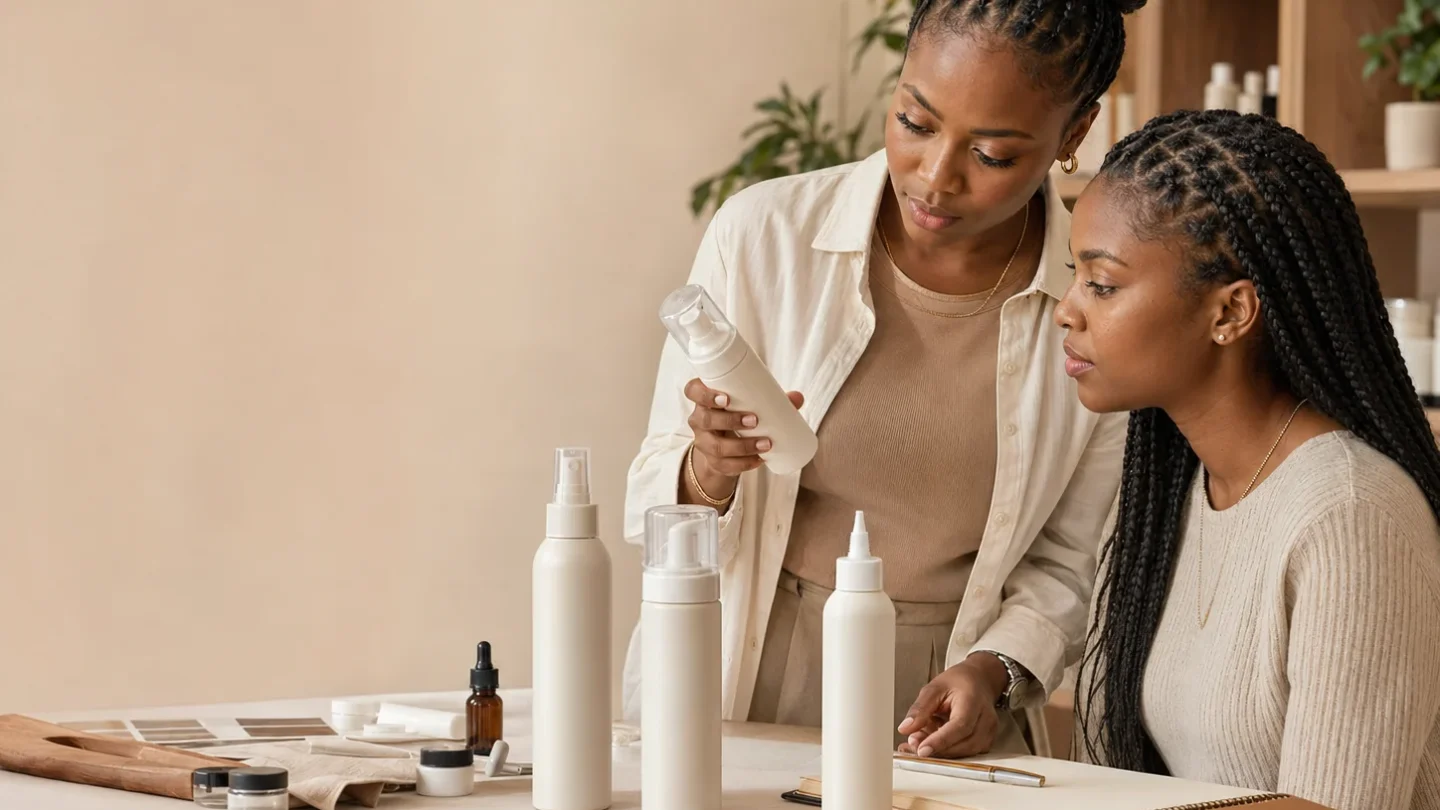
Private label braid care products can look convincing on a mood board and still disappoint the moment someone uses them twice. The spray lands too wet. The oil runs down the neck. The mousse looks perfect on day one, then leaves pale flakes over the braids.
For a first launch, two or three well-tested products are safer than a crowded collection. Start with a fine-mist refresher and a finishing mousse. Add a scalp oil only when it solves a clear need for your customer and stays light during repeated use. Edge control can wait unless it is central to the brand.
The goal is not to offer every possible braid product. It is to create a small system that works on real protective styles without causing a second problem.
Choose the job before choosing the formula
Each product needs one main job. “Good for braids” is too vague for a useful brief and even less helpful when the first samples arrive.
| Product | Main job | Common reason customers stop using it |
|---|---|---|
| Braid refresher | Add light moisture without disturbing the style | Wet spray, sticky finish or frizz |
| Finishing mousse | Smooth flyaways and refresh the surface | Flakes, stiffness or visible residue |
| Scalp oil | Lubricate a genuinely dry-feeling scalp | Greasy buildup, dripping or heavy fragrance |
| Edge control | Neaten the hairline | White cast, lifting or poor compatibility with other products |
Protective-style wearers do not all want the same routine. Some need a quick refresh after exercise. Some avoid oil because it sits on the scalp. Others want a product that reaches narrow parts without soaking the braids.
Brands planning a specialist line can first review common private label formats from a hair-care manufacturer such as Kinodin before choosing the first products in the collection.
Decide how much customization you actually need
A stock formula is usually the simpler route for testing a new market. A semi-custom formula may allow limited changes to fragrance, color or feel. A formula developed from scratch gives more control, but it also creates more decisions, sample rounds and testing costs.
A brand that wants a more distinctive range may choose custom formulation and packaging development instead of relying only on standard stock formulas. Custom work can provide greater control over texture, fragrance, performance and packaging, but it may require more time, testing and investment.
Before approving either route, ask in writing:
- Who owns the formula?
- Can another brand buy the same base?
- How many sample revisions are included?
- Which changes increase the MOQ or restart testing?
- Can production move to another factory later?
Test the products as a system, not four separate samples
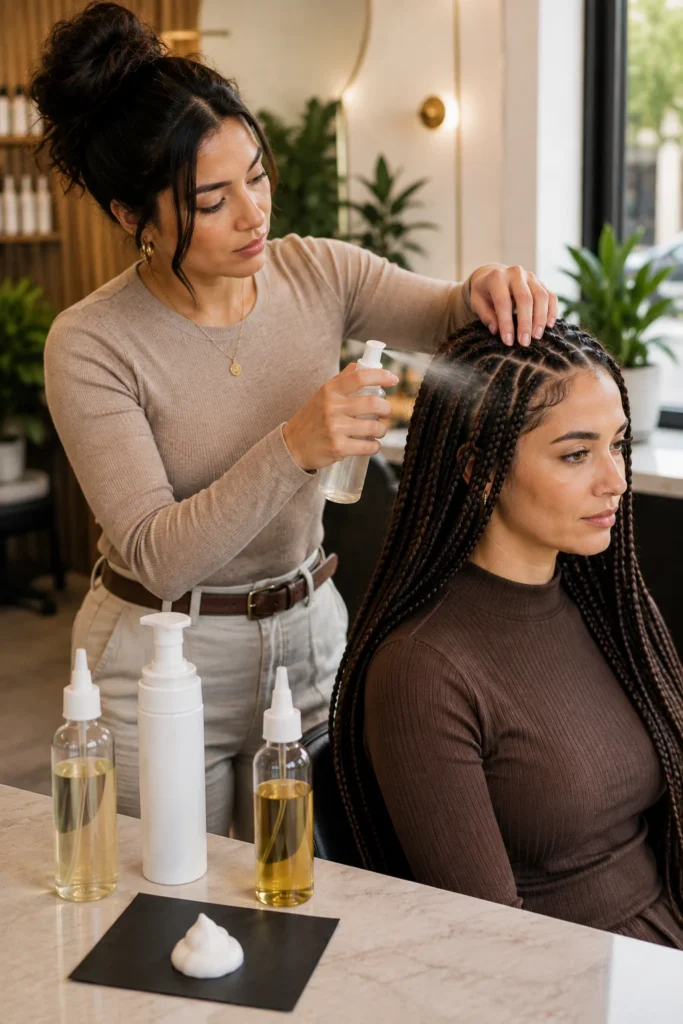
One neat application proves very little. Customers layer products over braid gel, sweat, scalp oil and yesterday’s mousse. That is when the trouble starts.
Test samples on the braid styles and hair characteristics named in the brief. Include different braid sizes, hair densities and scalp-oil levels. A small test will not represent every textured-hair customer, but it can reveal obvious problems before production.
Braid spray
Spray it through the proposed final nozzle, not a temporary laboratory bottle. Check whether the mist reaches the parts without flooding them, how quickly it dries and whether the braids become fuzzy or tacky.
Repeat the application over several days and look for dull residue or buildup.
Finishing mousse
Test the foam alone and over the gel or edge product likely to be used with it. Let it dry completely before judging flakes, stiffness and hold.
A mousse that behaves beautifully by itself may turn into tiny snowflakes when it meets another formula. Charming in December, less so along a fresh middle part.
Scalp oil
Apply a measured amount between narrow parts. Watch for runoff, greasy roots, bonnet transfer and fragrance that becomes stronger after repeated use.
An oil can make a dry-feeling scalp more comfortable, but it is not a cleanser and cannot fix irritation caused by tension or a product reaction.
Persistent redness, bumps, pain or hairline thinning should not be disguised with another scented oil. The American Academy of Dermatology warns that repeatedly wearing tight styles can cause traction alopecia, which may become permanent if the tension continues.
Make packaging part of the product test
A good formula in the wrong package is still a poor product. The spray bottle has to work between braids. The oil nozzle must control the dose. The mousse pump needs to produce consistent foam.
Test the proposed production package for:
- Mist coverage and droplet size
- Pump output from the first use to the last
- Clogging after product dries around the nozzle
- Leakage during storage and shipping
- Label damage caused by oil or moisture
- One-handed use around the back of the head
If you are comparing suppliers, our guide to choosing a hair-care manufacturer explains how to assess total cost, documentation and production consistency. The dispensing systems may differ, but the expensive questions are remarkably similar.
Price the order you will actually receive
“Low MOQ” can mean a low formula minimum paired with a much larger bottle or printed-label minimum. Ask for each number separately before comparing quotes.
Request an itemized estimate covering:
- Formula, filling and finished-unit MOQ
- Bottles, pumps, labels and cartons
- Samples and revision fees
- Stability, safety and packaging-compatibility work
- Artwork and setup charges
- Freight, duties and storage
- Deposit, balance and reorder terms
Set a target retail price before finalizing the package. Otherwise, a premium pump and decorative carton can quietly eat the margin while everyone is admiring the mockup.
Also define when the lead time begins. Is it after the deposit, formula approval, artwork approval or packaging arrival? “Six weeks” means little without a starting point.
Use a short approval scorecard
Written scoring makes it harder for a pretty sample and pleasant fragrance to win the whole meeting.
| Check | Approve only when | Reject or revise when |
|---|---|---|
| Application | Dose and coverage are controlled | Spray floods or oil runs |
| Finish | Braids look refreshed, not coated | Sticky, greasy or stiff feel |
| Layering | Works with the intended companion products | Flaking or white residue appears |
| Repeated use | No obvious buildup during the test period | Dull film, transfer or worsening itch |
| Packaging | Dispenses consistently and stays sealed | Clogging, leakage or weak closure |
| Removal | Washes out as expected | Residue remains after normal cleansing |
Keep an approved reference sample and a written specification. “Make it like the one we liked” is not quality control.
Keep product claims inside the evidence
Claims such as “helps refresh braids,” “reduces the look of frizz” or “adds shine” describe cosmetic appearance or use.
Claims that a product cures dandruff, treats scalp disease, prevents hair loss or guarantees growth can move beyond ordinary cosmetic territory. The FDA’s cosmetics-claims guidance explains why the intended use communicated through labels and marketing matters.
For products marketed in the United States, clarify who will act as the responsible person and who will handle safety records, product listing, applicable facility registration and serious adverse-event reporting.
The FDA’s MoCRA overview is more useful than a supplier simply saying “FDA approved.” Most cosmetics are not approved by the FDA before sale, although marketers remain responsible for safety and compliant labeling.
Launch small enough to learn
A practical first braid after-care collection might contain a refresher and mousse, with a scalp oil added only after demand and repeated-use testing support it. Give testers simple instructions, then record what happens after several applications, exercise, sleep and normal cleansing.
Pay attention to complaints that repeat:
- The spray makes the roots frizz
- The mousse flakes over another product
- The oil is difficult to control
- The scent lingers on bedding
- The pump clogs before the bottle is empty
- The routine leaves the scalp coated rather than refreshed
Those details are not minor. They form the product brief for the next sample round.
A large launch may photograph better, but unsold edge control has never been impressed by a coordinated label. Prove the products customers reach for, fix what they dislike and expand using evidence rather than enthusiasm.
Conclusion
Developing a successful private-label braid-care collection requires more than choosing popular products. Formula texture, scalp feel, fragrance, packaging compatibility, stability testing, regulatory documentation and production consistency all need attention.
A focused range may begin with braid spray and finishing mousse, then add scalp oil or edge control when testing and customer demand support them. The strongest collection is not necessarily the biggest. It is the one that works together and remains consistent from sample to reorder.
Frequently Asked Questions
What products are commonly included in a private-label braid-care collection?
Common products include braid refresher spray, finishing mousse, scalp oil and edge control. A new brand does not need to launch all four at once. The first products should reflect the clearest customer needs and work well together.
Can braid spray, scalp oil, braid mousse and edge control formulas be customized?
Yes, although the available options depend on the manufacturer and whether the formula is stock, semi-custom or fully custom. Possible changes may include fragrance, texture, color, ingredients and packaging. Meaningful changes should be sampled and tested before production.
What packaging formats are suitable for braid-care products?
Fine-mist bottles suit lightweight braid sprays, while controlled nozzles or droppers can help dispense scalp oils. Mousse requires a compatible foaming pump, and edge control is usually packaged in a jar or tube. Final packaging should be tested with the actual formula. For a closer look at bottle, closure, label and compatibility decisions, see our custom packaging checklist; the product category differs, but the approval questions are transferable.
What testing should be completed before mass production?
Testing should cover formula stability, safety, packaging compatibility, leakage, dispensing performance and repeated use. Products intended to be layered should also be tested together for flakes, residue, stickiness and buildup.
What information should a brand prepare before contacting a braid-care manufacturer?
Prepare the target customer, intended product benefits, preferred texture and fragrance, planned claims, packaging ideas, target price, expected order quantity and sales markets. A clear brief helps the manufacturer provide more useful samples, costs and timelines.