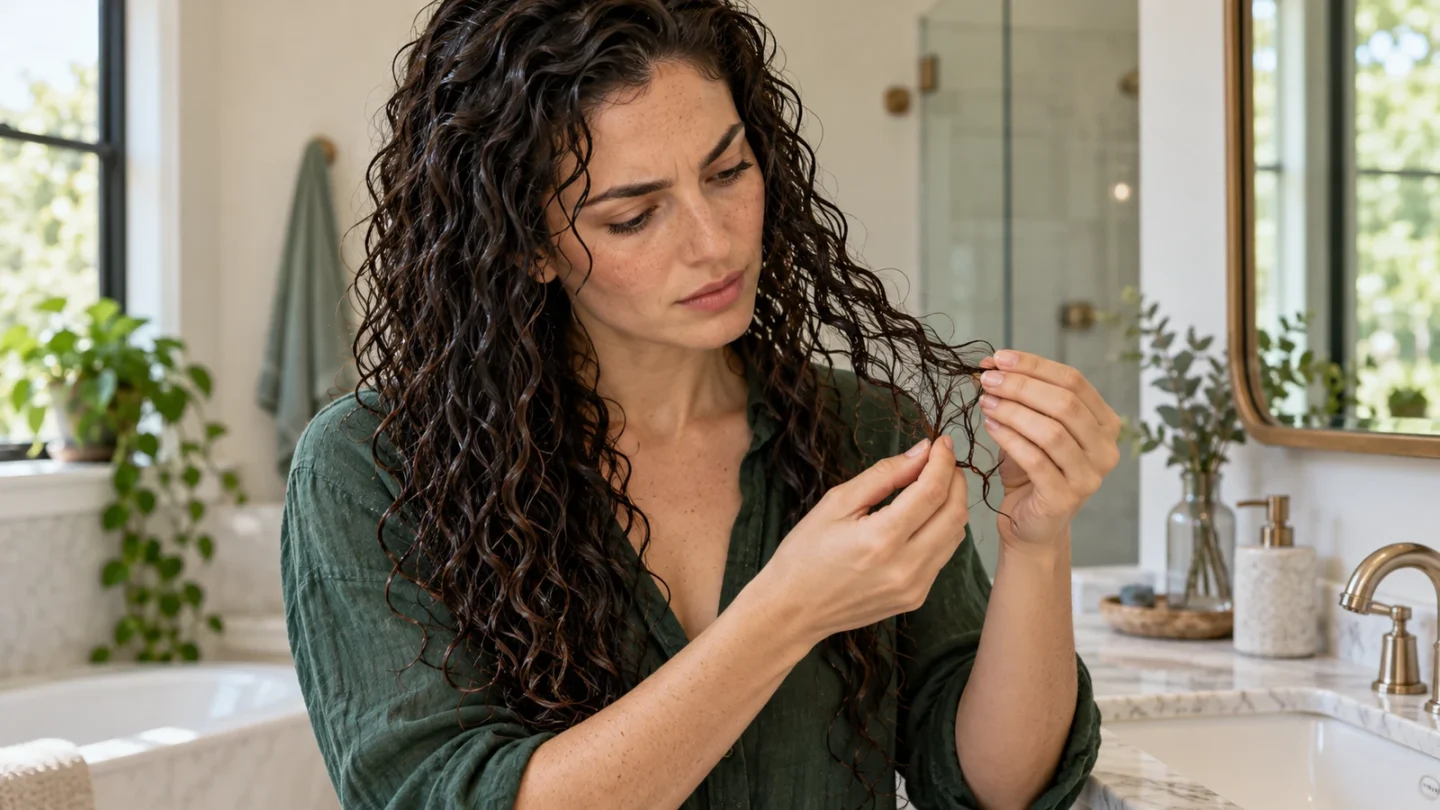
Your curls are dripping, but they already look fuzzy, webbed or split into thin pieces. It is tempting to add another handful of conditioner or styling cream. Pause first. Wet frizz is a visible clue, not a diagnosis, and more product can make the wrong problem harder to see.
The fastest way to fix wet frizz in curly hair is to identify the first step where it appears. Frizz that is present during rinsing points to a different problem from frizz that starts after leave-in, brushing or gel. Check one small section through a normal wash before changing your whole routine.
Wet frizz does not automatically mean dry hair
Wet frizz describes strands that sit outside the main curl clumps while the hair is still wet. It may look like fine webbing between sections, a fuzzy surface or ends that refuse to gather. A few separated hairs around the crown and hairline are normal. The useful question is whether the pattern is new, widespread or paired with roughness, coating, tangles or breakage.
It is also different from frizz that develops only as hair dries. If your clumps look smooth after styling but expand during diffusing, air-drying or humid weather, start with the broader guide to why curly hair gets frizzy. This article stays with the fuzz you can see before the style has set.
Do not use wet frizz alone to declare that your hair is dehydrated, high porosity, low porosity, overloaded with protein or in need of a bond treatment. Those labels describe different things. Our comparison of high- and low-porosity hair explains why porosity is only one part of how a strand accepts and loses water.
Find the first moment the frizz appears
| When you first see it | What to notice | Best first test |
|---|---|---|
| During rinsing, before conditioner | Waxy roots, dull lengths or hair that resists getting evenly wet | Check for product or mineral buildup |
| After shampoo, with a squeaky or rough feel | Tangles and a sudden loss of slip | Use your normal conditioner on one section before blaming damage |
| After conditioner | Some sections smooth while others stay fuzzy | Compare water, coverage and slip section by section |
| After leave-in, cream or gel | Sticky patches, flakes, stringiness or clumps breaking apart | Re-wet one section and remove one styling layer next wash |
| While brushing or raking | Frizz follows the tool or your fingers | Use more slip, less tension and fewer passes |
| Only on highlighted, bleached or oldest ends | Roughness, splits, snapping or a looser pattern | Treat it as likely structural wear, not a whole-head moisture problem |
Run a one-section rinse-and-slip test
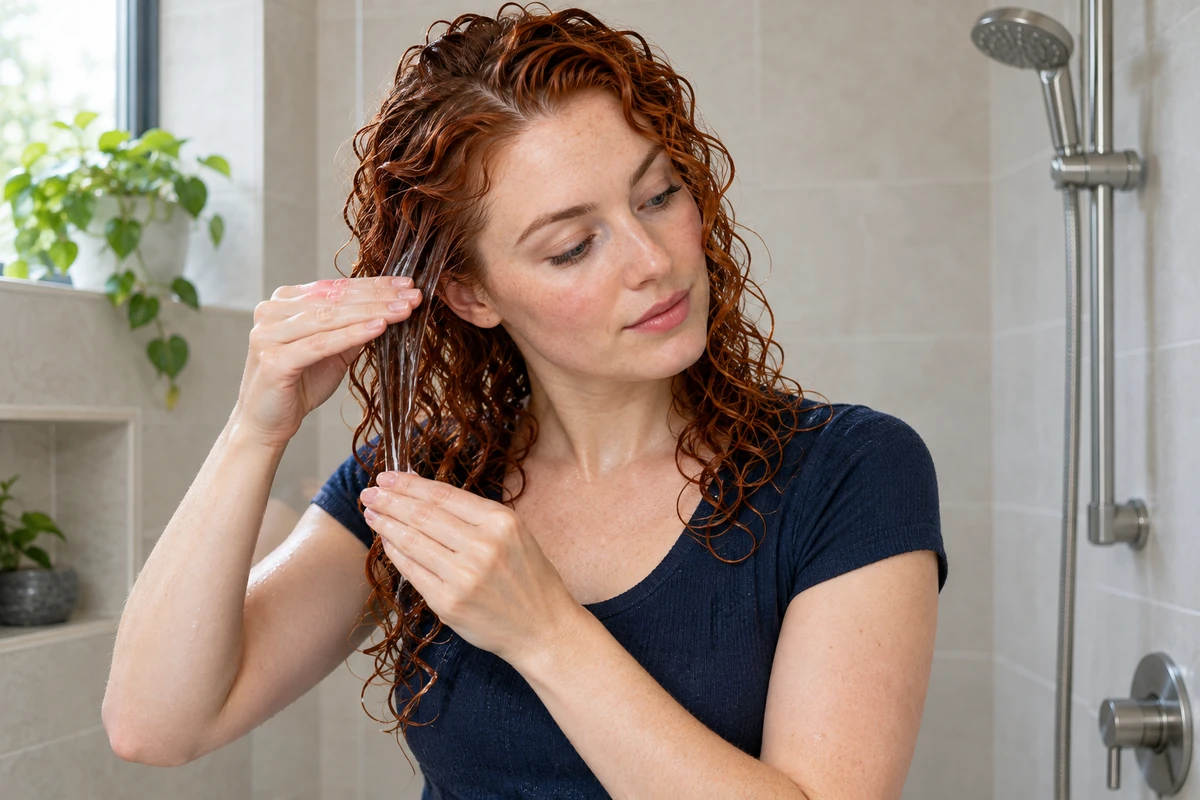
Use your regular wash products so the test has a useful baseline. Choose a side section you can see and keep the rest of your routine unchanged.
- Saturate it fully. Let water run through the section, then gently squeeze it. Notice whether the water spreads evenly or beads over coated-feeling strands.
- Check it before conditioner. Look for webbing and slide two fingers down the section without pulling. Record whether it feels waxy, squeaky, rough or simply separated.
- Add a normal amount of rinse-out conditioner. Smooth it through the same section with flat hands. Add a little water, not another palmful of product, and give the conditioner time to spread.
- Compare the change. If the section becomes slippery and gathers into larger clumps, the immediate problem was probably slip or uneven coverage. If it stays coated or rough, cleansing history, minerals or damage deserve a closer look.
- Watch the first styling step. If the clump separates only after leave-in, brush styling or gel, change that one step next wash.
This is not a laboratory test, but it prevents the most common mistake: adding masks, protein, oils and a new gel at the same time. One changed variable gives you an answer. Five give you a crowded shower shelf.
If the hair feels coated, identify what is coating it
Product buildup is more likely when wet frizz arrived after weeks of layering cream, gel, oil or dry shampoo, especially if the roots stay greasy and water takes longer to saturate the lengths. A clarifying wash may be the sensible reset.
Mineral buildup becomes more plausible if the change followed a move, trip or new water supply, or if pale scale collects on faucets and shower glass. Research found more calcium and magnesium deposited on hair washed experimentally in hard water, along with visible surface changes. That evidence supports hard water as a possibility, but it does not prove that every rough curl needs chelating.
A clarifier removes styling residue and excess oil. A chelating formula is designed to bind mineral or metal deposits. Use the clues in our clarifying versus chelating shampoo guide before choosing. Repeated deep cleansing without evidence can leave an already rough section feeling worse.
If only the ends stay fuzzy, be honest about damage
When the roots clump but bleached, relaxed, heat-styled or oldest ends remain webbed, the difference matters. Microscopic research on bleached hair found lifted and missing cuticle layers as well as deeper structural changes after excessive bleaching. Conditioner can reduce friction and improve how damaged hair behaves, but it cannot turn a split or severely weathered fiber back into untouched hair.
Use enough conditioner for slip, detangle with low tension and reduce repeated heat or chemical overlap. A compatible bond-building treatment may improve strength or manageability, but judge it by less breakage and easier handling, not a promise to make every strand new. Ends that keep splitting, snagging and snapping may need a trim.
If technique starts the frizz, simplify the styling step
Hair that looks smooth after conditioner but turns fuzzy during styling usually needs a technique adjustment before a treatment. Work in sections that stay wet enough for product to spread. Smooth or brush only until the strands group, then stop. Repeated raking can pull small hairs back out of the clump you just formed.
If one section starts drying before you reach it, add water to that section and distribute the same product more evenly. If a cream or leave-in makes fine curls separate, test less of it rather than sealing the result under more gel. Hold products help preserve clumps; they do not repair clumps that were already broken apart.
Choose one change for the next wash
- Frizz before conditioner plus a coated feel: investigate residue or water minerals.
- Frizz that smooths with conditioner: improve slip, sectioning and coverage.
- Frizz that begins after one styler: reduce, remove or change that layer.
- Frizz concentrated on processed ends: protect the weak area and set realistic repair expectations.
- Frizz created by brushing or raking: use fewer passes and less tension.
Keep the rest of the wash day stable and compare the same section. If wet frizz comes with sudden shedding, scalp pain, sores or persistent matting, stop treating it as a styling puzzle and speak with a dermatologist or qualified hair professional. Otherwise, the first moment it appears usually gives you the clearest next move.