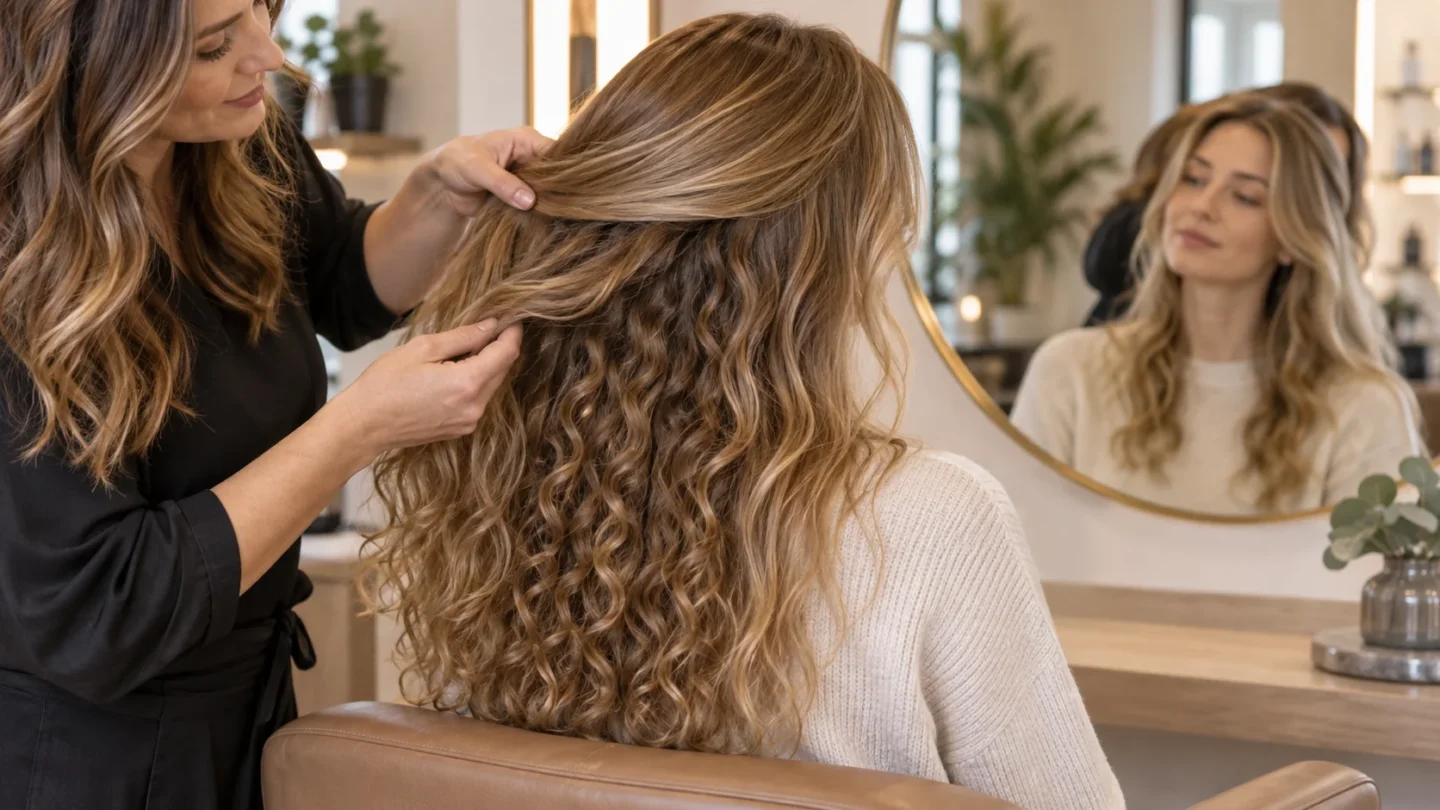
You lift the top layer and find curls hiding underneath, while the hair everyone sees lies almost straight. The useful question is not “How do I force it all to match?” It is whether the difference is natural, or whether the top layer has changed.
If the two textures have always been there and both feel healthy, you probably have a natural mixed pattern. If the top forms waves while wet and stretches as it dries, check weight, styling and hold. If it used to curl but became rougher or straighter after repeated heat, bleach or chemical treatment, damage moves higher on the list.
One controlled wash can separate those possibilities better than six new curl creams.
Start with one clue: has the top layer ever curled?
Look at the history and the wet pattern before changing your haircut or routine.
| What you notice | What it points toward | What to test first |
|---|---|---|
| The top has always grown looser from the roots | Natural mixed texture | Style each zone for the pattern it actually has |
| The top waves when wet, then dries almost straight | Weight, weak hold or drying position | Section and support the top layer separately |
| The top feels coated, heavy or unusually dull | Product or mineral residue may be adding weight | Use one appropriate cleansing wash |
| The straighter area starts where bleach or heat damage begins | Structural damage is more likely | Stop the stress and compare new growth with the lengths |
| The texture changed suddenly with shedding, thinning or scalp symptoms | This is no longer only a styling question | Arrange a professional scalp and hair assessment |
Do not decide from the dry surface alone. The top layer may be straighter from the root, or it may contain a wave that is being pulled, coated or dried flat.
Natural mixed texture does not need repairing
Hair follicles do not have to produce identical fibers across one scalp. Curl is linked to asymmetry in the follicle and developing hair fiber, and that geometry can vary from one area to another. A scientific review of how curly hair forms and behaves describes the structural differences behind curved fibers.
A healthy top layer that grows looser from the scalp, remains smooth and behaves the same after different routines may simply be your natural pattern. It is not failed curly hair. It also may never form the same ringlets as the underneath, no matter how persuasive the product label sounds.
The goal then becomes a balanced overall shape, not perfect curl uniformity. You may encourage more bend on top or soften the tighter underneath curls, but neither section needs to be treated as defective.
The top layer carries more weight and more wear
The visible layer usually receives more brushing, touching, sunlight, hot-tool contact and color work. It may also be longer and heavier than the shorter hair underneath. Those factors can create similar-looking results for very different reasons.
Weight is temporary. A wet top section may form an S-shape, then lengthen as it dries. Supporting it at the root or using a stronger hold product may preserve more of that movement. Damage is different. Repeated physical and chemical stress can weather the fiber, increase roughness and breakage, and change how it holds a shape. A recent medical review of the external factors that affect hair fibers includes heat, friction, chemical procedures and ultraviolet exposure.
Check where the straighter texture begins. If healthy new growth bends but processed lengths hang straight, styling cannot rebuild the altered section. The guide to curls changed by bleach explains what can improve and what must grow out.
Run one wash-day test on the top layer
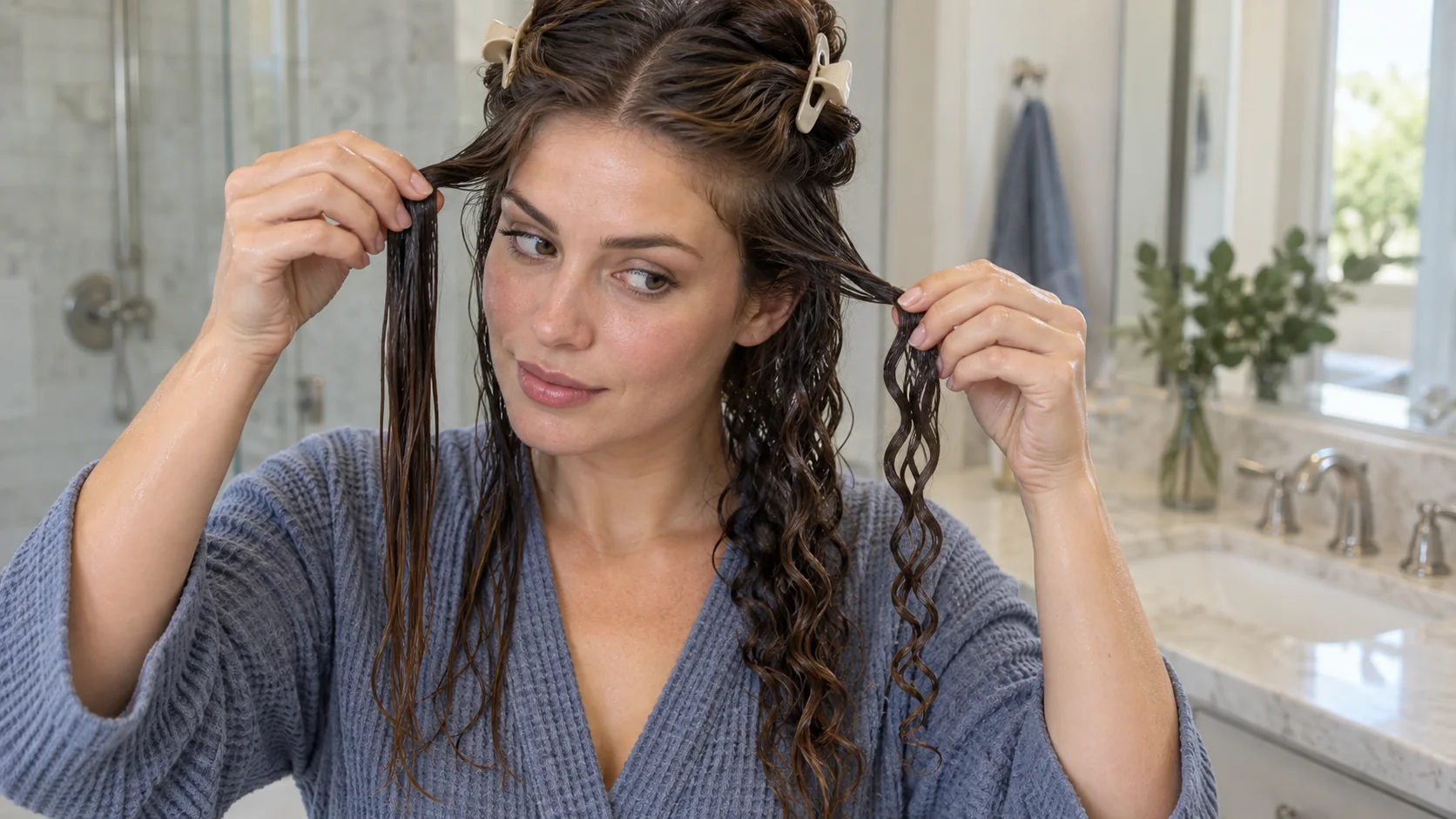
Use products you already understand. The point is to reveal when the two sections begin behaving differently, not to audition an entirely new bathroom shelf.
- Cleanse normally and rinse conditioner thoroughly. Do not add oil or a heavy cream yet.
- With the hair wet, photograph one top section and one underneath section from root to end.
- Clip the underneath away. Divide the top into smaller sections than you normally use.
- Apply a light, even layer of your usual hold product through the top instead of only scrunching the ends.
- Dry without brushing, stretching or repeatedly touching that area. Support the crown rather than letting every strand hang flat.
- Compare the fully dry result with the wet photo and with the untreated pattern you usually see.
Repeat only if one clear variable needs checking. Changing cleanser, conditioner, styler, brush and diffuser technique together produces a makeover, not an answer.
Read the result before buying another product
If the top stays nearly straight from root to end even when wet, feels healthy and has always behaved that way, natural mixed texture is the strongest explanation.
If it bends while wet but lengthens during drying, the top likely needs less weight, better hold or more support. If the curl groups form and then break into thin pieces, use the troubleshooting guide for curls that turn stringy after drying to find the exact step causing the split.
If one thorough cleansing wash makes the top noticeably lighter and wavier, residue was contributing. Do not turn that into aggressive weekly clarifying. Work out whether you are removing ordinary product buildup or hard-water minerals with the chelating versus clarifying decision guide.
If the section remains rough, snaps easily, tangles more than the underneath or turns straighter at the same point where processing begins, reduce the damaging stress. A mask may improve feel and manageability, but it cannot permanently restore the original structure of a severely altered fiber.
Style the top layer as its own zone
Mixed texture often responds better when the same routine is not applied with the same force everywhere.
- Use less softening product on top. Put richer cream where hair feels drier, rather than coating every zone equally.
- Give the top more hold. Smooth a small amount through narrow sections before scrunching so it reaches the middle as well as the ends.
- Change the drying direction. Lift or support the crown and keep forceful airflow from pushing the top flat.
- Shape only the stubborn pieces. Finger-coiling a few face-framing or crown sections can create temporary consistency without turning the entire routine into a craft project.
These techniques can help an existing wave hold. They cannot manufacture a permanent curl where the strand naturally grows straight.
Will layers make the top curlier?
Layers can release some weight, so a top section that already bends may spring up more when shortened. They are not a guaranteed curl switch. If the top grows straight from the root, removing length may simply give you shorter straight hair over curls.
Density matters too. Short crown layers can add lift to dense hair, but too many may expose sparse ends on fine or lower-density hair. Ask a curl-aware stylist where the shortest dry layer would land and how much perimeter weight would remain. Bring photos of your own wet and dry test, not only a reference model with different density.
When this is more than a texture mismatch
A long-standing difference between healthy sections is usually a styling and shape decision. A sudden change alongside excessive shedding, a widening part, patchy loss, scalp pain, burning, scaling or significant breakage deserves professional attention. The American Academy of Dermatology explains how a dermatologist distinguishes shedding from hair loss and investigates the cause.
Otherwise, let the controlled wash tell you what the top layer can do. Improve the part that responds, protect the part that is weathered and stop asking naturally different follicles to sign a matching agreement.