An itchy scalp, visible flakes, or hair that feels thinner than usual can lead people to reconsider their hair-care routine. Some try clarifying shampoos or scalp exfoliants, hoping to remove buildup and improve hair growth.
Removing residue may improve how hair looks and feels, but cosmetic scalp exfoliation is not an established treatment for pattern hair loss. Product residue, scalp inflammation, hair breakage and actual hair loss can produce similar-looking changes. Understanding the differences can help people choose appropriate care and recognize when a dermatologist should evaluate the problem.
Is it product buildup or hair loss?
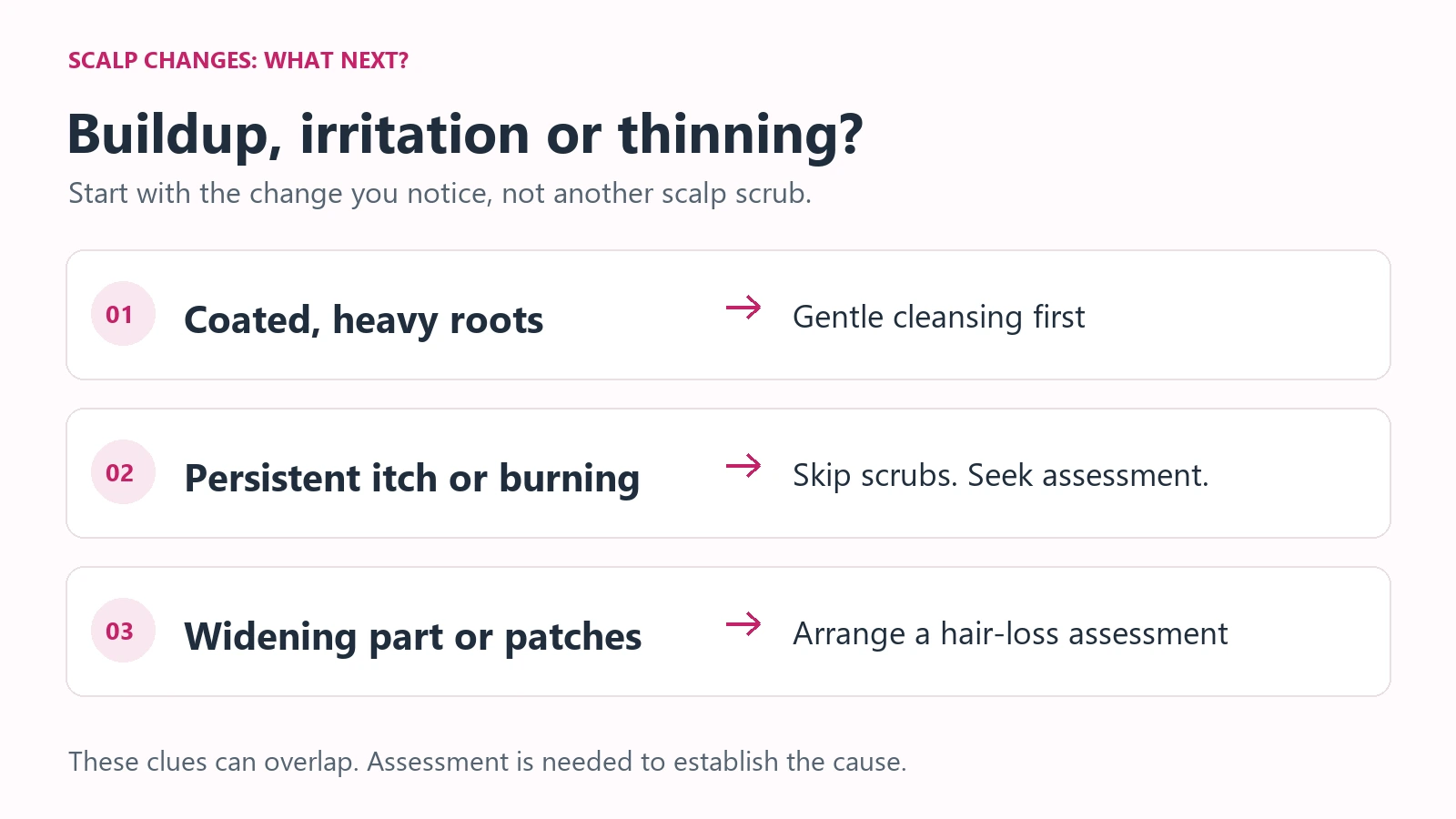
Hair products, natural oils and dead skin cells can accumulate on the scalp, particularly when styling products are applied frequently or washing intervals are extended.
This may leave the roots feeling coated, greasy or unusually heavy. Hair can appear flatter, and curls may lose some of their definition.
Common signs of buildup include:
- Waxy or sticky residue near the roots
- Hair that feels heavy shortly after washing
- Visible product particles or flakes
- Reduced volume that improves after thorough cleansing
Buildup can affect how hair looks and feels, but it does not necessarily mean follicles are damaged or hair is being lost.
A suitable shampoo, applied directly to the scalp and rinsed thoroughly, may resolve ordinary product accumulation. Exfoliation is not always necessary. Our guide to when to exfoliate your scalp explains when an extra cleansing step may help and when to skip it.
If the scalp feels cleaner but visible thinning remains, another cause may need investigation.
When flaking and itching suggest scalp irritation
Not all scalp flakes are product residue. Dandruff, seborrheic dermatitis, psoriasis and contact dermatitis can cause flaking, itching or inflammation. Certain hair dyes, fragrances and styling products can also trigger reactions.
Unlike ordinary buildup, these conditions may continue despite regular cleansing. Symptoms worth paying attention to include:
- Persistent itching or burning
- Redness or discoloration of the scalp
- Recurring greasy or dry-looking scales
- Tenderness or discomfort
- Flaking that returns soon after washing
The American Academy of Dermatology (AAD) explains that dandruff can often be managed with appropriate shampoos. Persistent symptoms, however, may indicate a scalp condition requiring professional assessment.
Aggressive exfoliation may worsen irritated skin. Scrubbing harder does not treat inflammation and can increase discomfort. When the scalp is already sensitive, identifying the underlying problem is more useful than adding another exfoliating product.
What does actual hair thinning look like?
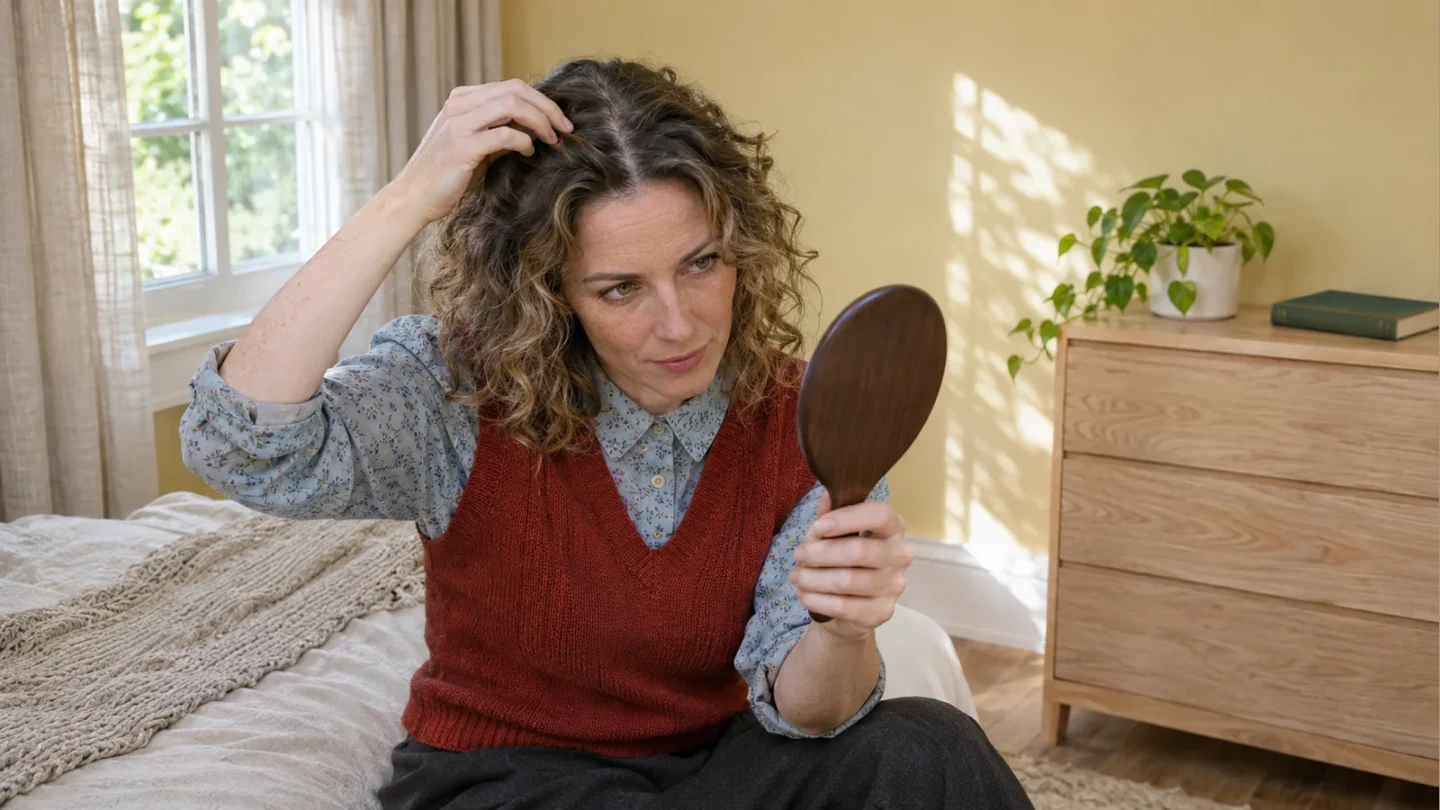
Hair thinning involves changes in hair density, growth or shedding rather than simply the condition of the scalp’s surface. In women, one common cause is female-pattern hair loss, which often develops gradually.
The AAD’s hair-loss signs and symptoms include a widening part and less fullness in a ponytail. Other changes worth noting include:
- Increasing scalp visibility around the crown
- Gradual reduction in hair density
- Finer hairs developing in areas that previously had fuller coverage
Female-pattern hair loss does not always involve itching, flaking or scalp discomfort.
Other conditions, including thyroid disorders, nutritional deficiencies, hormonal changes and temporary shedding after illness or significant stress, may also contribute to hair loss. These causes cannot reliably be distinguished through appearance alone.
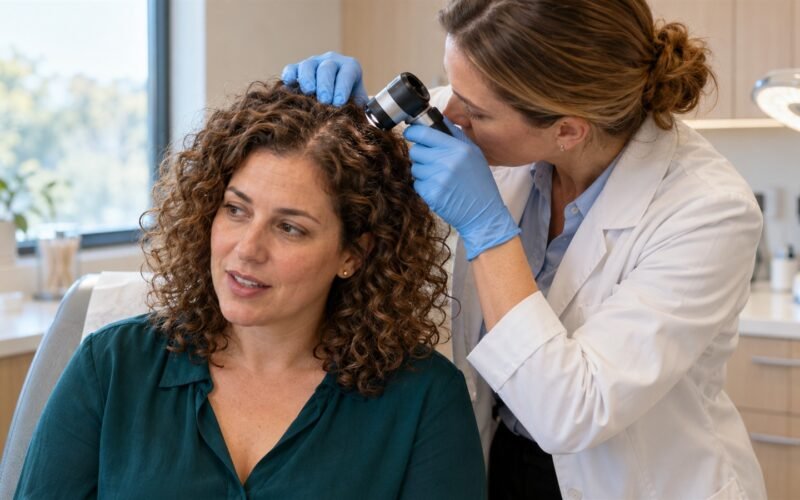
A dermatologist may examine the scalp, assess hair density and growth patterns, and recommend further testing when necessary.
Why curly and coily hair requires additional attention
Hair texture and styling practices can make the distinction between breakage and hair loss more complicated. Curly and coily hair may be more vulnerable to breakage during detangling, heat styling or repeated mechanical tension.
Short broken strands can make hair appear thinner even when follicles continue producing hair. Persistent tension from tight braids, ponytails, extensions or other hairstyles, however, can contribute to traction alopecia, a form of hair loss caused by repeated pulling on the follicles.
The AAD identifies broken hairs around the hairline, receding edges and thinning in areas exposed to tension as possible warning signs.
Some inflammatory forms of hair loss can also affect the crown and may initially resemble ordinary breakage or scalp irritation. For example, central centrifugal cicatricial alopecia (CCCA) can cause progressive hair loss and sometimes itching, tenderness or scalp scaling. Early evaluation matters because scarring forms of hair loss can permanently damage follicles.
Hair-care adjustments may reduce breakage, but progressive thinning or unexplained scalp symptoms should not be attributed solely to styling practices.
Can scalp exfoliation help hair grow back?
Scalp exfoliation removes material from the skin’s surface. Depending on the product and underlying concern, it may help manage residue or certain types of scaling. However, there is no established evidence that routine cosmetic scalp exfoliation reverses female-pattern hair loss.
Hair growth depends on the condition and activity of hair follicles, not simply how clean the scalp feels. Treatments for diagnosed hair loss may include topical medication, prescription therapies, changes in hairstyling practices or treatment of an underlying medical condition.
Hair transplantation may also be considered for appropriately selected patients with stable hair loss and sufficient healthy donor hair. The AAD’s female-pattern hair-loss guidance notes that not everyone is a suitable transplant candidate.
For women researching surgical options, HairInUSA’s guide to hair transplants for women explains how diagnosis, donor density and different transplant techniques affect treatment planning.
Surgery is not appropriate for every type of hair loss, particularly when shedding is temporary, scalp inflammation is active or donor hair is insufficient.
When should you see a dermatologist?
Professional evaluation is advisable when thinning progresses, shedding becomes unusually heavy or scalp symptoms do not improve with appropriate care. Seek assessment particularly when experiencing:
- Sudden or patchy hair loss
- Persistent burning, pain or significant itching
- Scalp sores, crusting or swelling
- A widening part or noticeable loss of density
- Hair loss accompanied by scalp inflammation
A dermatologist can distinguish cosmetic scalp concerns from conditions affecting hair follicles and recommend treatment based on the diagnosis. Buildup, scalp irritation and hair loss may occur separately or together, so the aim is to identify what is changing before choosing another exfoliant or hair-growth product.