
Still flaking? Count the washes before blaming the shampoo.
Nizoral’s schedule is every three to four days, so using it twice covers less than a week of treatment. That’s easy to overlook when the bottle costs around $16 at major U.S. retailers and says it starts working from the first use. Naturally, you expect something noticeable.
Sometimes there is. Less itching, perhaps. A cleaner scalp for a day. Complete control can take longer.
There’s also a less convenient answer: those flakes may not be dandruff at all.
Health note: This article offers general scalp-care information, not a diagnosis. Speak with a healthcare professional if your symptoms are severe, worsening or unusual.
1. You’ve Only Given It a Few Washes
How many times have you actually used Nizoral as directed?
Not how long the bottle has lived in your bathroom. Actual washes.
The Nizoral FAQ recommends using its 1% ketoconazole shampoo every three to four days for up to eight weeks. That works out to roughly two treatments a week, with regular shampoo allowed between them.
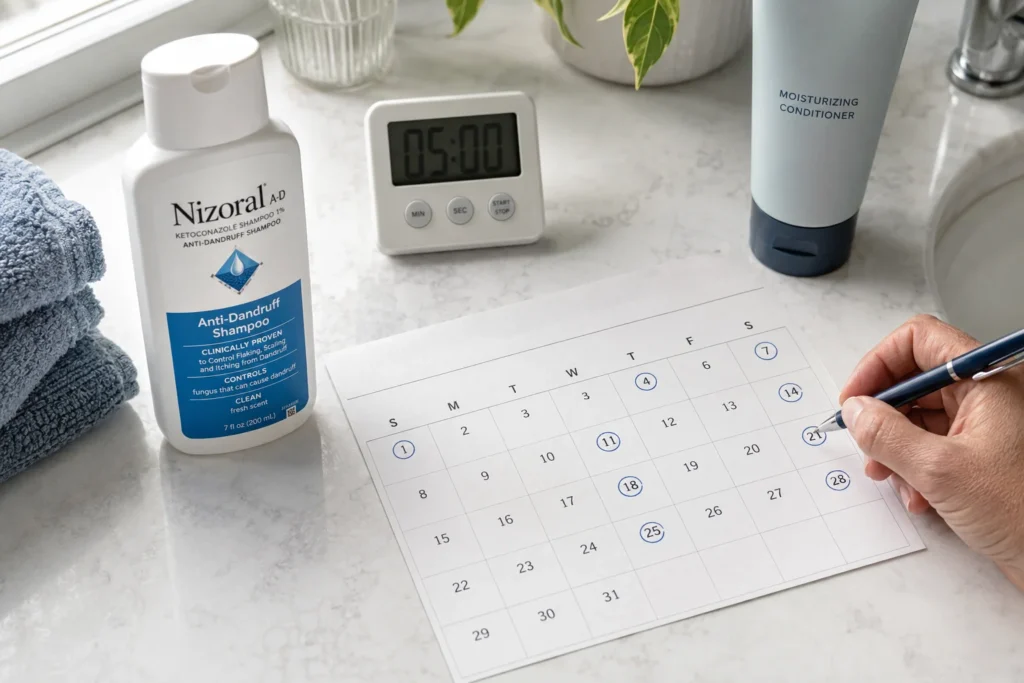
The full schedule can continue for up to eight weeks, but that doesn’t mean waiting eight weeks for any improvement. MedlinePlus says dandruff symptoms should begin improving within the first two to four weeks.
Nizoral may not get a fair trial when you:
- Use it only during a particularly itchy wash
- Forget the next scheduled treatment
- Quit after the first quiet scalp day
- Use several medicated shampoos without tracking any of them
Follow the directions printed on your bottle because Nizoral strengths and labels vary by country. And don’t double up after a missed wash. An irritated scalp can flake too, which leaves you with the same shoulders and a new problem.
2. It’s Cleaning Your Curls, Not Treating Your Scalp
This happens easily with thick hair. You squeeze shampoo into your palm, work up a good lather and rinse. The hair feels very clean. The skin underneath? It barely met the product.
Ketoconazole needs to reach the scalp.
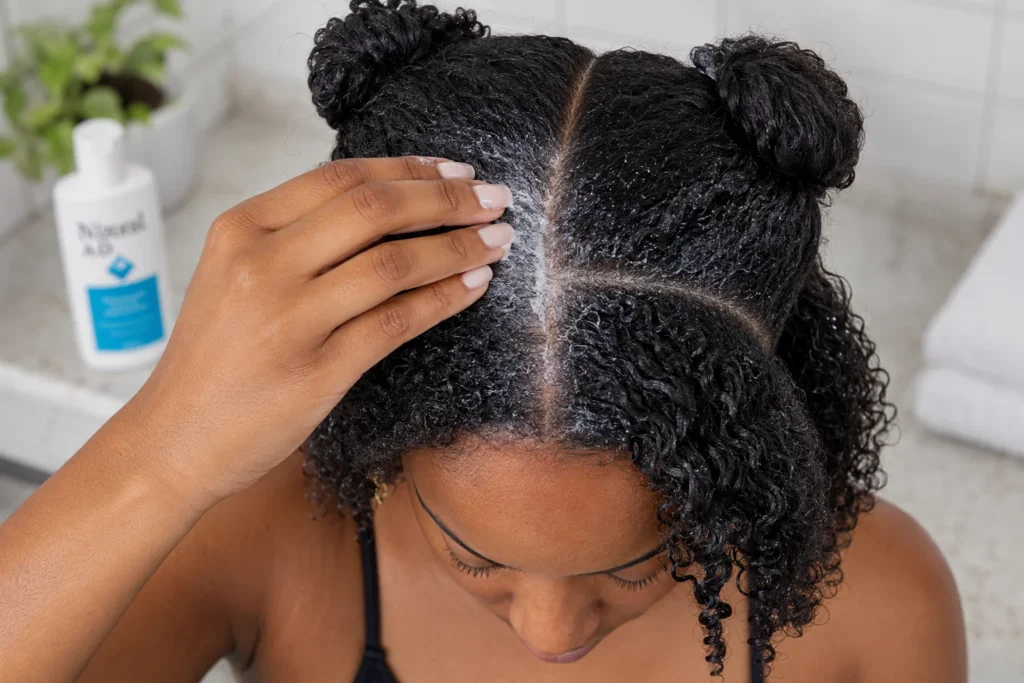
On your next wash, part the hair loosely in a few places. Apply the shampoo along those parts, especially where itching and flakes are worst. Use your fingertips rather than your nails, then follow the bottle’s directions for rinsing.
For curls and coils, this distinction matters. The American Academy of Dermatology advises keeping dandruff shampoo mainly on the scalp because medicated ingredients can dry the hair.
A practical wash:
- Soak the scalp properly.
- Apply in sections instead of piling shampoo on top.
- Massage the skin gently.
- Keep the foam away from dry ends where possible.
- Condition the lengths afterward.
Your scalp may need treatment while your curls still need moisture. Both can be true. Our guide on how often to wash curly hair explains why one wash schedule doesn’t suit every curl pattern or scalp.
3. The Flakes Aren’t Coming From Dandruff
White flakes don’t tell you what caused them.
Dry skin can flake. So can psoriasis, eczema, seborrheic dermatitis, product irritation and buildup. They can look similar in the mirror, especially around the hairline, but ketoconazole won’t solve all of them.
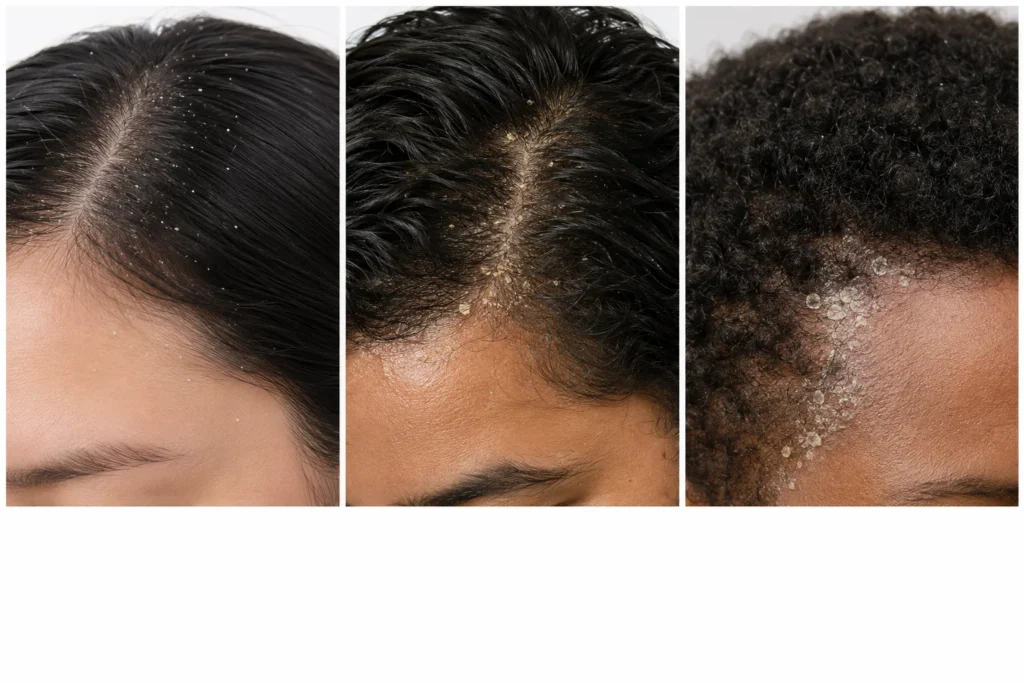
A few details are worth noticing:
- Are the scales thick or silvery?
- Does the skin hurt, crack or bleed?
- Do patches extend onto your forehead, ears or neck?
- Did the problem begin after a new dye, oil or styling product?
- Does Nizoral cause burning rather than mild dryness?
- Are you also seeing unusual shedding?
That isn’t a home diagnostic test. It’s a sign to stop guessing.
The American Academy of Dermatology recommends seeing a dermatologist when severe dandruff persists because psoriasis, eczema and other scalp conditions may need different treatment. Seek medical advice sooner if the skin is swollen, painful, broken or rapidly worsening.
4. You’re Following Someone Else’s Instructions
One person online leaves Nizoral on for three minutes. Another swears by ten. Someone in the comments has apparently turned wash day into a chemistry experiment.
Check your own bottle.
Directions vary between countries, strengths and versions. For example, MedlinePlus lists different instructions for prescription and over-the-counter ketoconazole shampoos. Copying directions from a different formula could mean rinsing yours too early or leaving it on longer than intended.
Use the amount, timing and frequency printed on the product you bought. If the label isn’t clear, ask a pharmacist.
5. Nizoral Is Irritating Your Scalp
More flakes after washing don’t always mean the dandruff is fighting back. Sometimes the shampoo itself is drying or irritating the skin.
Ketoconazole can cause:
- Dryness
- Stinging or burning
- Itching
- Changes in hair texture
- An unusually oily or dry scalp
- Redness, which may be less visible on darker skin
These effects are listed by the U.S. National Library of Medicine. Mild dryness and worsening inflammation are not the same thing, though. Stop using the shampoo and get medical advice if you develop marked pain, swelling, blistering, hives or a spreading rash.
And no, using a larger squeeze won’t bully the dandruff into leaving. It may only irritate the skin further.
6. Ketoconazole May Not Be the Right Active Ingredient for You
Dandruff shampoos don’t all work in the same way.
Some contain ketoconazole. Others use selenium sulfide, salicylic acid, zinc pyrithione, sulfur or coal tar. If ketoconazole hasn’t helped after a proper trial, a different active ingredient may suit your symptoms better.
The American Academy of Dermatology suggests trying or alternating dandruff shampoos with different active ingredients when one option fails. That doesn’t mean opening three bottles in one shower. A pharmacist or dermatologist can help you choose what to try next without making irritation harder to trace.
7. Your Scalp Needs More Than an Over-the-Counter Shampoo
There’s a point where continuing the same routine becomes expensive repetition.
According to MedlinePlus, dandruff treated with over-the-counter ketoconazole should begin improving within the first two to four weeks. Contact a doctor if it hasn’t improved during that period or becomes worse.
Flaking around your eyebrows, ears or the sides of your nose may accompany seborrheic dermatitis. It isn’t automatically urgent, but it’s worth mentioning when you arrange an appointment.
Book an appointment sooner if you have:
- Bleeding, sores or pus
- Painful or rapidly spreading patches
- Thick scales extending beyond the scalp
- Noticeable hair loss
- Painful swelling or a rapidly spreading rash
A dermatologist can check whether you’re dealing with stubborn dandruff, seborrheic dermatitis, psoriasis, eczema or something else. They may also recommend prescription treatment when an over-the-counter formula isn’t enough.

What Should You Do Now?
Don’t immediately buy another bottle.
- Check that you’ve followed your bottle’s directions consistently.
- Make sure the shampoo reaches your scalp.
- Stop if it’s clearly causing irritation.
- Give a properly used treatment time to show improvement.
- Speak with a dermatologist if nothing changes within two to four weeks.
Nizoral can work well for dandruff, but it cannot fix every condition that flakes. Sometimes the bottle is fine. The diagnosis is the part that needs another look.