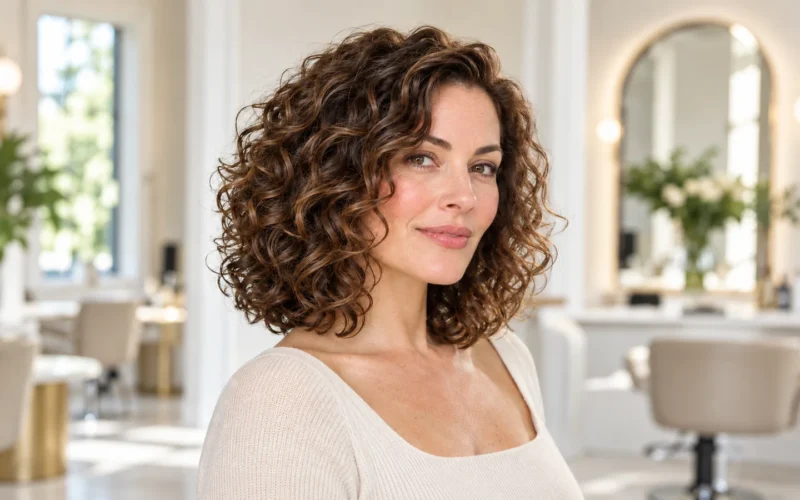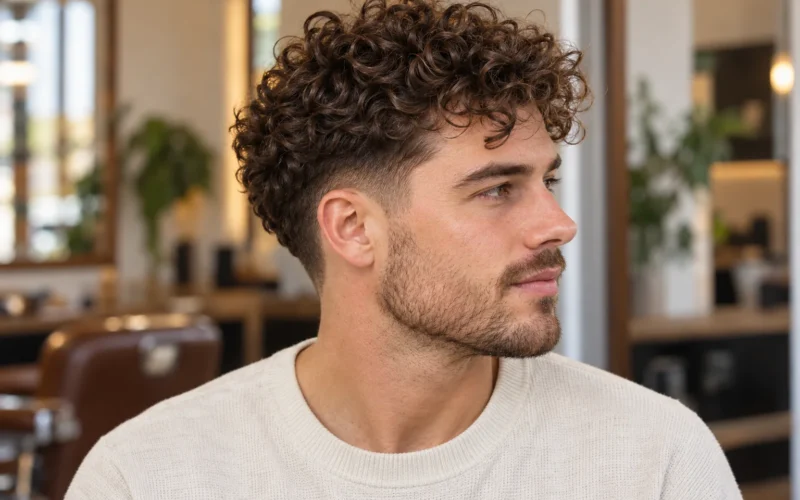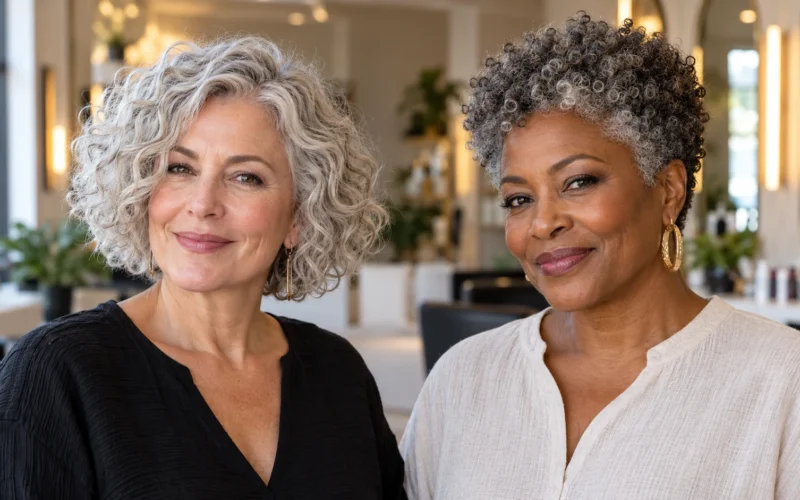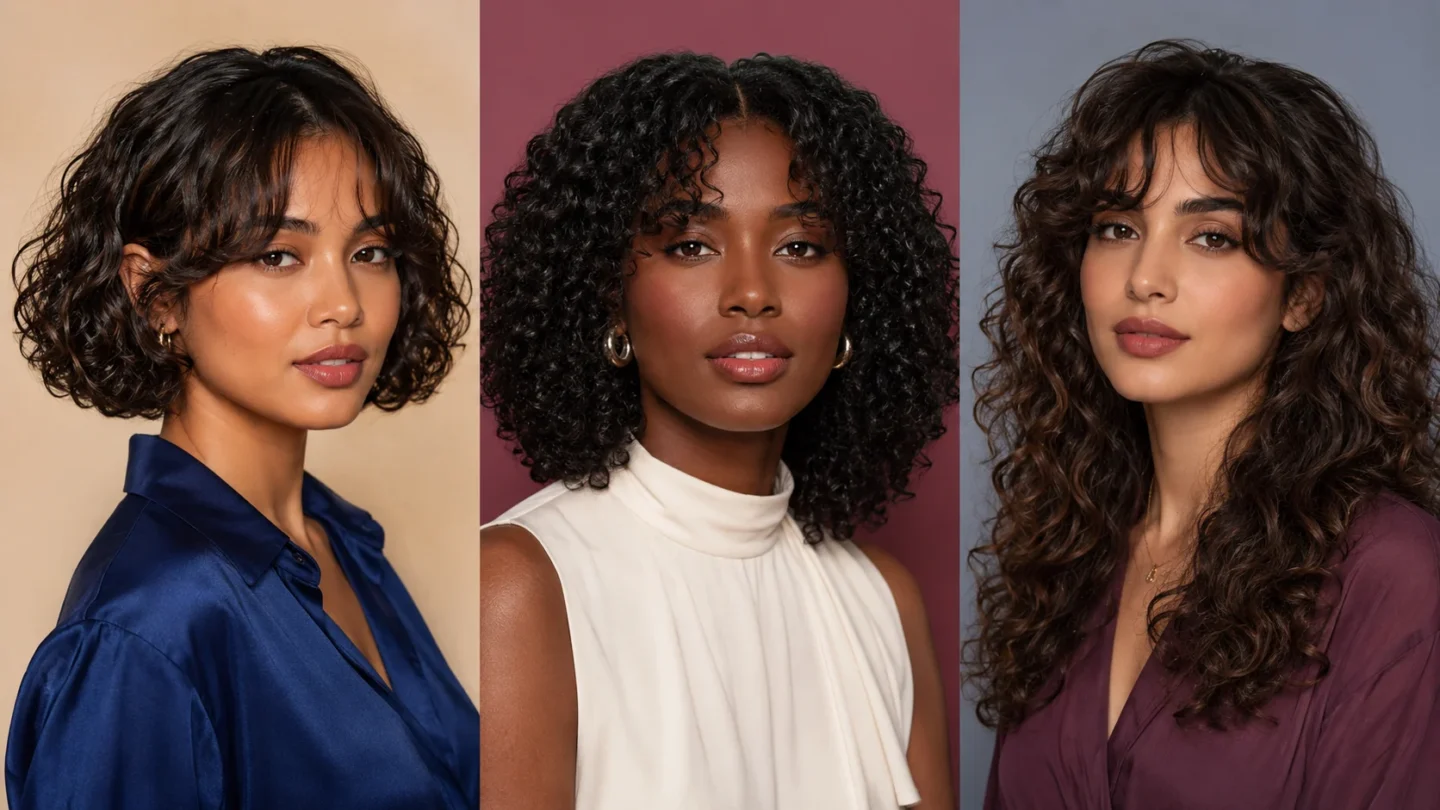
Curly curtain bangs are shorter near the center and gradually lengthen toward the cheekbones. They can look soft and open, full and rounded, or barely there, depending on your curls and how much hair is brought forward.
You came for ideas, so we’re starting with the cuts. Look for a style with hair density and curls close to yours. A fringe on fine 2C waves won’t translate exactly onto dense 4A coils. That’s useful information, not bad news.
One point to settle before the scissors appear: ask where the shortest curl will sit when completely dry. Stylists interviewed by Allure use dry, wet and combined cutting methods. The skill lies in planning for your shrinkage, not following one universal technique.
1. Long Curtain Bangs on a Curly Bob
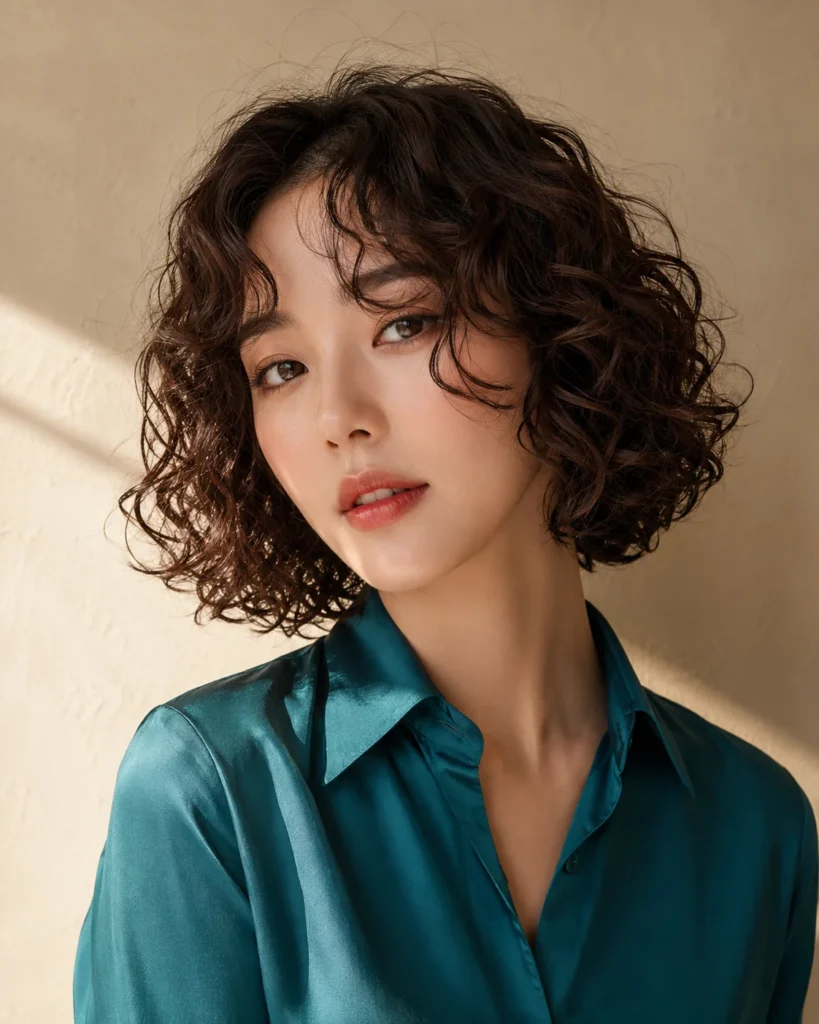
This is the gentle entry point. The shortest curls finish around the eyes or upper cheekbones, then blend into a jaw-length bob.
The extra length gives unpredictable front curls room to move without becoming accidental baby bangs. It also lets you tuck the pieces away when you don’t feel like styling them. Some mornings deserve fewer negotiations.
Choose this shape if you want:
- Noticeable face framing without a full fringe
- A bob that still works with a side part
- An easier grow-out
- Enough length to pin the bangs back
The transition should be gradual. If the front pieces end suddenly and the bob begins two inches later, the haircut can look like two separate appointments were involved.
2. Brow-Skimming Bangs With a French Curly Bob
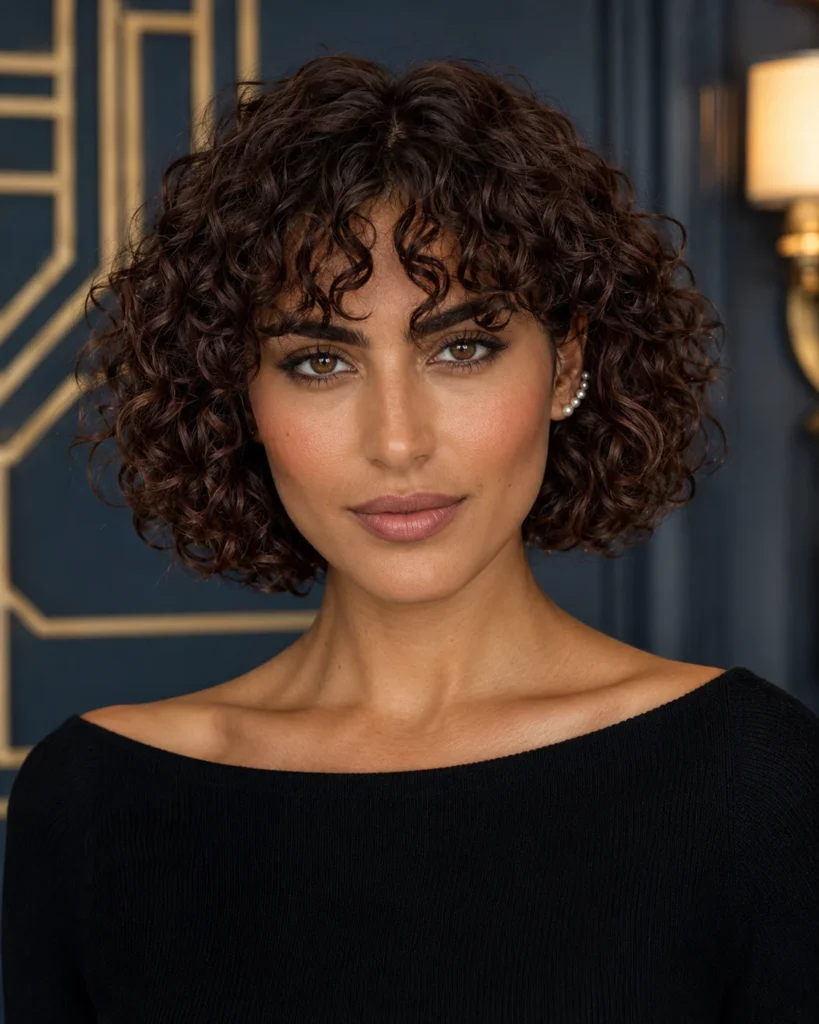
Here, the center curls sit near the brows while the outer pieces open toward the temples. The small center split keeps the fringe from forming one heavy line across the forehead.
This version suits defined curls that spring into a fairly consistent shape. It requires more attention than the longer bob option. Sleeping, exercise and humidity can all rearrange the front section without consulting you first.
Ask the stylist to leave the curls longer initially, dry the hair and shorten only the pieces that need it. The finished fringe should frame your eyes without hiding them.
3. Airy Curtain Fringe on a Short Curly Shag
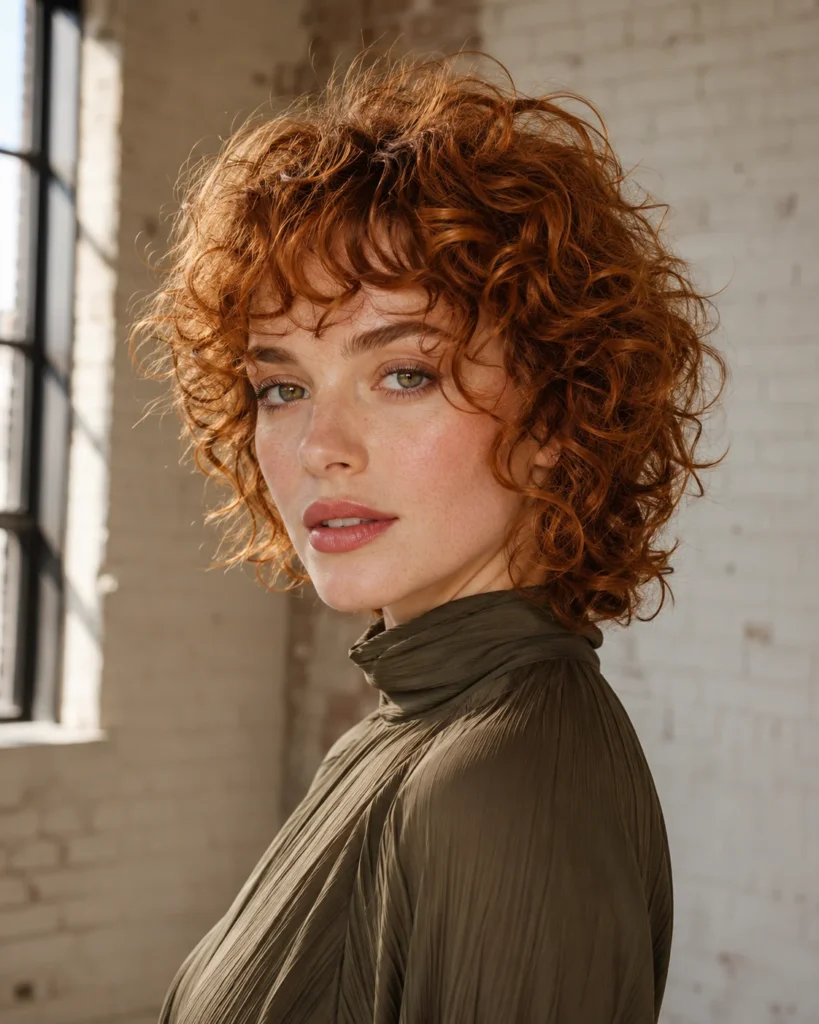
A shag doesn’t need a polished pair of curtain bangs. Some curls can fall forward, others can separate near the center and the longer pieces can disappear into the cheekbone layers.
The key is keeping the bang section light. Pulling too much hair forward may create a bulky fringe and leave the sides looking thin.
This cut makes sense if you prefer:
- Visible layers and crown volume
- An imperfect, piece-by-piece fringe
- Air-dried texture
- A shape that still looks intentional when the curls shift
Skip it if symmetry is non-negotiable. A curly shag is lively, flattering and many other good things. Obedient is rarely on the list.
4. Tapered Curtain Bangs on a Coily Bob
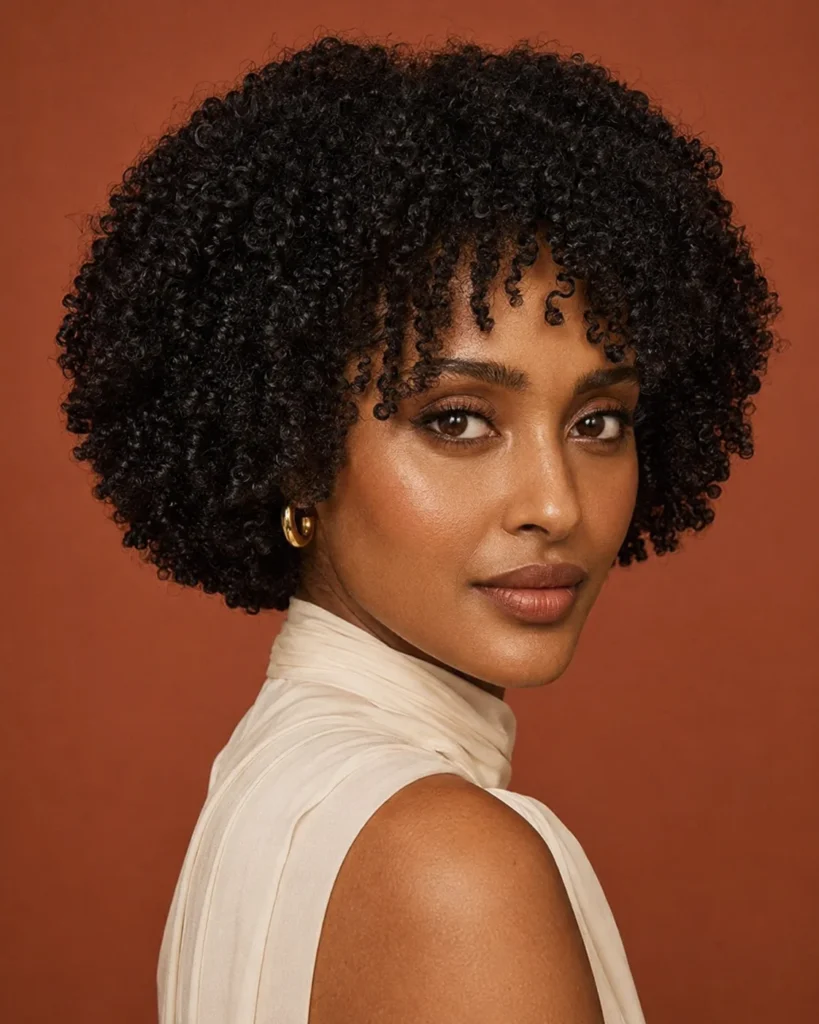
On tight curls and coils, curtain bangs may create a tapered opening rather than two smooth swoops. Shorter coils sit near the center, longer ones frame the temples and a small area of forehead remains visible.
That shape works beautifully with a rounded bob because the fringe becomes part of the silhouette. It opens the face without asking the coils to behave like blown-out hair.
Avoid giving the stylist a fixed instruction such as “cut everything at eyebrow level.” Coils beside each other can shrink to different lengths. Ask them to check the balance from the front and both sides as the shape develops.
5. Wispy Curtain Bangs on a Wavy Bob
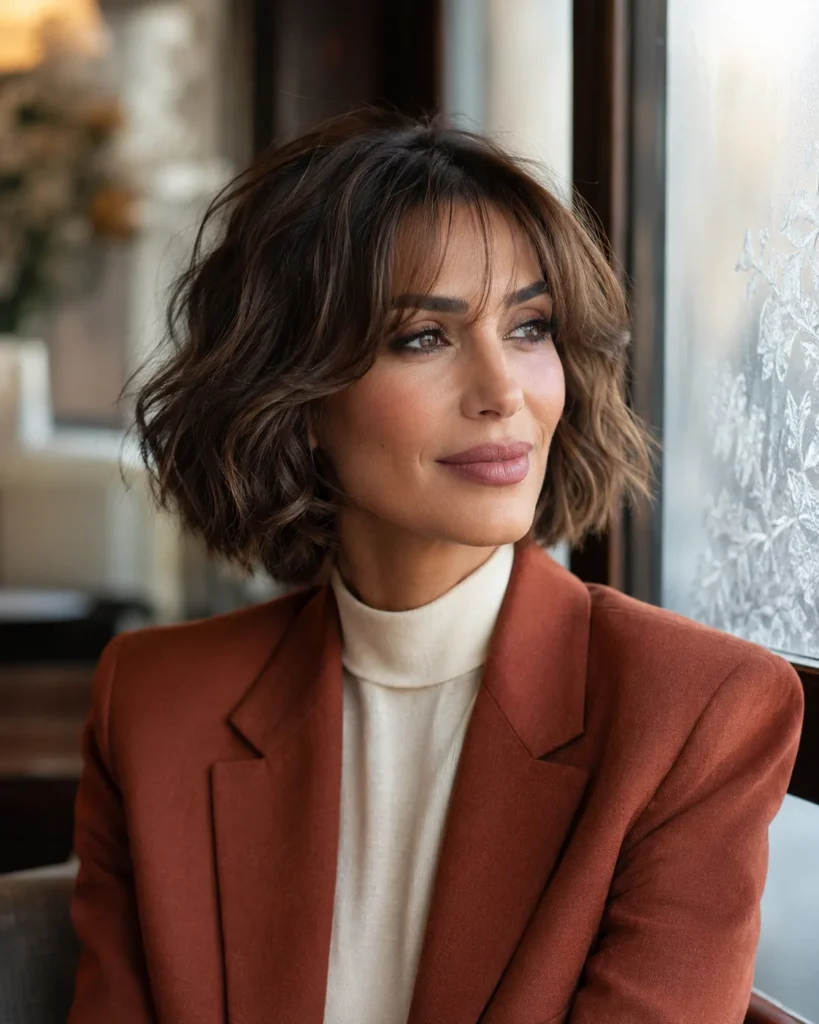
If the hair around your forehead is fine or less curly than the rest, a wispy fringe can look more natural than a thick one. A narrow section is cut into light pieces that separate near the center and blend into the sides.
This keeps more density in the bob and makes the fringe easier to grow into face-framing layers later.
Two details make the difference:
- Keep rich creams away from the roots, where they can turn fine bangs into oily-looking strands.
- Don’t make the section so sparse that it disappears into the bob.
The result should look light, not lonely.
6. Cheekbone Curtain Bangs With Shoulder-Length Curls
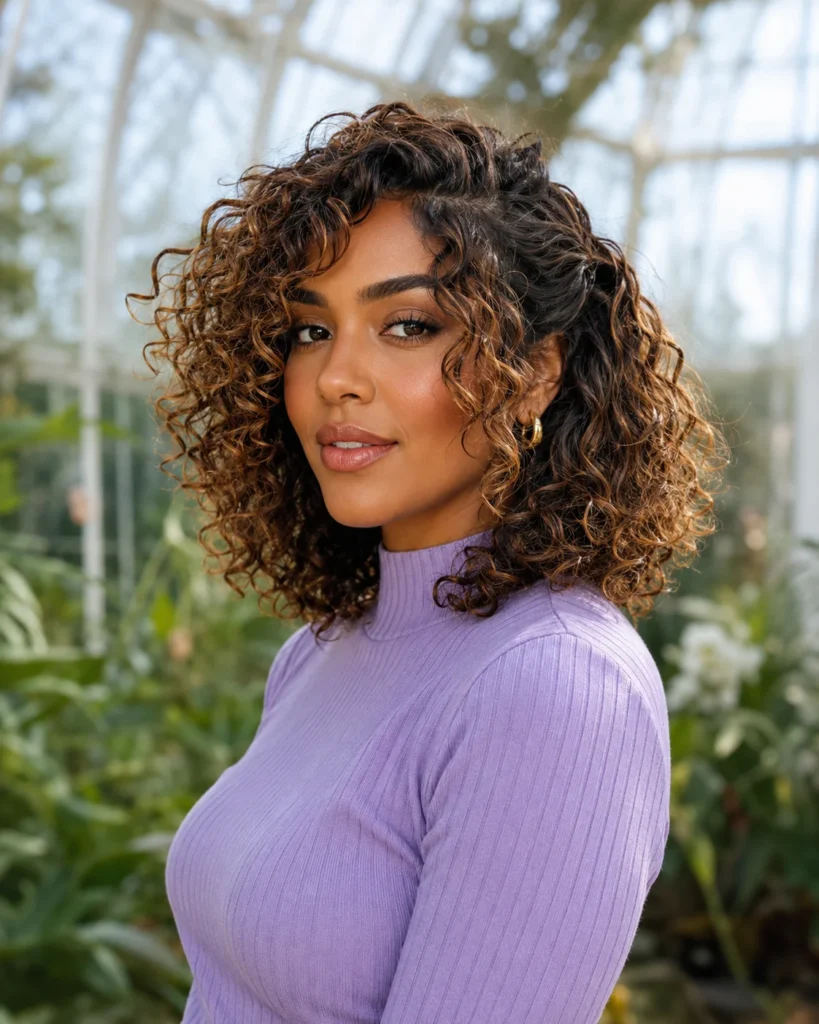
This sits between subtle face framing and a proper fringe. The shortest curls land around the cheekbones, while the sides merge into a shoulder-length cut.
Choose it when you want movement around your face but still need enough length for a ponytail. The bangs may escape, but in a deliberate way rather than a “my hair tie has given up” way.
Cheekbone length is also forgiving when your front curls are inconsistent. Tighter pieces can spring higher without making the entire fringe too short.
7. Layered 3B Curls With a Soft Center Split
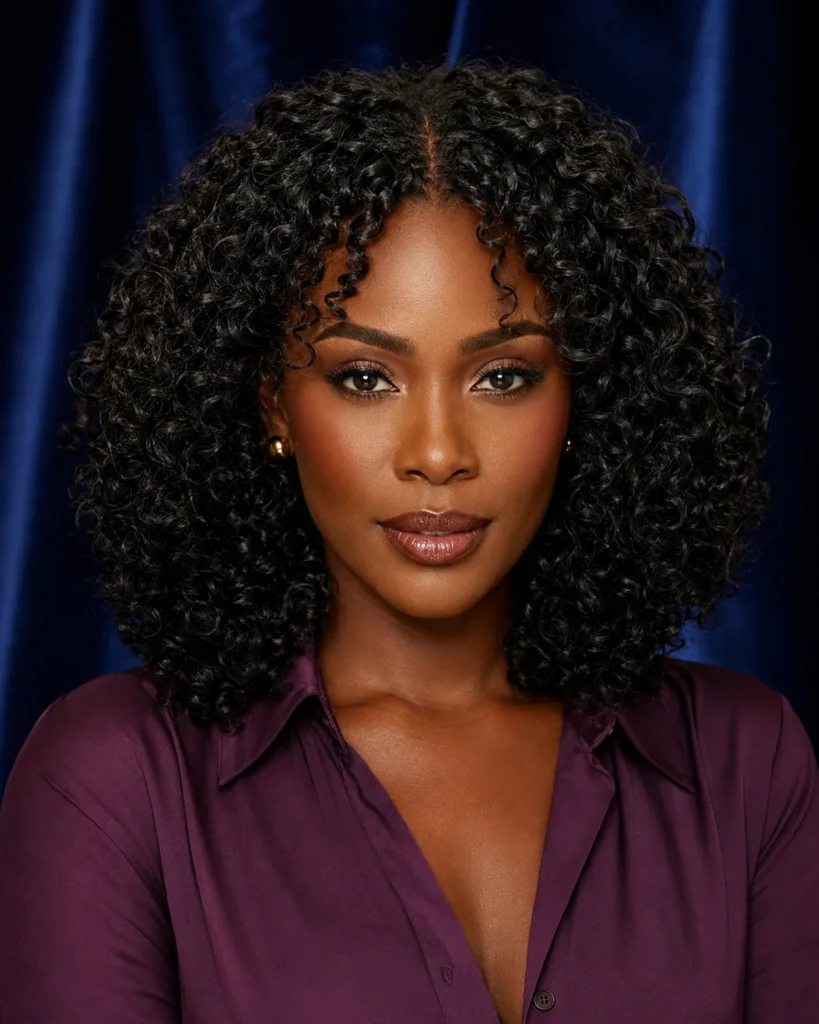
Defined 3B curls can create curtain bangs without needing a smooth, feathered finish. A few ringlets separate at the center, while fuller side curls connect them to the layers.
Keep the shortest pieces within a small central section. Cutting a wide, dense fringe can crowd the forehead and compete with the volume at the sides.
It looks most balanced when the haircut already has:
- Rounded layers
- Volume above the shoulders
- Defined front ringlets
- Enough side length to blend the fringe
Don’t expect every curl to divide evenly. A slightly uneven split often looks more natural than forcing both sides to match.
8. Off-Center Curtain Bangs for a Cowlick
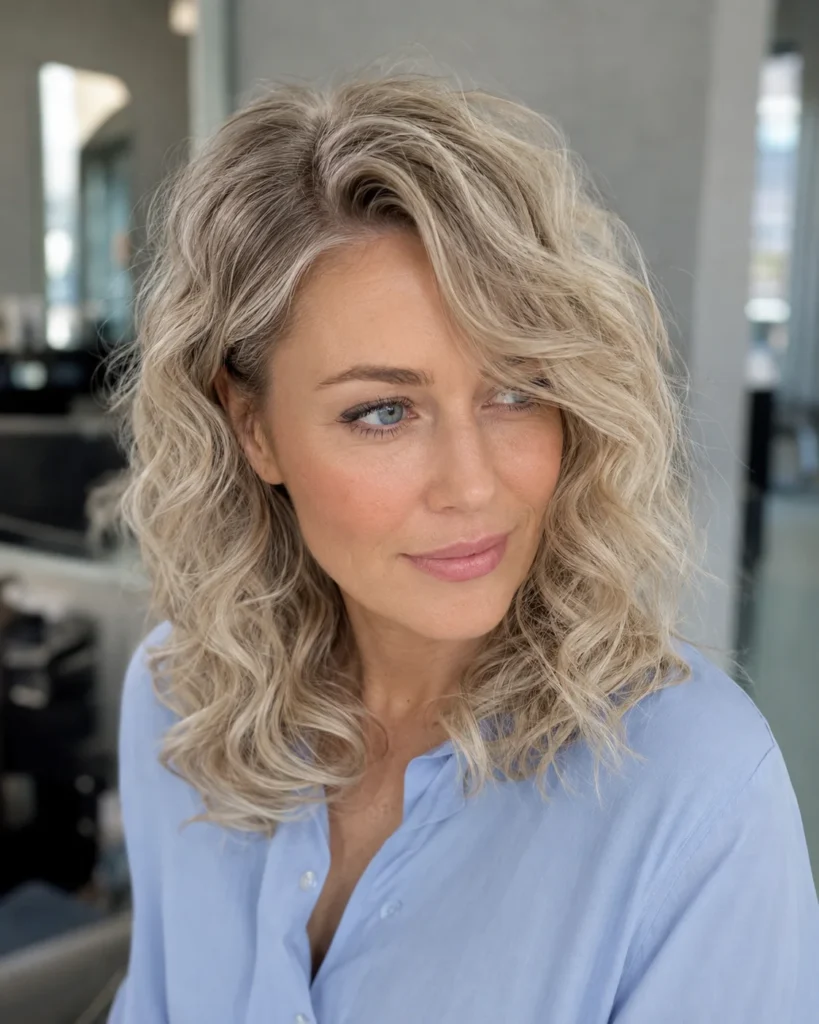
A middle part isn’t compulsory. If your hairline pushes one section sideways, move the opening slightly off-center and let the natural growth pattern lead the shape.
The shorter curls still frame the forehead, while the longer side sweeps toward the cheekbone. You keep the curtain effect without spending every morning arguing with a cowlick that has never respected authority.
This is usually better than cutting the stubborn section shorter. Extra length gives it enough weight to settle into the fringe.
Wear your normal part and style your curls as usual before the appointment. Your stylist needs to see what the front section actually does, not what it agreed to do for ten minutes under a clip.
9. Wavy Lob With Blended Curtain Fringe
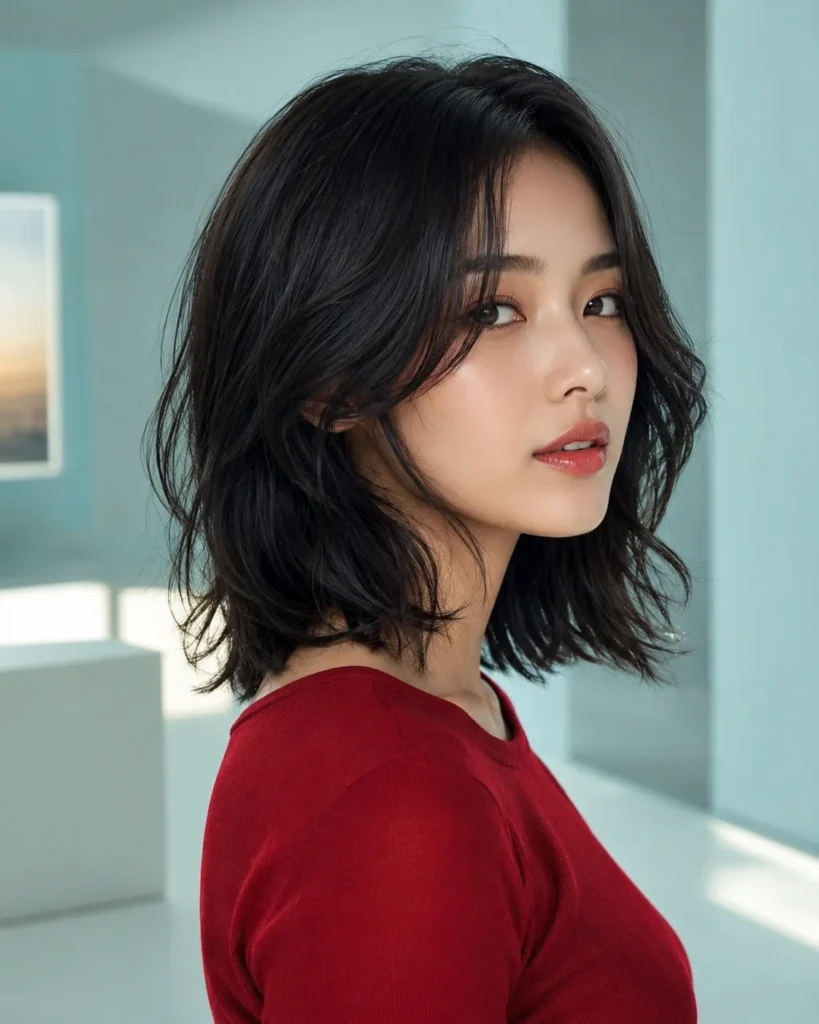
On a collarbone-length lob, curtain bangs can begin near the eyes and flow into long front layers. The result looks soft rather than dramatic, particularly on 2B and 2C waves.
The shorter front pieces add shape when a one-length lob feels flat around the face. They also preserve more density in fine or medium hair than a thick fringe would.
The difference between curtain bangs and ordinary face-framing layers is the shorter center. If every piece begins below the cheekbones, you have layers, not much of a fringe.
10. Rounded Medium Cut With Light Curtain Bangs
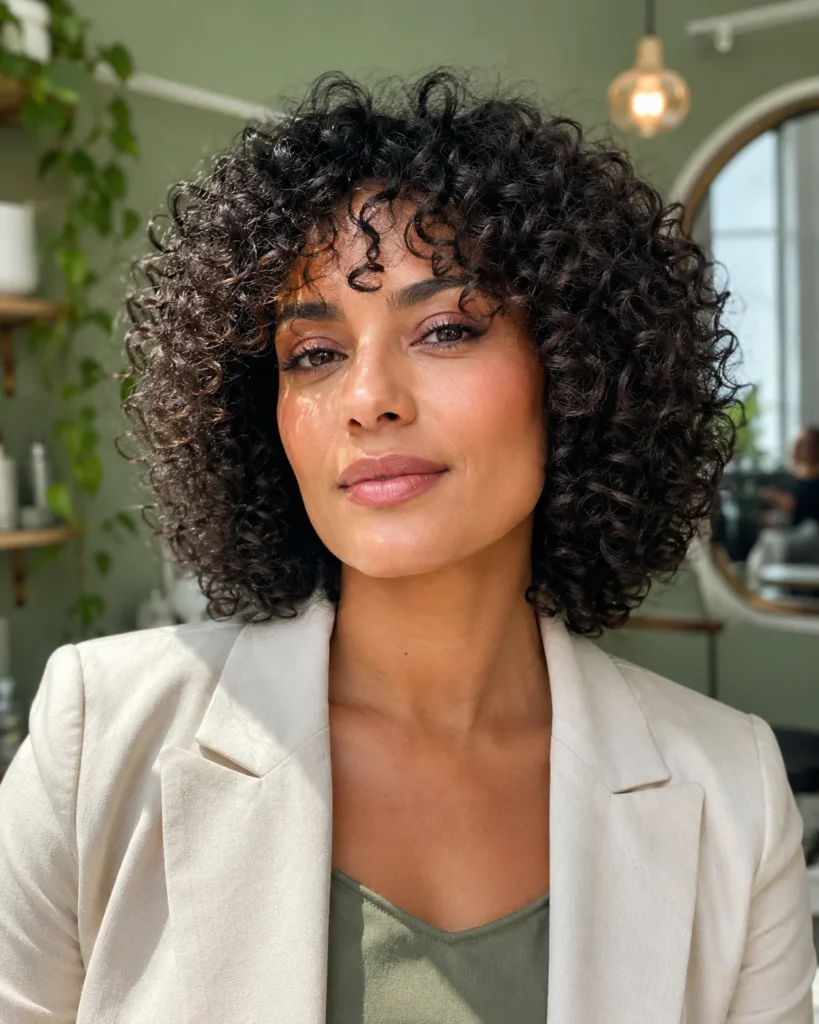
This cut keeps fullness around the sides while opening a small space above the brows. The fringe remains light, but the surrounding layers create a rounded outline instead of a narrow triangle.
It suits curls that expand outward after drying. Rather than trying to flatten that volume, the haircut gives it a planned shape.
Be careful with thinning shears around the fringe. Removing weight without considering the curl pattern can leave fuzzy, disconnected ends. The goal is separation between curls, not a cloud of short pieces hovering above your forehead.
If your hair becomes frizzy regardless of the cut, address the cause instead of coating the bangs with more product. Our guide to why hair gets frizzy explains where to start.
11. Long Curls With Graduated Curtain Bangs
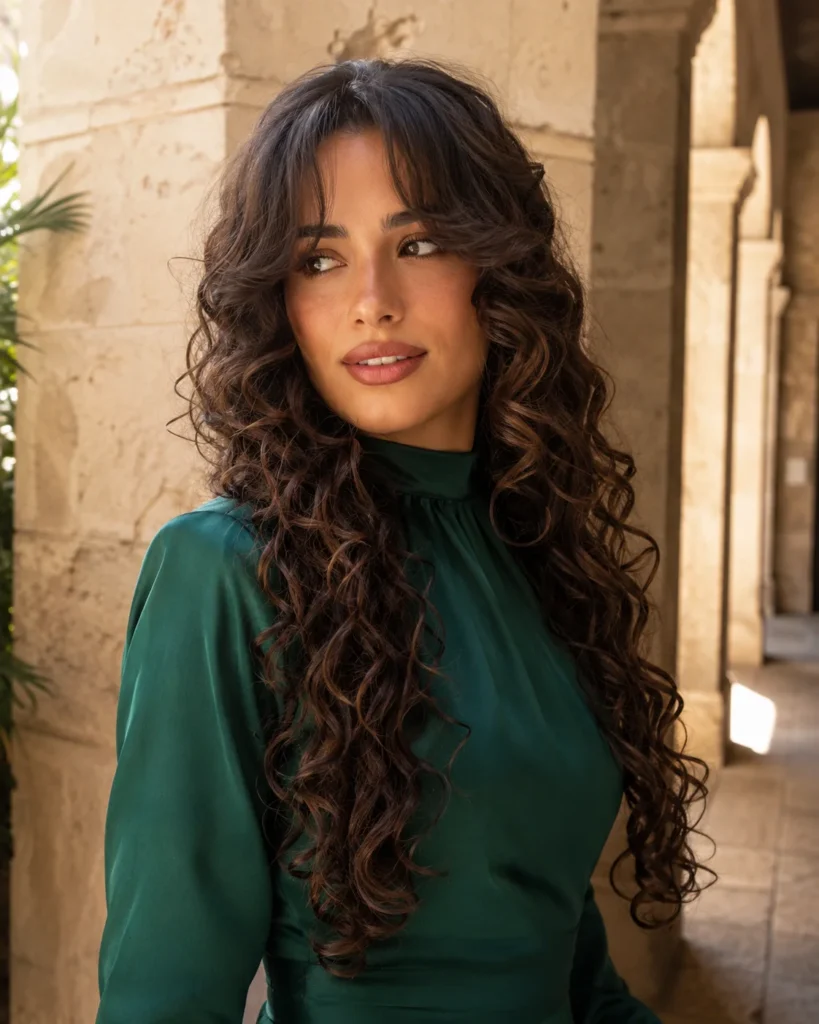
Long hair can swallow a small fringe, so clear graduation matters. The center curls begin near the eyes, the next pieces reach the cheekbones and the longest ones join the hair below the jaw.
That progression keeps the bangs visible without separating them from the length. You can wear them parted, pushed sideways or mixed into the rest of your curls.
This is a noticeable change without sacrificing overall length. Make sure the shortest section is substantial enough to be seen. Three cautious curls at the front won’t carry the whole idea.
12. Long Layered Hair With Cheekbone Fringe
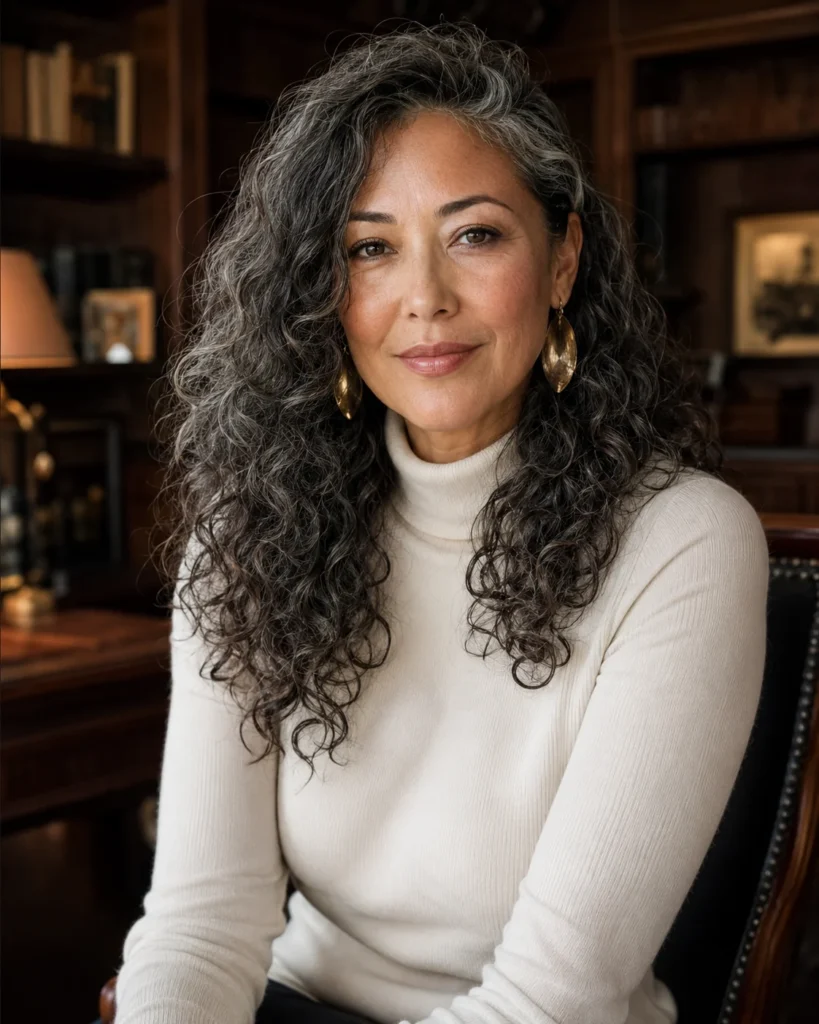
This softer shape begins around the cheekbones and melts into long, rounded layers. It adds movement around the face while keeping the bangs long enough to tuck behind your ears.
Choose it if you:
- Wear your hair up regularly
- Don’t want curls sitting on your forehead
- Prefer a lower-commitment fringe
- Feel nervous about cutting short front pieces
Because the center remains longer, this style sits close to face-framing layers. Ask for a visible opening and a gradual curve toward the sides if you want it to read as curtain bangs.
13. Long Curtain Bangs for Tight Curls
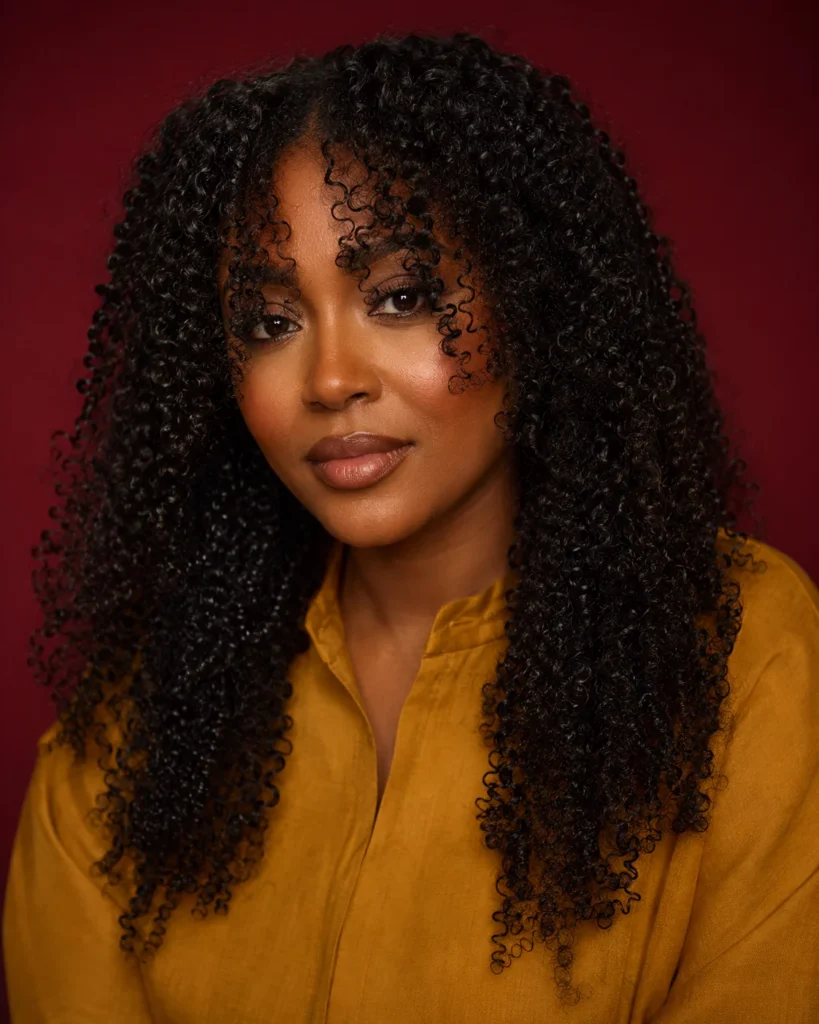
With tight curls, “long” should describe the dry result. The front coils may appear considerably longer while stretched, then settle around the eyes or cheekbones after shrinking.
The finished shape doesn’t need a sharp middle part. A small opening between curl groups is enough to frame the face, particularly when the surrounding hair is full.
Before the cut:
- Arrive with your usual curl pattern visible
- Show how you normally part the front
- Point out coils that shrink more than their neighbors
- Agree on the shortest dry position
If your results change drastically from one wash day to another, establish a consistent curly hair routine first. It gives the stylist a more honest picture of how the fringe will normally sit.
14. Grown-Out Curtain Bangs With a Curly Updo

Curtain bangs don’t stop being useful once they pass the cheekbones. Longer pieces can soften a bun, ponytail or claw-clip style without looking like forgotten sections that escaped during the day.
This is the practical option if you wear your curls up for work, exercise or warm weather. The pieces remain long enough to pin back but short enough to create shape when left loose.
Keep the amount of hair around your face controlled. Pulling out too many curls can turn a clean updo into “I started taking this down and got distracted.”
15. Wide Curtain Fringe on Thick Curly Hair
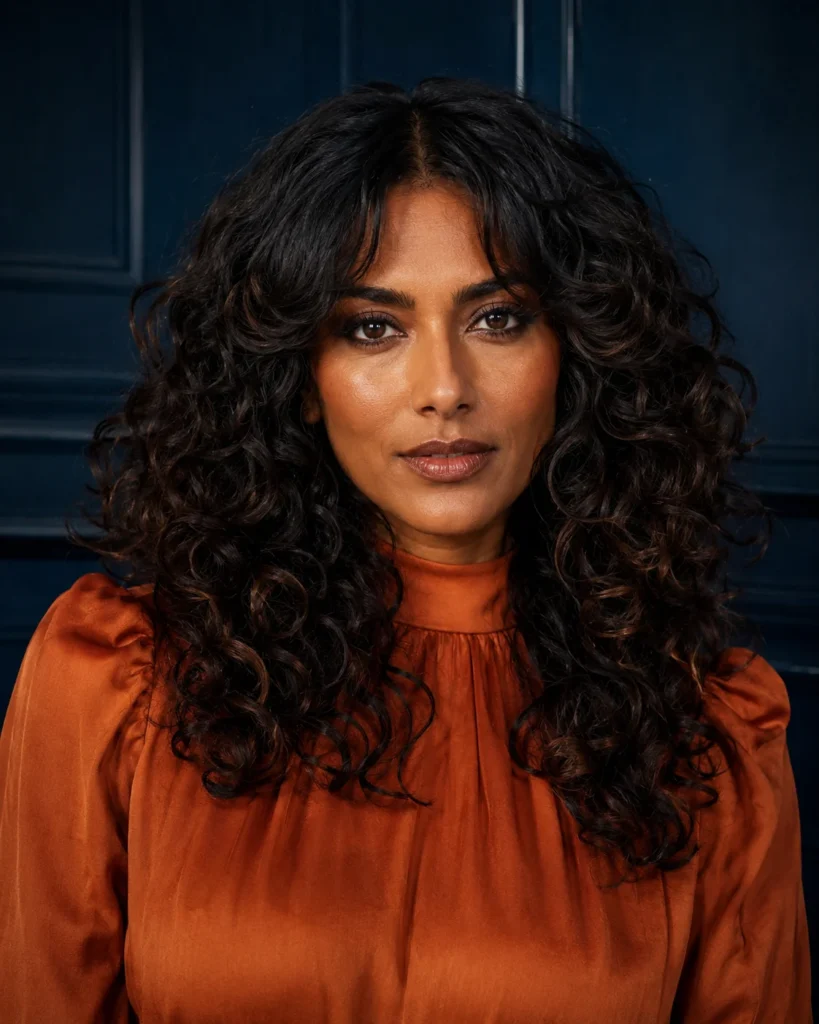
Thick curls can support a wider bang section without leaving the rest of the haircut sparse. The fringe opens near the center, stretches toward both temples and blends into full side layers.
The width creates a stronger frame than the wispy styles earlier in the list. Surrounding layers need to connect with the fringe. Without them, the bangs may sit like a shelf over one heavy length.
Face shape can help determine where the shortest curls should land, but it shouldn’t be treated as a permission slip. Our hairstyle-by-face-shape guide explains the proportions, while the guide to haircuts for round faces covers fringe and face-framing choices in more detail.
Which Version Is Closest to What You Want?
| If you want… | Start with… |
| The easiest grow-out | Long bob or cheekbone curtain bangs |
| Bangs that work with ponytails | Shoulder-length or grown-out curtain pieces |
| A stronger, visible fringe | French curly bob or wide curtain fringe |
| Less daily rearranging | Long layered cheekbone fringe |
| A shape for tight curls or coils | Tapered or long coily curtain bangs |
Reference photos matter more than the name. Save the front view, but also find a side view showing how the fringe joins the layers. That blend separates a complete haircut from two curly pieces having a private conversation near your forehead.