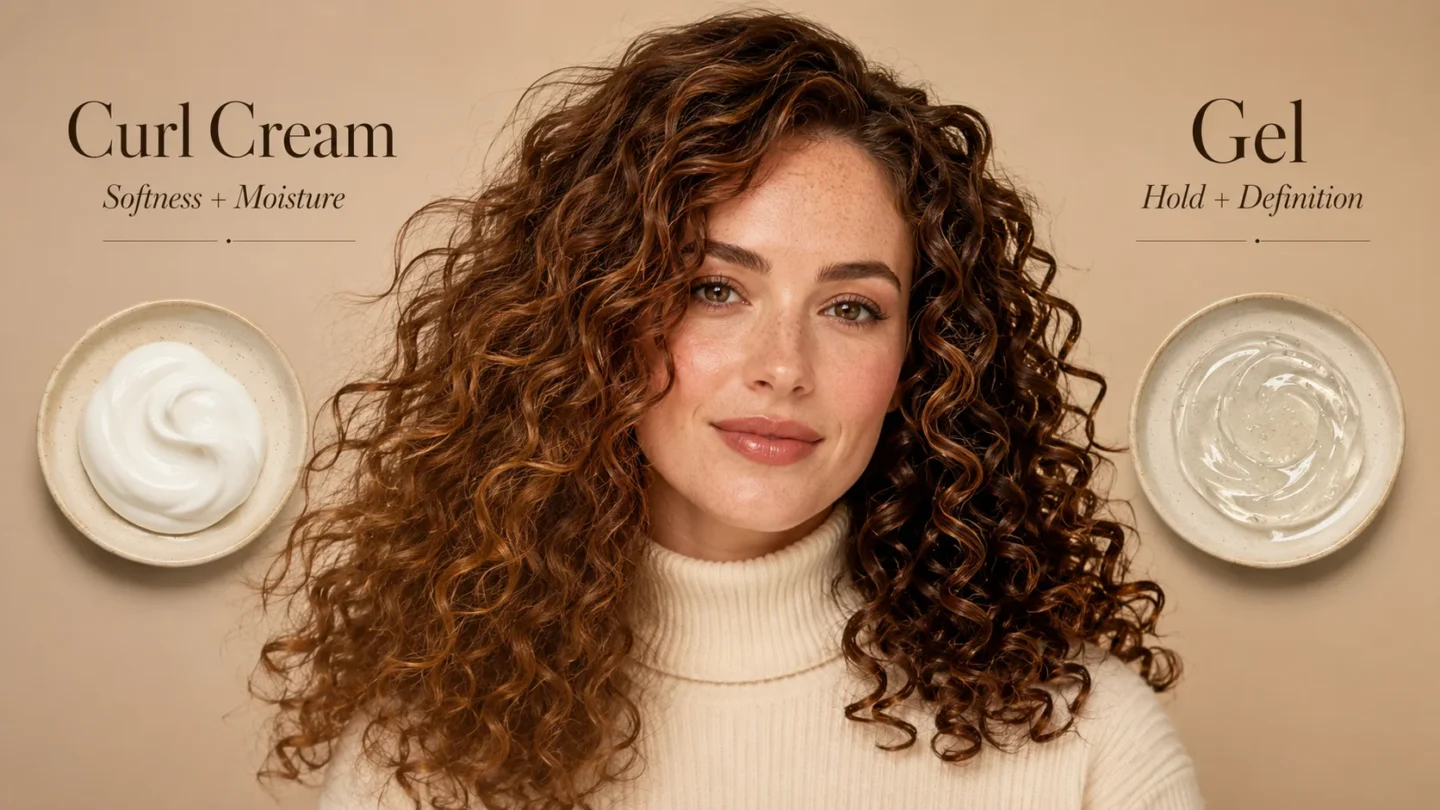
Curl cream vs gel is not a fancy product debate. It’s more like asking, “Does my hair need moisture, hold, or both?”
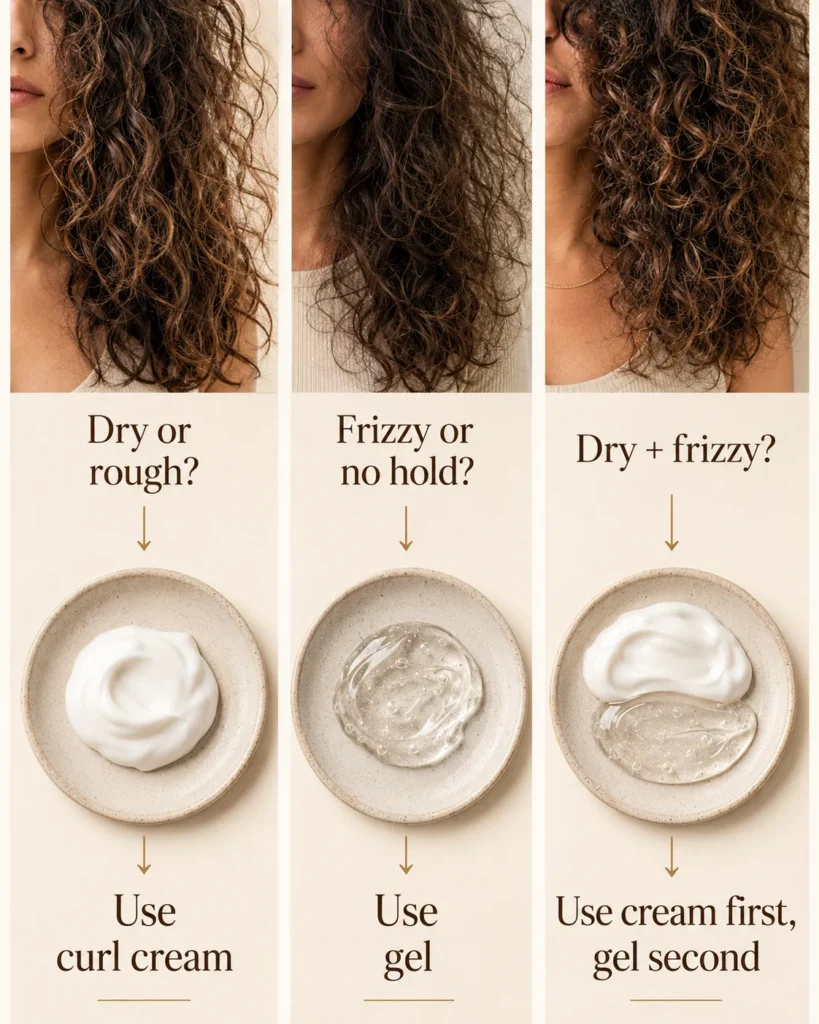
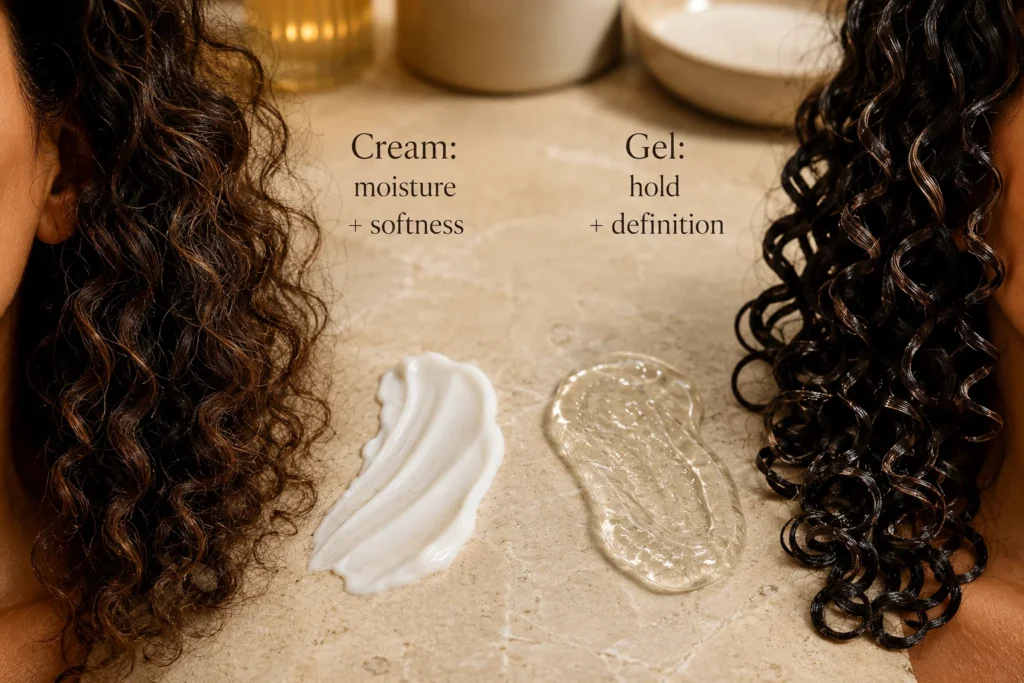
Curl cream softens, moisturizes, and helps curls feel less dry. Gel gives hold, definition, and better frizz control while your hair dries. If your curls feel rough or thirsty, cream usually helps. If your curls look good wet but turn fluffy, gel is probably the missing step.
Quick Answer
Use curl cream if your hair needs:
- More moisture
- Softer curls
- Less dryness
- Better slip while styling
- A touchable finish
- Help with coarse or thirsty curls
Use gel if your hair needs:
- Stronger hold
- Better curl definition
- Less frizz
- Longer-lasting shape
- Humidity control
- A cast you can scrunch out after drying
Use both if your hair is dry and frizzy. That’s common. Slightly rude of hair, but common.
Curl Cream vs Gel at a Glance
| Need | Better Choice | Why |
| Dryness | Curl cream | Adds softness and conditioning |
| Strong hold | Gel | Sets curl shape while drying |
| Frizz control | Gel | Keeps curl clumps together better |
| Soft finish | Curl cream | Less cast, more touchable feel |
| Fine waves | Light gel or very light cream | Heavy cream can flatten waves |
| Thick curls | Cream plus gel | Cream adds moisture, gel adds hold |
| Humid weather | Gel | Usually lasts longer against frizz |
| Low-porosity hair | Gel or lightweight cream | Rich creams can sit on top |
| Coily or very dry hair | Cream plus gel | Moisture first, hold second |
The mistake is thinking one product should do every job. Curl cream can give some definition, but it usually won’t hold like gel. Gel can make curls look polished, but it doesn’t replace moisture. Hair products have boundaries. Honestly, refreshing.
What Gel Actually Does
Gel is the product that tells curls to stay where you left them.
It helps with:
- Hold
- Frizz control
- Curl clumping
- Shape retention
- Humidity resistance
- Longer-lasting wash days
A good curly-hair gel forms a light film around curl clumps as they dry. That film is the cast. It can feel stiff at first, but it’s not supposed to stay that way. Once your hair is fully dry, you scrunch out the cast and the curls soften.
Glamour’s curly hair gel testing focuses on the same things readers actually care about: hold, frizz, crunch, buildup, and whether the gel works across different curl patterns.
Gel is usually a good fit when your hair says:
- “I look defined when wet, then puff up.”
- “My curls don’t last.”
- “Humidity ruins everything.”
- “My frizz shows up while drying.”
- “Cream makes me soft, but not styled.”
If gel makes your hair crunchy, you may be using too much, applying it too dry, or not scrunching out the cast after it fully dries. Sometimes the problem is not the gel. Sometimes it’s impatience wearing a towel.
For product-specific support, your Not Your Mother’s Curl Talk Gel review fits well here.
Which Is Better for Wavy Hair?
For wavy hair, gel often works better than people expect.
Fine or loose waves can get weighed down by rich curl creams. A light gel can define the wave pattern without making the roots look flat. If your waves disappear under cream, that’s your clue.
Use curl cream for wavy hair if:
- Your waves feel dry
- Your ends need softness
- Your hair is medium to coarse
- You want a relaxed, touchable finish
Use gel for wavy hair if:
- Your waves fall flat
- You get halo frizz
- Cream makes your roots greasy
- You want more visible wave clumps
Best starting point for most fine waves: skip heavy cream and try a light gel first.
If you already published the mousse comparison, this is where the article can link naturally to mousse vs gel for curly and wavy hair for readers who want volume instead of moisture.
Which Is Better for Curly Hair?
For curly hair, the answer is often curl cream plus gel.
Curly hair usually needs moisture and hold. Cream helps with softness and dryness. Gel helps the curl pattern survive drying, weather, and several hours of existing outside your bathroom mirror.
Use curl cream alone if:
- Your curls are dry but hold their shape well
- You like a soft, fluffy result
- You don’t need long-lasting definition
- Your hair dislikes a cast
Use gel alone if:
- Your curls are fine or easily weighed down
- Your hair already feels moisturized
- Your biggest issue is frizz or weak hold
- Cream makes your curls look stretched or greasy
Use both if:
- Your curls are dry and frizzy
- Your ends need softness but your shape needs hold
- Your hair looks good at first, then expands
- You want definition without a rough or crispy feel
This is the real decision: cream fixes the feel, gel fixes the hold.
Do You Use Curl Cream or Gel First?
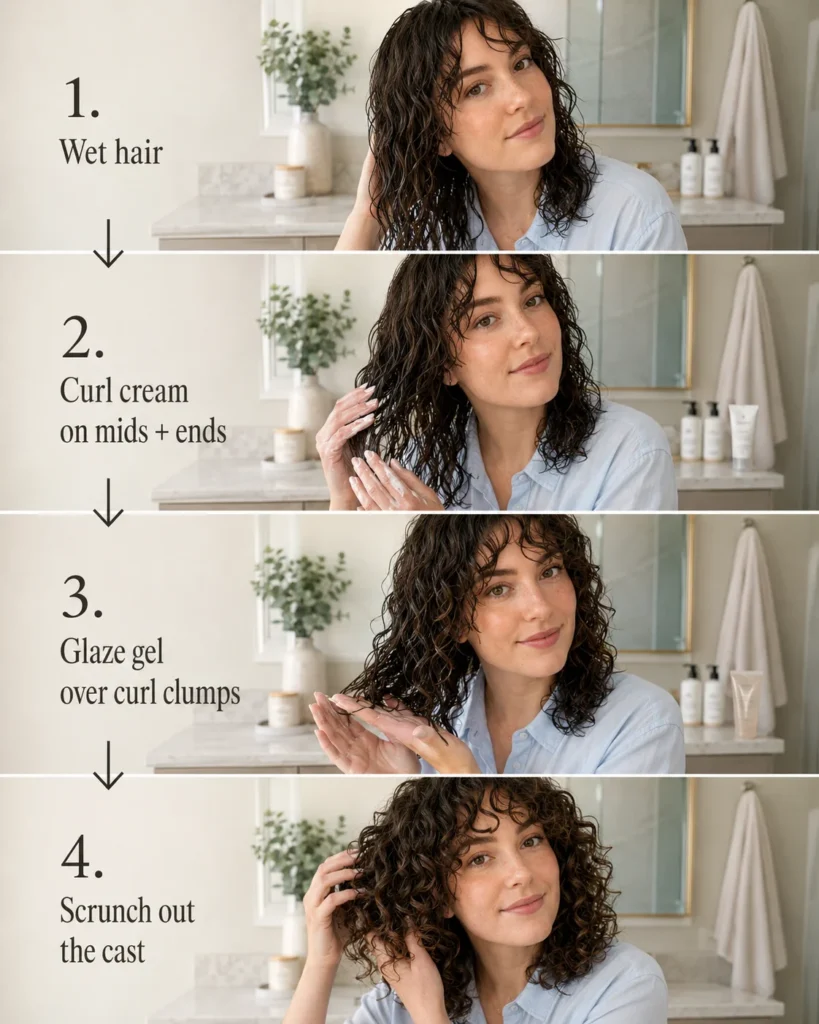
Use curl cream first, then gel.
Curl cream adds softness and moisture. Gel goes over it to hold the curl shape while your hair dries. If you put gel on first, then work cream through afterward, you can break up the curl clumps you just tried to form. Very annoying. Very avoidable.
Simple order:
- Start with wet or very damp hair.
- Apply leave-in conditioner only if your hair needs it.
- Smooth or scrunch in curl cream.
- Glaze or scrunch gel over the top.
- Dry without touching too much.
- Scrunch out the gel cast once hair is fully dry.
If your roots get flat easily, keep curl cream away from the scalp. Use it mostly through the mids and ends.
Can You Use Curl Cream and Gel Together?
Yes. In fact, this is often the best option for curly hair.
Use both when your hair needs softness and structure at the same time. Cream makes curls feel better. Gel helps them last.
| Hair Problem | Better Product Move |
| Dry curls with frizz | Curl cream first, gel second |
| Fine waves that go limp | Light gel only, or tiny amount of cream on ends |
| Thick curls that puff up | Cream plus medium or strong-hold gel |
| Low-porosity hair that feels coated | Skip rich cream or use a very small amount |
| Crunchy curls | Use less gel and scrunch out after fully dry |
| Greasy roots | Keep cream away from the scalp |
| Curls lose shape by day two | Add gel for stronger hold |
The key is using less cream than you think. Curl cream is not frosting. Your hair does not need a generous layer for emotional support.
Curl Cream vs Gel vs Mousse
Mousse deserves a quick mention because it sits between the two.
| Product | Best For | Finish |
| Curl cream | Moisture, softness, dry ends | Soft and conditioned |
| Gel | Hold, definition, frizz control | Defined, sometimes casted |
| Mousse | Volume, lightweight shape | Airy and bouncy |
If your hair is flat, mousse may be better than cream. If your hair is dry, cream may be better than mousse. If your hair frizzes as it dries, gel is usually the better anchor.
For a deeper comparison, use your mousse vs gel guide instead of cramming that whole conversation here.
Which Product Should You Buy?
Don’t choose by hype. Choose by what your hair keeps doing wrong.
| If Your Hair… | Try This |
| Feels dry or rough | Lightweight curl cream |
| Gets greasy fast | Gel or mousse instead of rich cream |
| Frizzes while drying | Gel |
| Has flat roots | Avoid cream near the scalp |
| Is thick, dry, or coarse | Cream plus gel |
| Is fine or low density | Light gel, foam, or tiny cream amount |
| Is low porosity | Use less cream and clarify when needed |
| Needs longer hold | Medium or strong-hold gel |
If buildup is a recurring issue, a reset wash may help. Your clarifying shampoo guide is the better next read for that.
Common Mistakes
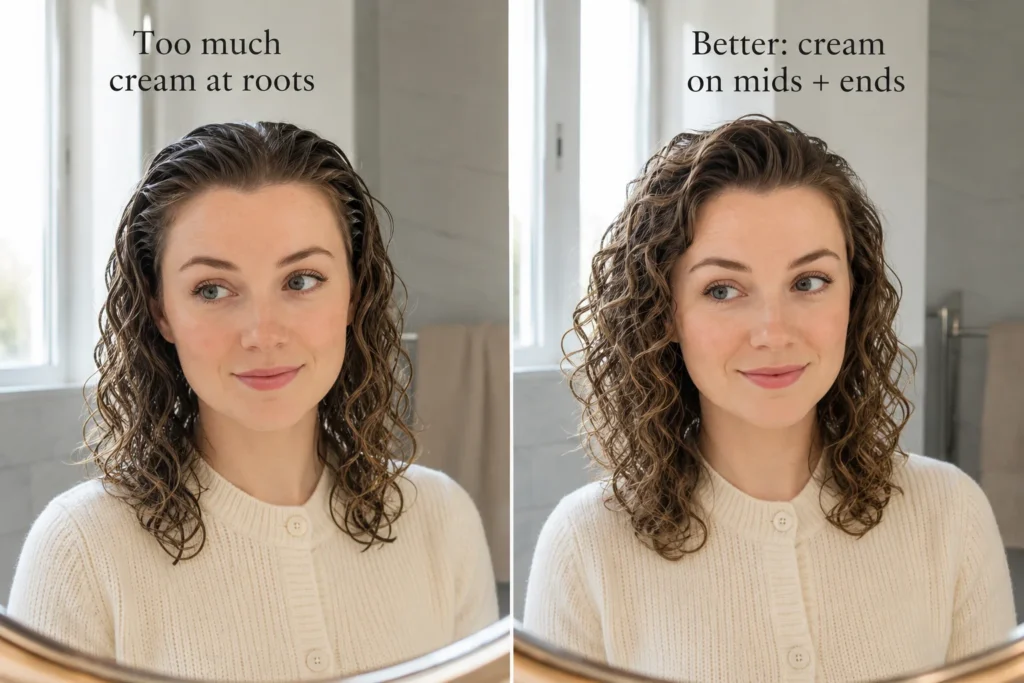
Most cream-and-gel problems come from amount, order, or timing.
Avoid these:
- Applying cream to hair that is too dry
- Using rich cream on fine roots
- Skipping gel when your curls need hold
- Using gel but breaking the cast too early
- Layering too many heavy products
- Raking through curls after clumps have formed
- Assuming crunch means the gel failed
A little stiffness while drying is normal with gel. The final result depends on whether you let the hair dry fully before scrunching it out.
If a product makes your scalp burn, itch, or break out, stop using it. The FDA notes that fragrance ingredients in cosmetics can trigger sensitivity for some people. That doesn’t mean every fragranced product is bad. It means your scalp gets an opinion, unfortunately.