Lilial, a floral fragrance ingredient, has been banned from EU cosmetics since March 2022. Yet it continues to appear in safety alerts. On a hair-product label, the name to look for is butylphenyl methylpropional.
If you find that name on an old shampoo, conditioner or styling product, set it aside and check the relevant safety advice before using it again. A familiar bottle or a trusted brand name is not enough to identify whether your particular product is affected. The formula, batch and market matter.
The headline findings
The European Commission’s 2025 Safety Gate report shows why Lilial remains worth checking:
- Cosmetics were the most frequently notified product category for the third consecutive year, accounting for 36% of 4,671 alerts across all product categories.
- Lilial was named in 1,278 alerts in 2025. It accounted for 77% of cosmetics alerts involving a chemical risk.
These figures cover cosmetics as a whole, not hair products alone. Safety Gate records products that authorities have flagged; it is not a random survey of everything on a beauty shelf. A large share of alerts does not mean a large share of products in your routine is unsafe.
What gets cosmetics flagged
Lilial is also known as BMHCA or 2-(4-tert-butylbenzyl)propionaldehyde. It was added to the EU’s prohibited list following its classification as toxic to reproduction, with the ban applying from 1 March 2022. That classification explains the regulatory action; it does not tell you that using one particular bottle has caused harm.
Other ingredients in cosmetics alerts need different explanations. Some are prohibited outright, while others are permitted only in certain products and under specific conditions.
| Ingredient | What the EU rule means | What to notice |
|---|---|---|
| Lilial / butylphenyl methylpropional | Prohibited in cosmetics since March 2022. | Check the ingredient list, including older stock at home. |
| Lyral / HICC | The fragrance allergen could no longer be made available on the EU market from August 2021. | The label name is hydroxyisohexyl 3-cyclohexene carboxaldehyde. |
| Methylisothiazolinone (MI / MIT) | Not permitted as a preservative in leave-on cosmetics; rinse-off use is restricted. | A shampoo and a leave-in conditioner are not interchangeable product categories. |
| PPD and related hair-dye ingredients | Rules depend on the substance, concentration and intended use. PPD is restricted rather than universally banned. | Follow the specific dye’s instructions and warnings. |
| TPO | Prohibited in EU cosmetics from September 2025. | This concerns an ingredient associated with artificial nail products, not evidence of a hair-product problem. |
The relevant sources are the EU rules on HICC and methylisothiazolinone, ECHA’s PPD restriction entry, and the Commission’s TPO guidance. Finding a long chemical name is not, by itself, a reason to discard a product.
Hair products in detail
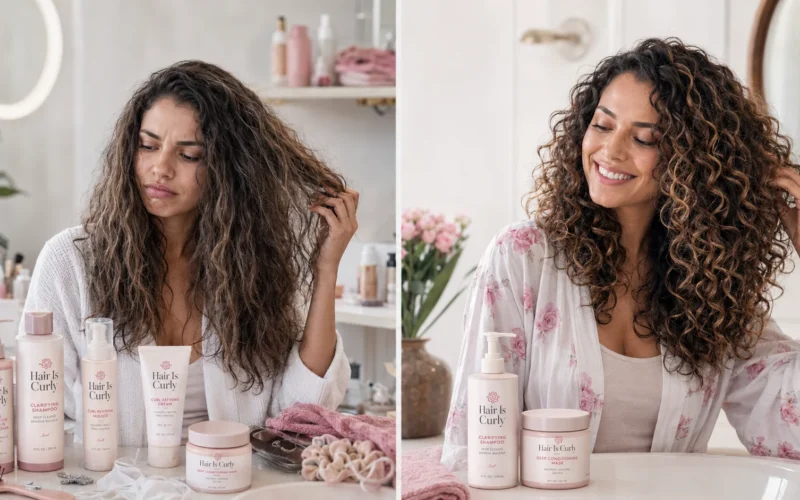
For curly and textured hair, the practical concern is the products already in your routine: shampoo, conditioner, masks, leave-ins and styling products. Check the actual label rather than assuming a product is unaffected because it is designed for curls.
A French recall notice published in September 2025 illustrates the difference between product types. It identified Lilial in a shampoo and mask, and MCI/MI preservatives in a separate leave-in from the same range. The notice told affected customers to stop using the products and contact the seller.
This is a specific recall, not a verdict on every product from that brand. Match the product reference and the affected batch information before deciding whether a notice applies to your bottle.
Hair dyes need their own check. A product described as an “instant colour shampoo” should not be treated as ordinary shampoo simply because of its name. Read its intended use and precautions. Restrictions on dye ingredients depend on the formulation and use, rather than whether the front label sounds convenient.
Three checks for your next wash day
1. Read the ingredient name on the bottle you own
Look for butylphenyl methylpropional, not just “Lilial”. The EU ban covers both rinse-off and leave-on cosmetics, so rinsing a shampoo out does not make the ingredient permitted.
For readers in Great Britain, the Office for Product Safety and Standards advises checking labels and disposing of cosmetics containing Lilial. It states that selling these products has been illegal in Great Britain since December 2022. Follow the applicable local advice, and photograph the label and purchase details if you need to contact the seller.
2. Match the recall to the product and batch
Search the Safety Gate alert database by brand or product name. Compare the product photograph, size, barcode and batch details where supplied. Read the action requested in the notice rather than relying on a social-media screenshot.
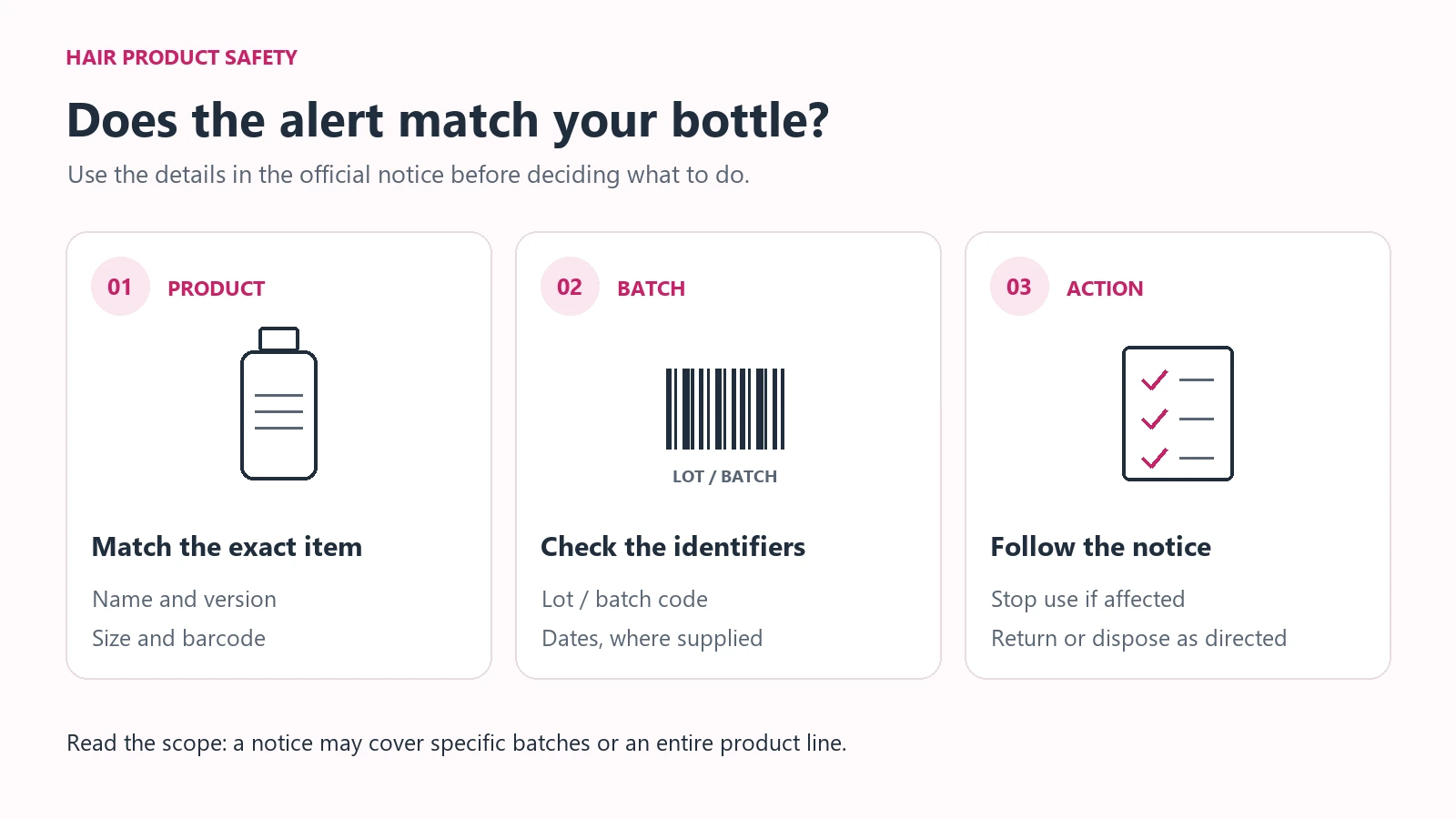
An old online ingredient list may describe a previous formula. If the website, bottle and alert disagree, contact the manufacturer with clear photographs. If the notice identifies your product, stop using it and follow its return or disposal instructions.
3. Buy from sellers who can explain where stock came from
Keep your receipt and choose sellers who provide clear product and contact details. Retailers and salons sourcing stock through https://radianceb2b.com/ or another wholesaler should ask about batch records, stock provenance and how recall notices reach customers. Traceable purchasing makes affected stock easier to identify; a wholesaler’s name alone is not proof that every item is compliant.
If you are comparing formulas after this check, our article on hair-care ingredients and what they do explains their roles. A useful ingredient list needs context, rather than a blanket “good” or “bad” label.
What the figures can and cannot tell us
This article uses the Commission’s published 2025 annual findings and the linked regulatory and recall documents. It does not present a new laboratory test or a count of all hair products sold.
The annual figures are a completed-year snapshot, not live totals through November 2026. Alert numbers can change with enforcement activity, reporting and new restrictions. They cannot establish that curly-hair products are riskier than other products, rank countries’ manufacturing quality or measure an individual user’s exposure.