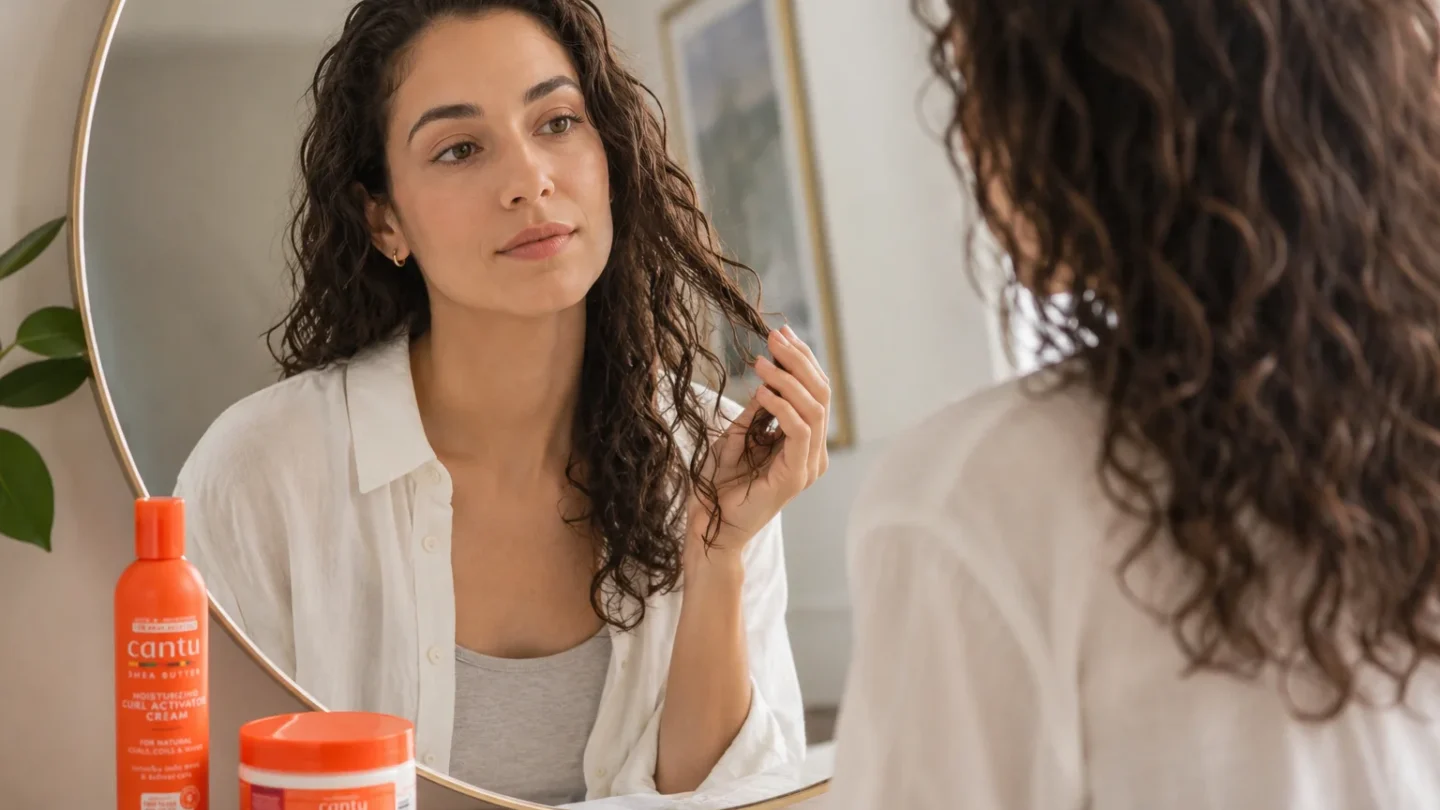
Spend ten minutes in any curly hair forum and you’ll see it. One person says Cantu saved their curls. Three replies down, someone says it turned their hair to straw. Same brand, opposite verdicts. So which is true?
Cantu is one of the most popular and most affordable natural hair lines on the shelf, and that popularity cuts both ways. It gets a lot of love and a lot of blame. Some of the blame is fair. A lot of it is built on old information or a single bad wash day.
The honest answer: Cantu isn’t bad for your hair. It’s a rich, oil-and-butter-heavy line that works beautifully on some hair and overwhelms other hair. The trouble is almost never “bad ingredients.” It’s usually a heavy product meeting the wrong hair type, or a routine with no real clarifying step. I’m reading this as a trichologist, from the formula and how these ingredients behave, not from a paid lab test.
Why people say Cantu is “bad” for your hair
Three complaints come up again and again. None of them mean the product is dangerous. They mean something got mismatched.
It builds up. Cantu leans on heavy oils, butters, and film-forming conditioners that coat the strand. If your hair actually drinks that in, great. If it doesn’t, the product just sits on top, layer after layer, until your curls feel coated and dull. That’s far more likely on low-porosity or fine hair, which struggles to absorb rich products in the first place. If you’ve never figured out where you land, our guide on high vs low porosity hair is the place to start. And buildup is really a wash-routine problem, not a Cantu problem. Dermatologists at the American Academy of Dermatology suggest washing based on how oily your hair and scalp get, not a fixed schedule.
It feels like glue or straw. This is the one people describe most dramatically, and it’s usually protein. Cantu contains silk amino acids and hydrolyzed silk, which strengthen the strand. Helpful in small doses. But if your hair is already protein-sensitive, or you’re stacking Cantu on top of other protein products, the result is stiff, crunchy, “why is my hair so hard” hair. That’s protein overload, not damage.
The “toxic ingredients” thing. Here’s where the internet is just behind. The current formula is free of the ingredients people usually worry about: no parabens, no silicones, no sulfates, no mineral oil, no phthalates. So the “Cantu is full of chemicals” line you’ll still see quoted is mostly outdated.
What’s actually in Cantu
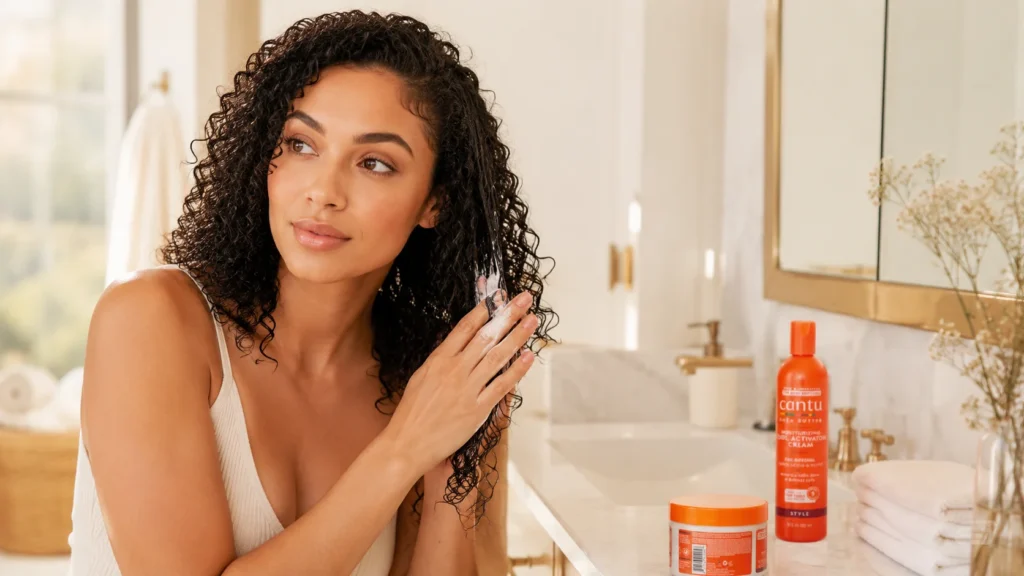
The Shea Butter Moisturizing Curl Activator Cream, the product most people mean when they say “Cantu,” is basically water, humectants, a long list of oils and butters, a few conditioning polymers, and some protein. Here’s what that breaks down to and why it matters for your hair.
| What’s in it | Examples | Why it matters |
| Humectants | glycerin, propanediol | Pull moisture into the hair. Can swell or frizz in very dry or very humid weather |
| Oils and butters | shea, coconut, jojoba, avocado, argan, mango | Deep moisture and shine. Heavy, so they pile up on hair that can’t absorb them |
| Film-forming conditioners | polyquaternium-10, stearalkonium chloride | Smooth and define curls. They sit on the cuticle, so they need washing off, not just a rinse |
| Proteins | silk amino acids, hydrolyzed silk | Add strength and body. Too much leaves protein-sensitive hair stiff |
| Preservatives | phenoxyethanol, ethylhexylglycerin | Keep the product safe to use. Standard and well tolerated |
Look at that list and the pattern is obvious. This is a moisture-and-coating product, built for hair that’s dry and thirsty. That’s a feature for some heads and a problem for others, which is the whole reason the reviews are so split.
Who Cantu actually works for
If your hair runs thirsty, you and Cantu will probably get along. It’s built to deliver moisture and weight, so it does its best work on hair that wants exactly that.
| Cantu usually works for | Cantu often struggles on |
| Thick, dry, or coarse hair | Fine or thin hair, which it weighs down |
| Type 3 curls and type 4 coils | Low-porosity hair, which can’t absorb it, so it builds up |
| High-porosity hair that soaks up oils | Protein-sensitive hair, which the silk proteins can stiffen |
| Wash-and-go people who like moisture and hold | Oily scalps, where heavy oils sit and look greasy fast |
See the split? It comes down to porosity and thickness more than anything else. Thirsty, coarse, coily hair drinks Cantu up. Fine or low-porosity hair just wears it like a coat.
Does Cantu cause hair loss?
Short version: no.
This rumor spreads because “my hair is falling out” is a scary sentence, and Cantu is on every shelf, so it catches the blame. But a moisturizing curl cream doesn’t reach down into your follicles and switch them off. Losing 50 to 100 hairs a day is just normal, according to the American Academy of Dermatology. What people usually mean when they blame Cantu is one of three things:
- Buildup that makes hair look limp and thin. That’s coating, not loss.
- Breakage from protein overload or yanking through tangles. That’s the strand snapping mid-length, not the follicle letting go.
- Thinning edges from tight buns or braids worn with it. That’s traction alopecia, and it’s the style pulling, not the cream.
Real hair loss has real causes, genetics, stress, hormones, and medical conditions among them, and a board-certified dermatologist can pin down which one. A curl cream isn’t on that list.
If you’re seeing actual bald patches, a widening part, or far more shedding than your normal, skip the forums and book a dermatologist. A product review can’t diagnose a scalp.
How to use Cantu without the buildup or crunch
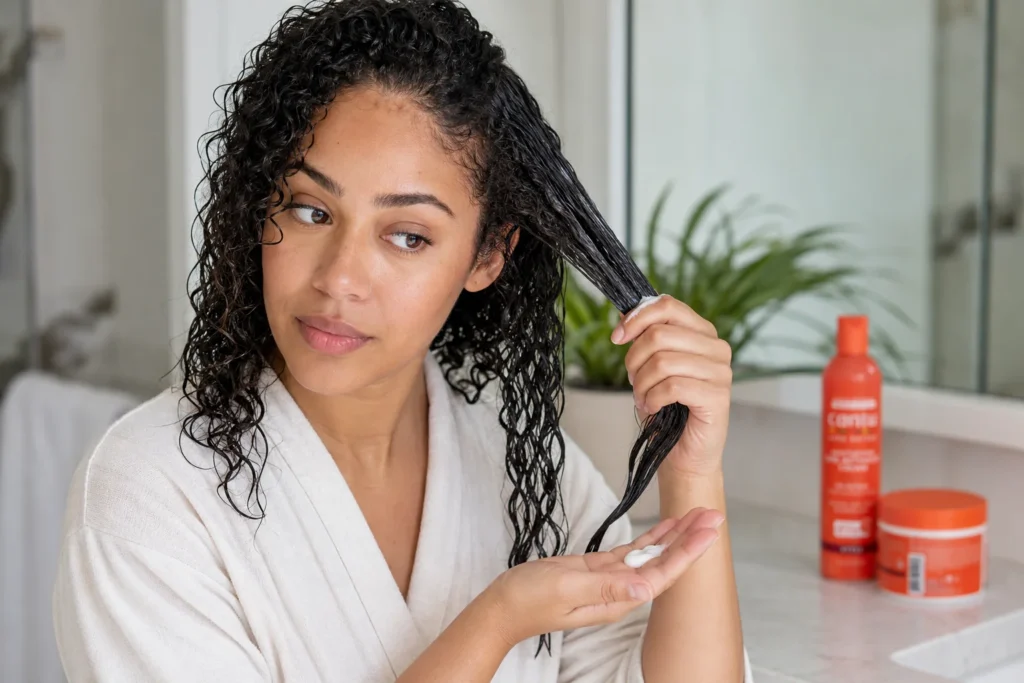
Most “Cantu ruined my hair” stories are really “I used it wrong” stories. The fixes are simple.
- Use less than you think. It’s rich. A quarter-sized scoop covers most heads, and piling on more is exactly how the cast and crunch start.
- Apply to soaking wet hair, not just damp. It spreads thinner and grips less.
- Don’t stack it with other protein or heavy products the same day. That combo is where “straw” comes from.
- Clarify on a schedule so buildup never settles in. If you’re not sure you need it, here’s when clarifying actually helps.
- Hair feels stiff or straw-like? Use it less often. That’s protein talking, and more product won’t fix it.
- Mind the glycerin in extreme weather. Bone-dry winter air and thick summer humidity can both make humectants misbehave.
- Settle into a wash rhythm so nothing piles up between washes. Our guide on how often to wash curly hair helps you find yours.
What to reach for if Cantu isn’t your match
No product wins for everyone, and that’s fine. If Cantu sat heavy, felt crunchy, or just wasn’t it, the answer is usually a lighter formula, not swearing off curl cream forever.
- Fine or low-porosity hair? You want something that won’t just sit on top. Our Aussie Miracle Curls leave-in review covers a lighter option for easily weighed-down hair.
- Want hold without the cream weight? A gel may suit you better. See how Not Your Mother’s Curl Talk gel performs.
- Chasing volume and bounce more than moisture? Mousse is lighter on the strand. We broke down The Doux Mousse Def for exactly that.
Match the product to your hair instead of to the hype, and most “this brand is bad” stories quietly disappear.
So, is Cantu bad for your hair?
No. It’s an honest, cheap product that happens to be picky about who it suits.
Thick, dry, curly, or coily hair? Cantu can be a staple for a few dollars. A 12 oz jar usually runs under $10 at Target and Walmart, which makes it one of the cheapest ways to find out whether a rich curl cream works for you. Barely a loss if it flops.
Fine, low-porosity, or protein-sensitive hair? It’s not that Cantu is bad. It’s that it’s too much. Use a little, clarify often, or pick something lighter.
The “toxic,” “causes hair loss,” “ruins your curls” panic mostly traces back to old formulas, the wrong hair type, and a missing wash step. Judge it on your own hair and the brand gets a fair shake.
A few quick answers
Is Cantu good for low-porosity hair? It can be, but go light. Low-porosity hair doesn’t drink in rich products, so use a small amount and clarify regularly or it builds up fast.
Can you use Cantu every day? You can, though most curls look better when you use it on wash day and just refresh lightly in between. Daily heavy reapplication is where buildup starts.
Is Cantu good for wavy hair? Thicker waves, yes. Fine type 2 hair often finds it heavy, so start with a pea-sized amount or reach for a mousse or gel instead.