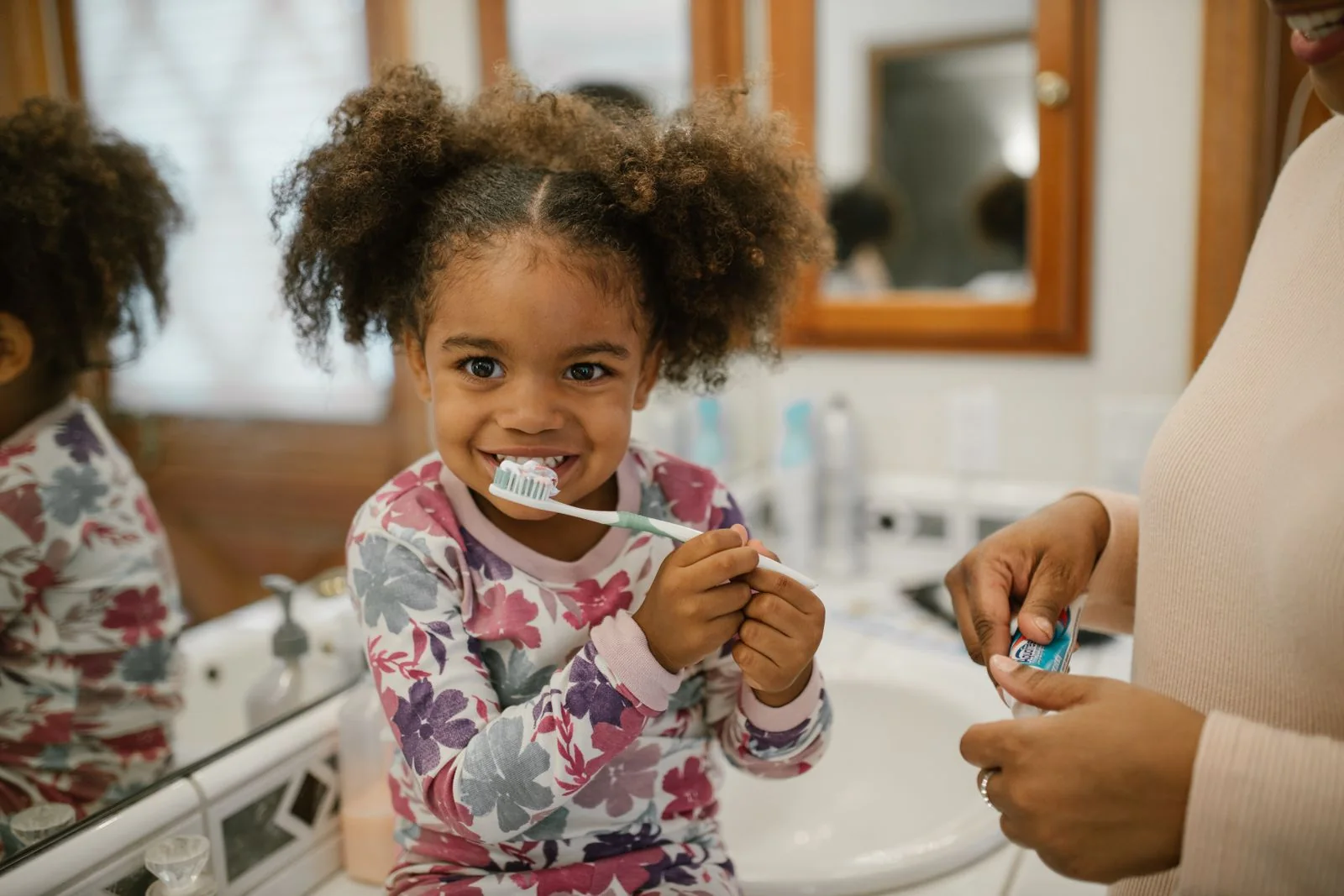
Cover photo: RDNE Stock project / Pexels.
In our house, wash day used to start with a negotiation and end with someone scratching behind their ears at bedtime. Our kids have eczema-prone skin, and for a long time I thought of hair care and skin care as two separate jobs. They aren’t. On wash day, everything that touches the hair also touches the hairline, the forehead, the neck and the backs of the ears, which are some of the spots where sensitive skin tends to complain first.
I’m not a doctor, and nothing here replaces advice from your pediatrician or a dermatologist. What I can share is the routine that slowly made wash day calmer for our family, built from trial and error and from guidance by groups like the American Academy of Dermatology and the National Eczema Association.
Start with the water, not the products
The first change we made had nothing to do with shampoo. Hot water feels great on a cold evening, but it can leave dry, sensitive skin feeling tighter afterward. The National Eczema Association’s bathing guidance recommends lukewarm water instead of hot, patting skin dry, and moisturizing while skin is still damp.
Lukewarm feels almost boring at first. Within a week, nobody noticed anymore, and their faces and necks looked less flushed when they got out.
Make wash day shorter, even if it means splitting it up
Curly hair can take a long time to wash, condition and detangle, and a long soak is hard on skin that’s already dry. So we stopped trying to do everything in one marathon session.
Here’s what that looks like for us:
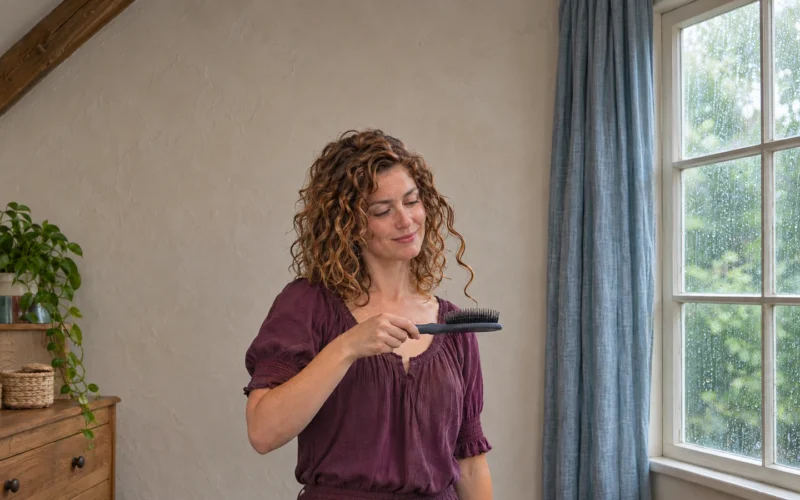
- Detangle before the water goes on. We finger-detangle or use a wide-tooth comb on hair that’s slightly damp and coated with conditioner, working from the ends up. Less pulling means less rubbing at the scalp and hairline.
- Wash the hair separately or at the end of bath time, using fresh running water or a rinse cup rather than bath water, so our kids aren’t sitting in shampoo runoff.
- Leave deep conditioning or styling for another day if a long session is going to mean tears or a red, itchy neck.
A shorter wash day isn’t a lesser wash day. For us, it’s the difference between a routine our kids tolerate and one they actually let us do.
Watch the hairline, neck and behind the ears
This was the biggest lesson for our family. Shampoo, conditioner, leave-ins and styling products don’t stay on the hair. They run down the forehead, collect behind the ears and sit at the nape of the neck, sometimes for hours.
The American Academy of Dermatology has a helpful page on finding eczema triggers on a child’s body, and it’s worth reading with these product paths in mind. A few habits that helped us:
- Tip the head back and use a cup or handheld sprayer so suds run away from the face.
- Keep a soft washcloth handy to gently wipe the hairline and ears as you rinse.
- Apply leave-in products to the lengths of the hair, not right at the hairline, and wipe off anything that lands on skin.
- Choose soft, smooth hair ties and avoid styles that pull tight at the edges, especially on a day when the skin there already looks irritated.
Rinse thoroughly without prolonging the bath
With thick, coily or curly hair, it’s easy to leave product behind. Lift sections so fresh water reaches the scalp and rinses away the shampoo and rinse-out conditioner, rather than extending the whole bath. Finish with a quick, gentle rinse of the neck and behind the ears, where leftovers can collect.
If your child gets flakes after wash day, it helps to know what you’re looking at, because dry, flaky skin and dandruff can look alike. We wrote a parent-friendly guide to telling a dry scalp apart from dandruff that walks through the differences. If you’re not sure, ask your pediatrician.
Pat, don’t rub, and moisturize skin while it’s still damp
Towel-drying curly hair by rubbing creates frizz, and rubbing the face and neck can bother sensitive skin. So we wrap the hair in a soft cotton T-shirt or microfiber towel and gently squeeze it, then pat the face, neck and ears dry.
Within a few minutes of getting out, while the skin is still a little damp, we smooth a fragrance-free moisturizer onto the skin around the hairline, neck and ears, along with anywhere else that tends to get dry. Then we keep the damp hair off the neck with a loose, soft tie so wet curls aren’t resting on freshly moisturized skin all evening.
Introduce new products carefully
Curly hair care involves a lot of products, and it’s tempting to try whatever a friend or a video recommends. With eczema-prone skin, we add only one new product at a time, so if something bothers our kids’ skin, we know what it was.
Ask your child’s clinician how to introduce a new product, especially during a flare. The AAD’s general product-testing advice describes a small test area over seven to ten days. Rinse-off products should be rinsed off as directed, not left on the skin. A home check cannot diagnose an allergy.
The American Academy of Dermatology’s page on finding eczema-friendly products suggests a gentle, fragrance-free shampoo for kids with eczema. If you suspect a reaction, understanding shampoo allergy versus irritation can help you describe it to a dermatologist.
Know when to call the doctor
Some signs mean it’s time to stop experimenting at home and get help: skin that’s cracked, oozing or crusting; a rash that keeps spreading; itching that’s keeping your child up at night; or a scalp that stays flaky and irritated no matter what you change. The American Academy of Dermatology explains when a child with eczema should see a dermatologist, and your pediatrician is a good first call.
Seek urgent medical advice if there is fever, rapidly worsening painful skin, or clusters of blisters, which can indicate a skin infection.
What wash day looks like for us now
Our routine isn’t perfect, and some weeks we skip steps because life happens. But the basics have stuck: lukewarm water, a shorter session, extra attention to the hairline and ears, a thorough rinse, a gentle pat-dry, moisturizer on damp skin, and one new product at a time.
The biggest change wasn’t any single step. It was thinking of wash day as both hair care and skin care. Once we started thinking about where every product actually goes, wash day got calmer, and bedtime got a lot less itchy for everyone.