Straight hair looks amazing for about two hours after a blowout. Then it starts doing that thing where it just… hangs.
And if there’s any humidity? Forget it. The little bit of shape you had turns into frizz by mid-afternoon. I see it constantly. A client walks in with gorgeous straight hair and her only complaint is “it won’t hold anything.” And nine times out of ten, the problem isn’t her hair. It’s her cut.
The wrong haircut on straight hair turns it into a curtain. The right one builds structure into the shape itself so the hair does the work without you fighting it all day. That’s what I look for when someone with straight hair sits in my chair. Not what looks good right now, but what’s going to look good at 6pm when she hasn’t touched it since morning.
These are the cuts I keep recommending because they actually hold.
The Shoulder Length Chop With Internal Layers
Shoulder length hair cuts are the sweet spot for straight hair. Long enough to pull back, short enough that the weight doesn’t drag everything flat.
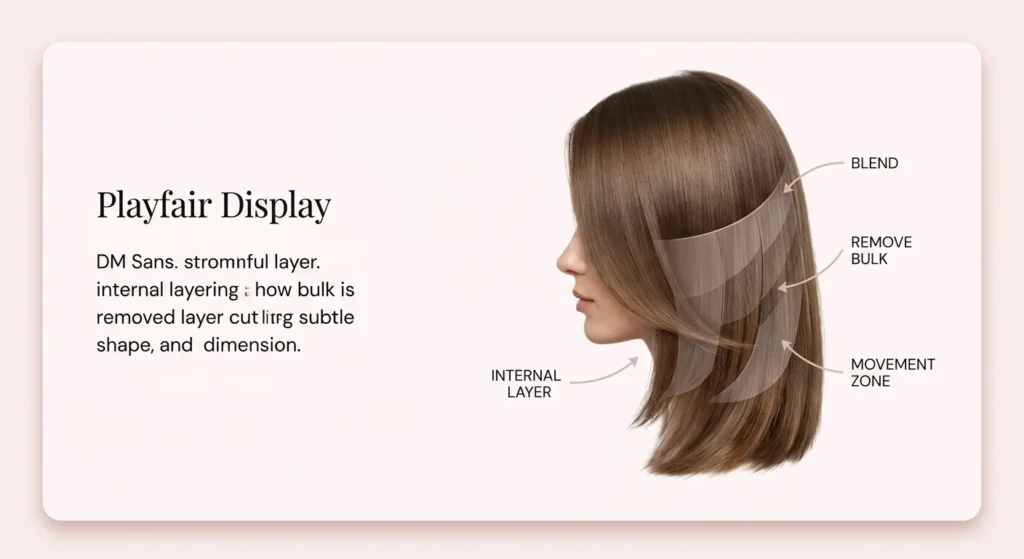
But here’s what makes or breaks it: where the layers go.
I don’t do heavy, visible layers on straight hair. They separate and look stringy by day two. Instead, I cut internal layers. These sit underneath the top section, so you can’t see them, but they remove bulk from the inside and let the hair bounce instead of hang.
A client came in last fall wanting to keep her length but couldn’t figure out why her hair “died” by afternoon. One shoulder-length cut with internal layering. That’s all it took. She texted me a photo at 8pm that same day saying her hair still had movement. First time in years.
What to ask your stylist:
- Shoulder length, blunt perimeter
- Internal layers for movement, not visible ones
- Keep weight at the ends so it doesn’t go wispy
Why One-Length Cuts Fail on Straight Hair
I need to say this because I get clients requesting it weekly.
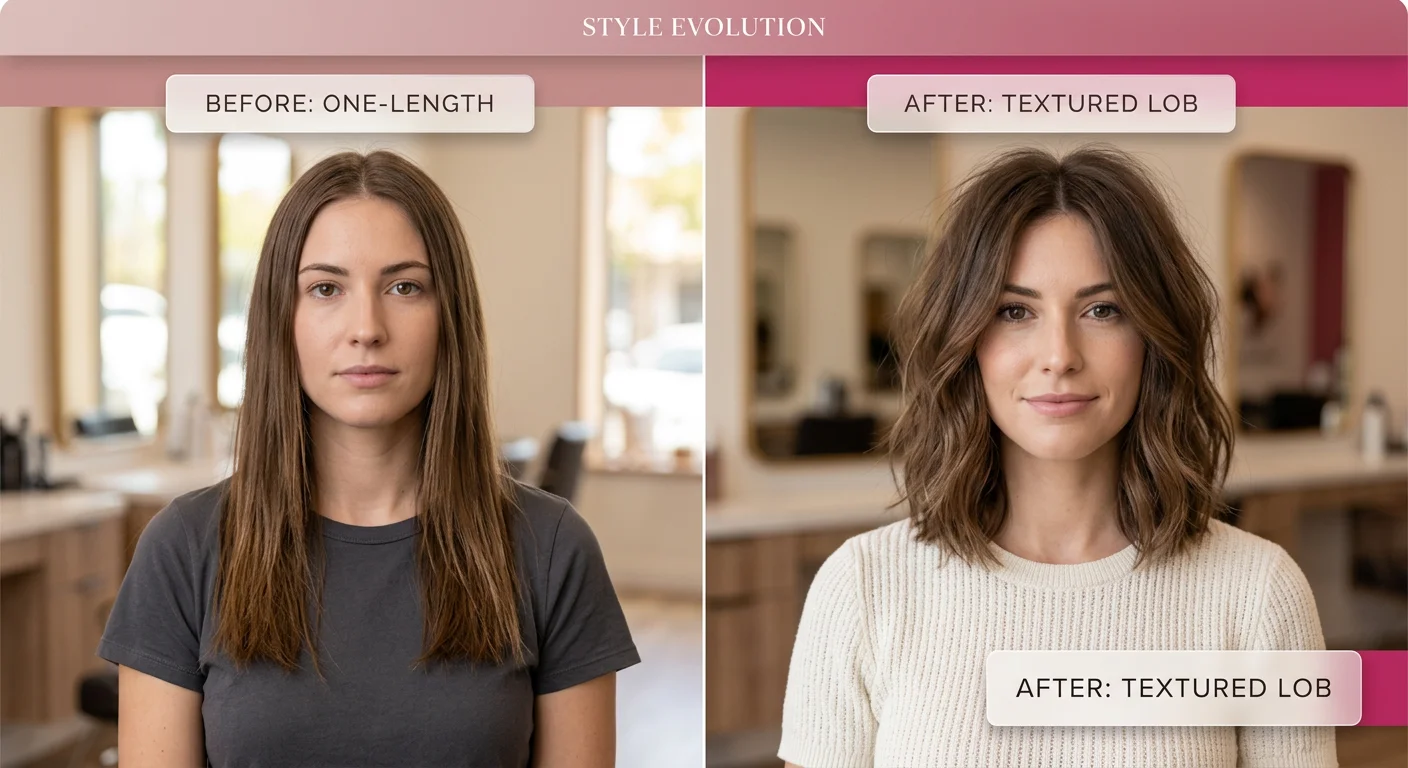
One-length cuts, no layers, no texture, same length everywhere, look stunning on Instagram. On actual humans living actual lives? They go flat fast. Straight hair naturally lies closer to the scalp because there’s nothing to lift it. No curl, no wave, no bend. Without layers to create internal structure, gravity wins every time.
Does that mean blunt cuts are always wrong? No. A blunt bob works because the shorter length reduces the weight pulling it down. But a blunt cut on medium to long straight hair? You’ll be reaching for dry shampoo and a curling iron by noon.
If you love the one-length look, at least ask for point cutting at the ends. It thins the very bottom edge just enough to prevent that “heavy curtain” effect without changing the overall silhouette.
The Textured Lob: Straight Hair’s Best Friend

I call this cut “the convincer.” Because every client who swore she’d never go shorter than her shoulders? This is the one that changed her mind.
A textured lob hits right between the chin and collarbone. On straight hair, that length is magic. Short enough that the ends don’t weigh themselves flat, long enough that you still feel like you have hair. The texture comes from razor cutting or point cutting the ends so they move independently instead of clumping into one solid sheet.
Marie Claire listed the textured lob as one of 2026’s strongest cuts, and I’m not surprised. I’ve been cutting this for years on straight-haired clients who want low maintenance but don’t want to look like they gave up.
Styling is barely anything:
- Air dry with a texturizing spray
- Or blow dry with a round brush just at the roots for lift
- Skip the flat iron, it defeats the entire point
Skip this cut if: your hair is extremely fine and thin. The razor cutting can make fine ends look see-through. Ask for point cutting instead, it gives a similar result without removing as much density.
Straight Short Cut Hair That Doesn’t Look Boring
Short hair on straight textures scares people. “Won’t it just sit there?” Yes. If you get the wrong cut, it absolutely will.
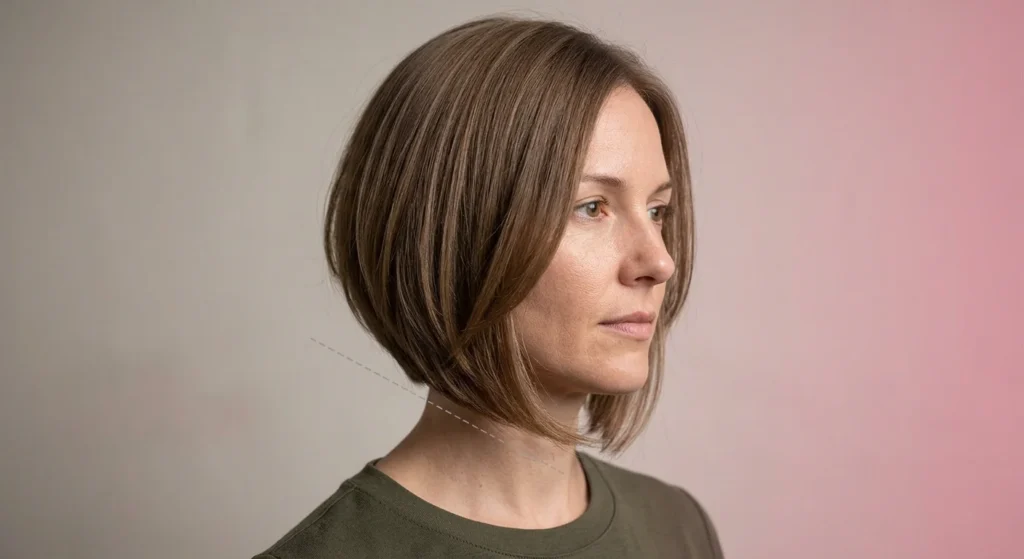
The trick with a straight haircut for short hair is building angles into it. Not dramatic asymmetry. Just enough that the hair falls at slightly different lengths around the face, creating depth where a single-length crop would fall flat.
My favorite version right now is a chin-length bob with a slight graduation at the back. Slightly shorter at the nape, slightly longer at the front. The angle is subtle, maybe an inch of difference, but it forces the hair to curve inward at the ends instead of just dropping straight down.
Had a woman in my chair last winter, fine straight hair, hadn’t gone short in fifteen years. She was terrified. I cut a graduated bob with face-framing pieces and she literally teared up in the mirror. Not because it was emotional. Because she couldn’t believe her hair had movement for the first time since she was a kid.
Your hair’s porosity plays into this too. Low porosity straight hair resists products and takes forever to air dry, which means your cut needs to do the heavy lifting since styling products won’t stick around long.
What makes this cut hold shape:
- The graduation creates a natural curve
- Face-framing pieces break up the “helmet” look
- Works on fine and medium density straight hair
- Thick straight hair needs more layering to prevent it from bowing out at the sides
When Your Cut Is Fine But Your Routine Is Killing It
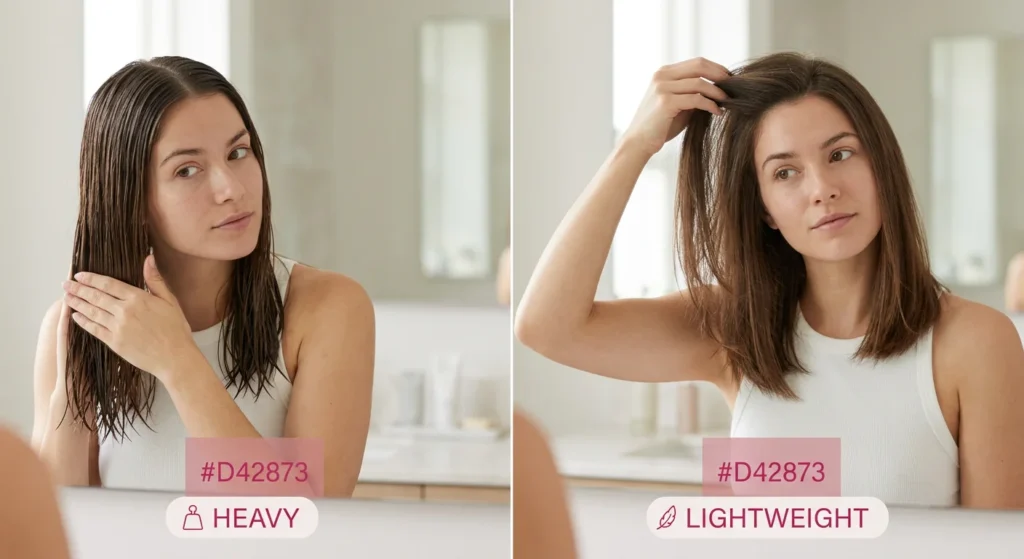
Sometimes the haircut isn’t the problem.
I’ve had clients come back two weeks after a cut convinced it wasn’t working. I look at their hair and the shape is still there. What happened? Heavy conditioner applied root to tip. Or a serum that basically glued everything flat.
Straight hair picks up product weight faster than any other texture. Those oils traveling down the shaft have no curls or bends slowing them down. So when you layer a heavy conditioner on top of that? Flat city.
Quick fixes that actually help:
- Conditioner mid-length to ends only, never the roots
- K18 dry shampoo at the crown for second-day lift
- Lightweight everything. If a product feels slippery between your fingers, it’s too heavy for straight hair
Also, how you dry matters. Blow drying upside down for even 30 seconds at the roots creates lift that lasts hours. Most of my straight-haired clients who complain about flatness are air drying with their head upright. Gravity is doing exactly what gravity does.
5 Cuts Compared: Which One Fits You?
| Cut | Best Length | Best For | Holds Shape Because |
| Internal layers | Shoulder length | Medium density, wants movement | Hidden layers create bounce without visible choppy texture |
| Textured lob | Chin to collarbone | Most hair types except very fine | Razor or point-cut ends move independently |
| Graduated bob | Chin length | Fine to medium straight hair | Angle forces hair to curve inward naturally |
| Blunt bob | Chin or above | Thick straight hair | Short length reduces weight, keeps density |
| Long layers with face framing | Past shoulders | Thick hair that falls flat | Removes bulk strategically, and stylists are recommending it more than ever in 2026 |
Stuff My Straight-Haired Clients Always Ask
Do layers make straight hair look thinner?
Depends who’s cutting them. Badly placed layers on fine hair, yes. Internal layers or long face-framing layers on medium to thick hair, opposite effect. They add fullness. Always tell your stylist your density, not just your texture.
How often should I trim straight hair to keep the shape?
Every 8 to 10 weeks for layered cuts. Every 6 weeks for bobs and blunt cuts. Straight hair shows uneven growth faster because there’s no texture disguising it.
Can I get a preppy, polished look with straight hair?
Straight hair was basically built for preppy style. A clean bob or a sleek shoulder-length cut with minimal layers is the most effortlessly polished thing you can walk out of a salon with.
Why does my straight hair look good at the salon but flat the next day?
Your stylist blow dried with tension and a round brush, lifting at the roots. At home you probably towel dry and air dry with your head upright. Try flipping your head forward while blow drying the roots for 60 seconds. That alone changes everything.