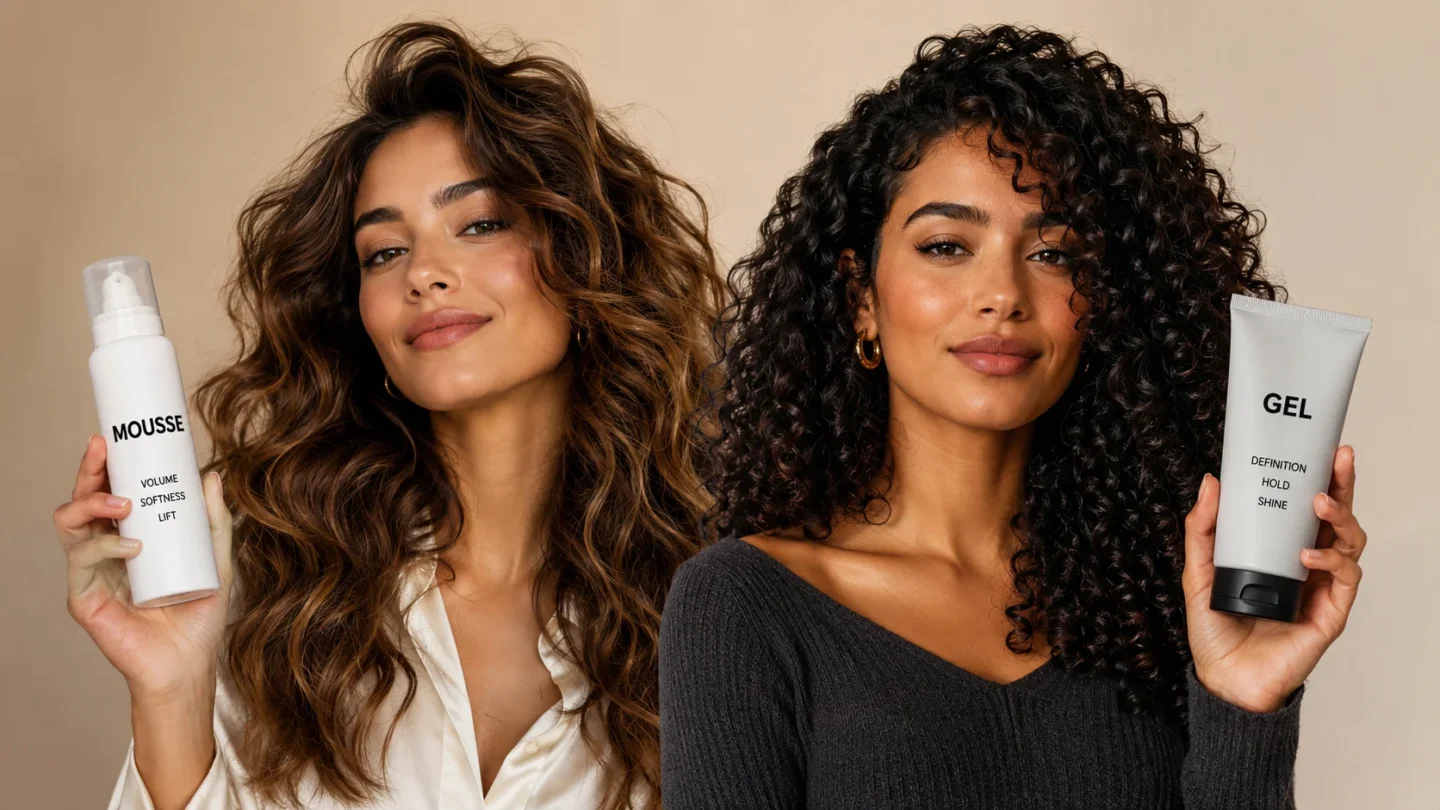
Mousse vs gel for curly and wavy hair sounds like a product fight. It’s really not.
Mousse and gel do different jobs. Mousse gives hair lift, shape and a softer finish. Gel gives stronger hold, better definition and more frizz control. The problem starts when you expect mousse to behave like a strong-hold gel, or expect gel to give that fluffy, touchable volume without any cast. That’s asking a lot from one poor bottle.
The short answer: use mousse if your hair falls flat easily. Use gel if your curls or waves lose shape, frizz up or need longer hold. Use both if you want volume and definition.
Mousse vs Gel at a Glance
| Need | Better Choice | Why |
| Root volume | Mousse | Lighter and easier to lift at the roots |
| Strong hold | Gel | Forms a stronger styling film around curls |
| Soft waves | Mousse | Less stiffness, more movement |
| Frizz control | Gel | Better at sealing the curl shape while drying |
| Fine hair | Mousse, or light gel | Heavy gel can flatten fine strands |
| Thick curls | Gel, or mousse plus gel | Mousse alone may not give enough control |
| Humid weather | Gel | Usually lasts longer against swelling and frizz |
| Touchable finish | Mousse | Softer feel with less crunch |
| Day-two definition | Gel | Holds the curl pattern longer |
Modern mousses are not all crunchy 1980s foam. Many are made for soft definition and volume. Vogue’s curly hair mousse guide also points out that mousse is often used for curl enhancement without heavy weight.
Gel has its own reputation problem. People hear “gel” and imagine stiff, shiny helmet hair. But a good curly-hair gel is usually meant to dry with a cast, then soften when you scrunch it out. Glamour’s curly hair gel testing focuses on the same practical concerns users actually care about: frizz, hold, buildup, crunch and whether the gel works across different curl types.
What Mousse Actually Does
Mousse is best when your hair needs air, not armor.
It coats the hair lightly, adds body and helps curls or waves form without dragging them down. That makes it especially useful for wavy hair, fine curls, low-density hair and anyone whose roots collapse the second they look in a mirror.
Mousse is usually a good fit when your hair says:
- “I need volume.”
- “Creams make me greasy.”
- “Gel makes me look flat.”
- “My waves disappear when I use heavy products.”
- “I want soft definition, not a crunchy cast.”
Mousse can help with frizz, but it’s not always enough on its own. If your hair expands in humidity or your curls lose shape as they dry, mousse may need backup from a light gel.
For a product-specific example, you can compare this with the texture and hold notes in our The Doux Mousse Def review.
What Gel Actually Does

Gel is for hold. That’s the job.
A curly-hair gel helps curls clump together, reduces flyaways and keeps the curl pattern from falling apart while the hair dries. The cast is not the final look. It’s more like scaffolding. Slightly annoying, but useful.
Once your hair is completely dry, you scrunch out the cast with dry hands or a tiny amount of oil. That’s when gel stops looking stiff and starts looking like defined curls with manners.
Gel is usually better when your hair says:
- “I frizz while drying.”
- “My curls look good wet, then puff up.”
- “Mousse disappears after two hours.”
- “I need definition to last.”
- “Humidity ruins everything.”
If you’re new to gel, start with a lighter one before going straight for maximum hold. Strong gels can be amazing, but on fine waves they can also turn volume into a small personal tragedy.
For a real product breakdown, see our Not Your Mother’s Curl Talk Gel review.
Is Mousse or Gel Better for Wavy Hair?
For most wavy hair, mousse is the easier starting point.
Wavy hair often gets weighed down faster than curly or coily hair. Heavy creams and thick gels can stretch the wave pattern, especially on fine 2A, 2B or 2C hair. Mousse gives waves a better chance to spring up instead of sitting politely against your head.
Use mousse for wavy hair if you want:
- Beachy movement
- More root lift
- Softer bends
- Less product buildup
- A natural finish
Use gel for wavy hair if you want:
- More defined wave clumps
- Less halo frizz
- Longer hold
- Better results in humidity
The best routine for many wavy-haired people is not mousse or gel. It’s mousse first, then a small amount of gel. Think of mousse as the volume layer and gel as the seatbelt.
Is Mousse or Gel Better for Curly Hair?
For curly hair, gel usually wins on hold and definition.
Curly hair often needs more structure while drying. Without enough hold, curls can separate, puff up or lose shape before they’re fully dry. Gel helps preserve the curl pattern long enough for the style to set.
That said, mousse still has a place. It’s helpful if your curls are fine, limp, low-density or easily weighed down. It can also refresh curls without making the hair feel coated.
Use mousse for curly hair when:
- Your curls need lift
- Your roots go flat
- Your hair hates heavy stylers
- You want soft, fluffy volume
- You’re refreshing day-two curls
Use gel for curly hair when:
- You want stronger clumps
- Your curls frizz during drying
- You need the style to last longer
- Your hair loses definition fast
- You live somewhere humid
For a full routine foundation, link this decision back to your wash-day steps in our curly hair routine for beginners.
Which One Is Better for Frizz?
Gel is usually better for frizz because it gives the hair more control while it dries.
Frizz often happens when curls separate before they set. That can come from rough towel drying, touching the hair too much, not enough water, not enough hold or using products that don’t match your hair density. Product is only one part of it.
Mousse can reduce frizz on looser waves and fine curls, especially when applied evenly to damp hair. But if your hair frizzes no matter what, a gel cast usually gives better protection.
A simple rule:
- Light frizz and flat roots: mousse
- Frizz plus weak definition: gel
- Frizz plus flat roots: mousse first, gel second
For more causes beyond styling products, use our guide on how to fix frizzy hair.
Quick safety note: If a mousse or gel makes your scalp burn, itch or break out, stop using it. The FDA notes that some fragrance ingredients in cosmetics can trigger allergies or sensitivities in some people, even when they’re safe for most users. Choose fragrance-free options when needed and check ingredient labels carefully. Source: FDA
Do You Put Mousse or Gel First?
Usually, mousse goes first and gel goes second.
Mousse gives lift and shape. Gel seals that shape with hold. If you apply gel first, then rough mousse through it, you can break up the curl clumps before they set. Annoying. Avoidable.
Simple order:
- Apply leave-in only if your hair needs it.
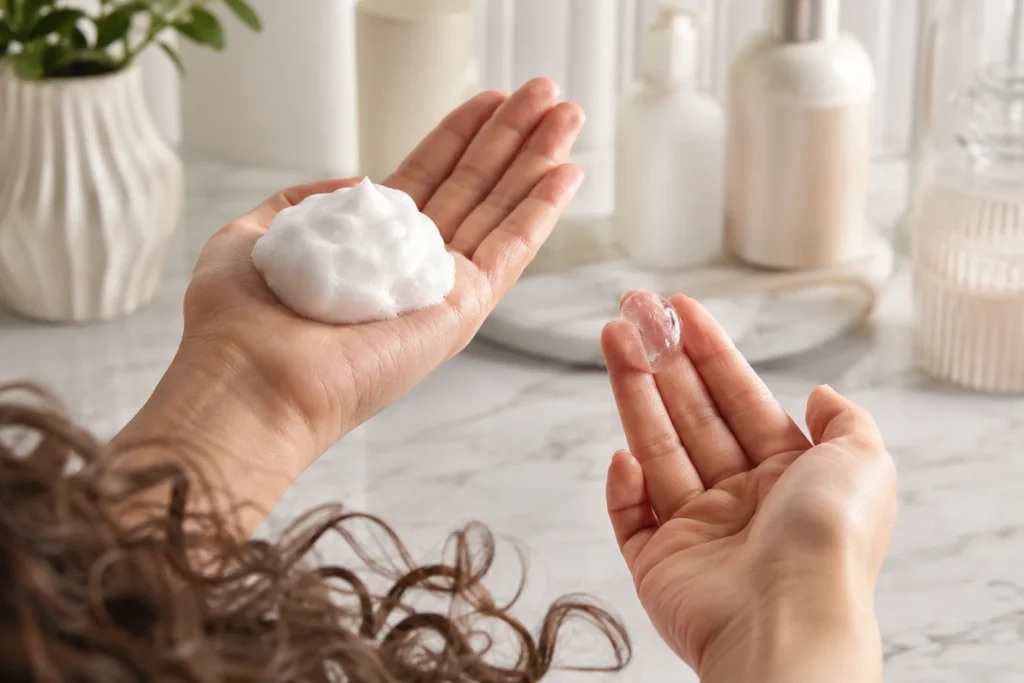
- Scrunch mousse into wet or very damp hair.
- Glaze or scrunch a small amount of gel over the top.
- Diffuse or air-dry without touching too much.
- Once fully dry, scrunch out the cast.
If your roots get flat easily, keep gel away from the scalp and use mousse there instead.
Can You Use Mousse and Gel Together?
Yes. For many wavy and curly routines, that’s the best answer.
Use both when:
- Mousse gives volume but not enough hold
- Gel gives definition but makes roots flat
- Your hair looks good wet, then expands while drying
- Humidity ruins your style
- You want soft volume with cleaner curl clumps
The trick is balance. Use mousse generously enough to spread, then use gel with a lighter hand. You’re styling hair, not sealing a driveway.
Which Product Should You Buy?
Don’t start with the fanciest bottle. Start with what your hair actually needs.
| Hair Type or Goal | Look For |
| Fine waves | Lightweight mousse, soft-hold gel |
| Thick curls | Medium to strong-hold gel |
| Frizz-prone hair | Humidity-resistant gel |
| Flat roots | Volumizing mousse |
| Dry curls | Leave-in or curl cream under gel |
| Soft casual waves | Mousse alone |
| Long-lasting definition | Gel, or mousse plus gel |
If your hair gets buildup quickly, avoid using too many stylers at once. If it feels coated or dull after a few wash days, a reset wash may help.
Common Mistakes
Most mousse and gel problems come from application, not the product itself.
Avoid these:
- Applying stylers to hair that’s already too dry
- Using gel only on the outside layer
- Raking through curls after they’ve clumped
- Breaking the cast before the hair is fully dry
- Using heavy gel on fine roots
- Expecting mousse to give strong hold by itself
- Using cream, mousse, and gel when your hair only needs one or two
If a product makes your scalp itchy, irritated, or uncomfortable, stop using it. The FDA notes that fragrance ingredients in cosmetics can bother some people, especially those with sensitivities. That doesn’t mean every scented product is bad. It means your scalp gets a vote.
Final Takeaway
Mousse is best for lift, softness, and movement. Gel is best for hold, definition, and frizz control.
For wavy hair, start with mousse. For curly hair, start with gel. If your hair needs both volume and staying power, use mousse first and gel second.
That’s the whole decision. No bathroom shelf identity crisis required.