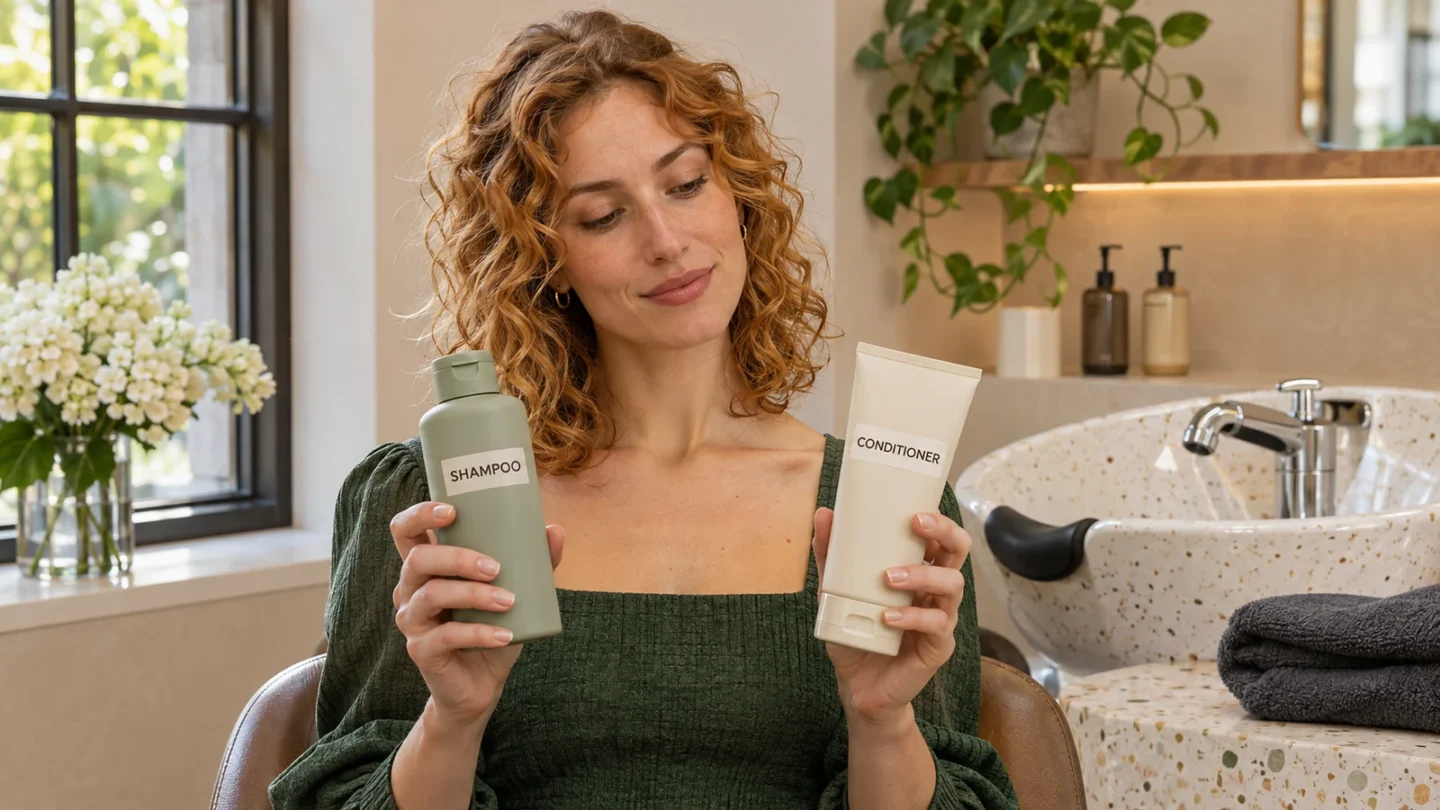
The best shampoo for fine curly hair cleans your scalp comfortably; the best conditioner makes the lengths easier to detangle without leaving them limp. Those jobs don’t always call for a matching set. Oily roots can need effective cleansing while dry ends still need a richer conditioner.
I’d start by separating what happens at the roots from what happens farther down. If you keep buying an entire new range whenever one part of wash day disappoints, it becomes difficult to work out which product needed changing.
This guide combines Lisett Perez’s professional styling judgment with current product information and reported customer experiences. The products below have not been documented as personally tested for this article.
Match the shampoo to your scalp and the conditioner to your lengths
Fine means a small individual strand diameter. Low density means fewer hairs across an area of scalp. Fine hair can be dense, and neither characteristic tells you whether your scalp is oily or your ends are damaged. A curl-pattern label doesn’t answer those questions either.
Look at the timing of the problem. Roots that still feel greasy immediately after drying may need better shampoo distribution or more thorough rinsing. Roots that feel clean initially and become oily later raise a different question about washing frequency. Rough ends after an otherwise comfortable wash point toward conditioning or cleansing technique.
The shortlist below gives you options for different jobs. Prices are US manufacturer-page snapshots checked November 13, 2026, before tax and shipping.
| Product | Reason to consider it | Main limitation |
|---|---|---|
| Giovanni Tea Tree Triple Treat Invigorating Shampoo: $10.99, 8.5 oz | A cleansing option to investigate for oilier roots | Current US formula contains sulfate, fragrance and cooling ingredients |
| Jessicurl Gentle Lather Shampoo: $19.95, 8 oz | A low-lather alternative with a No Fragrance Added option | Light lather doesn’t establish enough cleansing for every routine |
| Jessicurl Aloeba Daily Conditioner: $19.95, 8 oz | A lighter-positioned conditioner for slip and softness | Contains oils and oat-derived protein; some fine-haired users still find it heavy |
| Jessicurl Too Shea! Extra Moisturizing Conditioner: $19.95, 8 oz | A richer option to trial on dry, difficult-to-detangle lengths | Not the default choice when curls already feel soft and coated |
Two shampoos to compare for different wash-day needs
Giovanni Tea Tree Triple Treat Invigorating Shampoo is the less expensive full-size trial here. Its current US ingredient list starts with water, sodium coco-sulfate, cocamidopropyl betaine and sodium cocoamphoacetate. It also contains peppermint and tea tree oils, menthol and fragrance. Check your bottle: the brand warns that stock can carry previous ingredient statements.
I’d consider it for someone seeking a cleansing-focused option who enjoys a cooling, scented wash. I wouldn’t choose it to soothe an already irritated scalp. Tingling does not measure cleanliness. The brand’s visible reviews include an account of a clean, unweighted feel using the matching conditioner, and another reviewer who disliked the tingle. Neither establishes how it will perform on your fine curls alone.
Use it on wet hair and rinse thoroughly, as directed. If the scalp feels comfortable but your lengths become increasingly rough, reconsider how much shampoo reaches the ends and whether every wash needs the same formula. A more forceful clean isn’t automatically a better clean.
Jessicurl Gentle Lather Shampoo provides a different option: a light-lather formula available in No Fragrance Added, Citrus Lavender and Island Fantasy versions. The unscented option lists decyl glucoside, cocamidopropyl betaine and sodium cocoyl isethionate as its cleansing agents. The range includes 2 oz trial and 32 oz sizes as well as the 8 oz bottle.
Shake, thoroughly wet the hair, massage into the scalp and rinse well. The brand cautions that the first application may not produce much foam. Don’t repeatedly shampoo just to chase bubbles; assess the rinsed and dried result. One fine-curly reviewer reports comfortable frequent use, while another customer describes itching. Other reports involve a shampoo-and-conditioner combination, making the cause harder to isolate. “Gentle” is not a promise that every scalp will tolerate it.
Choose conditioning weight independently
Jessicurl Aloeba Daily Conditioner is positioned for fine hair, but lightweight does not mean oil-free. Its formula includes cetearyl alcohol, coconut, jojoba and avocado oils, behentrimonium methosulfate and hydrolyzed oat flour. Cetearyl alcohol is a fatty alcohol used in conditioning formulas; it isn’t the same ingredient as drying ethanol.
The directions are to apply to wet hair, leave for three to five minutes and rinse. Start there rather than automatically using it as a leave-in too. Fine-haired reviewers on the brand page describe useful slip and softness. A critical reviewer reports too much weight even when rinsing. The page notes that some reviews are grouped from related products, so this is context, not a clean product-testing dataset.
If your ends remain rough despite adequate coverage and rinsing, a richer conditioner may be more useful than switching to an even lighter one. Jessicurl Too Shea! Extra Moisturizing Conditioner includes shea butter, jojoba and avocado oils, a conditioning agent and oat-derived protein. The brand primarily positions it for medium or coarse hair, while also suggesting it as a deeper-conditioning option for fine hair.
That makes it a conditional choice for dry lengths, not my default for fine curls that flatten easily. Its directions also specify three to five minutes before rinsing. Some fine-curly reviewers report smoother, softer results; those accounts don’t show that everyone needs the extra richness. The same fragrance choices and 2, 8 and 32 oz sizes are offered. Choose a small trial if you are unsure.
You could pair Giovanni with Aloeba when you want a cleansing-focused shampoo and a lighter conditioner, or keep a familiar shampoo and trial Too Shea! only on rough ends. If one product already works, keep it while assessing the other.
Give the roots and ends different attention
Thoroughly wet the scalp before applying shampoo. Spread a small amount between your hands and work it across the scalp with your fingertips, including the crown, behind the ears and at the nape. Dense fine hair may need sectioning to reach those areas. Avoid scratching with your nails or piling the lengths into a tangled heap.
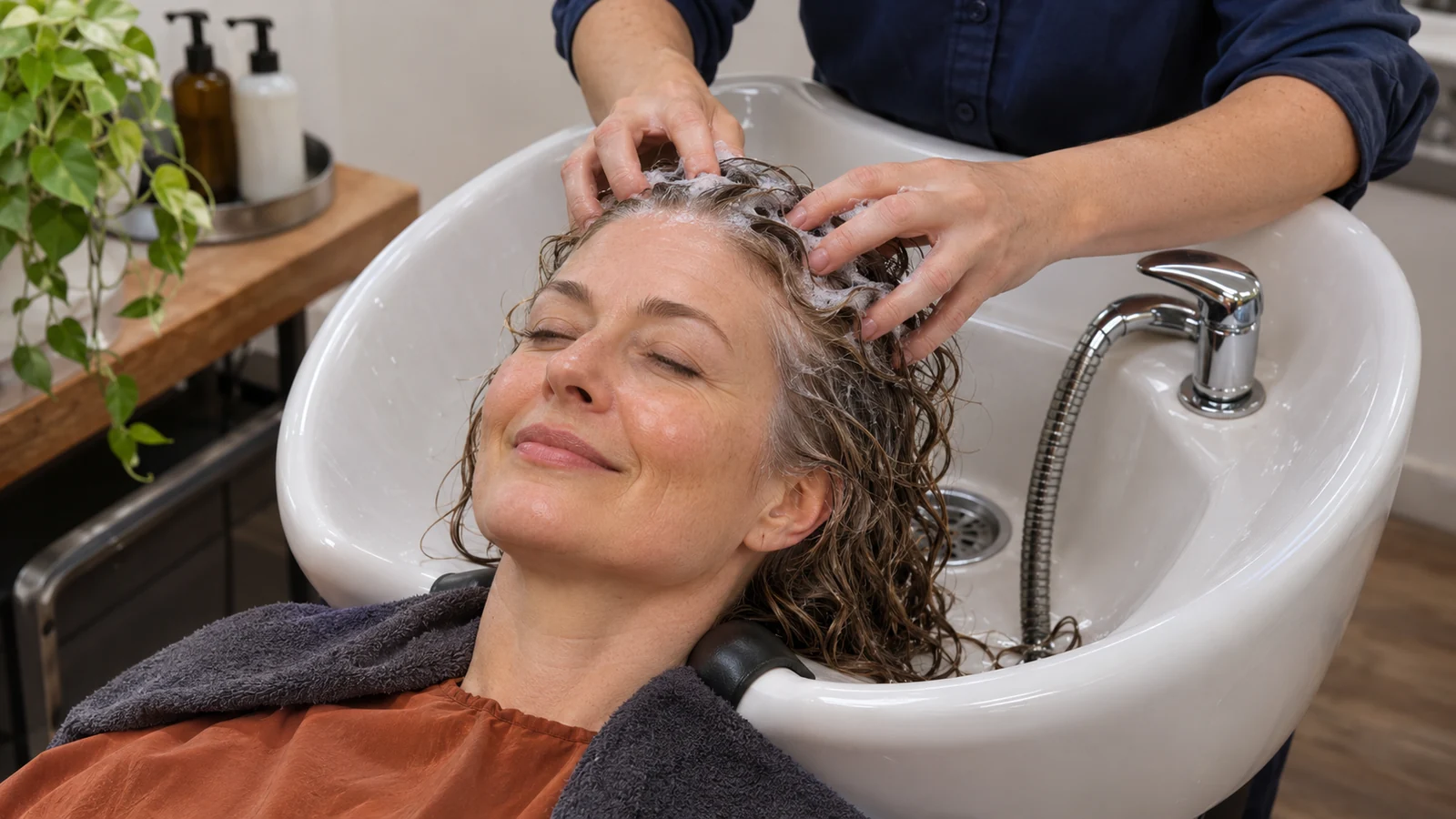
The American Academy of Dermatology recommends concentrating shampoo on the scalp. Let the rinse pass through the lengths rather than repeatedly scrubbing ends that are already dry. If the lengths carry substantial product residue, they may need deliberate cleansing too, handled gently.
For conditioner, begin at the ends and work upward only as far as the hair needs slip. Fine, short or easily flattened hair may need little near the roots. Longer, dry curls can need coverage farther up. Support a section while gently working through tangles from the ends upward. Rinse according to the product directions instead of leaving an unmeasured coating behind.
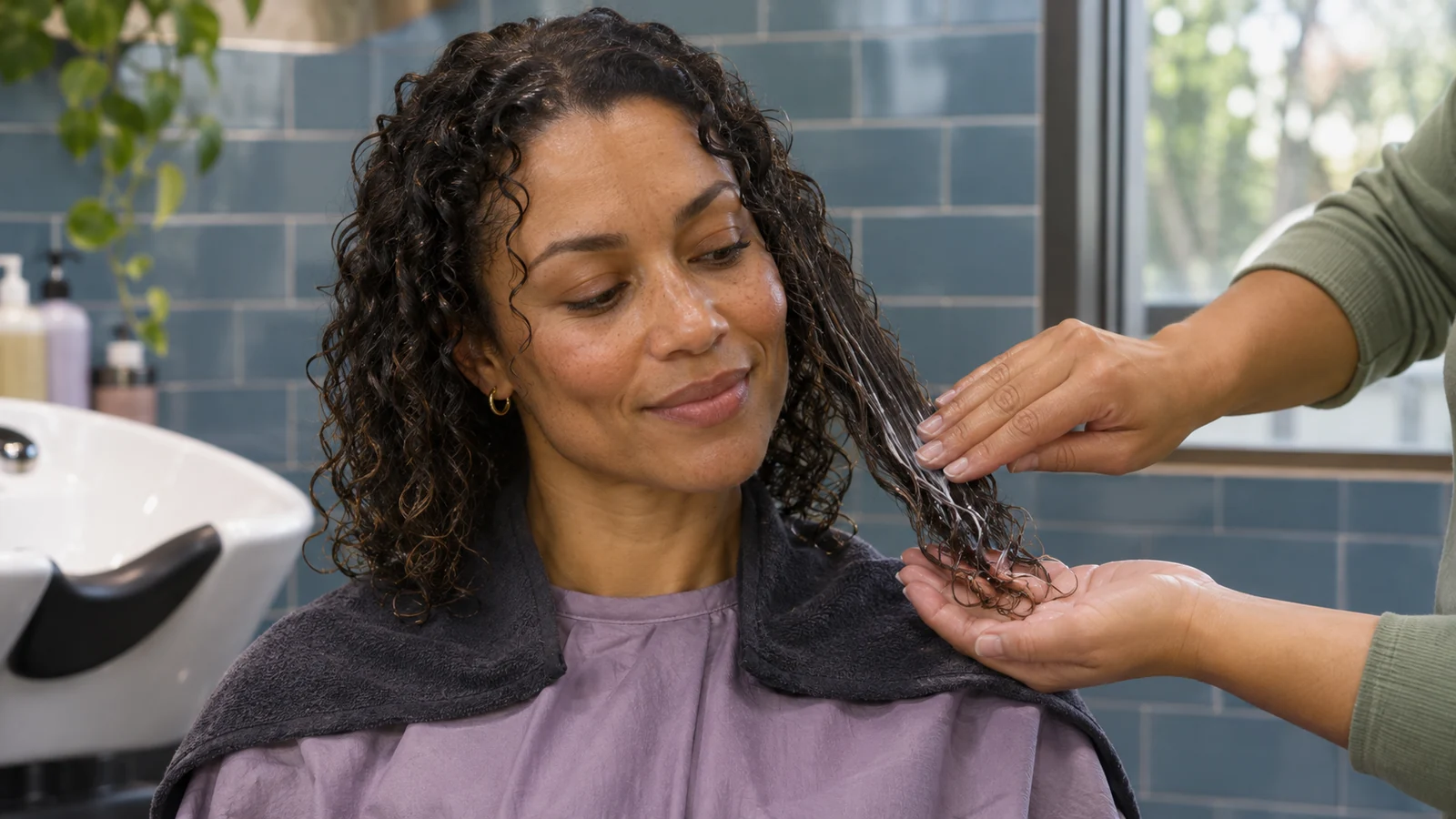
A small coin-sized amount per section can be a trial starting point, not a universal dose. Hair length, density and formula concentration change the quantity needed. Add more where coverage is missing. If the finished hair feels coated, reduce the next application before buying another conditioner.
Adjust washing frequency to oil, dirt and your routine. A curly-hair schedule is not a requirement to tolerate greasy roots until a particular day. Equally, washing more often with the same uncomfortable routine may make your lengths harder to manage.
What sulfate-free, silicone-free and protein labels actually tell you
Sulfate-free identifies an ingredient choice, not the cleansing strength or comfort of the whole shampoo. Surfactants are used in blends, and the amount, formulation and your washing method matter. Giovanni’s current US formula illustrates why an old sulfate-free product recommendation needs checking before a repurchase.
Silicones can provide slip and a smoother feel. They do not automatically make a product unsuitable for fine curls, just as silicone-free conditioner can still feel heavy. This dermatology review of shampoos and conditioners explains their conditioning role.
Protein on a label also doesn’t tell you whether your next wash will feel soft or stiff. Assess the whole routine rather than diagnosing “protein overload” from one rough wash. For fragrance preferences, Jessicurl offers No Fragrance Added versions, but botanical ingredients and individual sensitivities still matter. Stop a product that causes burning or itching; seek medical advice if irritation persists.
When another bottle won’t solve the problem
Roots still greasy straight after washing: first check scalp coverage and rinsing, including conditioner accidentally left around the crown. Keep styling products familiar while you assess the change. If the hair feels clean before styling but flat afterward, use our fine-curly styling-product guide to assess those layers separately.
Clean roots, rough or tangled ends: reduce unnecessary scrubbing through the lengths and improve conditioner distribution. If handling becomes easier but the ends still split or feel damaged, don’t expect shampoo to repair them permanently.
Curls feel soft but look limp: try less conditioner, keep it lower on the lengths, or rinse more thoroughly. Don’t assume the shampoo has stopped working when an extra leave-in or cream was added at the same time.
A coating develops across several washes: assess accumulated styling residue and whether your regular cleanser removes it adequately. Our guide to when clarifying shampoo is useful covers that decision. If hard-water minerals are a concern, the chelating-versus-clarifying guide explains the different job; repeated stronger washing is not a substitute for identifying it.
Change one product at a time and compare the scalp after drying, ease of detangling, root movement and feel of the ends. Note the amount used and what happens before the next wash.
Images are generated illustrations of washing and conditioning techniques.